Corner glue flap
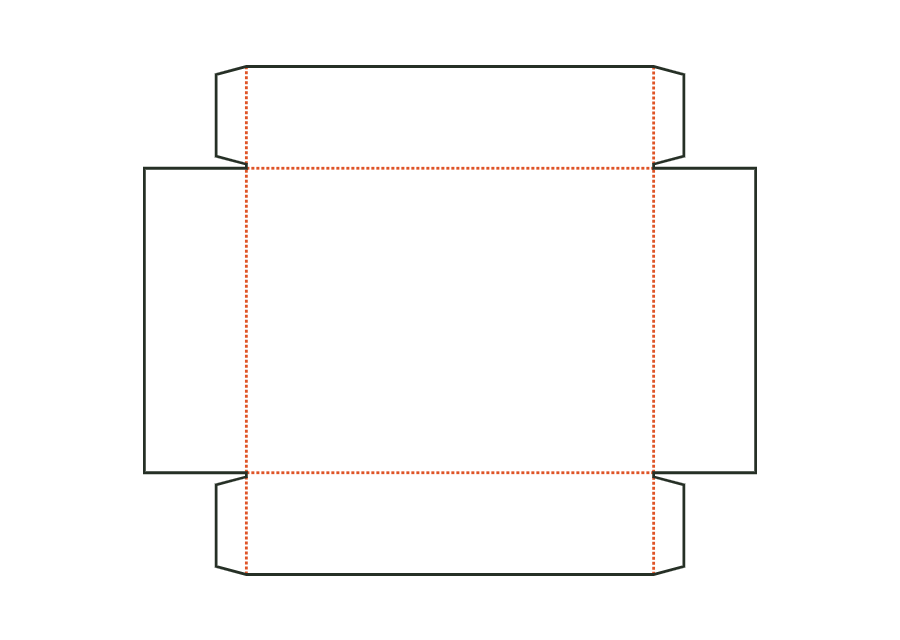
Width of glue flaps at front and back wall ends, glued to the inside of end walls. Material requires a minimum width; flaps from both sides must not meet on the end wall.
 JetDieline
Trays and displays / JETDIELINE
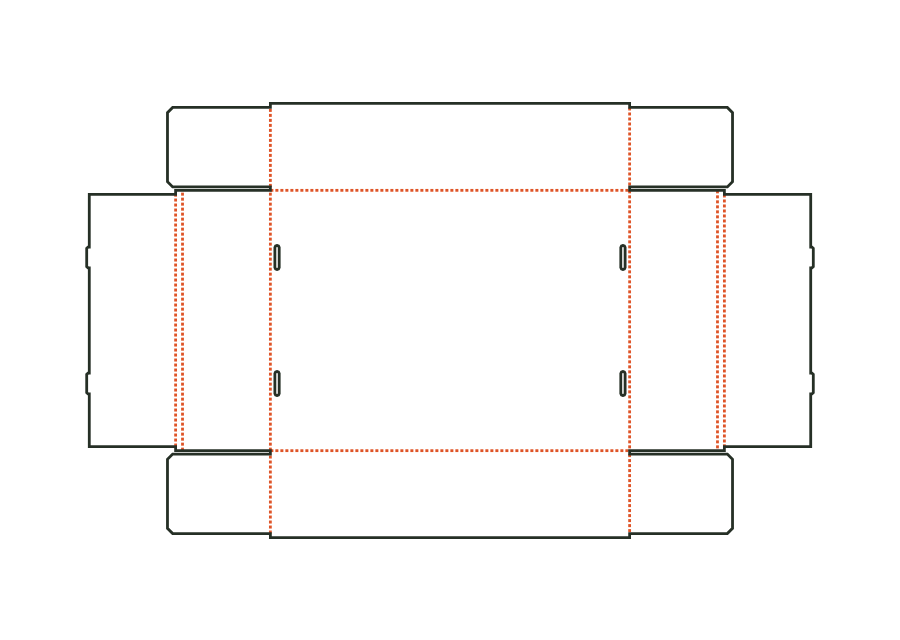
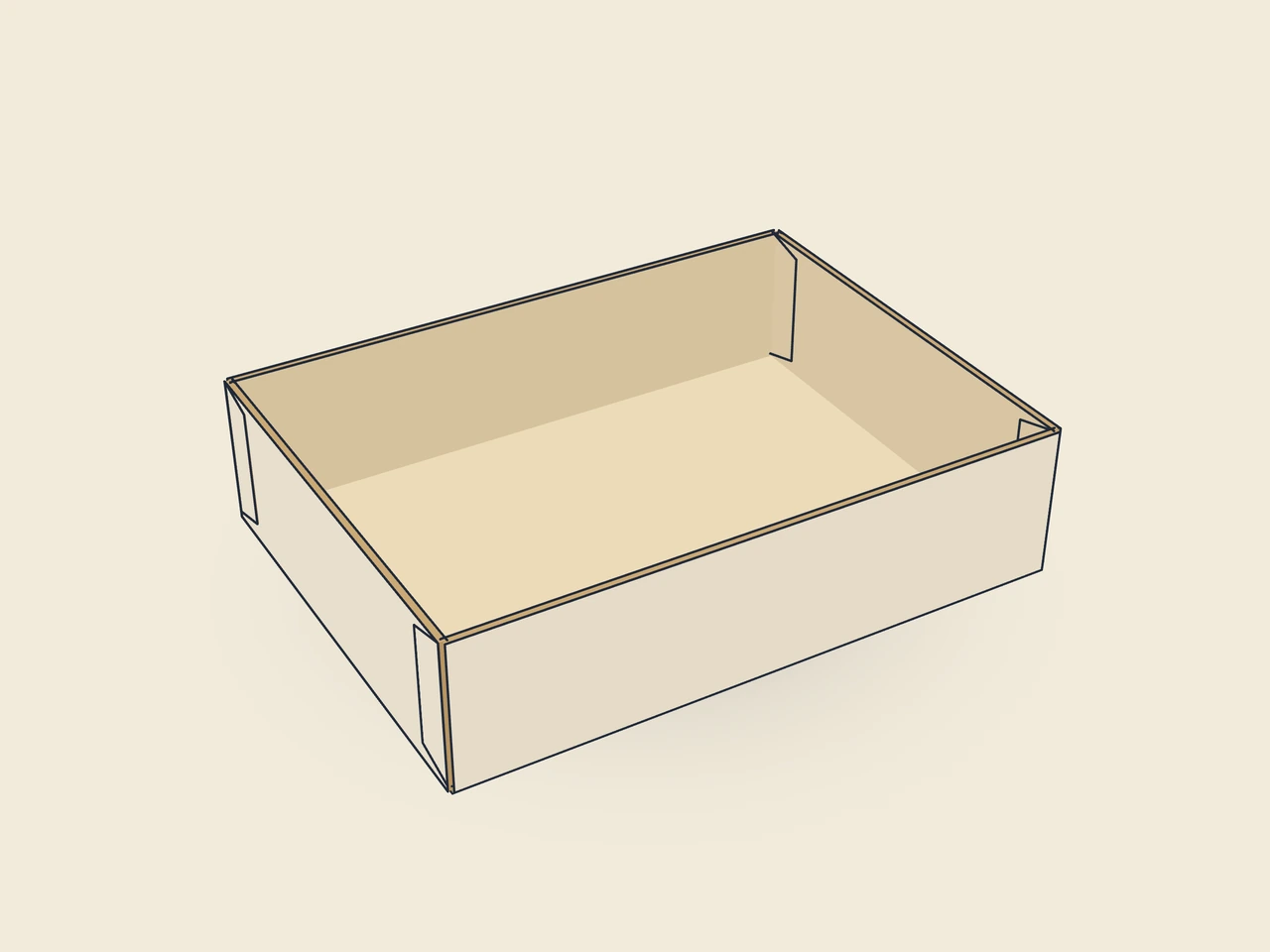
A base, four walls and glued corners form the open folding tray. The page shows V2 with an optional window; the starting example keeps the window disabled.
Drag to rotate
03 / BOX
Simplified display model without material thickness, not to scale.
The 3D view is not available in this browser. The image shows the folded shape.
carton.tray.gluedThe base sits centrally between front, back and end walls. Four corner glue flaps are folded inward and glued. End walls press against the flaps and close the open corners.
Erect front and back walls, fold corner glue flaps inward and apply glue to their outside. Erect end walls and press firmly against the flaps (manually or in a tray erector).
Grain direction horizontal on the blank (check)
Test fit, folding and closure on a sample made from the intended material. Confirm material thickness, grain direction and production steps with your printer.
Inside dimension
These dimensions describe the preview, not a fixed packaging size. The app recalculates the dieline for your own dimensions.
Width of glue flaps at front and back wall ends, glued to the inside of end walls. Material requires a minimum width; flaps from both sides must not meet on the end wall.
Bevel at both ends of corner glue flaps; prevents the flap catching on the base or upper edge during erection.
Gap between adjacent flaps or walls; at least approximately material thickness.
Enable a viewing window with film margin (initially off). It sits in the lid (mailer, hinged lid), front wall (trays) or front (gable, pillow); window, film margin and 3 mm bridge must fit the panel.
Shape of the window cut-out in the front.
Four corner glue flaps on front and back walls are folded inward and glued on the outside. End walls are then erected and pressed against the flaps. Parametric construction describes this assembly. Adhesive choice, pressing time and actual strength depend on material and processing and must be checked on a sample.
This ID describes glued corners. Assembly with interlocking corners has its own catalogue type. Its folds, tabs and slots change the blank. You cannot simply omit gluing. Choose the appropriate construction and test assembly with the eventual material.
The page shows V2 of the glued carton tray. This version adds an optional window in the front wall. The starting example uses construction without a window. Template ID, version and selected parameters remain visible in the data. This associates the preview with the correct construction state.
Find the right packaging shape and fit it to your product
Design the artwork directly on the real dieline
Spot problems before you pass on files
Files your printer can trace
Unglued tray made from folding carton board: front and back walls with corner flaps, double end walls with a return; tabs on the inner wall tuck into slots in the bottom.
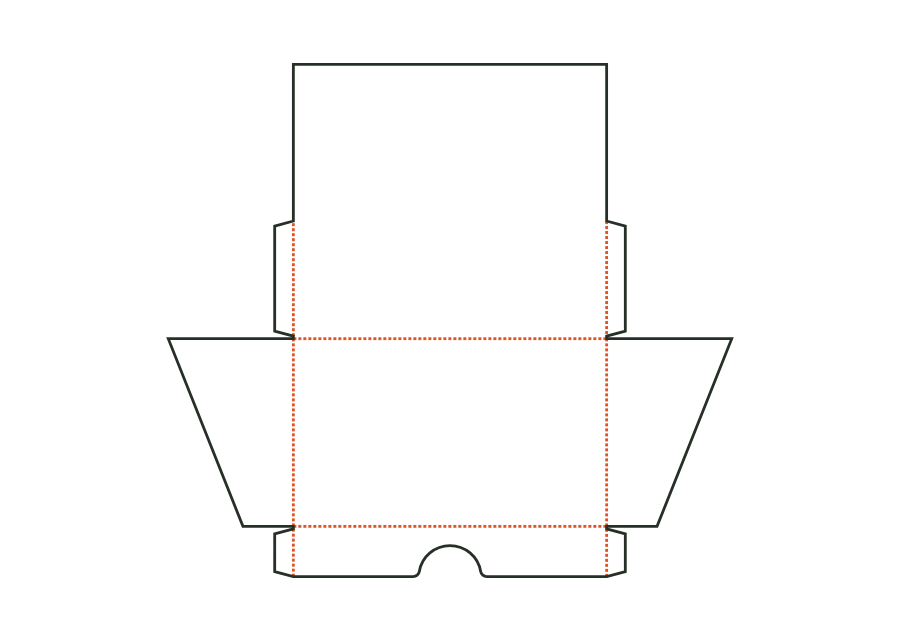
carton.tray.lockedView templateOpen display for the shop counter: low front wall with finger recess, tall back wall with advertising area, sloping side walls; corners are glued inside with corner glue flaps as on the tray.
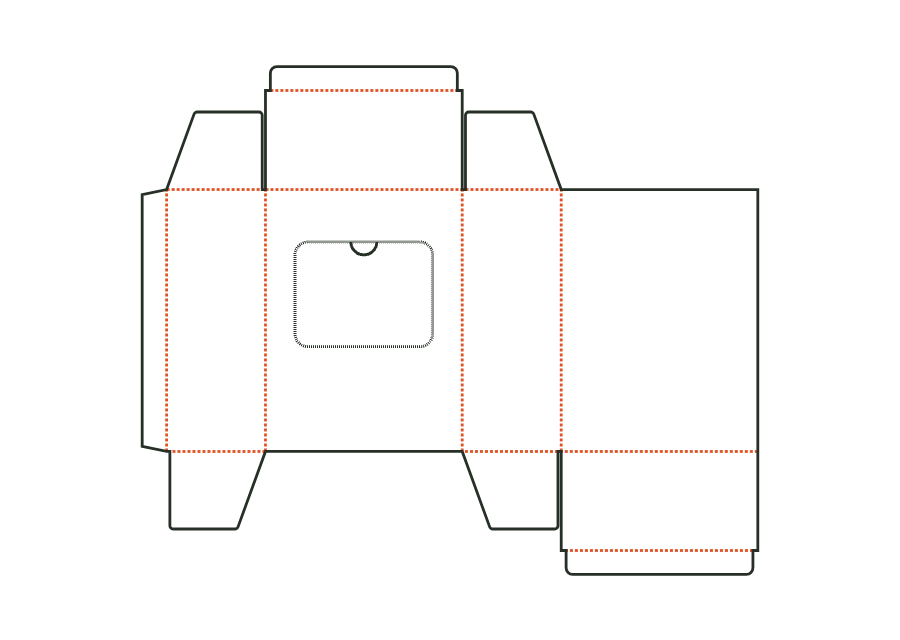
carton.display.counterView templateReverse tuck-end carton with a perforated tear-out window on the front and a thumb notch as a tear tab; after opening, the contents are removed individually.
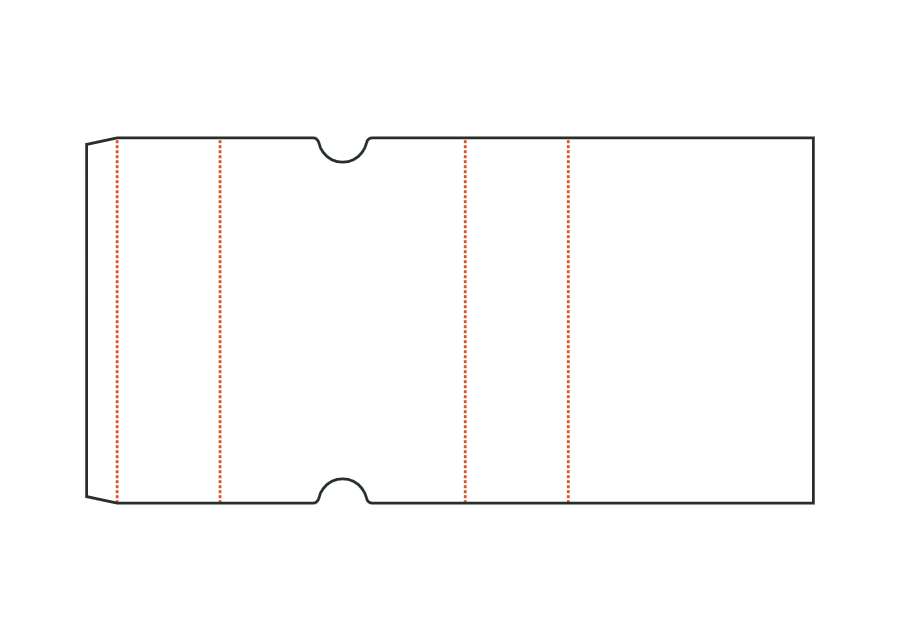
carton.dispenserView templateThe sleeve surrounds a product with four walls and remains open at both ends. Length and width describe the cross-section; height describes the sleeve length. The dieline shows version 1 with finger notches on the front. Material thickness, glue flap and notch position remain part of the calculation rather than simple scaling.
carton.sleeveView templateWith JetDieline, choose a suitable template, adjust its size, and place text, logos, and images directly on your packaging.
Try your dimensions