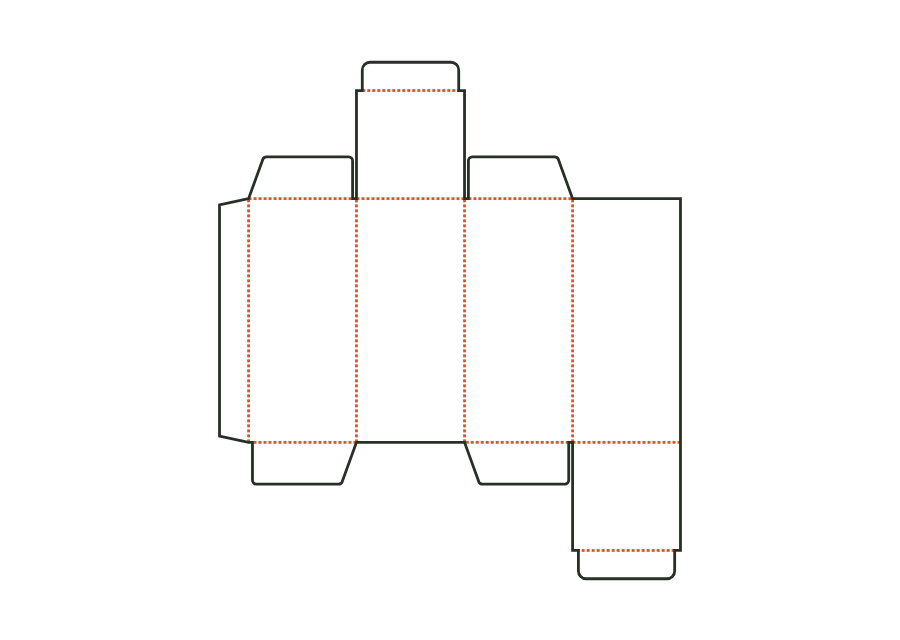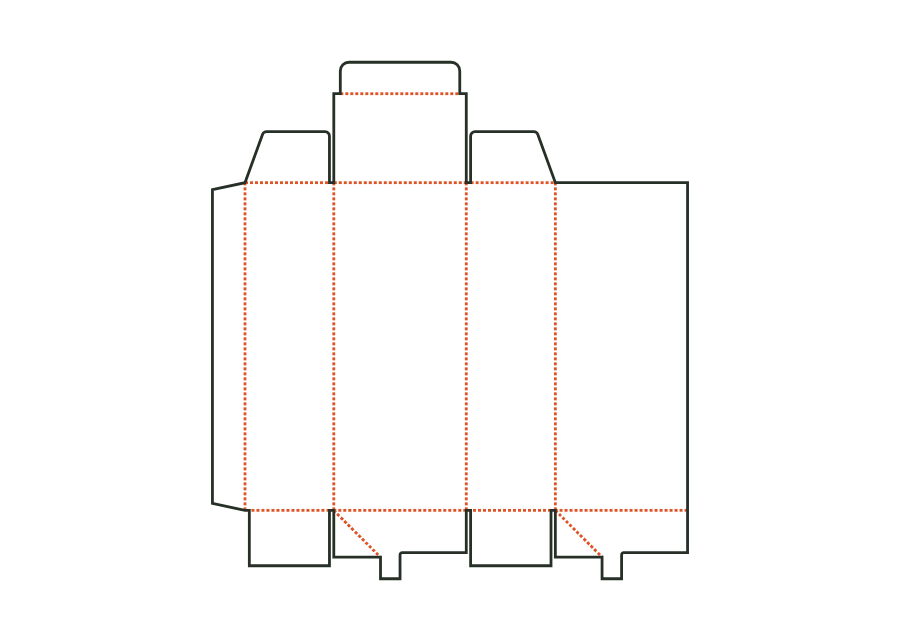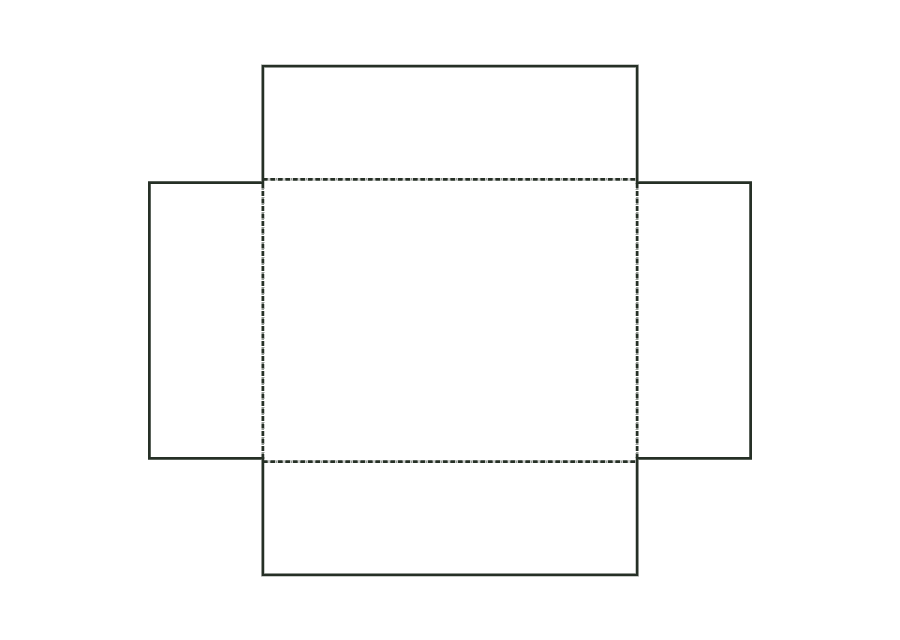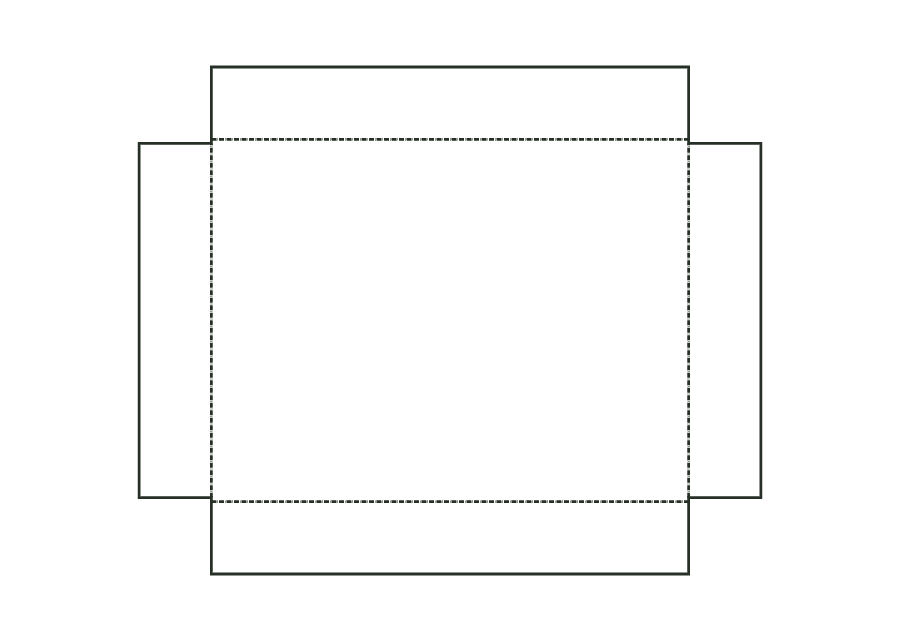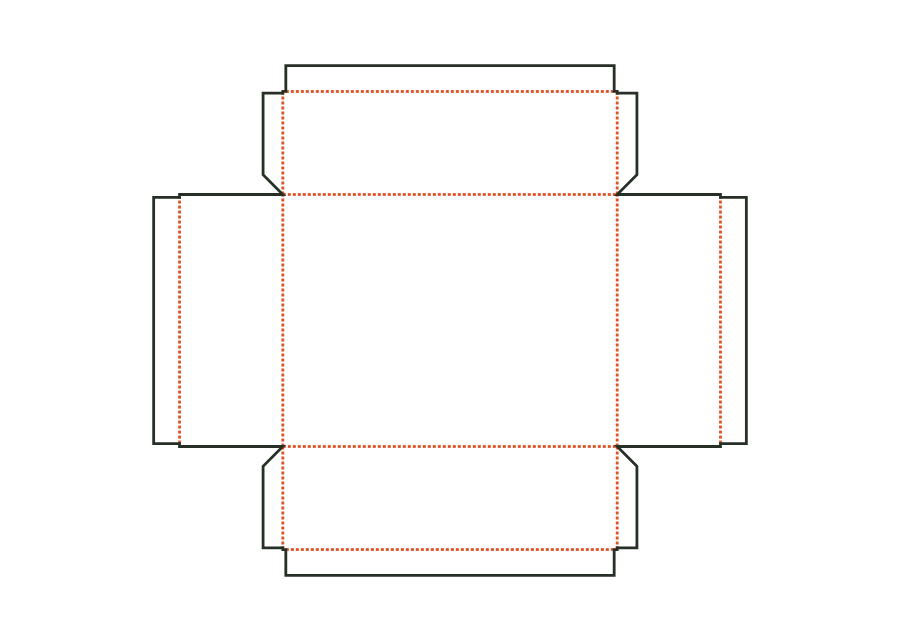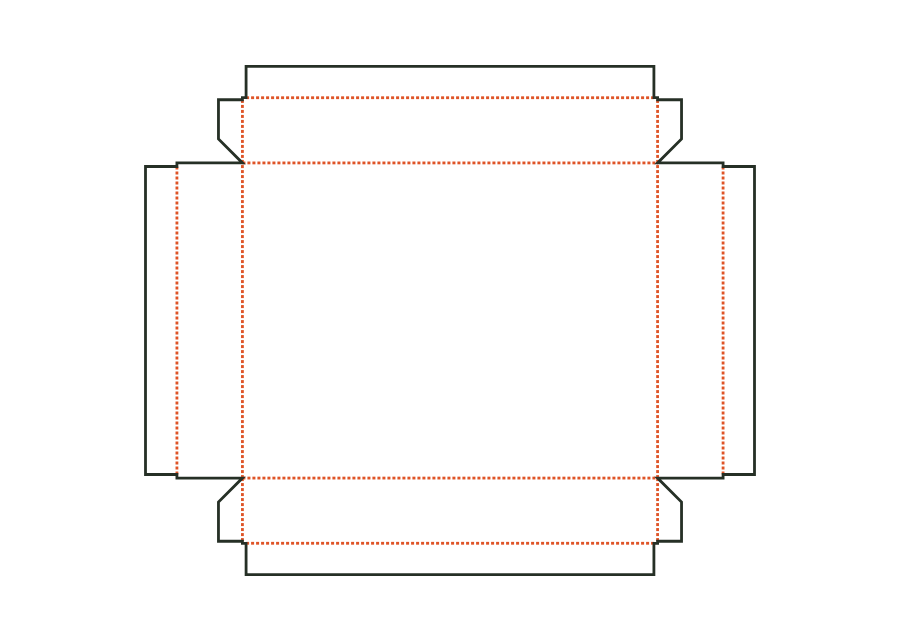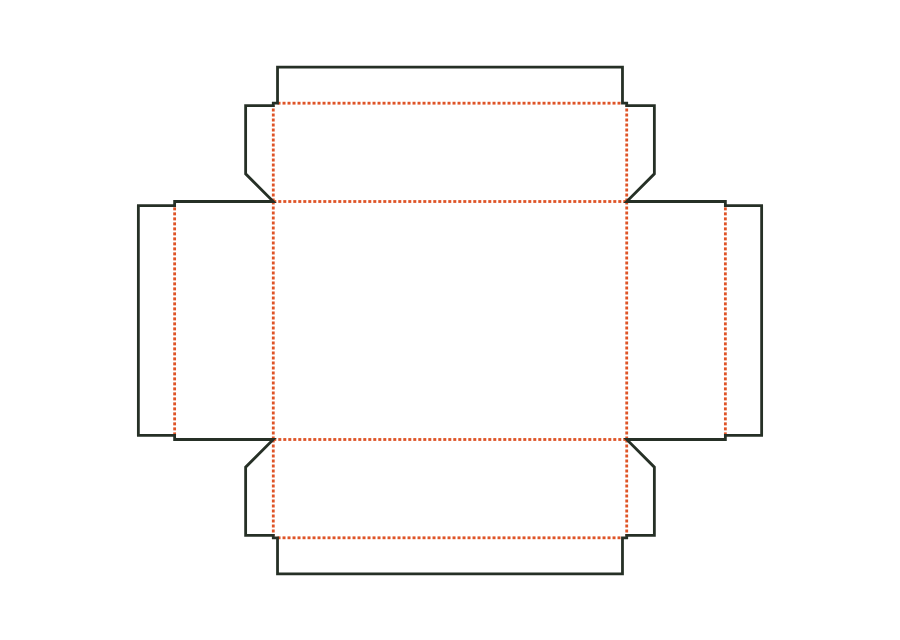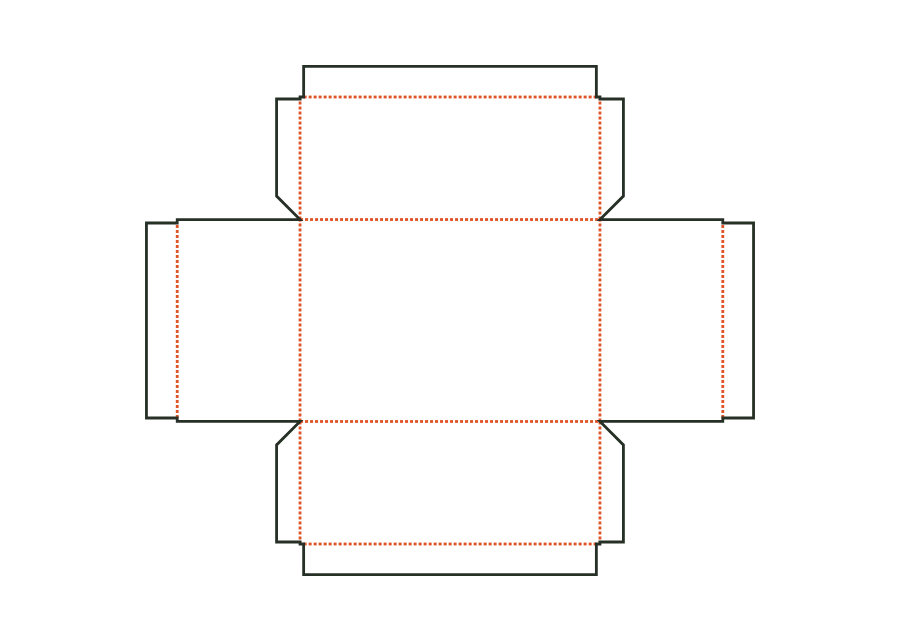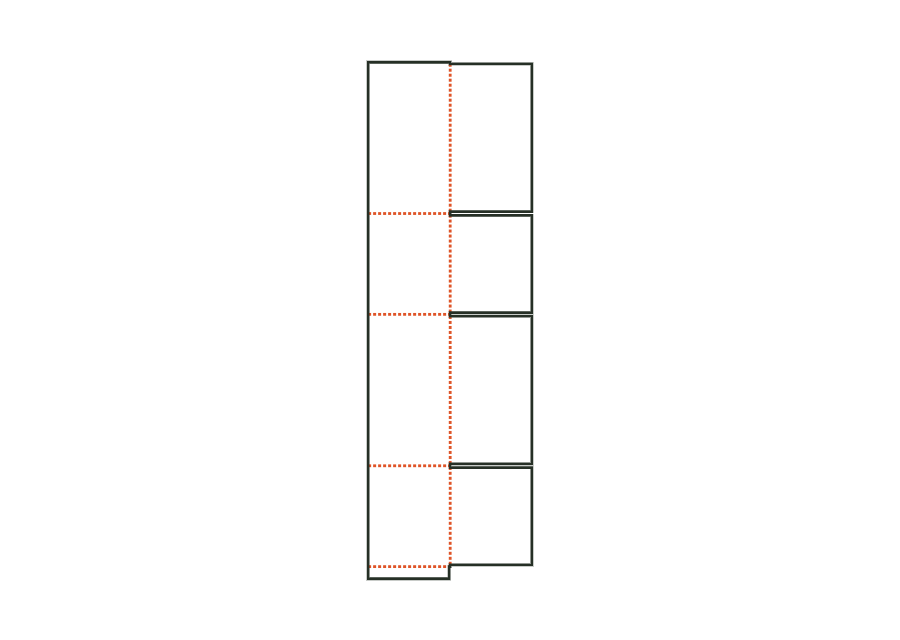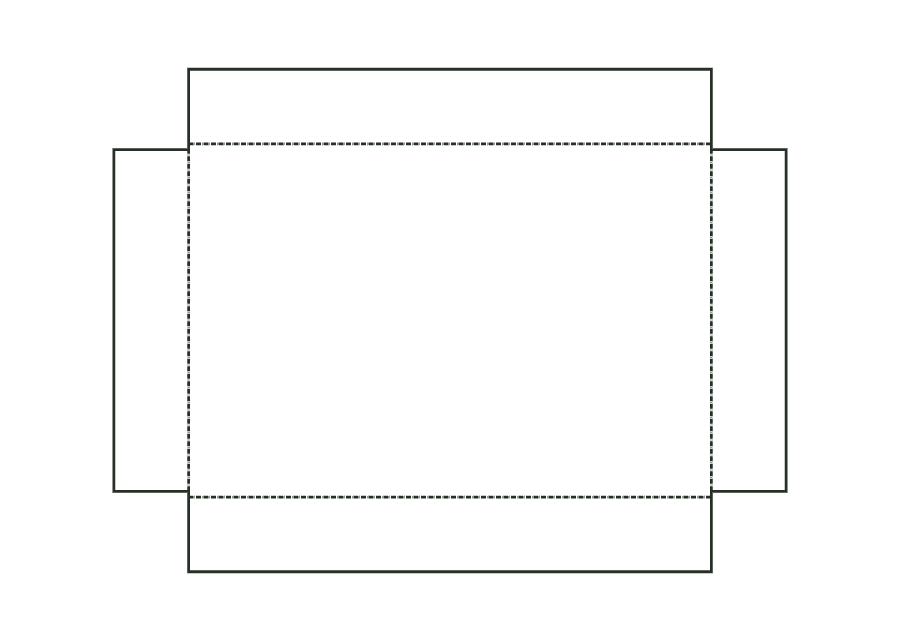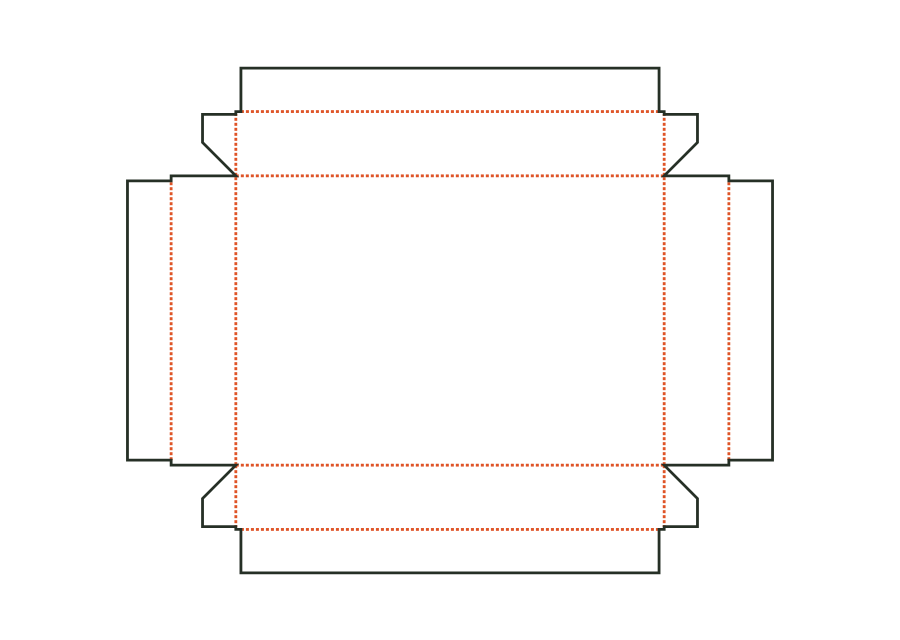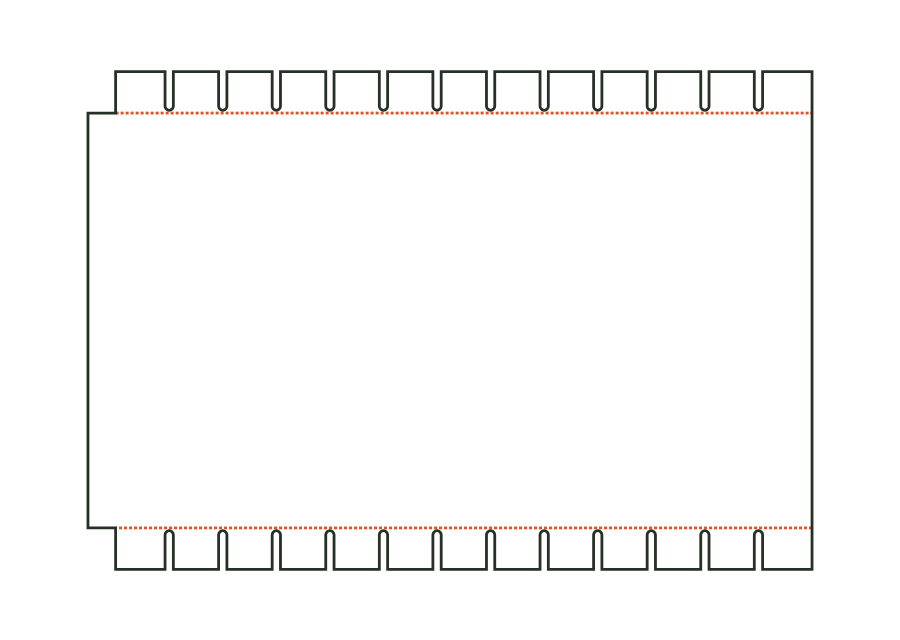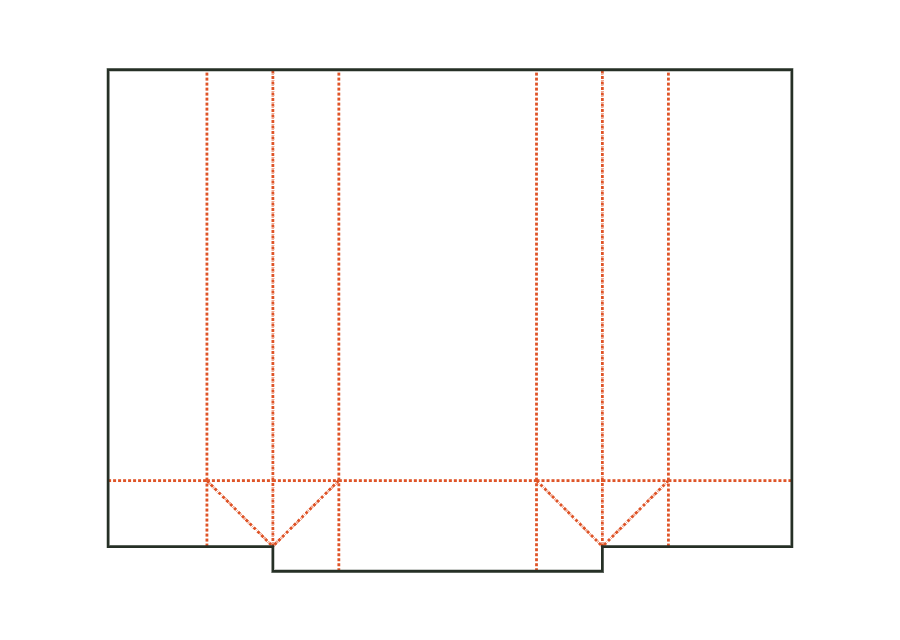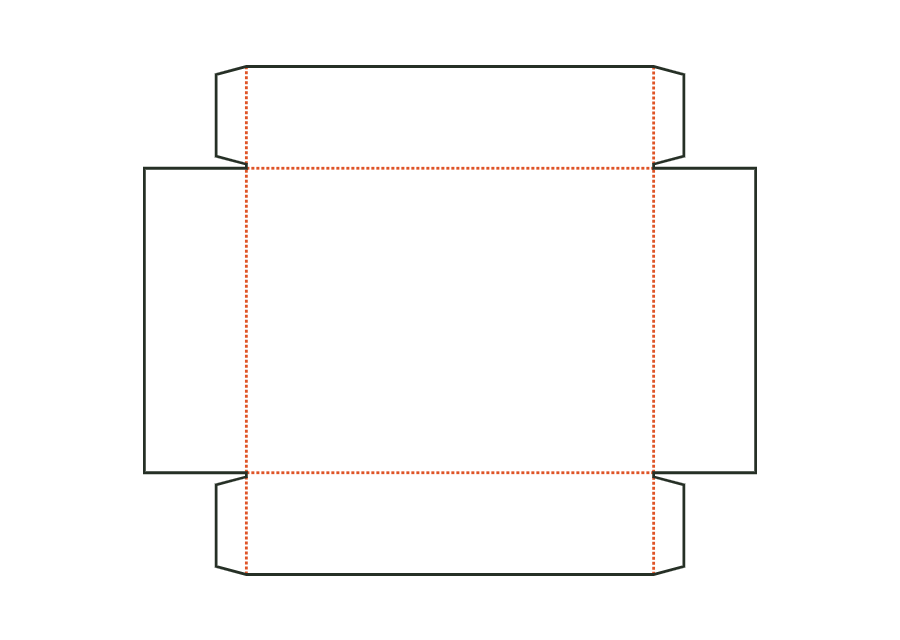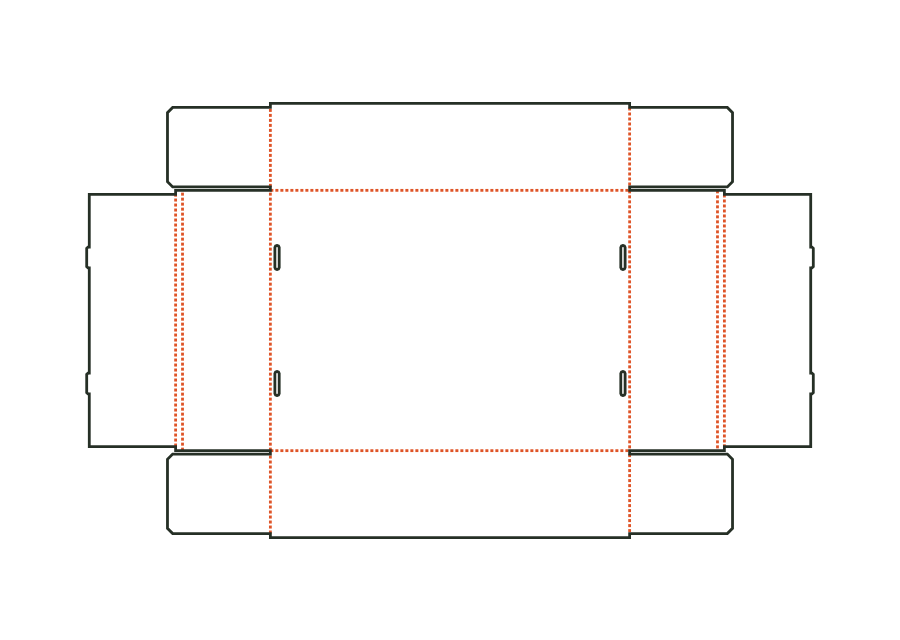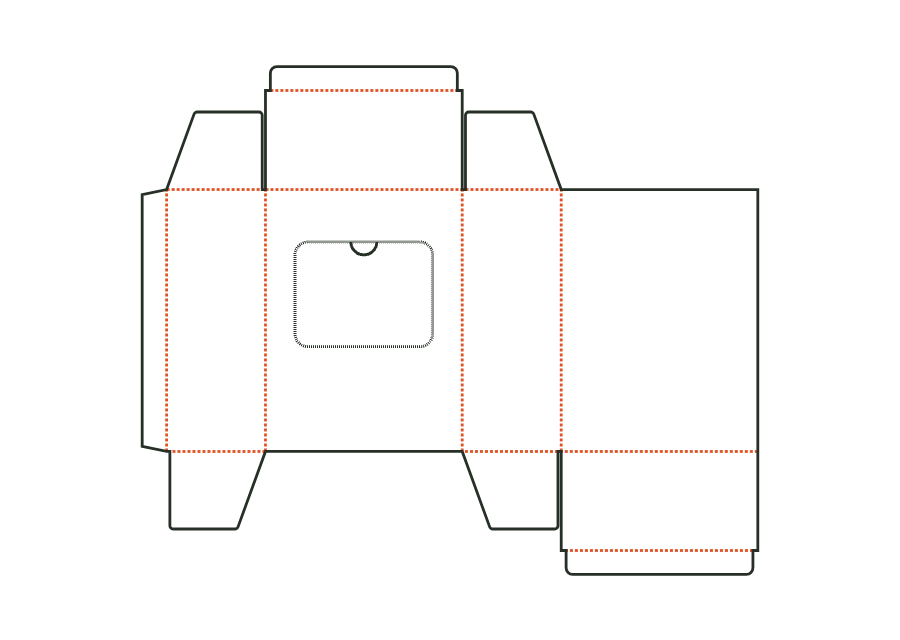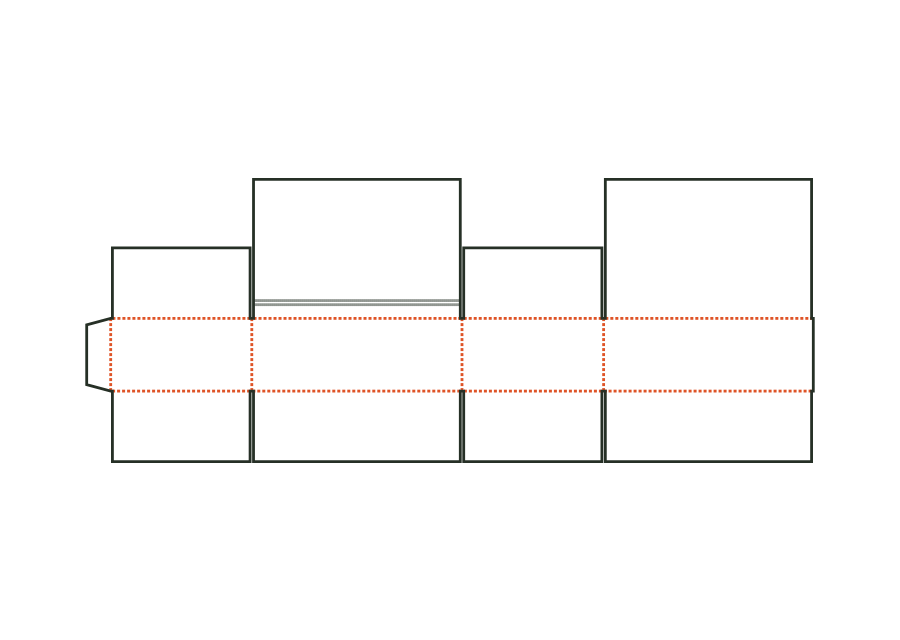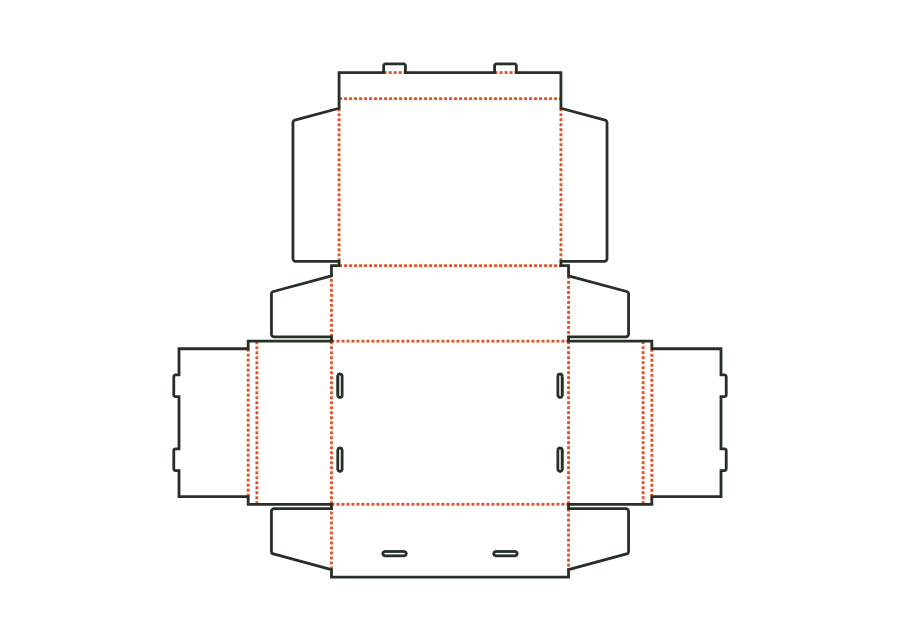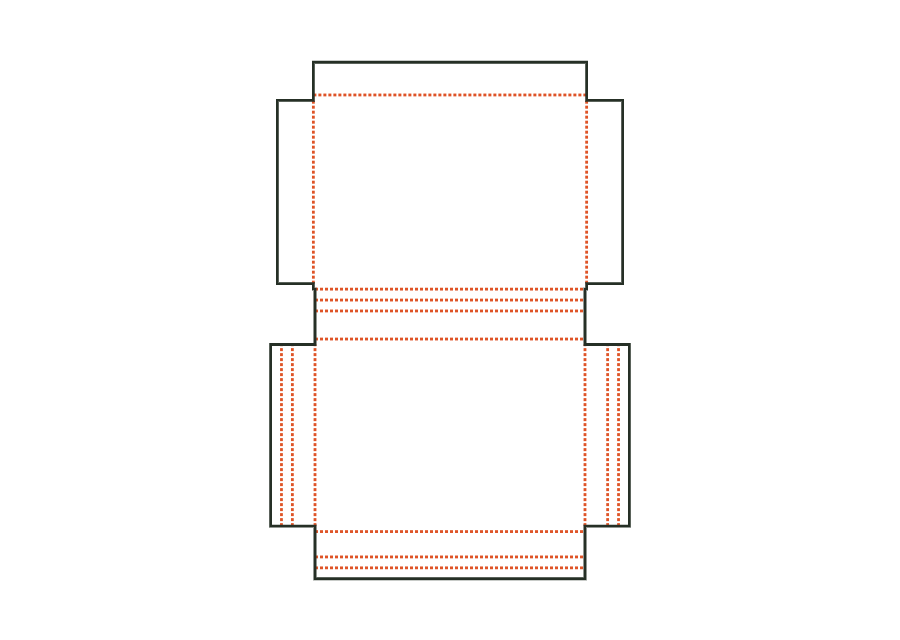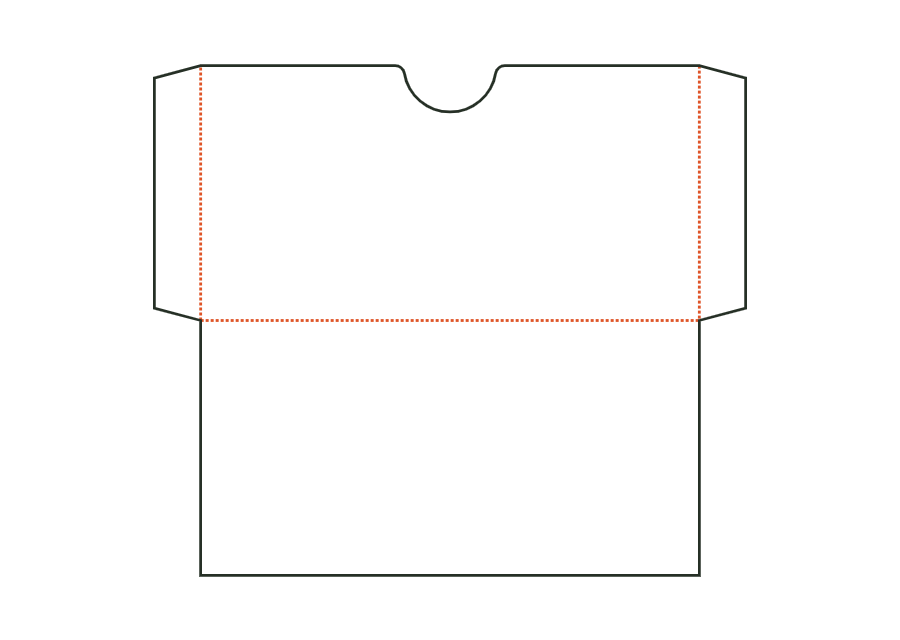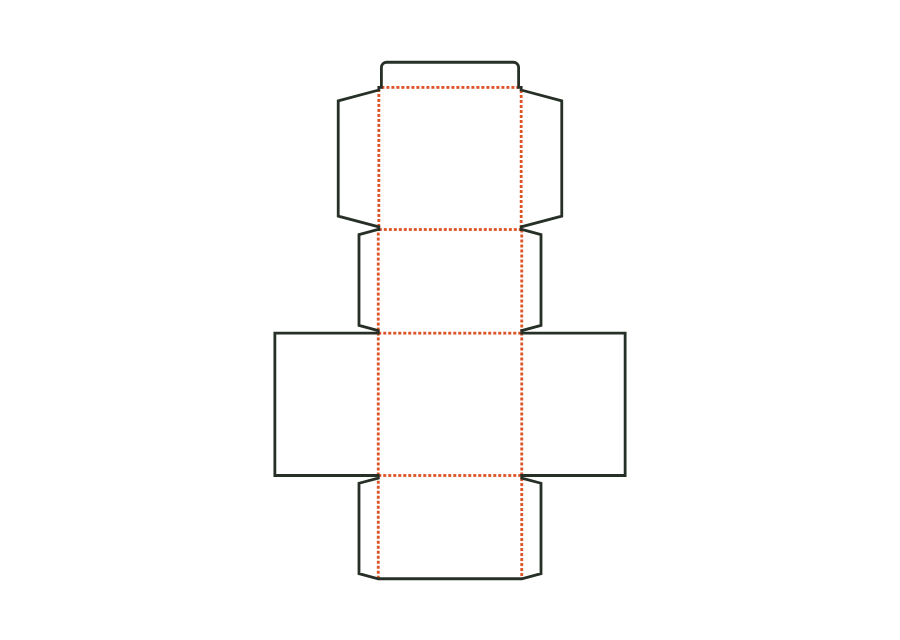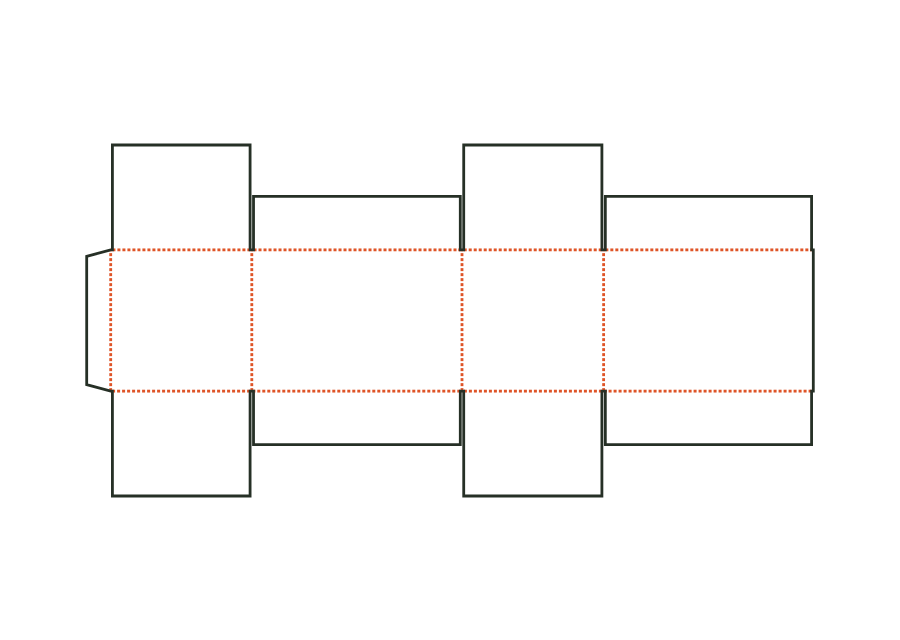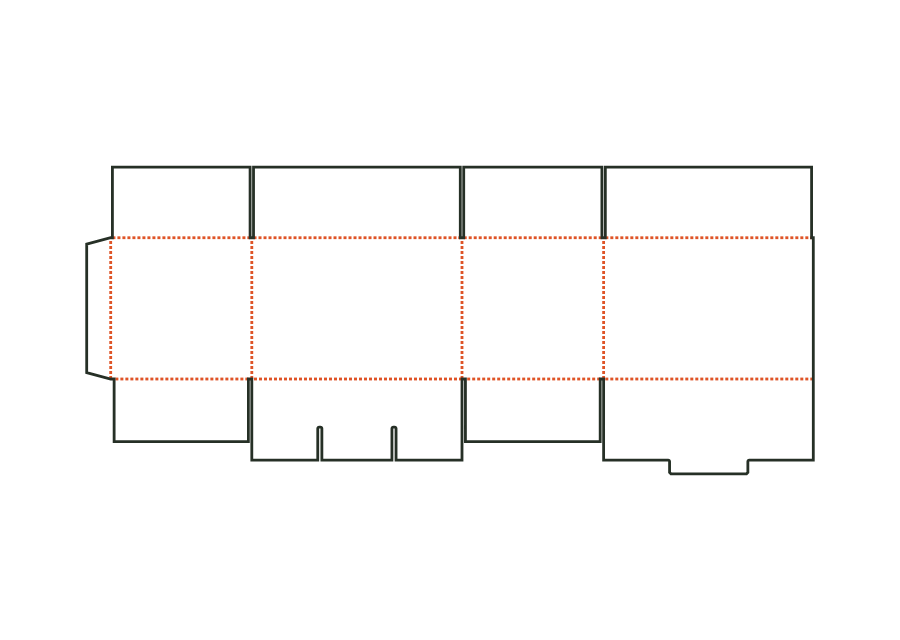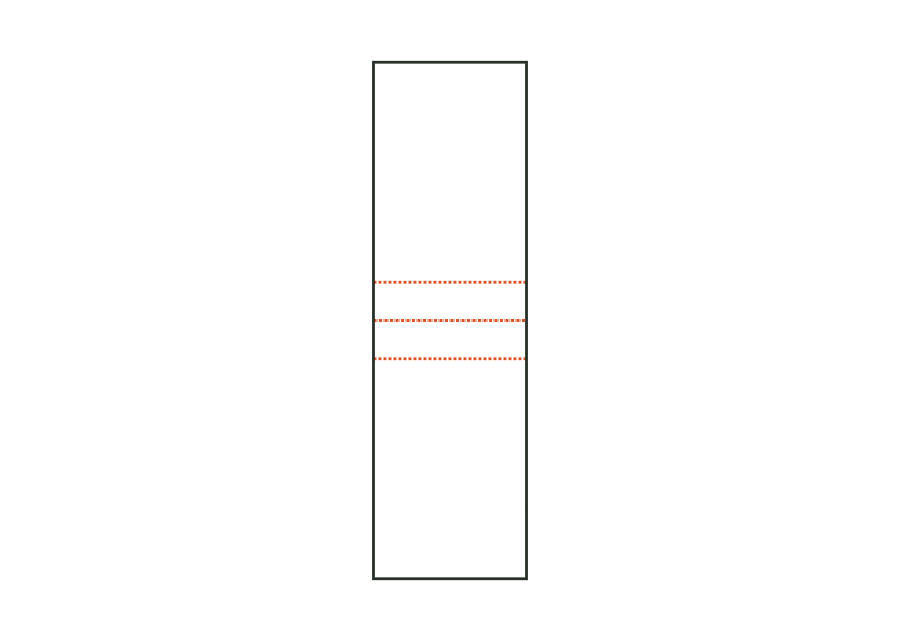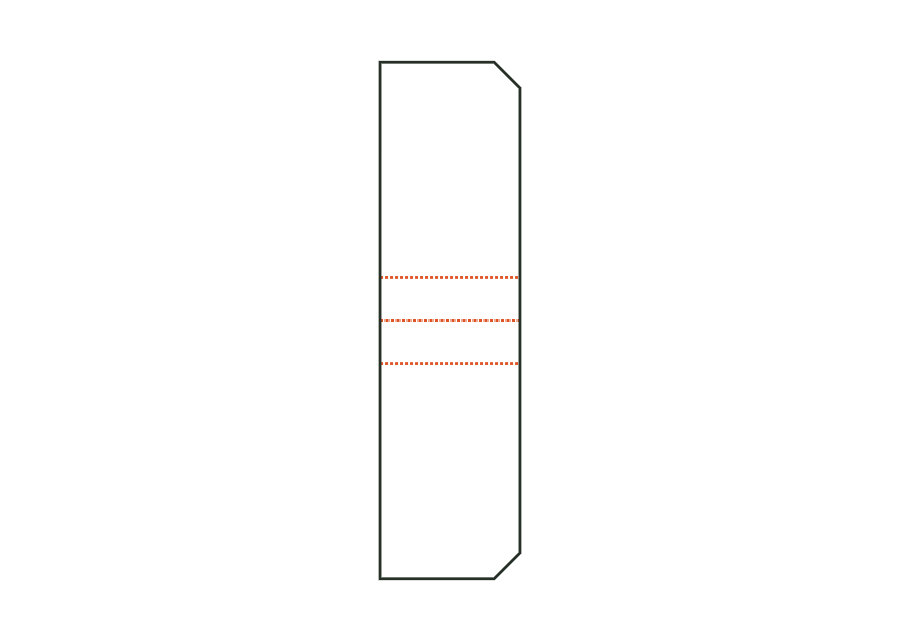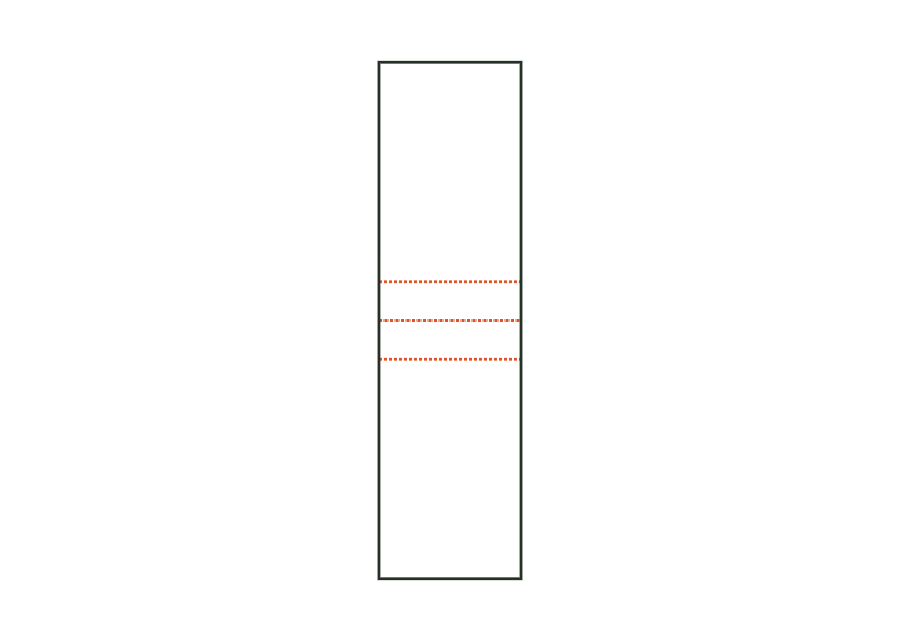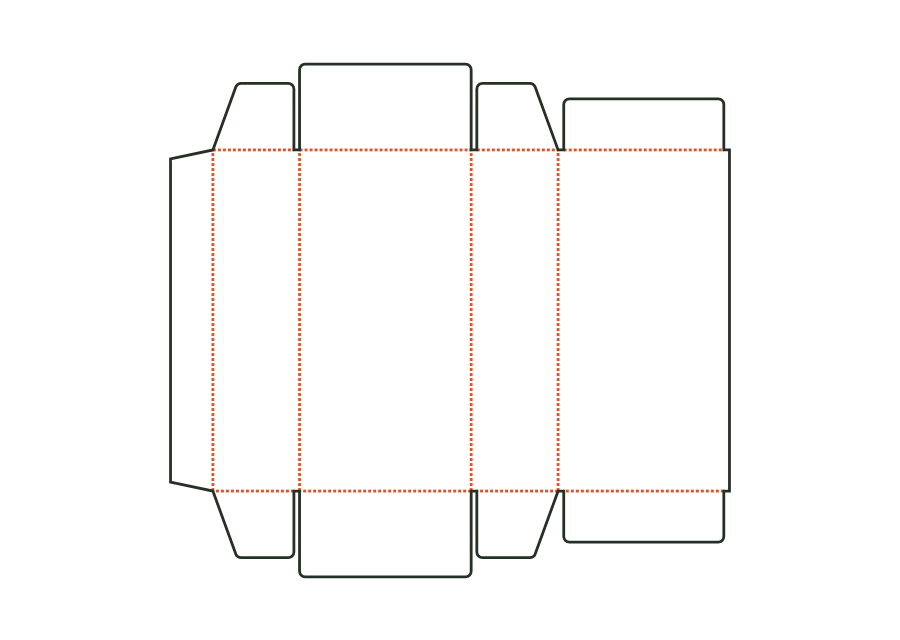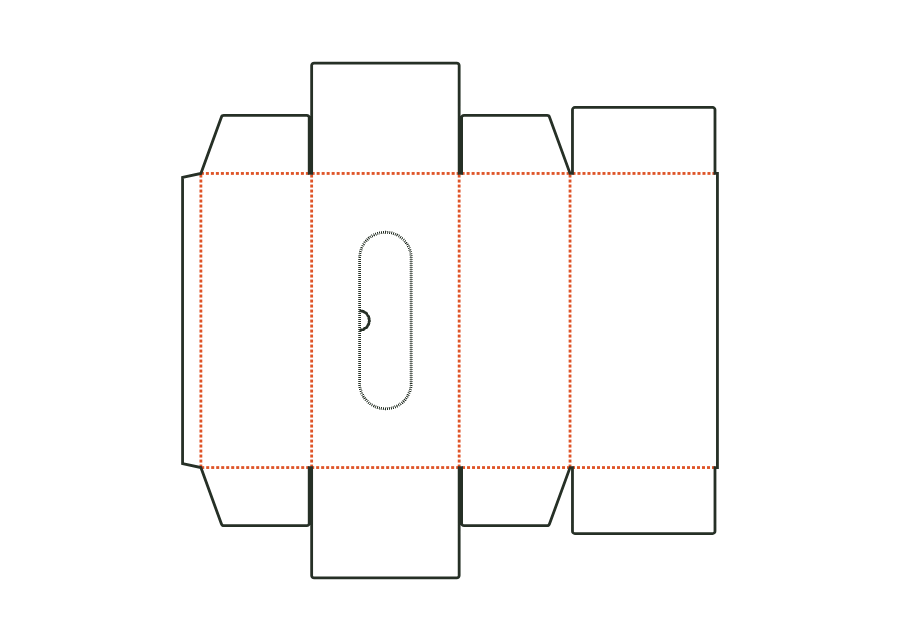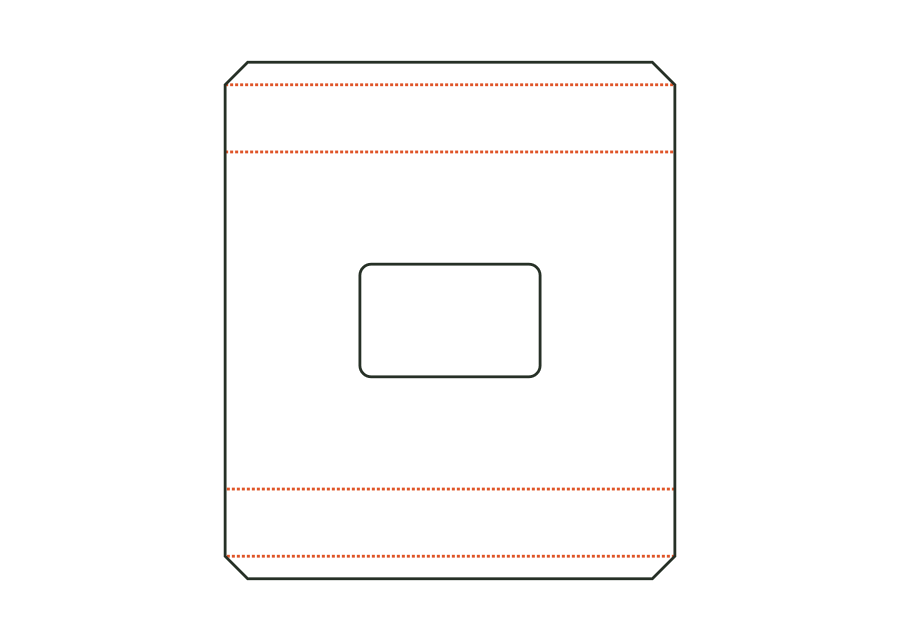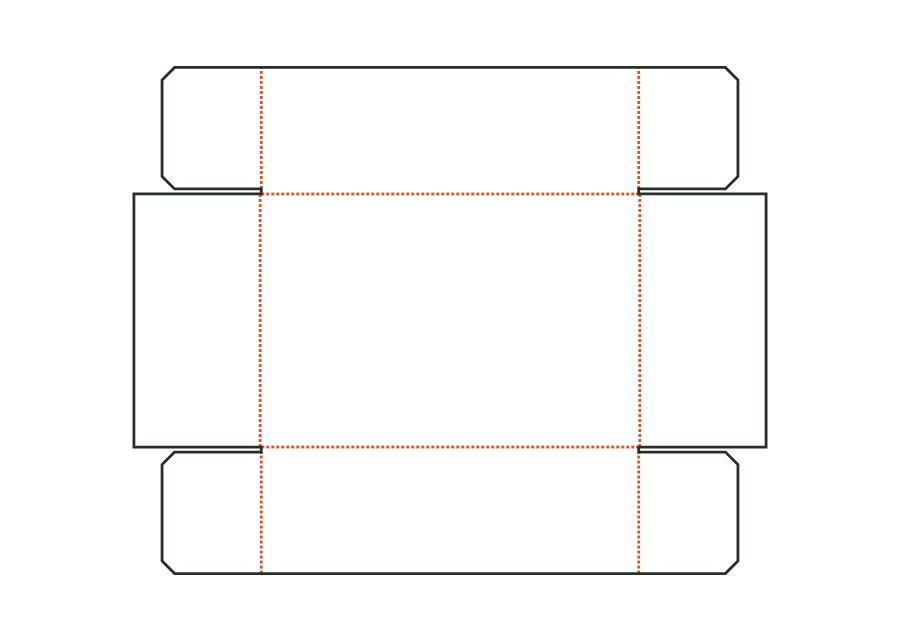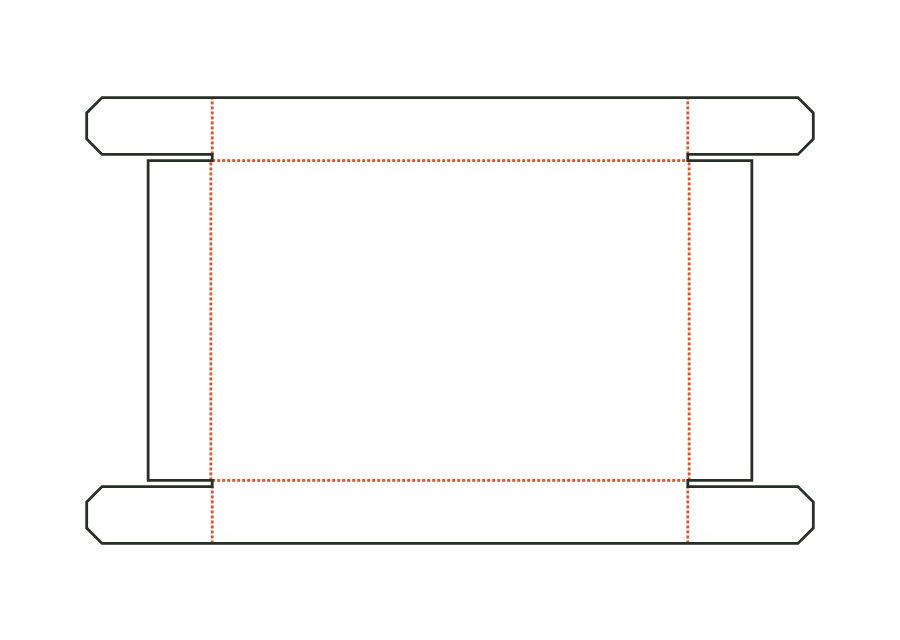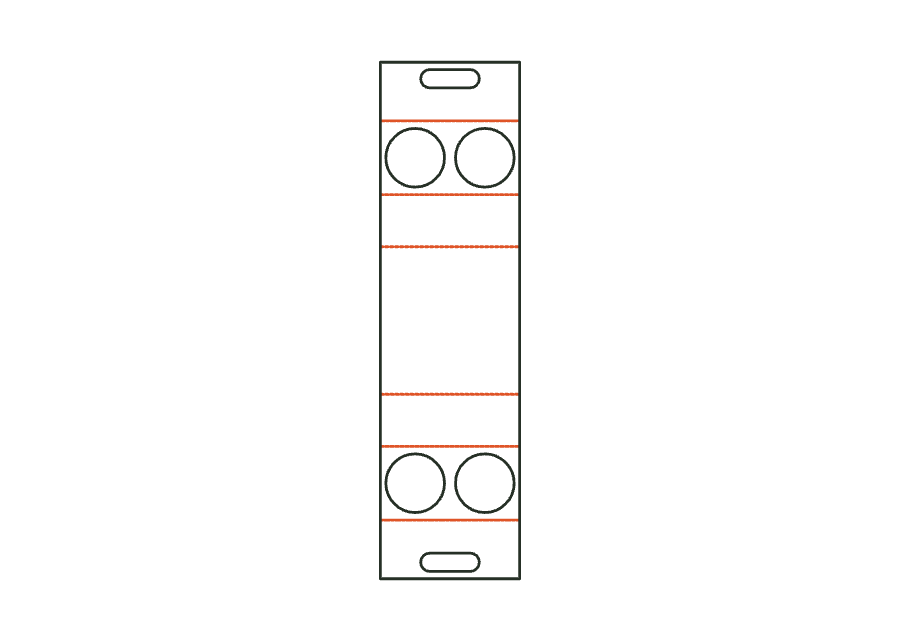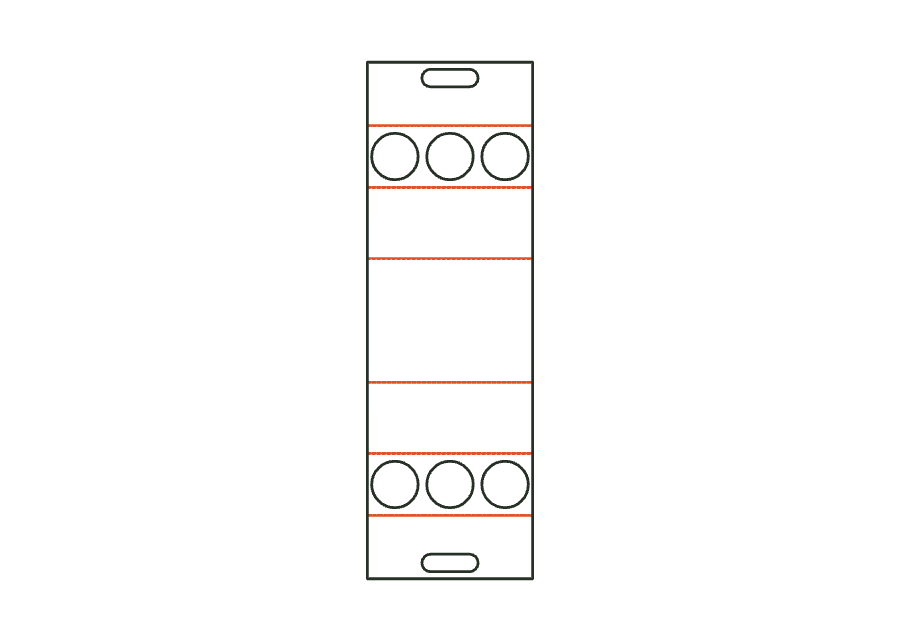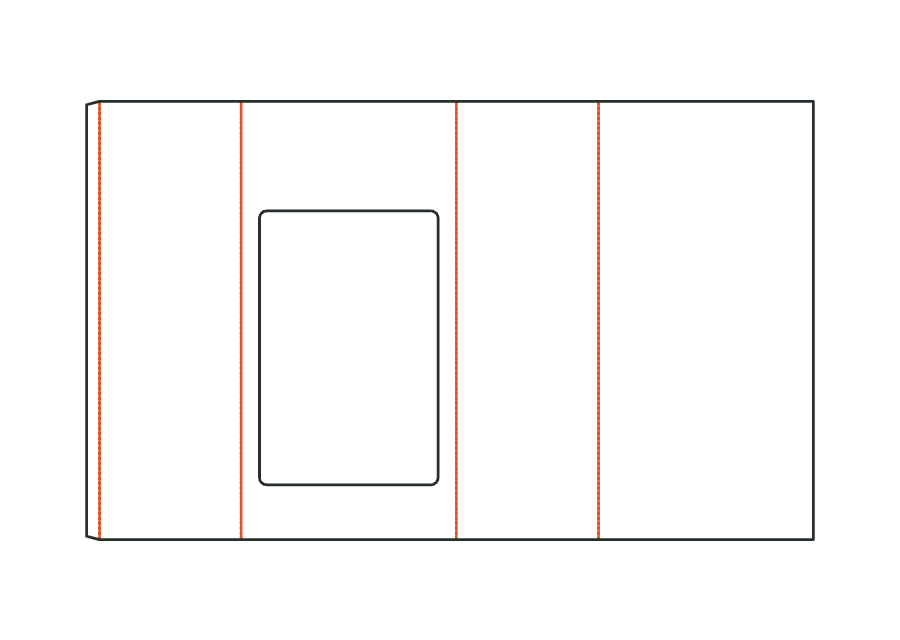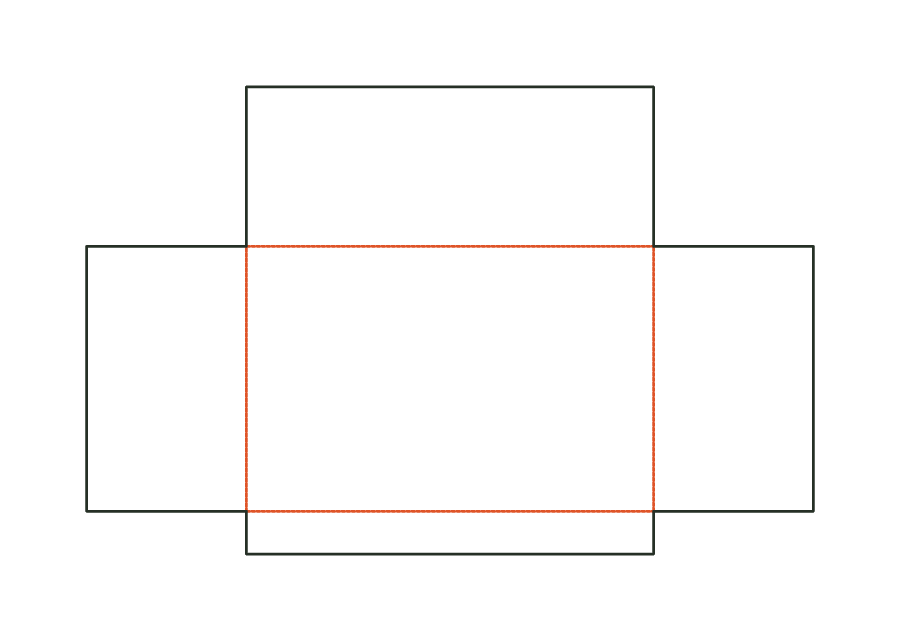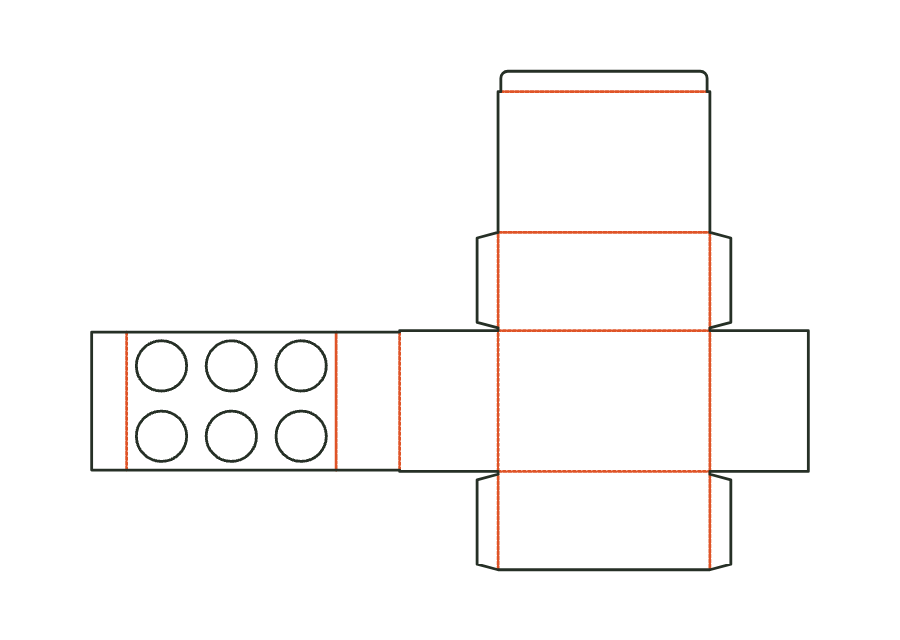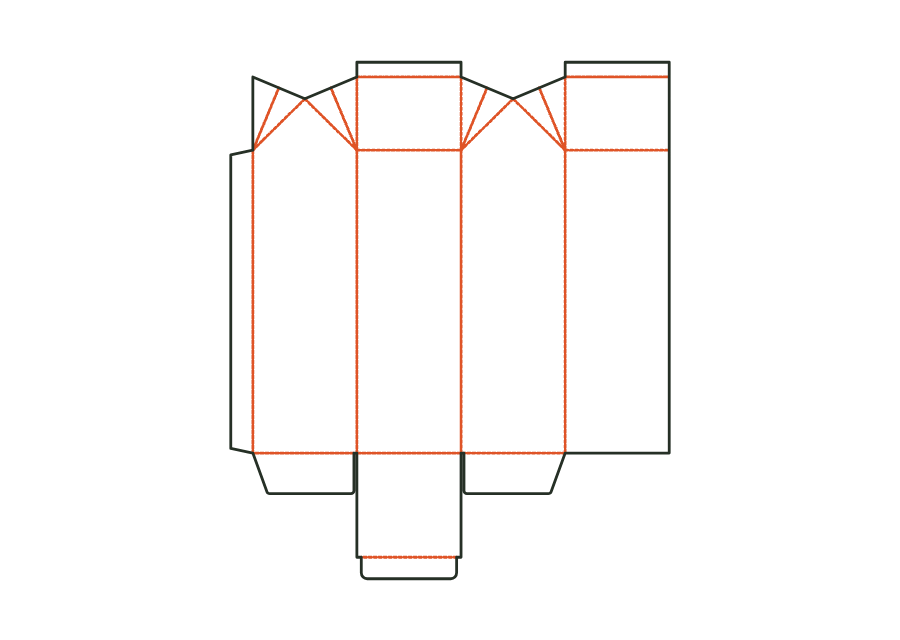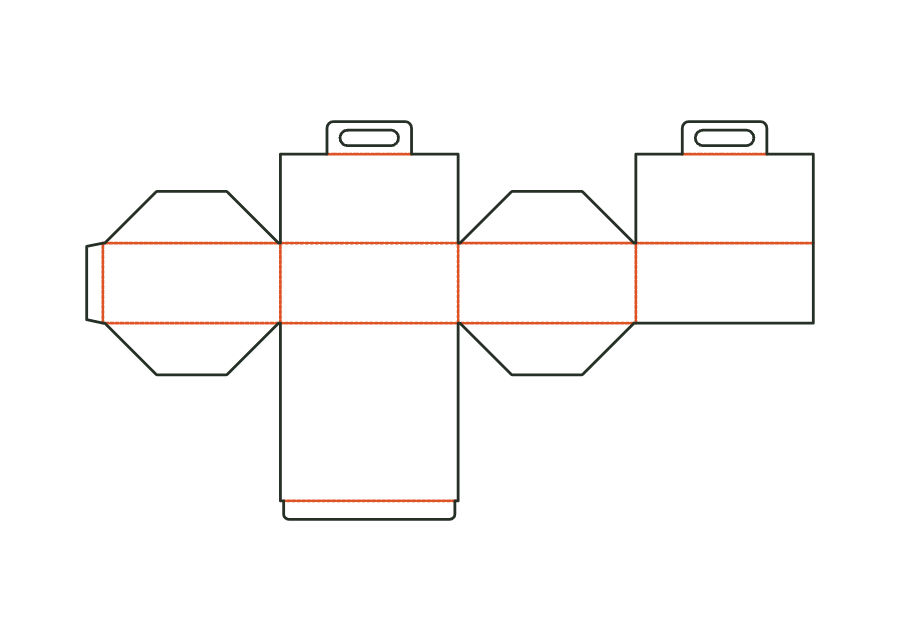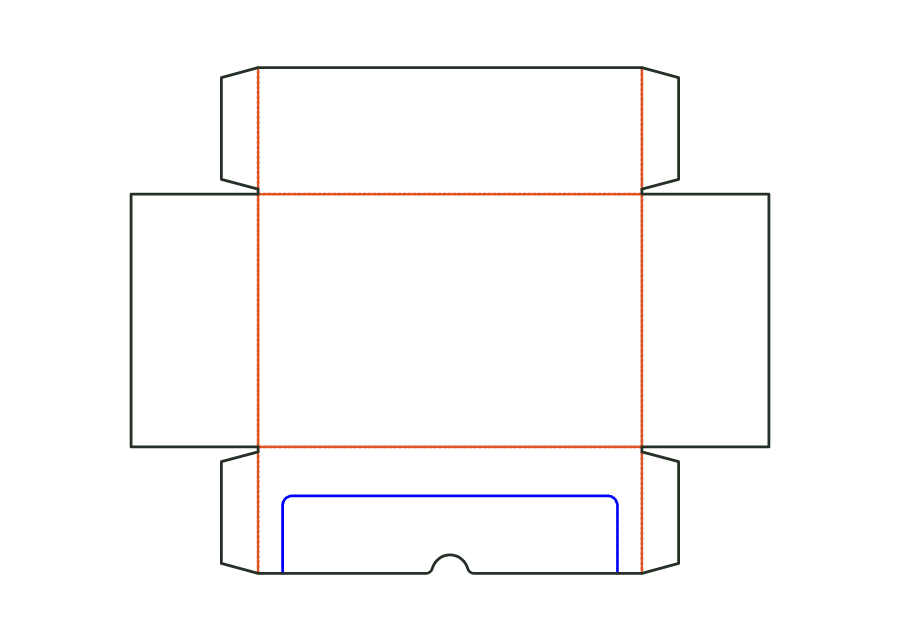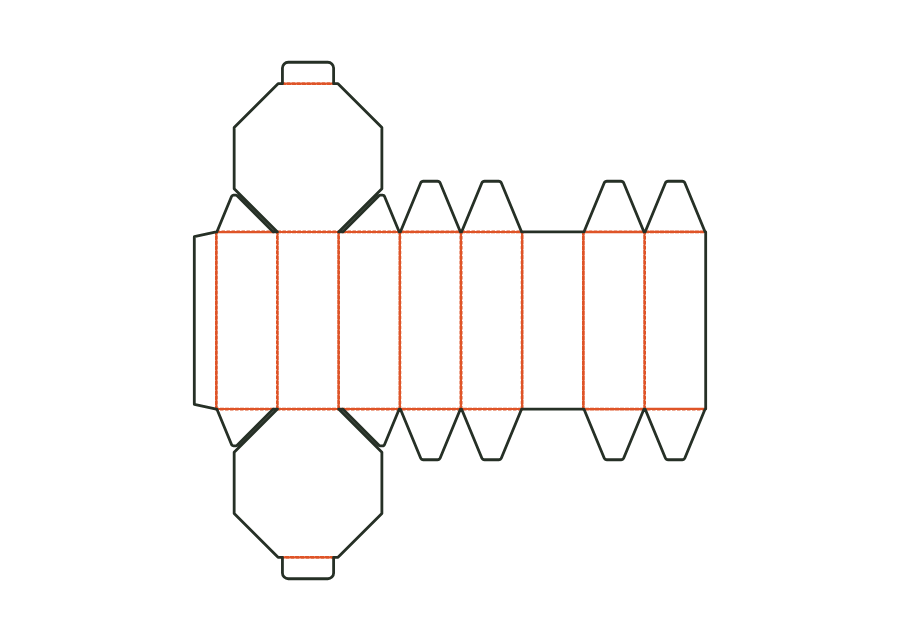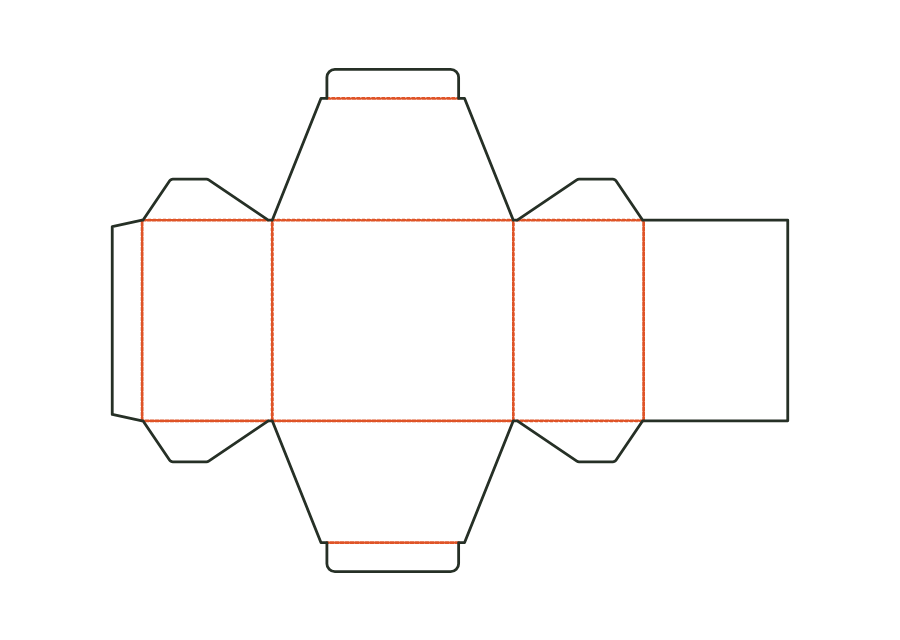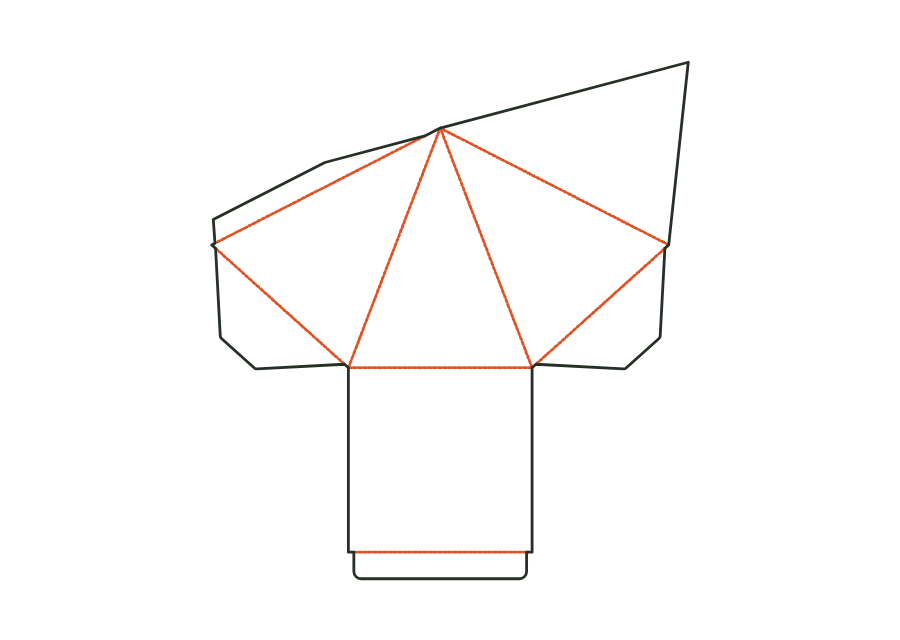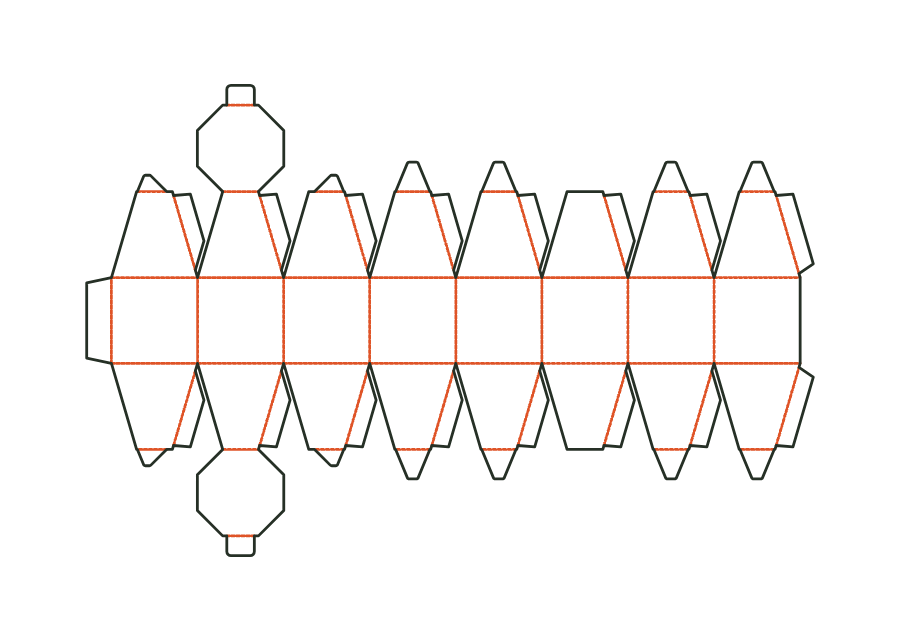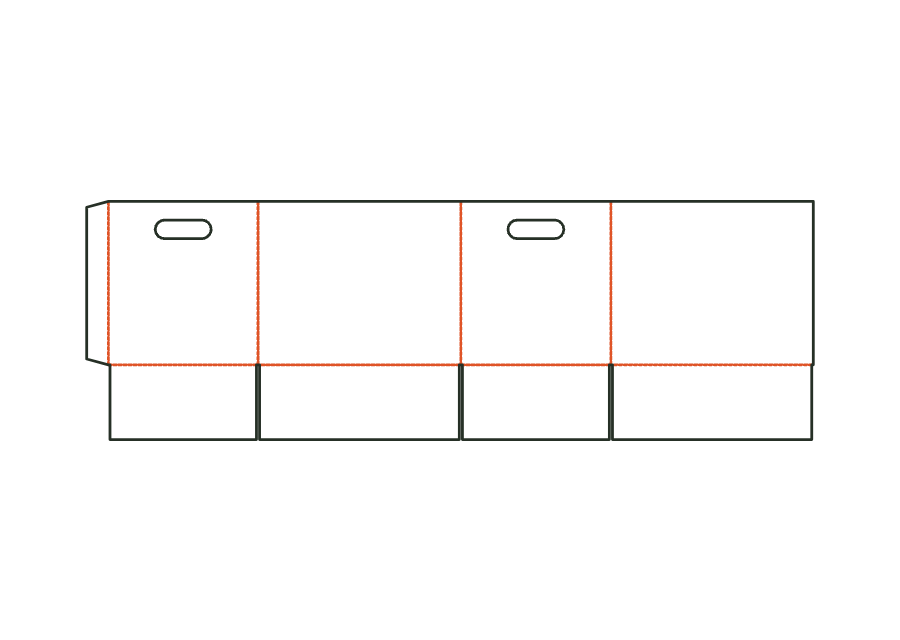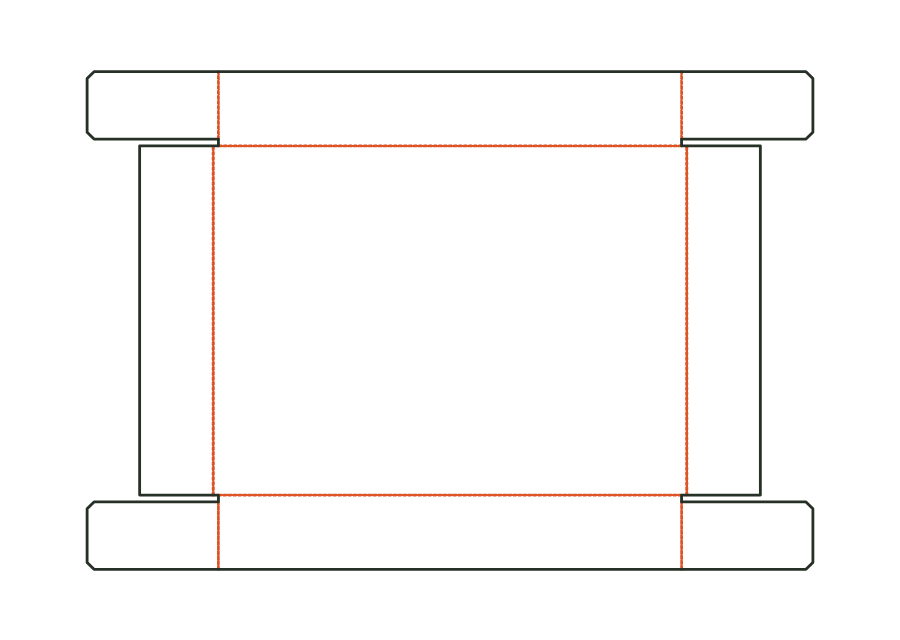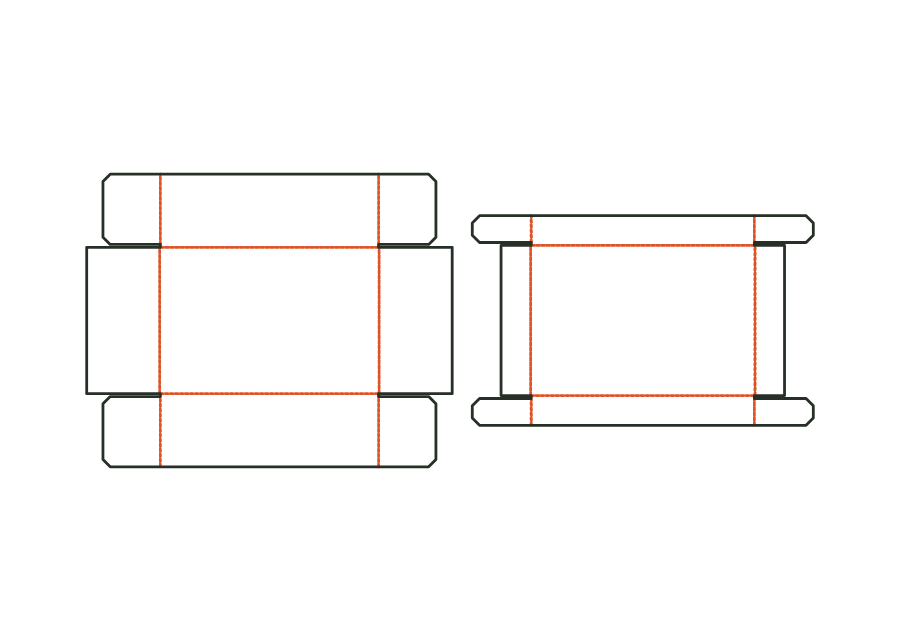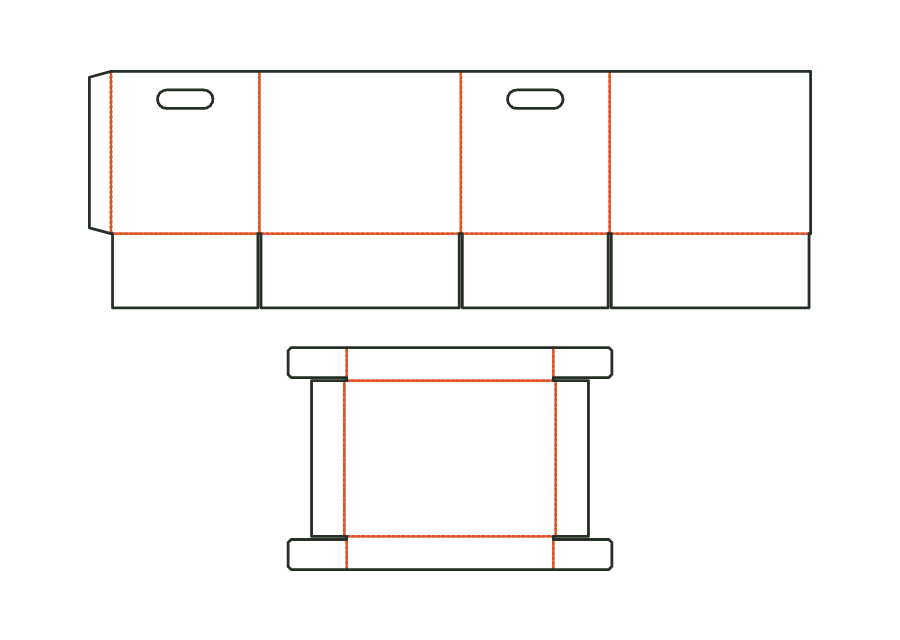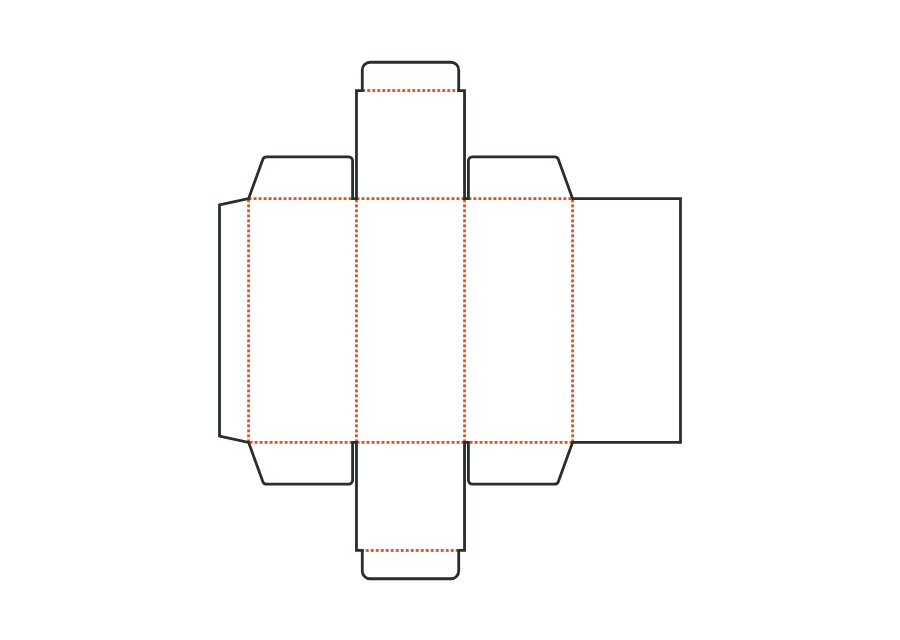
Straight tuck-end box
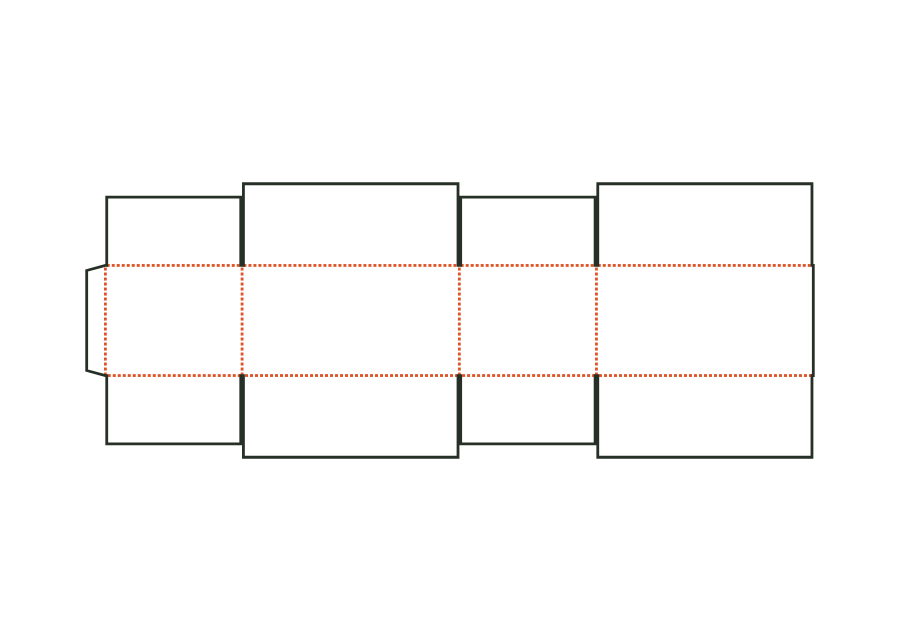
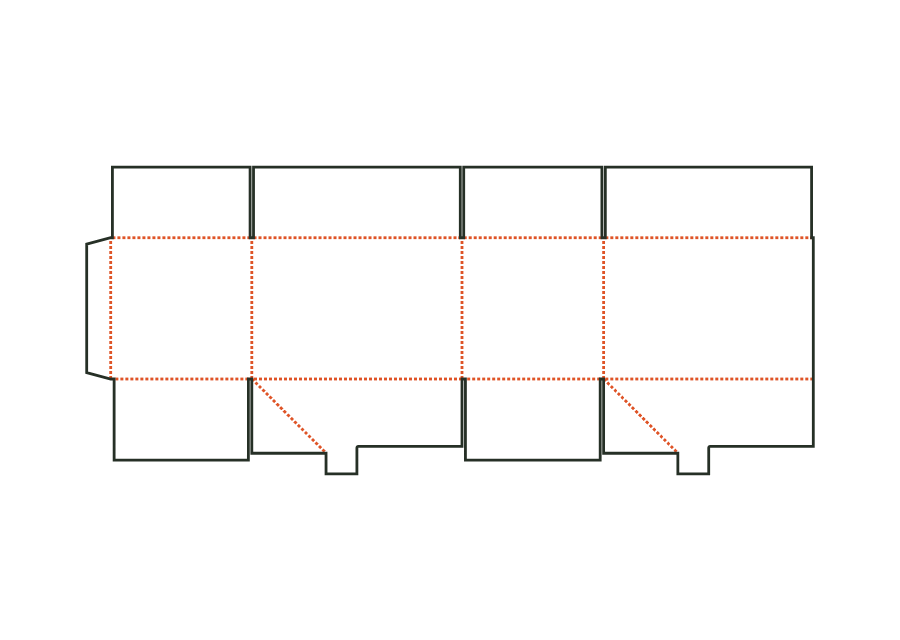
Blank, creases and flaps are calculated from inside dimensions. The results are artwork PDF, production dieline and production sheet for the printer.
carton.tuckend.straightView template JetDieline
JETDIELINE / Templates
Find the right shape for your product. Compare constructions, closures and dimension references — from folding cartons to gift packaging made up of several components.
Individual components are shown separately. Different sizes and stored template versions are not additional packaging shapes.
 corrugated.mailer
Blank, creases and flaps are calculated from inside dimensions. The results are artwork PDF, production dieline and production sheet for the printer.
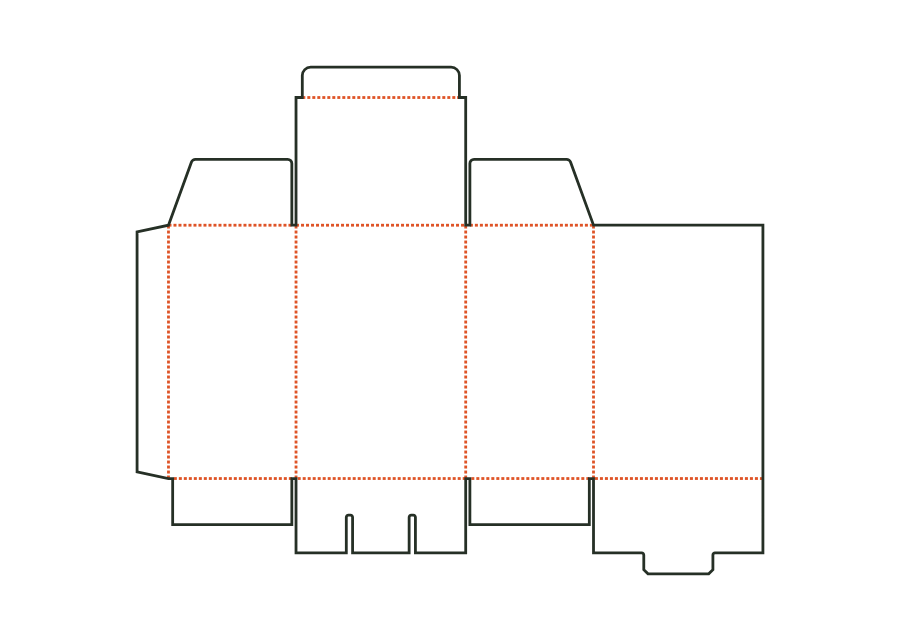
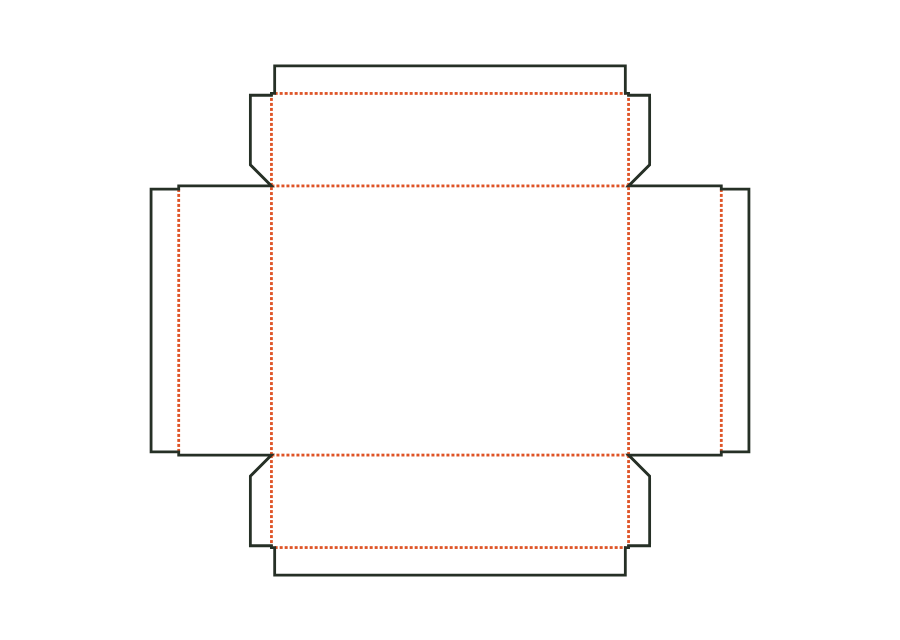
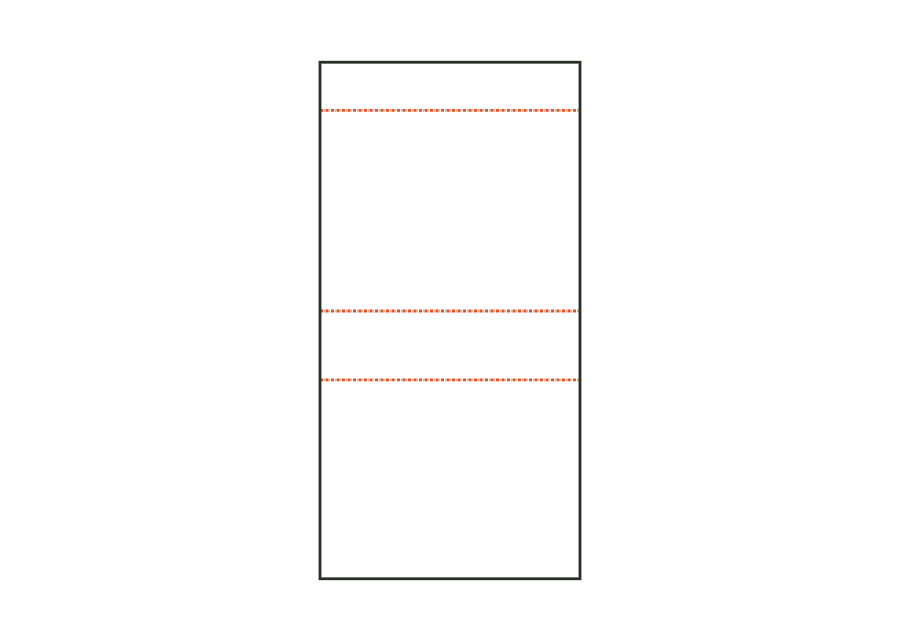
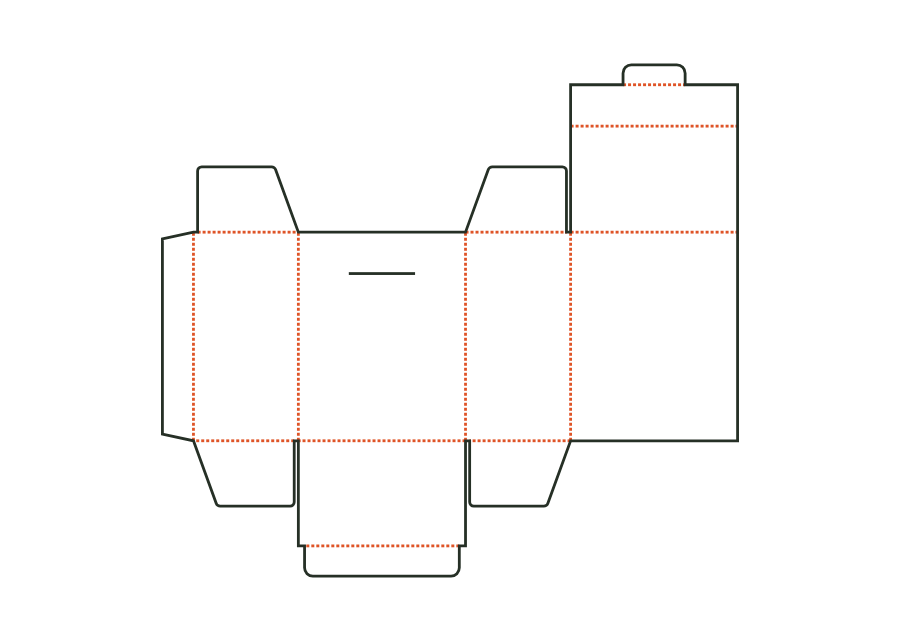
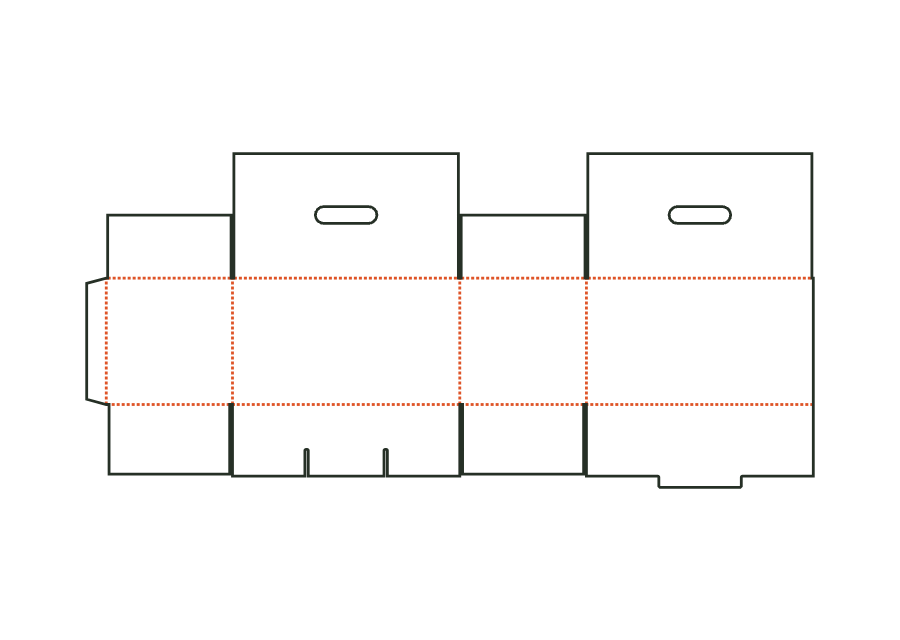
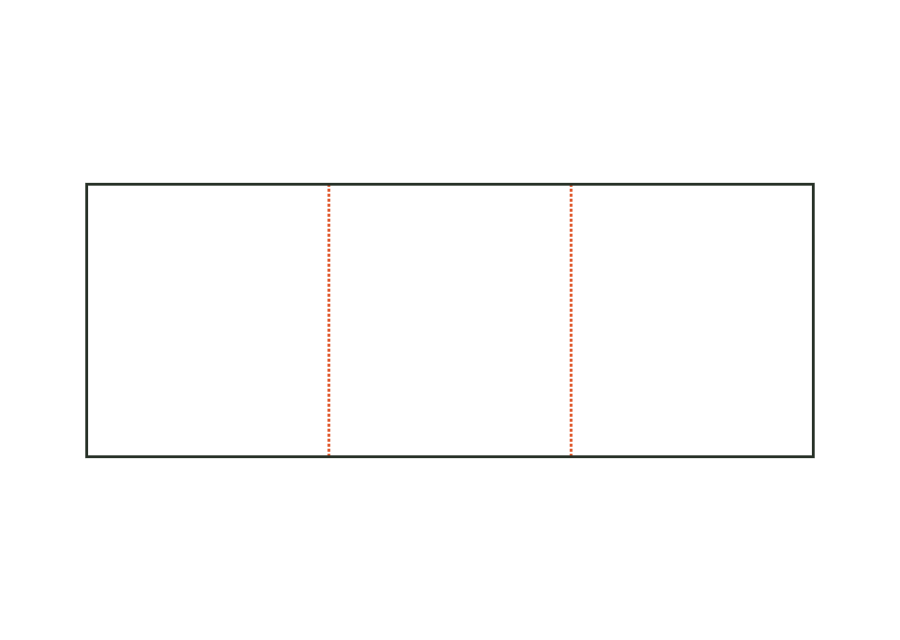
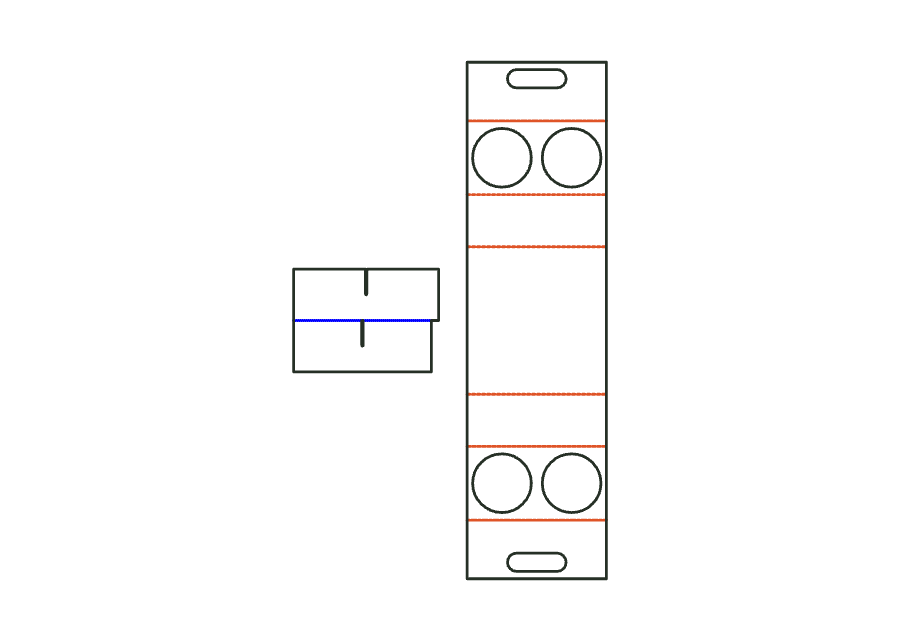
carton.tuckend.straightView templateThe top tuck flap sits on the front, the bottom one on the back. The reverse tuck-end carton calculates its walls, dust flaps and closures from the inside dimension. The dieline shown comes from version 3 with the hanging hole disabled; artwork, production dieline and production sheet can be exported together in the technical core.
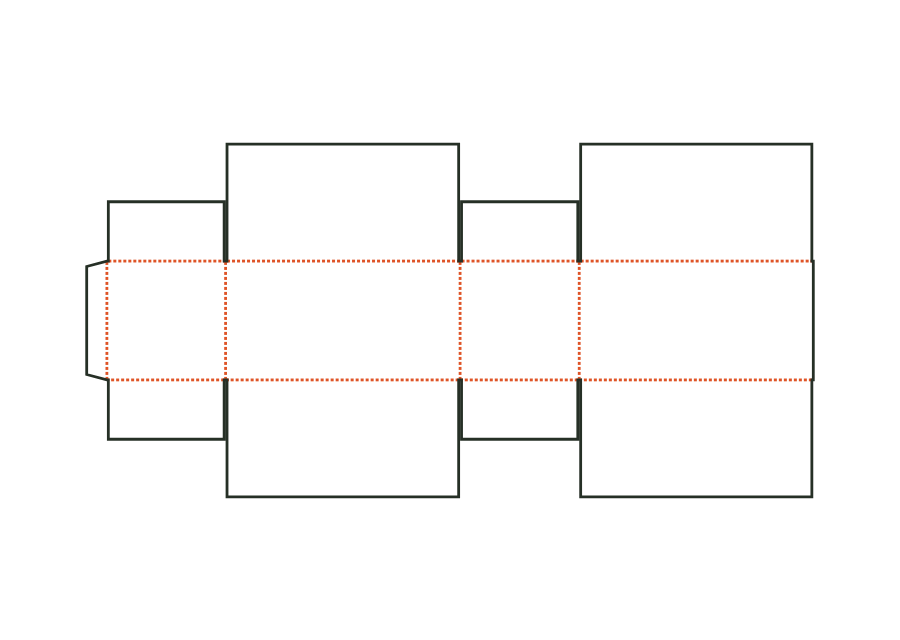
carton.tuckend.reverseView templateThe regular slotted container combines four walls, a glue flap and four flaps each at top and bottom. Outer flaps meet in the middle; the reference is similar to FEFCO 0201.
corrugated.rscView templateShipping box with tuck lid and dust flaps made from E flute or microflute. Inside printing, double walls and size series are part of the same construction.
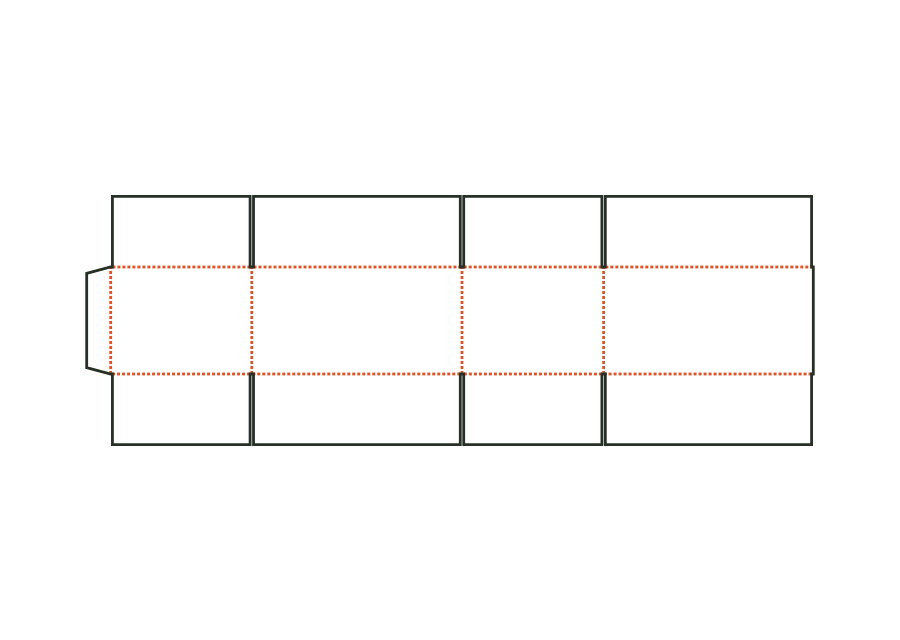
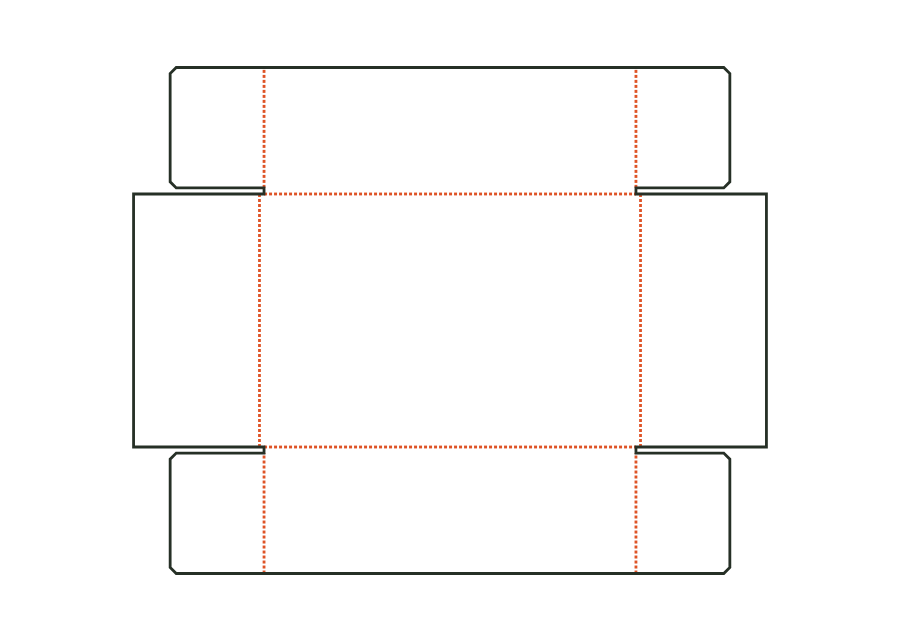
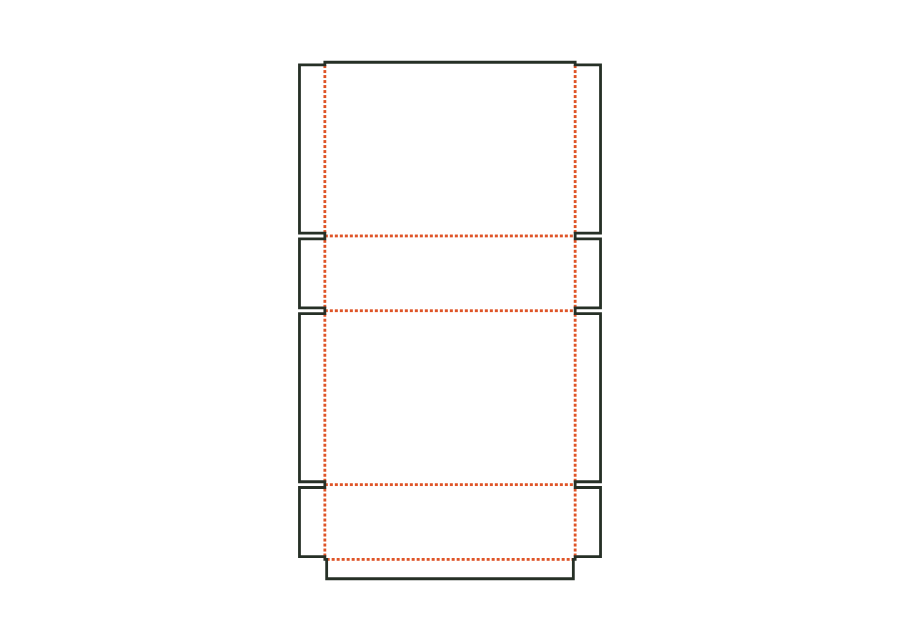
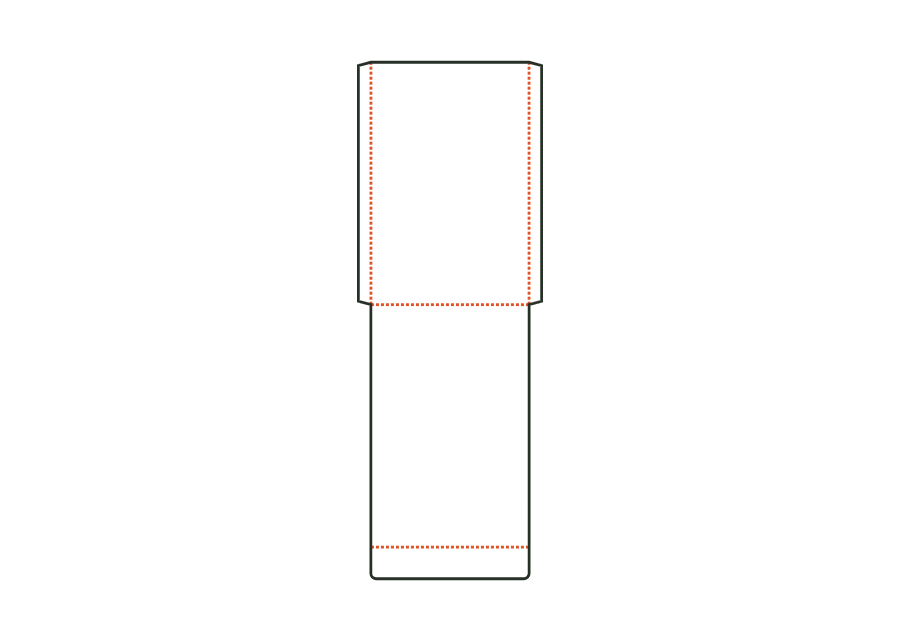
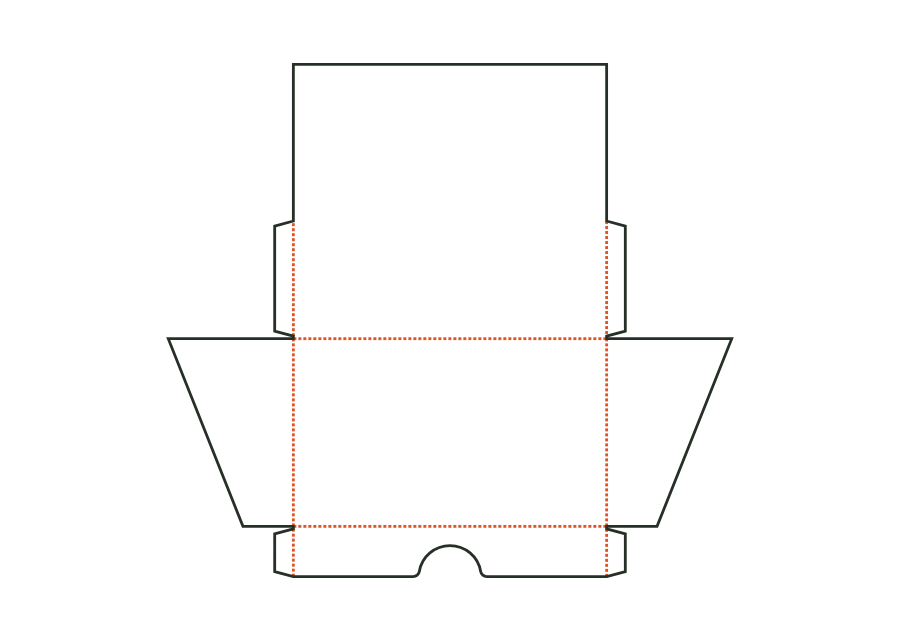
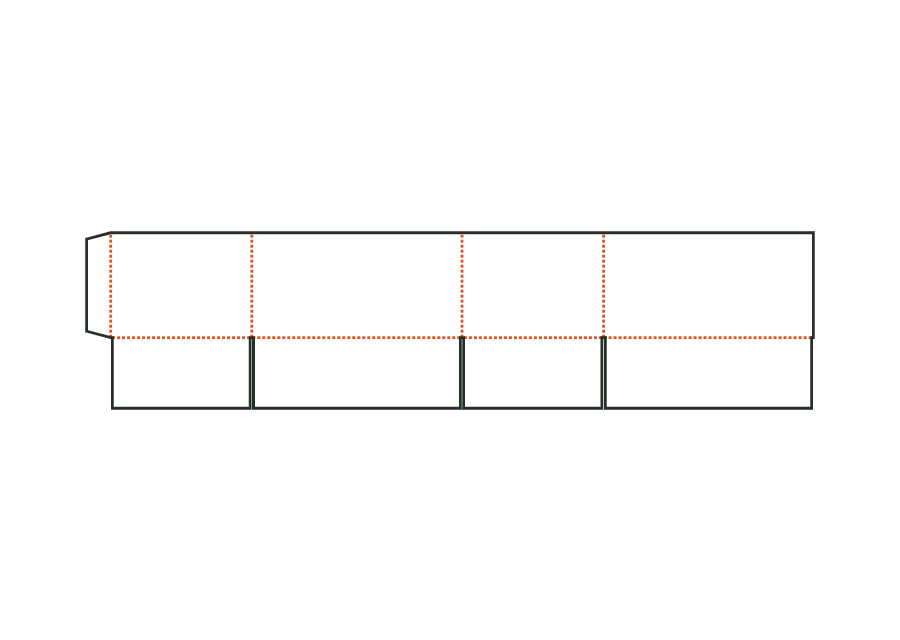
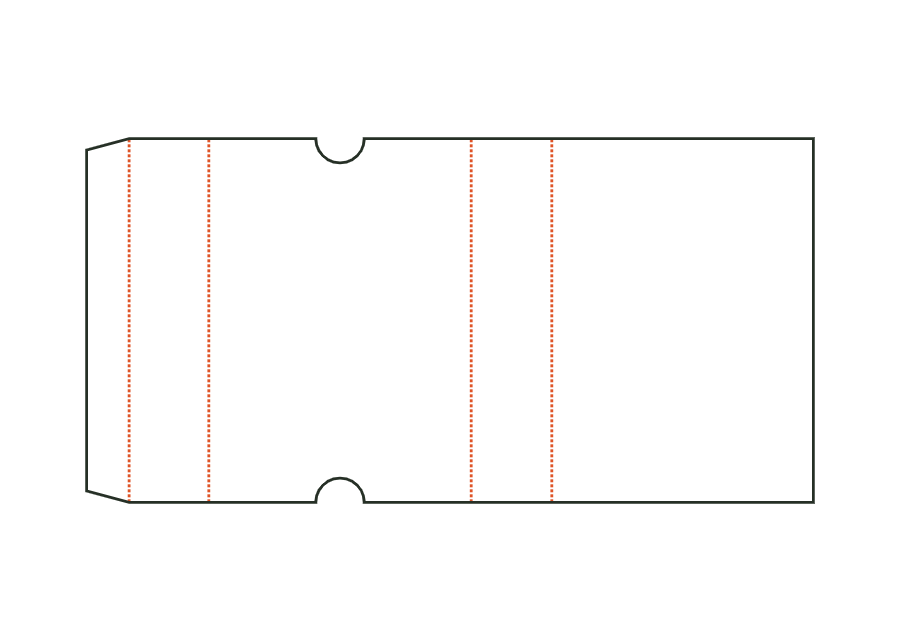
corrugated.mailerView templateThe sleeve surrounds a product with four walls and remains open at both ends. Length and width describe the cross-section; height describes the sleeve length. The dieline shows version 1 with finger notches on the front. Material thickness, glue flap and notch position remain part of the calculation rather than simple scaling.
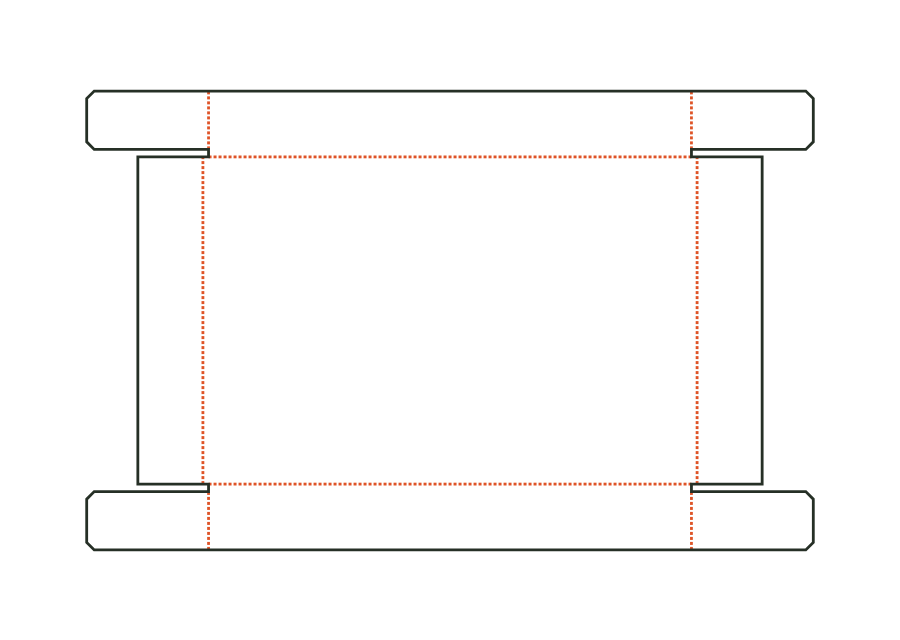
carton.sleeveView templateAn open corrugated tray with double end walls and interlocking corners. The blank is erected without adhesive; this page shows the custom V2 construction with B flute.
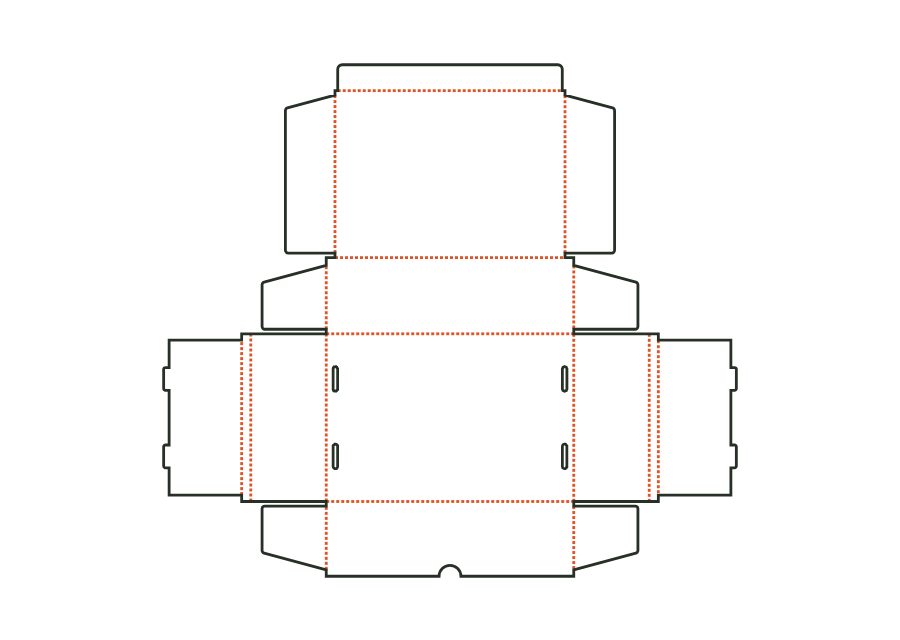
corrugated.trayView templateThe pre-glued crash-lock bottom closes when the body is erected. Dust flaps and a tuck flap close the folding carton at the top; bottom gluing belongs to the production workflow.
carton.crashlockView templateThe snap-lock bottom closes with four interlocking flaps. Two side flaps sit inside; a nose on the back tucks under the front flap's tongue. Version 1 combines this bottom with a tuck lid. The calculation example uses folding carton board 400 g/m² and shows the flat dieline with creases and bottom cuts.
carton.snaplockView templateBase and lid form a two-piece corrugated construction with glued corner flaps. Both components have their own dieline; the lid is derived from the base's outside dimension and clearance on each side.
corrugated.telescope.baseView templateCorrugated lift-off lid with the same construction as the base; its dimensions follow the outside dimensions of the base plus clearance per side.
corrugated.telescope.lidView templateRectangular label with selectable corner radius; dieline with bleed and safe zone from the production profile.
label.rectView templateWraparound label for cylindrical bottles and cans: length from circumference (or diameter) plus overlap; the front viewing area and overlap are marked as annotation lines.
label.wrapView templateNeck label for a conical bottle neck as a cone development from top and bottom diameters and height; as a closed ring with overlap or a partial label.
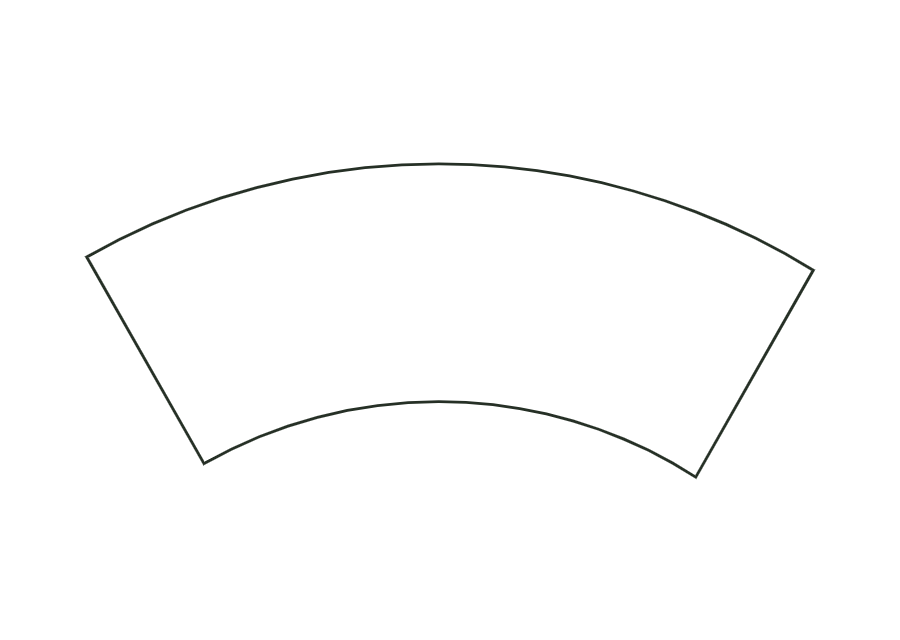
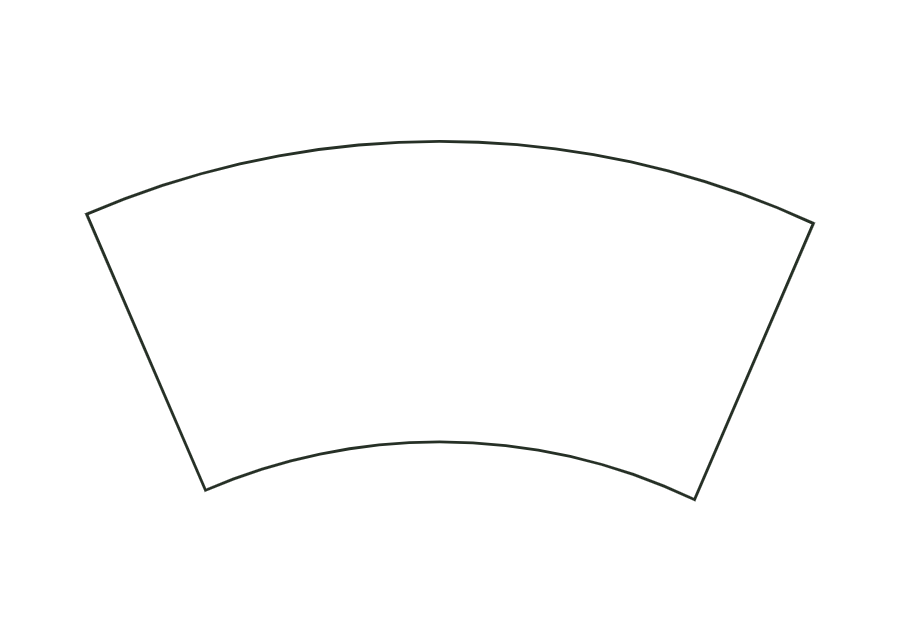
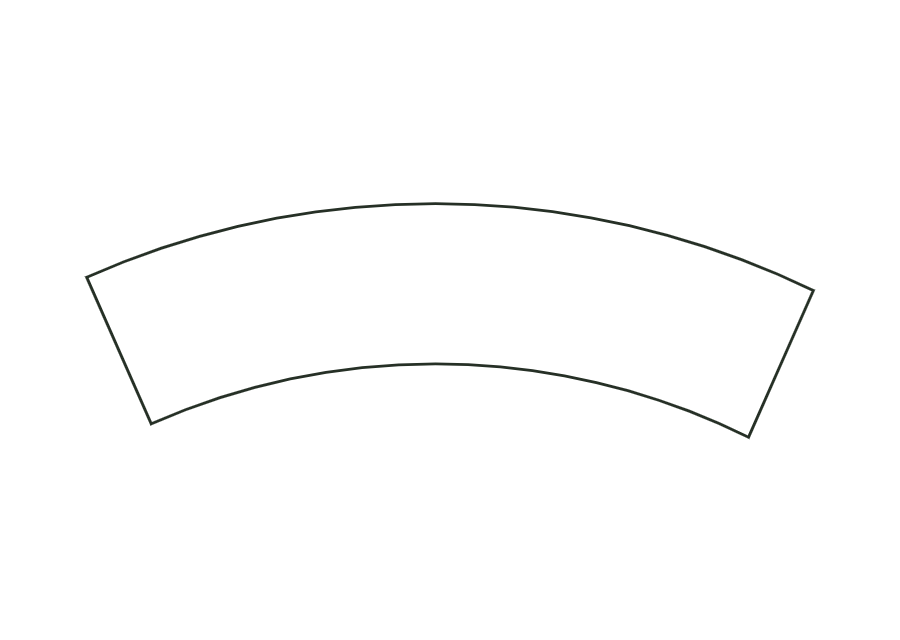
label.neckView templateWraparound label for tapered cups and cans as a cone blank (annular sector) with a glue strip of constant width.
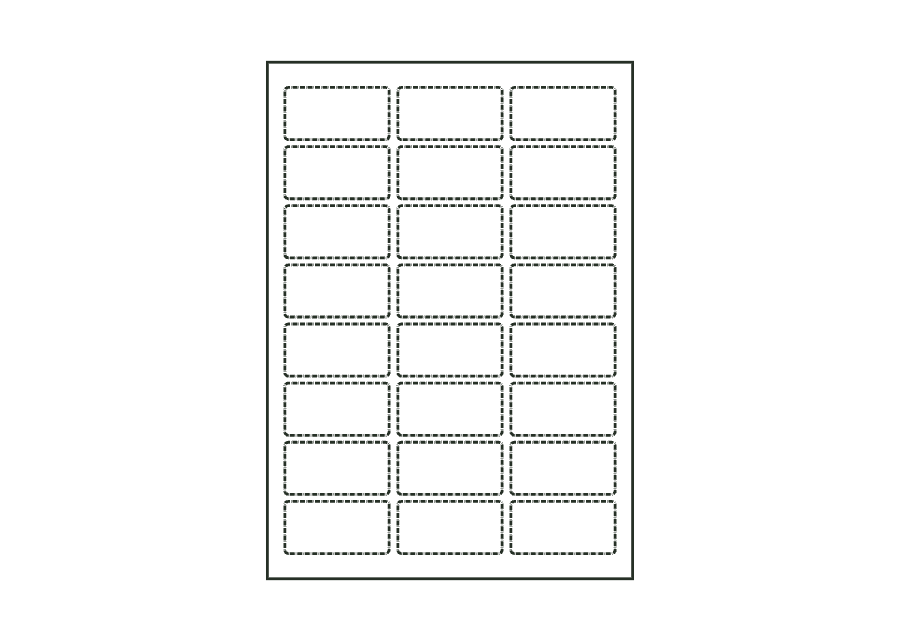
label.tapered.wrapView templateSheet with several identical labels in columns and rows; labels are kiss-cut, leaving the backing intact.
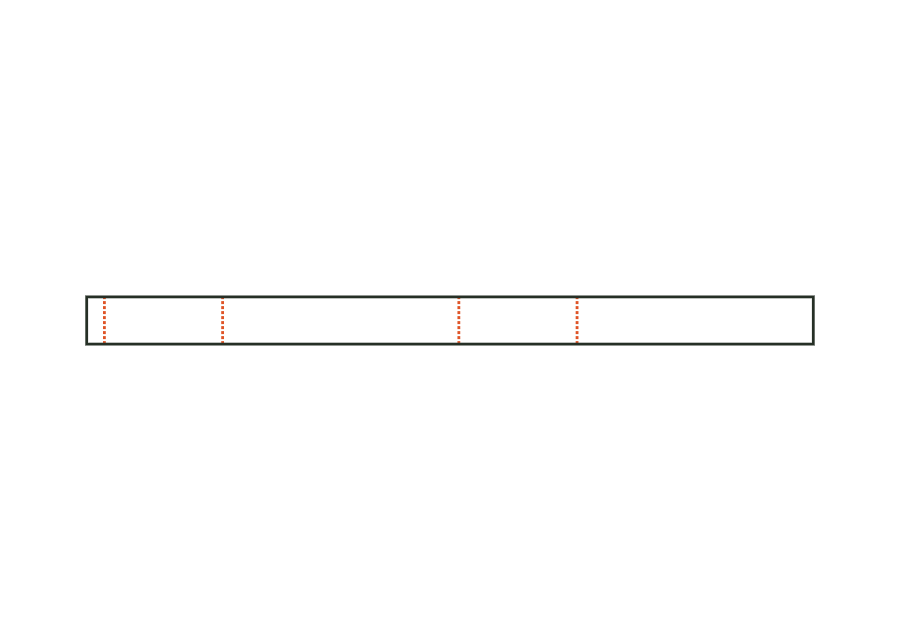
label.sheet.layoutView templatePaper wrap band around a round body or a stack: length from circumference plus ease allowance and overlap; the overlap at the beginning is the glue area.
band.wrapView templatePaper belly band around the four walls of a box, with creases at the edges and a glue flap; crease-to-crease dimensions from the box's outside dimensions plus material thickness.
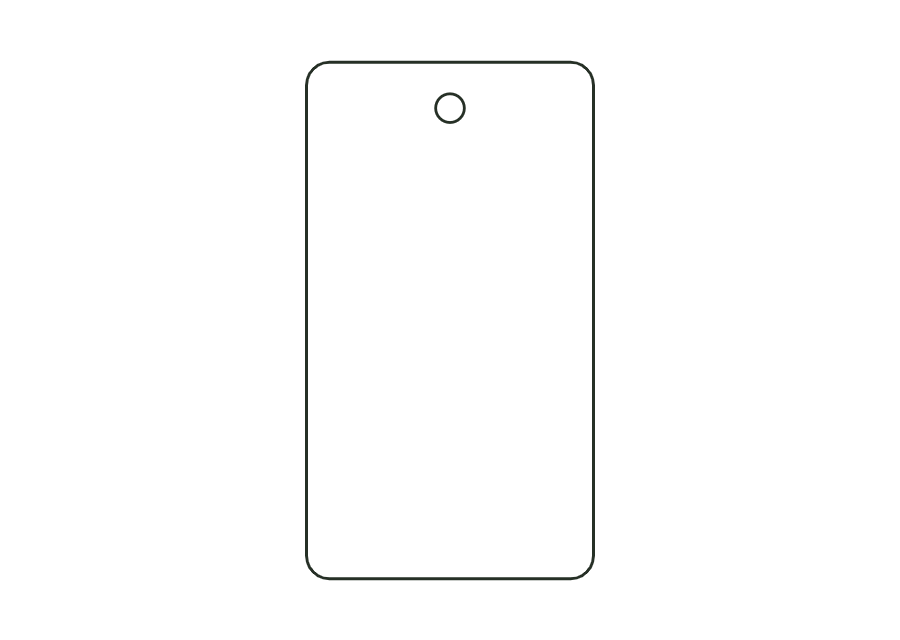
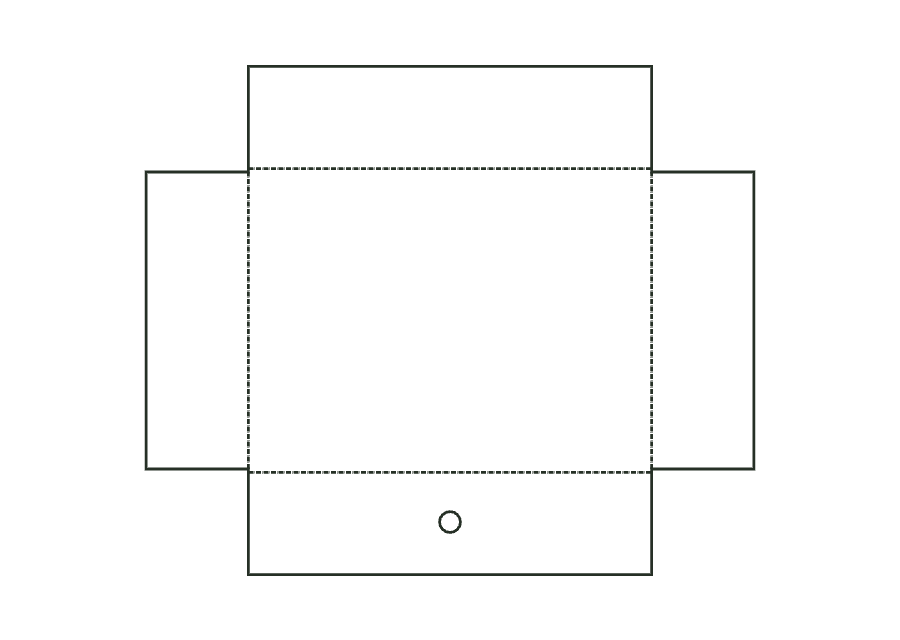
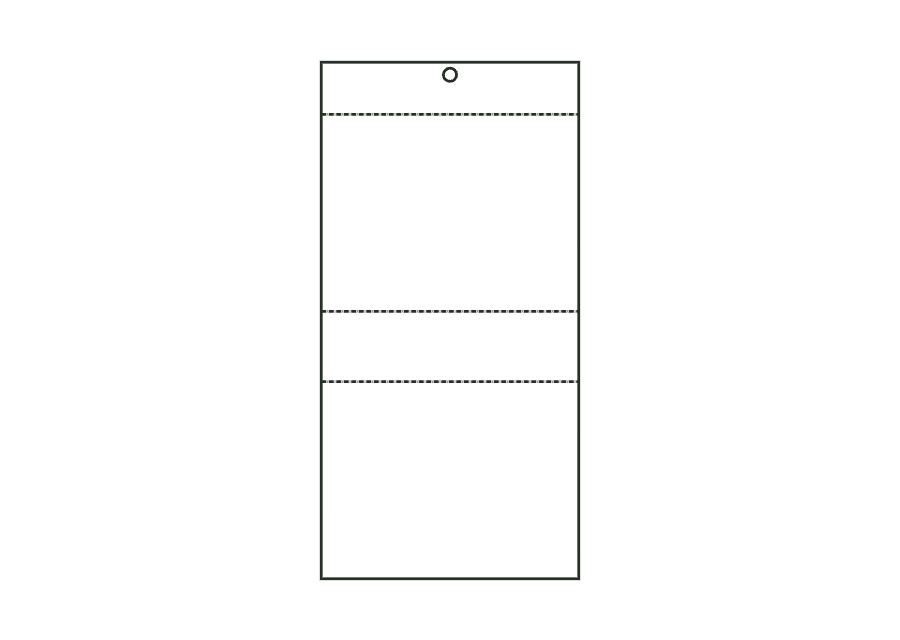
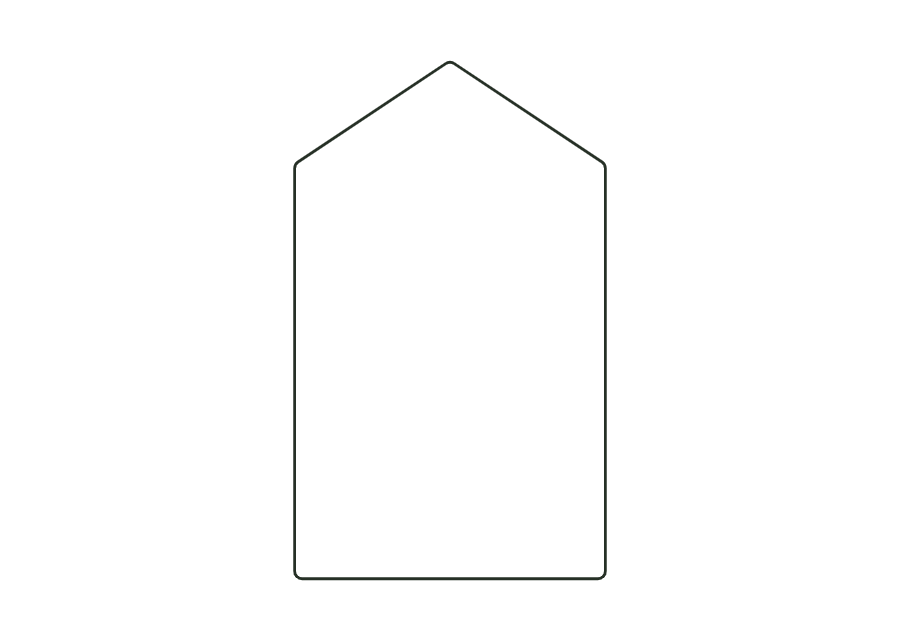
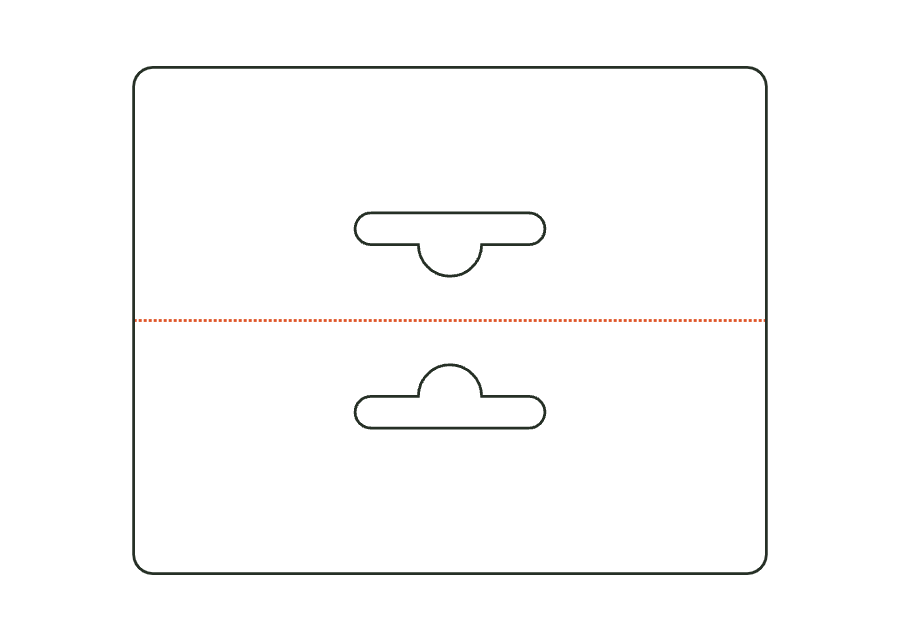
band.bellyView templateHang tag with corner radius and a round hanging hole as an internal cut.
hangtagView templateGreyboard shell for the base of a rigid box: base with four walls, V-grooves and butt-jointed corners.
rigid.lidbase.baseView templateGreyboard shell for the lid, constructed in the same way as the base; dimensions from the base outside dimensions plus clearance and paper.
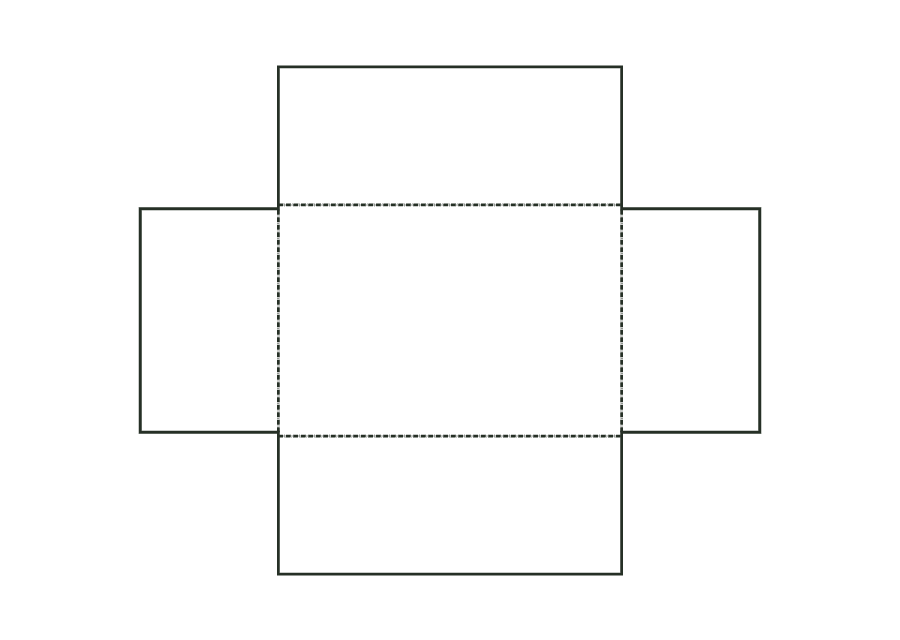
rigid.lidbase.lidView templateWrapping paper for the base: cross-shaped blank with corner tabs on the front and back walls and turn-ins over the top edge to the inside.
rigid.lidbase.base.wrapView templateWrapping paper for the lid, constructed in the same way as the base wrap.
rigid.lidbase.lid.wrapView templateGreyboard tray: tray with V-grooves and butt-jointed corners, optionally with a slot for a ribbon handle in the right end wall.
rigid.drawer.trayView templateGreyboard sleeve: strip with three V-grooves, open at both ends, with a butt joint at the lower front edge.
rigid.drawer.sleeveView templateWrapping paper for the tray: cross with corner flaps and turn-ins, optionally with a slot above the tray's slot.
rigid.drawer.tray.wrapView templateWrapping paper for the sleeve: strip with overlap at the butt joint and turn-ins at both open ends.
rigid.drawer.sleeve.wrapView templateGreyboard tray with V-grooves and butt-jointed corners, with a round magnet recess centred in the front wall.
rigid.magnetic.trayView templateWrapping paper for the tray: cross shape with corner flaps and turn-ins; covers the magnet in the front wall.
rigid.magnetic.tray.wrapView templateGreyboard hinged-lid case: base, spine with spine allowance, lid and front flap in one strip with V-grooves, round magnet recess in the flap.
rigid.magnetic.coverView templateWrapping paper for the case: panel with turn-ins all round, corner cuts at 45° and creases at the joint positions.
rigid.magnetic.cover.wrapView templateLining paper for the inside of the case, smaller all round by the margin; covers the turn-ins and flap magnet.
rigid.magnetic.cover.liningView templateGreyboard shell for the neck box base: base panel with four walls, V-grooves and butt-jointed corners.
rigid.neck.baseView templateWrapping paper for the neck box base: cross shape with corner flaps and turn-ins over the top edge inwards.
rigid.neck.base.wrapView templateGreyboard neck: surrounding strip with three V-grooves, joint at the rear right corner; sits in the base and protrudes above it by the neck height.
rigid.neck.neckView templateWrapping paper for the neck: strip with overlap at the joint and turn-ins at the top edge covering the inside down to the base.
rigid.neck.neck.wrapView templateGreyboard shell for the neck box lid; dimensions from the base inside dimension plus clearance, height from neck height plus clearance.
rigid.neck.lidView templateWrapping paper for the neck box lid in the same construction type as the base wrap.
rigid.neck.lid.wrapView templateCalculate the wrap from diameter or circumference, height and overlap. For a cardboard tube, slit turn-ins are added; for a can, you can disable both. The drawing shows the blank with starting values, not a finished can or confirmed fit.
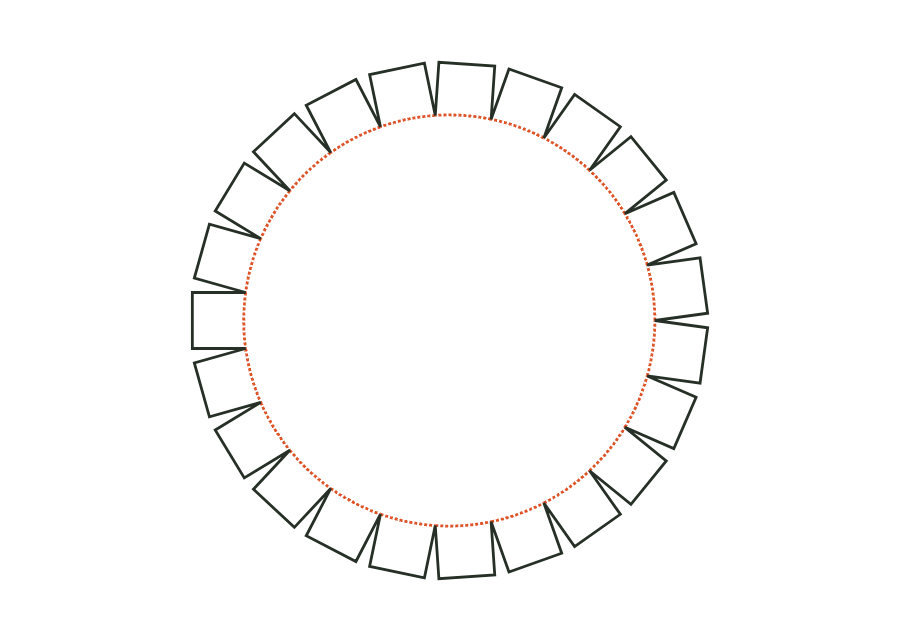
tube.wrapView templateThe lid or base disc has glue flaps around a circular crease line. The starting dimension is the cylindrical wall's inside diameter, together with its height. The parametric dieline shows the disc as an individual component; check a matching wall and assembly separately.
tube.discView templateCalculate the conical wall of a paperboard cup from rim diameter, base diameter and finished height. The annular sector includes the glue seam and separate allowances for the bottom curl and top rolled rim.
cone.cup.wrapView templateThe flat bag is formed from front and back with two glued side seams and a bottom fold. Enter bag width and height as outside dimensions. An optional flap on the back closes the opening; the dieline shows its effect on the paper blank.
bag.flatView templateThe side-gusset bag has a glued longitudinal seam and a block bottom formed by flaps, ears and triangles. You set bag width, gusset depth and height. The inside dimension shown is converted to crease-to-crease dimensions using the material profile; the flat dieline also includes the bottom overlap.
bag.gussetView templateA base, four walls and glued corners form the open folding tray. The page shows V2 with an optional window; the starting example keeps the window disabled.
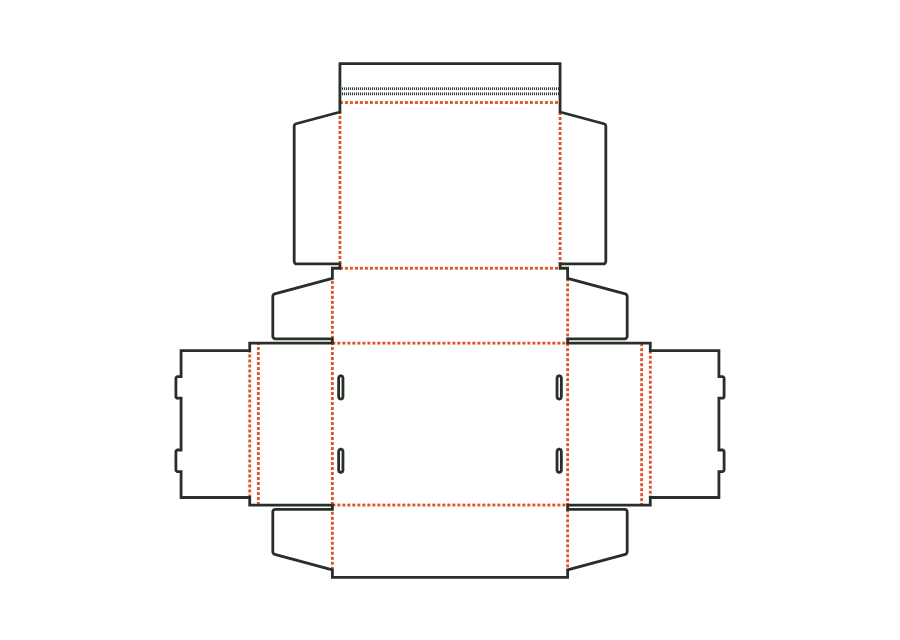
carton.tray.gluedView templateUnglued tray made from folding carton board: front and back walls with corner flaps, double end walls with a return; tabs on the inner wall tuck into slots in the bottom.
carton.tray.lockedView templateReverse tuck-end carton with a perforated tear-out window on the front and a thumb notch as a tear tab; after opening, the contents are removed individually.
carton.dispenserView templateOpen display for the shop counter: low front wall with finger recess, tall back wall with advertising area, sloping side walls; corners are glued inside with corner glue flaps as on the tray.
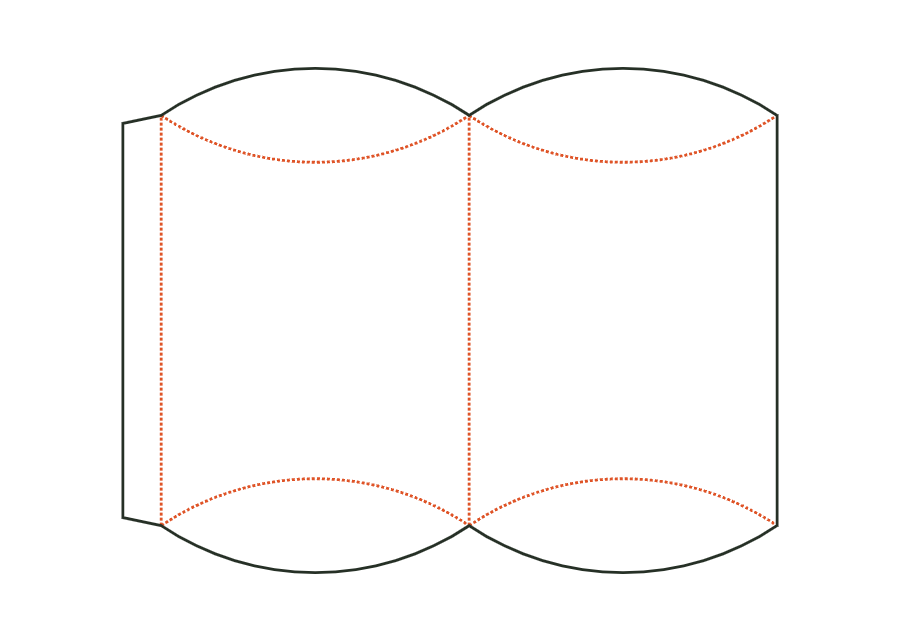
carton.display.counterView templateThe pillow box bows two wall panels between lens-shaped end flaps. Curved creases form the closure instead of straight lid creases. In version 1, the inputs mean width × thickness × length of the packaging. The dieline shown accounts for these proportions and the starting material; it does not define a rectangular box interior.
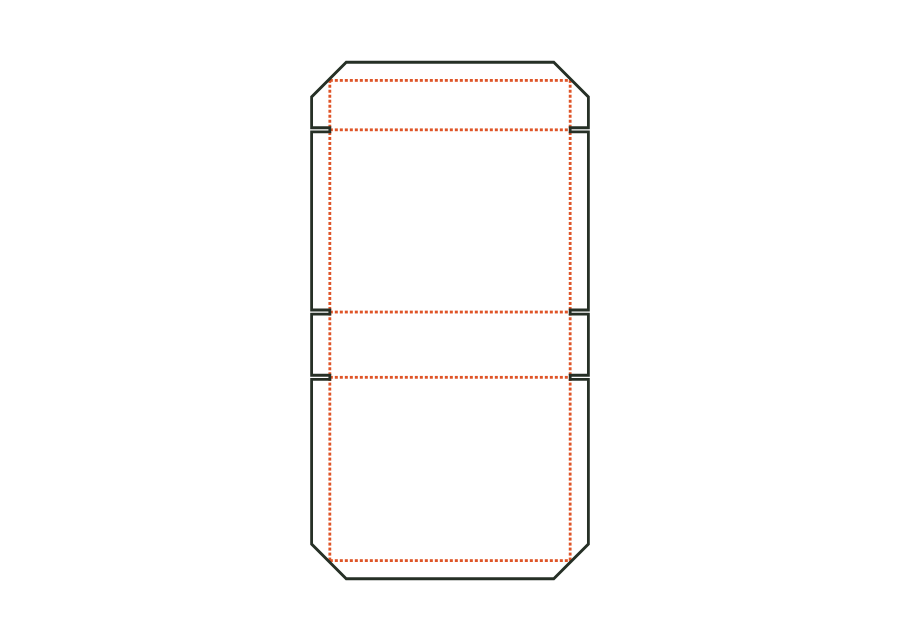
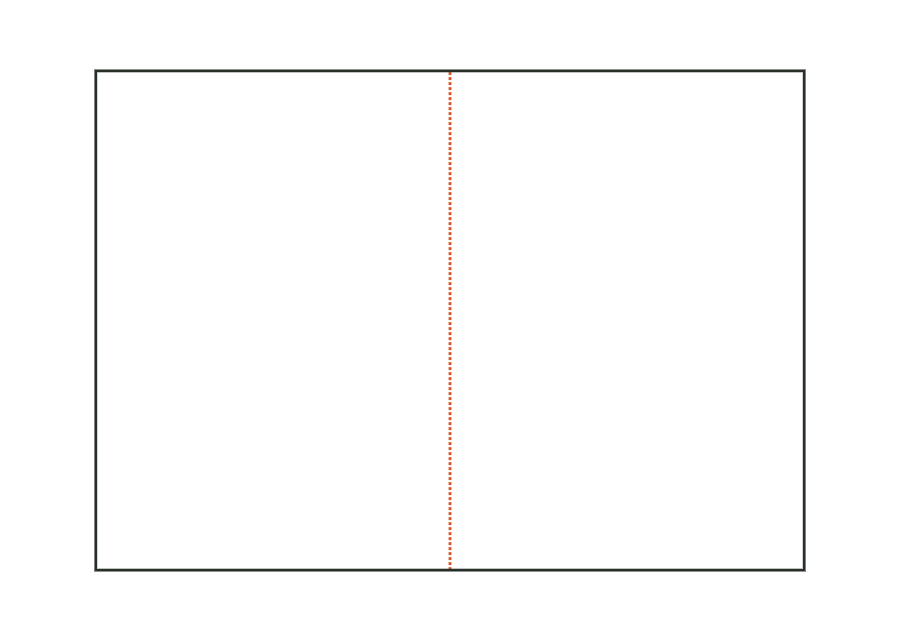
carton.pillowView templateThe hinged lid sits on the back wall and places its front wall over the outside of the front. A lid tab passes through a slot in the front; a tuck bottom closes the base. This page shows version 2 with the hanging hole disabled. The technical core calculates lid overhang, flaps and creases from the chosen dimensions and material profile.
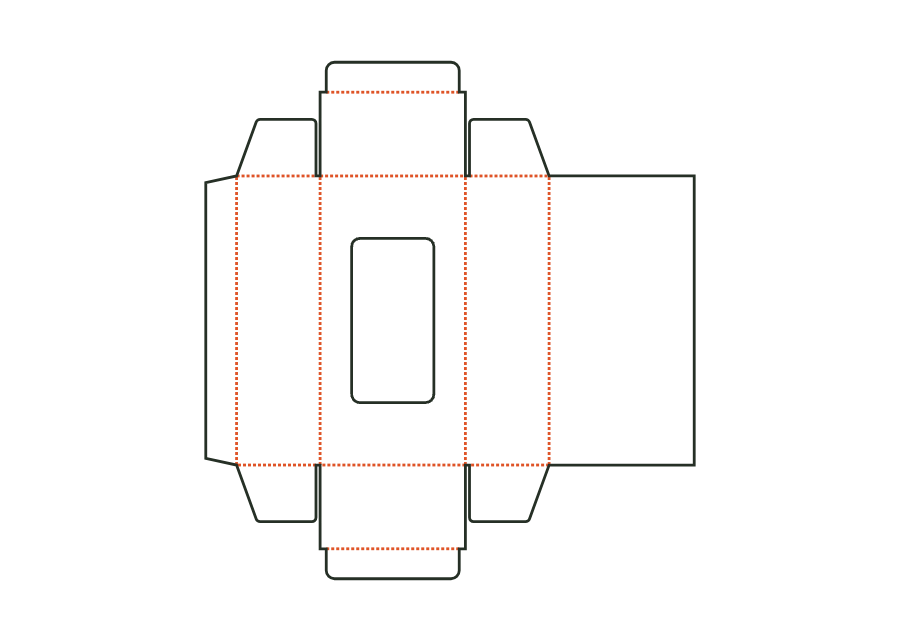
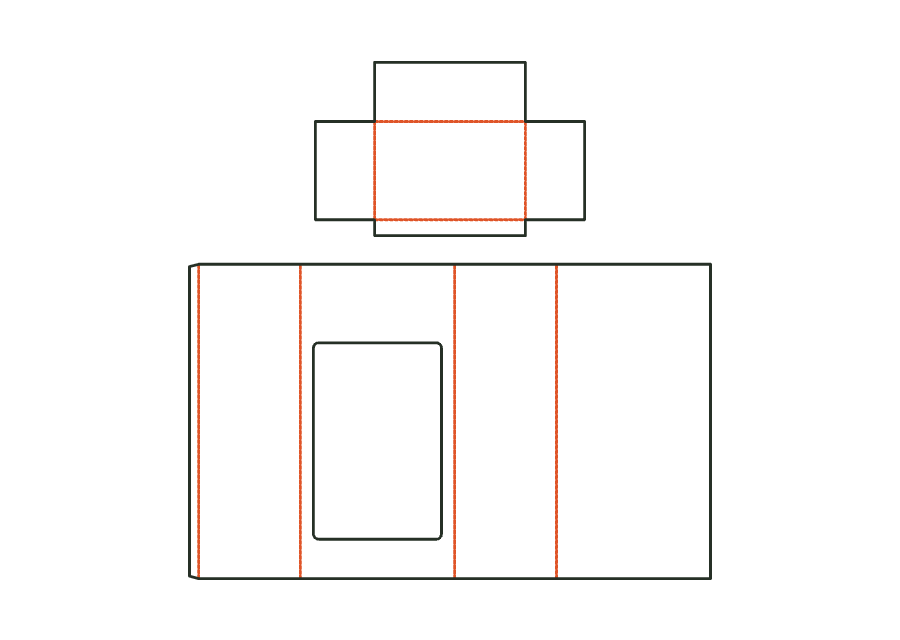
carton.hinged.lidView templateThe window carton combines straight tuck closures with a cut-out in the front. Choose a rectangle with corner radius or an oval and leave room for the film margin and bridges. Version 2 shown here starts with a rectangular window and no hanging hole. The dieline provides the construction; window film is attached separately behind the window.
carton.windowView templateSix walls form a hexagonal footprint with tuck lid and bottom. The inputs mean across corners × across flats × height, rather than a rectangle's length and width. Version 1 calculates the angled walls, mitres and creases from these dimensions. The example shows the straight lid style; the bottom can alternatively sit on the back.
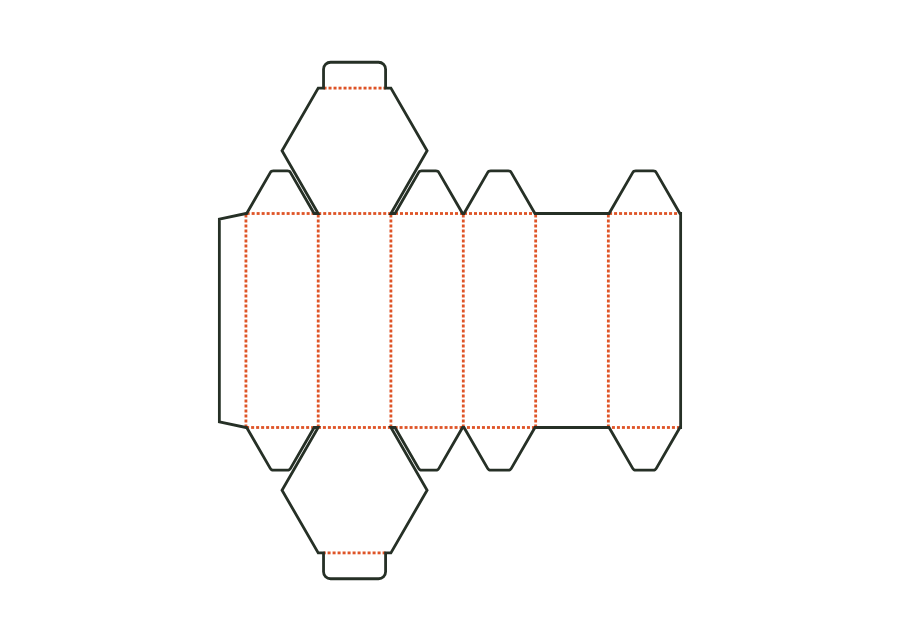
carton.hexagonView templateThe gable box combines a tuck bottom with a pitched roof and glued handle flaps. The page explicitly shows version 1 with a handle hole, roof panels and gussets. The entered height describes the body; gable and handle are added through their own parameters. The calculated dieline is a basis for a folding sample and does not demonstrate a load capacity.
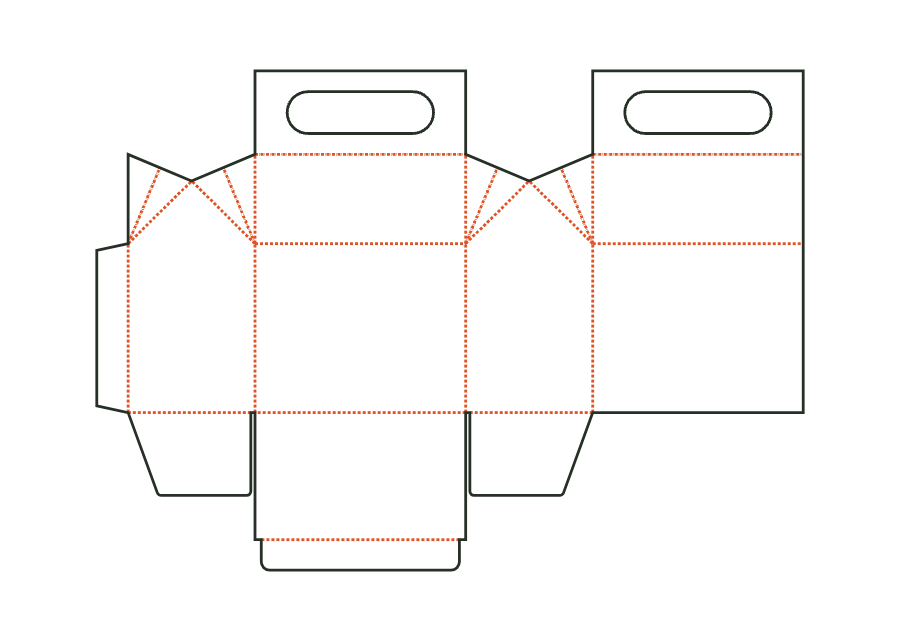
carton.gableView templateFour walls with a glue flap and bottom flaps, open top: the half slotted container can be used as a shelf box or base. Our own parametric construction calculates only this open box body.
corrugated.halfslottedView templateThe outer flaps each cover the entire opening at the top and bottom and lie on top of each other. Our own corrugated construction calculates full coverage rather than just a narrow overlap strip.
corrugated.rsc.fulloverlapView templateCorrugated shipping box with fully overlapping lid flaps, self-seal closure and tear strip. The bottom is closed with adhesive tape as on a slotted box; the upper closure has an adhesive strip and opening aid.
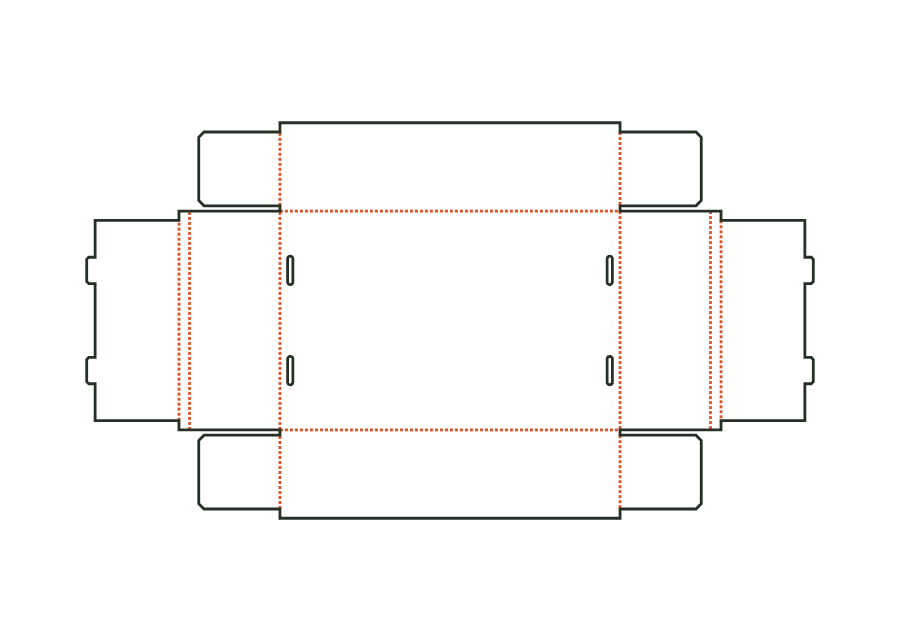
corrugated.shipper.selfsealView templateCorrugated mailer with double side walls and an external tuck closure. The lid locking tabs engage through oblong holes in the front wall; the construction is erected without gluing.
corrugated.mailer.lockView templateCross-shaped wrap-around packaging for books and flat goods. Additional crease lines allow folding for thinner contents; end walls and lid end flaps close the sides, an adhesive strip closes the front.
corrugated.wrapView templateDivider insert made from longitudinal and transverse strips with interlocking slots extending halfway down their height. All strips lie on a shared sheet and remain joined by holding nicks until separated.
corrugated.dividerView templateFlat insert pad as a base, intermediate layer or top insert in a box. Flat dimensions follow the box's inside space; side clearance makes the pad smaller. An optional grid forms identical rounded cutouts.
corrugated.insert.padView templateFlat sleeve for gift, loyalty or greeting cards: front with a thumb cut-out at the opening, back at the bottom fold, side seams formed by glue flaps, optional closure flap. Dimensions are the card's insertion dimensions; clearance and flaps make the sleeve larger.
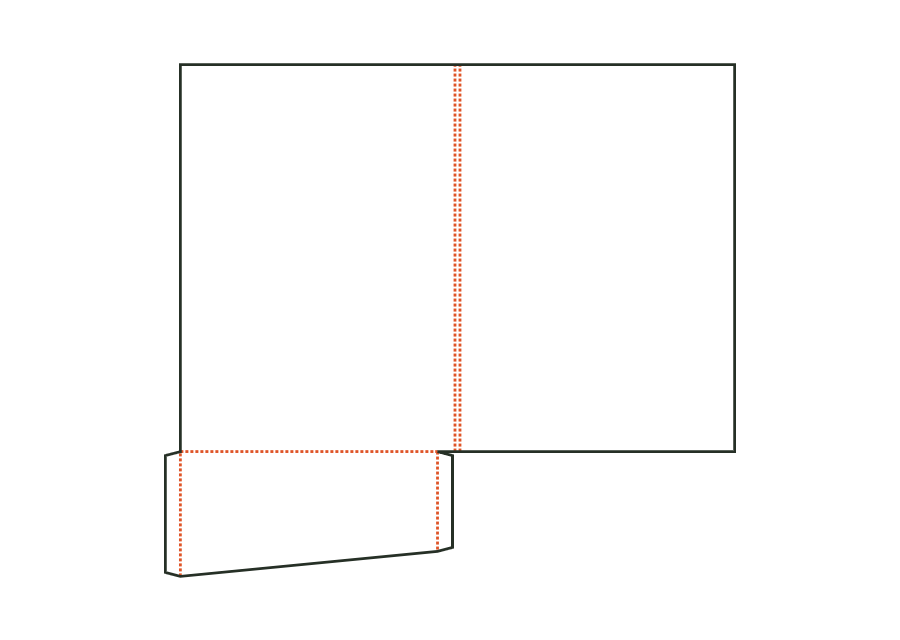
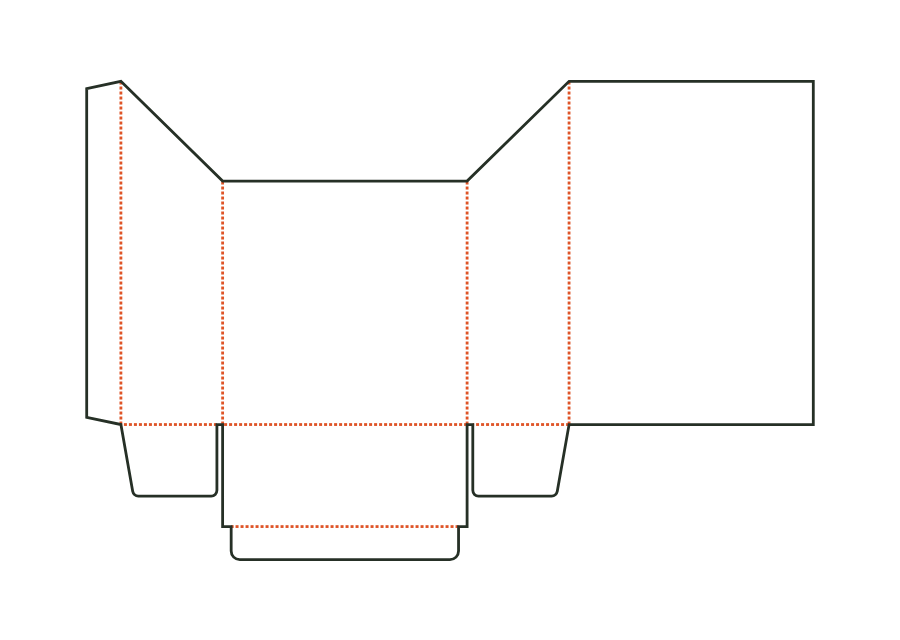
card.sleeveView templateFolder with front and back covers, spine and pocket on the right, left or both sides; pockets have glue flaps on both sides and optional business card slots. Dimensions refer to the finished format of the closed folder.
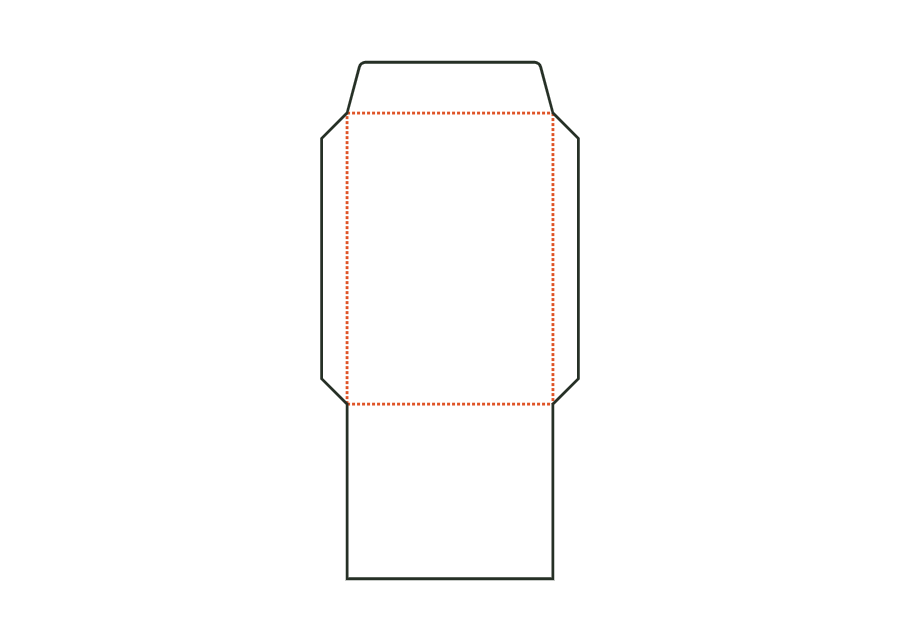
folder.pocketView templateEnvelope or pocket envelope comprising address panel, two side flaps, bottom flap as the back and closure flap. Dimensions are the finished format; the opening is at the top edge.
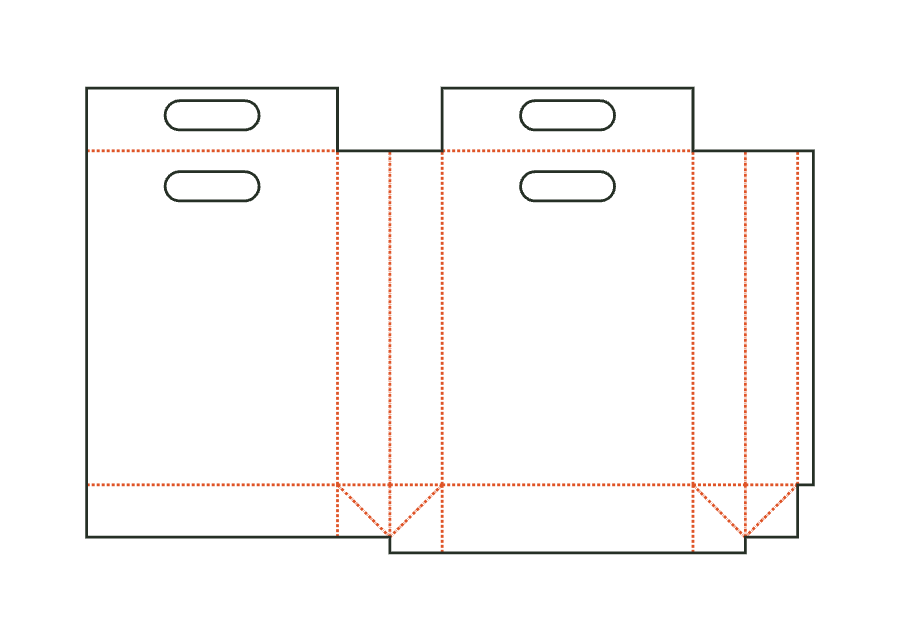
envelope.pocketView templatePaper carrier bag comprising front, back and two side gussets with longitudinal seam, block bottom, top turn-in as handle reinforcement and die-cut handle holes; dimensions bag width × gusset depth × height. Bottom insert and handles are separate parts.
bag.carrierView templateBlank from your own closed contour (point list, e.g. from an SVG file) with a uniform corner radius and up to four crease lines between contour points; the panels are derived from the crease lines.
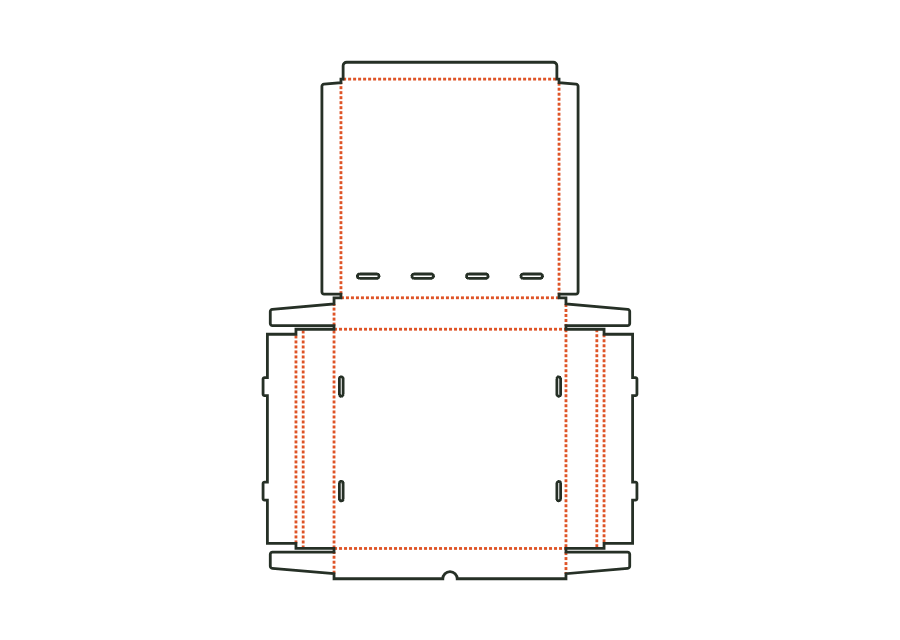
custom.polygonView templateThe pizza box is made from one blank with double side walls, interlocking corners and a hinged lid. Inside dimensions determine the space for the pizza; ventilation slots and locking tabs are separate parameters.
carton.pizzaView templateThe clamshell tray combines a base with glued corners and a lid hinged to the back wall. You choose a tuck flap or tab-and-slot closure and calculate either from inside or outside dimensions.
carton.tray.hingedView templateThe takeout box has outward-sloping front and back walls, glued corners and a folding lid with tuck flap. Inside width and outside width have different reference points.
carton.takeoutView templateThe cup sleeve is an annular sector with a glue flap for an existing tapered cup. You measure the diameters at the top and bottom edges of the sleeve and its vertical height.
sleeve.cupView templateThe fries scoop remains open at the top and has a taller back wall, lower front and sloping sides. Front width, depth and back wall height form the inside dimension; front height is a separate parameter.
carton.friesView templateThe popcorn box is open at the top and has four outward-sloping walls, a side seam and a glued bottom. Length and width describe the upper opening; the base is smaller.
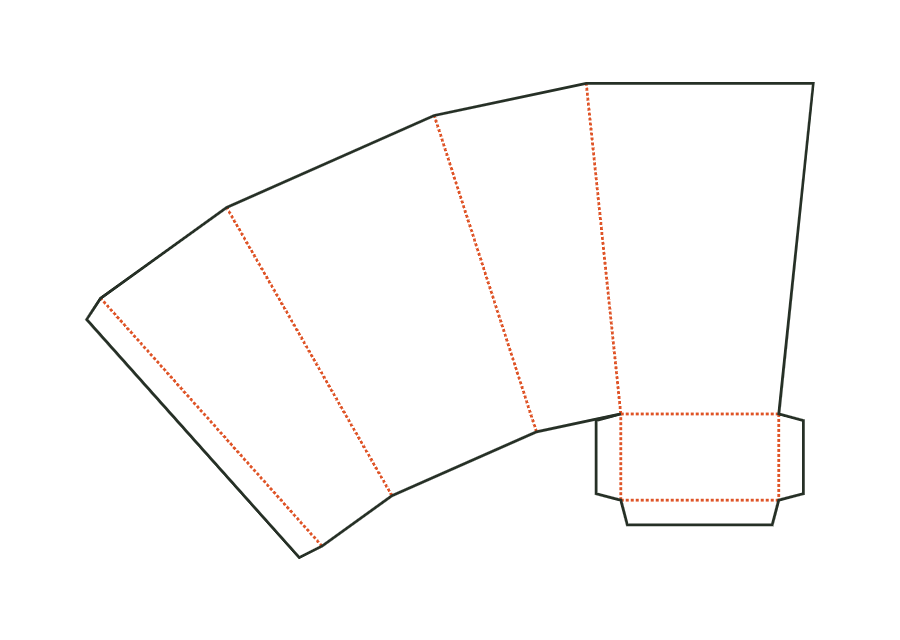
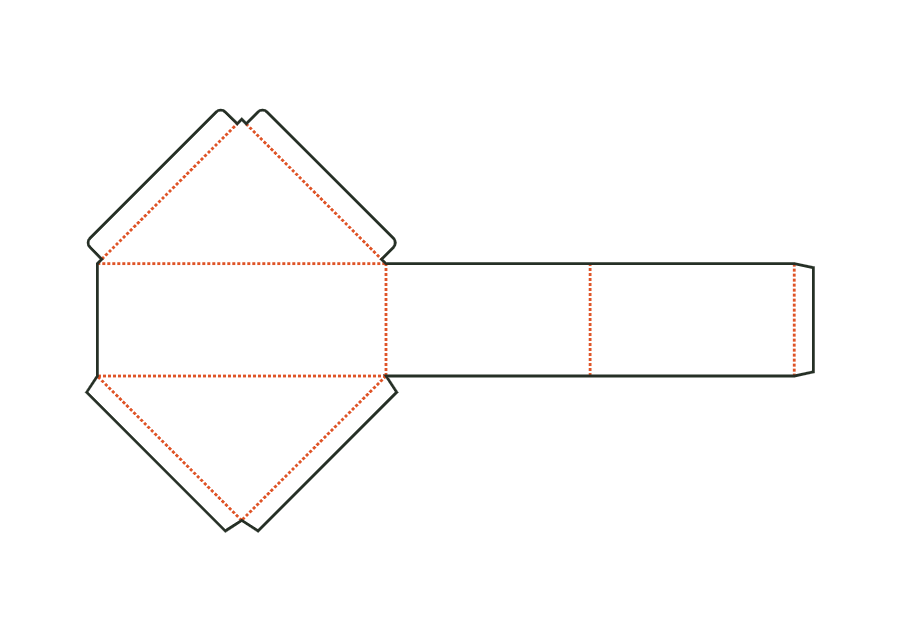
carton.popcornView templateThe sandwich wedge forms a triangular prism from a base and two sloping panels, a glued-in back and a hinged lid. Inside dimension describes baseline, prism thickness and triangle height.
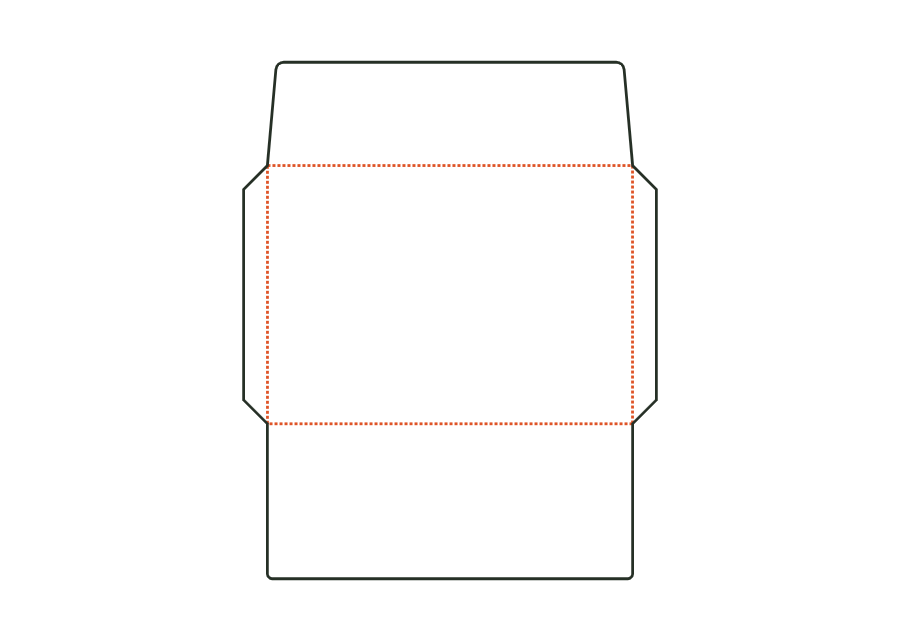
carton.wedgeView templateEnvelope opening on the long side: address panel, two side flaps, bottom flap forming the back, and a straight or pointed closure flap. Dimensions refer to the finished format; starting sizes DL, C6, C5, C4 and US No. 10.
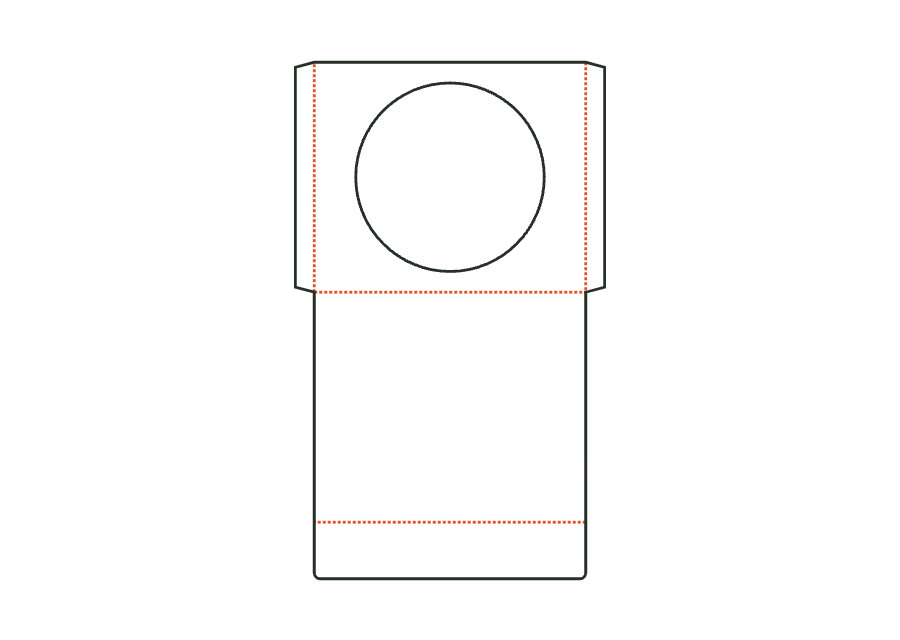
envelope.walletView templateFlat sleeve for a CD or DVD with a round window (optionally without), side seams formed by glue flaps, a closure flap on the back, and an optional thumb notch. Dimensions refer to the insert; clearance and flaps make the sleeve larger.
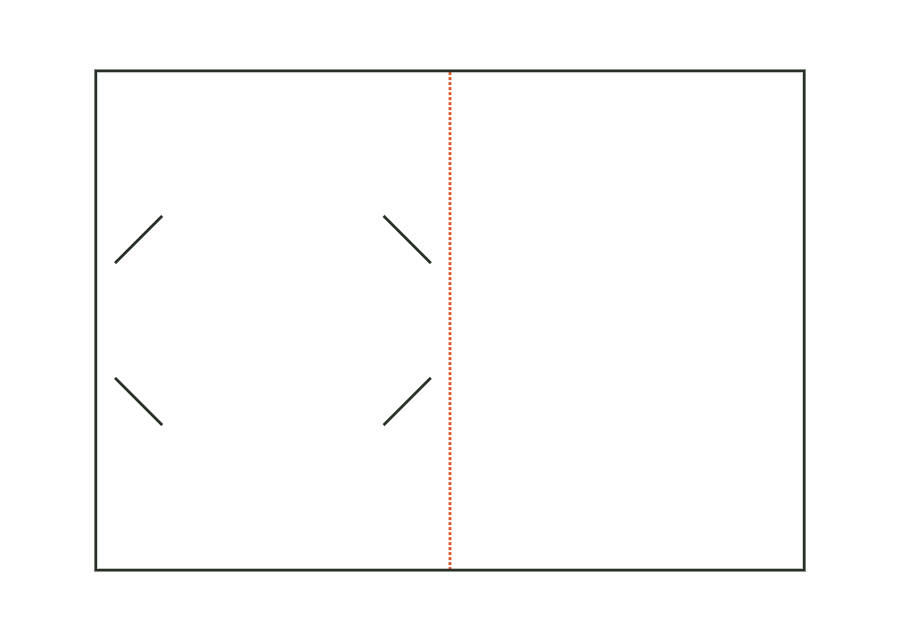
envelope.cdView templateFolded card with a single fold (two panels), roll fold (three panels, with a slightly narrower inner flap) or gate fold (centre with two wings). Dimensions refer to the folded finished format.
card.foldView templateHeader card folded over a bag edge and stapled or glued, with a hanging hole through both layers (Euro hole, round hole or slot). Dimensions are the folded finished format.
card.headerView templateFolded card or single card with four corner slots (corner pockets) or two side slots for a gift card in credit card format 85.6 × 54 mm; optional header with hanging hole.
card.giftholderView templateAn adjustable strip connects the outer flaps at the top and bottom. The template calculates flap lengths, material layers and blank from the box dimensions and desired overlap.
corrugated.rsc.overlap.outerView templateThe inner flaps meet in the middle and close the opening. Outer flaps with an adjustable gap lie over them; our own construction calculates both flap layers together.
corrugated.rsc.innerfullView templateA snap-lock bottom closes this corrugated box without tape at the bottom. The top can be chosen separately: meeting flaps, fully overlapping flaps or open.
corrugated.rsc.mixedView templateCorrugated carry-handle box with snap-lock bottom. Two fully overlapping lid flaps have aligned handle cut-outs and are glued across their surfaces; an additional handle is not part of the construction.
corrugated.handleView templateMailer with double side walls and an external closure flap. A self-adhesive strip connects the flap to the front wall; a tear strip opens it. The bottom tabs still hold the wall structure.
corrugated.mailer.flapView templateRectangular corrugated sheet with zero to three evenly spaced creases. Without a crease, it serves as a flat layer pad; folded, it forms an angle, U-profile or wrap around a product.
corrugated.sheetView templateCorrugated sliding sleeve with glue flap and open ends. Thumb cut-outs at both ends of the top make sliding out an inner component easier. The template calculates only the sleeve.
corrugated.slideView templateThe corrugated box is pre-glued at the factory and supplied flat. The crash-lock bottom closes during erection; the top can have meeting flaps, fully overlapping flaps or an open edge.
corrugated.autobottomView templateThis template calculates the print mask for a flat pouch with a three-side seal. Front and back are on a shared print sheet with a bottom fold. Side and top seals are seal zones; zipper, tear notch and hanging hole are optional additions. The drawing is not an approved film die-cutting contour.
pouch.flatView templateThe stand-up pouch has a print mask comprising front, inserted W-shaped bottom gusset and back. Side seam, top seam, Doyen corners and zipper strip remain documented as seal zones. Pouch width and height are outside dimensions; the bottom gusset is a separate parameter. The calculated print sheet does not yet confirm standing stability.
pouch.standupView templateThe spouted pouch print mask adds a sealed-in spout to the stand-up pouch. Choose the top right corner or the centre of the top edge and enter the inside diameter. The spout fitment is part of the seal zones; the drawing documents its position, not confirmed component fit.
pouch.spoutView templateThe beverage pouch template shows a stand-up print mask with a marked straw puncture point on the front. The top seal in the starting profile is wider than in the simple stand-up variant. Width, height, bottom gusset and puncture point are set separately; a calculated fill volume is not part of the model.
pouch.drinkView templateFolding carton with a side seam and glued closures at the top and bottom (Seal End) instead of tuck flaps: outer flap on the front, inner flap on the back, dust flaps on the sides. For pharmaceutical and food products; opened by tearing.
carton.sealendView templateHorizontal box for facial tissues and handkerchiefs: body with side seam, glued end closures (Seal End), perforated dispensing opening in the top (oblong slot or rectangle) with thumb notch. Dimensions: length × top width × height.
carton.tissueView templateBoard insert for a box: platform with a freely positioned product cutout (rectangle, circle or oval) on folded-down feet at two or four edges, optionally with inward-folded foot tabs. Dimensions: insert outside dimensions (box inside dimensions) × platform height.
carton.insert.cutoutView templateLower part of the telescopic box made from folding carton board: base with four walls and glued corner flaps, same design as the corrugated telescopic box, for smaller gift and chocolate boxes.
carton.telescope.baseView templateTelescopic lid made from folding carton board in the same design as the base; dimensions from the base's outside dimension plus clearance on each side.
carton.telescope.lidView templateOne-piece folding carton carrier for 2 or 4 cups: base, front and back wall, two hole decks holding the cups and a double handle from the blank. Ends open.
carrier.cupView templateOne-piece folding carton carrier for 4 or 6 bottles with two hole decks and a handle from the blank; with a divider as an assembly (carrier with divider), strips also separate the bottles below the deck.
carrier.bottleView templateShell of a corrugated pallet display for a quarter or half pallet: tube of four walls with glue flap, large shelf opening in the front between plinth and top header (advertising area). The shelves are stacked in from above.
corrugated.display.palletView templateStackable corrugated shelf: base with raised rims, open corners and a low front lip as price rail. Dimensions: inside cross-section of the shell × shelf height.
corrugated.display.pallet.shelfView templateFolding carton tray with glued corners, hinged lid and an integrated hole deck for 6, 10 or 12 eggs. The construction uses a hole deck rather than molded pulp cups. Check egg size, retention and transport on a filled sample.
carton.eggView templateMilk-carton shape with a glued longitudinal seam, tuck bottom, triangular gable folds and a glueable top strip. The template is a print layout and dieline made from folding carton board. It is not designed as liquid-tight or aseptic packaging.
carton.gable.topView templateBox for cakes and tarts with a tuck bottom, a split lid of two roof halves and a carry handle made of two handle panels with handle holes; optional window in the lid halves or in the front. Starting material E-flute microflute, start sizes for cakes Ø 24, 26 and 28 cm.
carton.cakeView templateShipping and shelf packaging in one: tray with four walls of equal height and glued corners, a U-shaped tear-off perforation with a thumb notch in the front wall. After tearing off, a low front and side lands remain; optional header on the back wall (straight, rounded or arched). Starting material B-flute.
carton.display.shelfView templateFolding carton with 5 to 12 walls as a generalization of the hexagon box: glue flap, tuck lid at the front with the tuck flap opposite, straight or reverse bottom, mitered dust flaps. Length × width is the rectangle the n-gon fills.
carton.polygonView templateFolding carton with an isosceles trapezoid plan: wide front, narrower back, slanted sides; tuck lid at the front with the tuck flap at the back, straight or reverse bottom. Dimensions: front × depth × height.
carton.trapezoidView templatePyramid with 3 to 8 triangular faces as a fan around the apex, glue flap, bottom with tuck flap and dust flaps on the other faces. Dimensions: base length × width, apex height above the bottom.
carton.pyramidView templateSphere or ball box as a polyhedron of meridian strips: equator walls, zone faces with glue flaps above and below, a lid at the top and a bottom with tuck flap, dust flaps on the other strips. Dimensions: diameter at the equator (length = width) and height.
carton.sphereView templateBase of the archive box: corrugated half slotted container, open at the top, four bottom flaps like the slotted box, a handle hole (slot) in both end walls.
corrugated.archive.baseView templateTelescope lid of the archive box: shallow tray of bottom and four walls with glued corner flaps; in the assembly sized from the outside dimensions of the base plus clearance per side.
corrugated.archive.lidView templateBase and telescope lid in folding boxboard form one assembly. Both parts have glued corner flaps; the lid follows the outside dimensions of the base plus clearance per side. For gift and chocolate boxes.
carton.telescopeView templateArchive and storage box in corrugated board with matching base and telescope lid. The base is open at the top and has hand holes in both end walls. Clearance per side and lid height determine the fit; the starting dimensions suit A4 documents.
corrugated.archiveView templateCup carrier and slotted divider form one assembly. The carrier has two hole decks and a carrying handle; the crossed strips also separate cups below the decks. The divider follows the internal space and cell count of the carrier.
carrier.cup.dividerView templateBottle carrier for 4 or 6 bottles with a matching slotted divider. Two hole decks and the carrying handle hold the bottles in the carrier; additional strips also separate them below. The divider is derived from the internal space and selected bottle count.
carrier.bottle.dividerView templateCorrugated shell with a shelf opening, plinth and header, plus matching shelves with price rails. The identical shelves stack in from above. The selected count and shell dimensions together determine the height and fit of the individual levels.
corrugated.display.pallet.shelvesView templateNo matching template. Change the search or application.
With JetDieline, choose a suitable template, adjust its size, and place text, logos, and images directly on your packaging.
Try your dimensions