Flap gap
Gap between adjacent flaps or walls; at least approximately material thickness.
 JetDieline
Corrugated shipping boxes / JETDIELINE
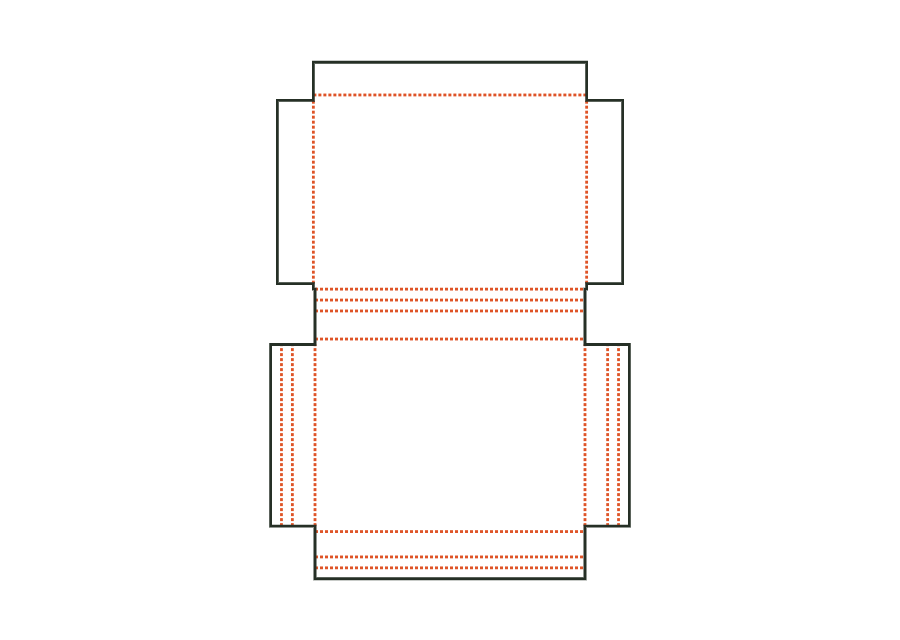
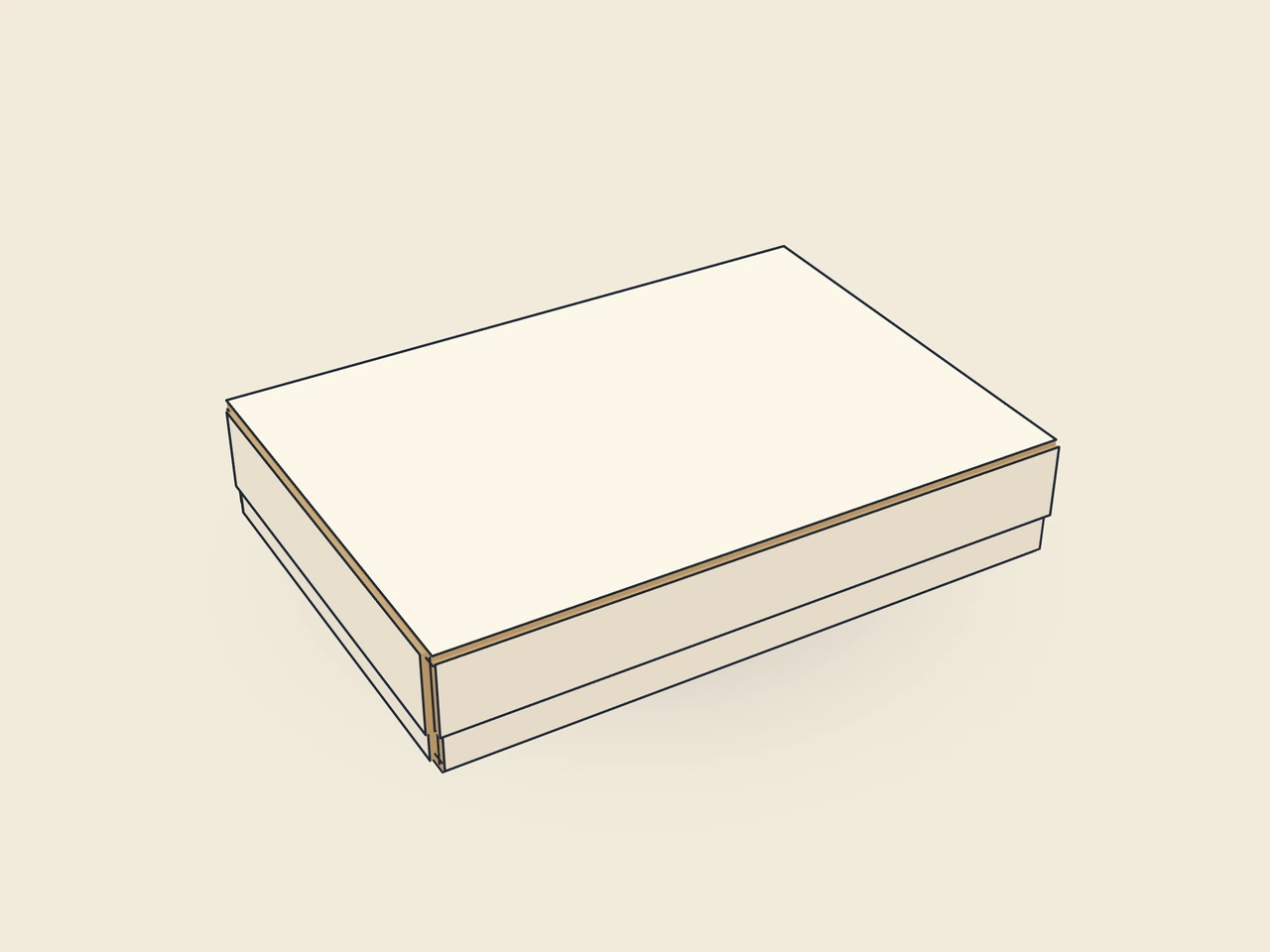
Cross-shaped wrap-around packaging for books and flat goods. Additional crease lines allow folding for thinner contents; end walls and lid end flaps close the sides, an adhesive strip closes the front.
Drag to rotate
03 / BOX
Simplified display model without material thickness, not to scale.
The 3D view is not available in this browser. The image shows the folded shape.
corrugated.wrapCross-shaped corrugated blank for books and flat goods: bottom, front and back walls, lid with closure flap and self-adhesive strip, end walls and lid end flaps; multiple creases for contents of different thicknesses.
Place contents on the bottom, erect front and back walls and end walls – for thinner contents, fold at one of the additional crease lines. Close the lid, lay the lid end flaps over the end walls on the outside, remove the release liner and press the closure flap against the outside of the front wall.
Flute direction parallel to the bottom, wall and lid creases: the folds around the package and multiple creases fold cleanly (check with the test printer).
Test fit, folding and closure on a sample made from the intended material. Confirm material thickness, grain direction and production steps with your printer.
Inside dimension
These dimensions describe the preview, not a fixed packaging size. The app recalculates the dieline for your own dimensions.
Gap between adjacent flaps or walls; at least approximately material thickness.
Depth of the closure flap glued to the outside of the front wall; no deeper than the front wall is high.
Width of the self-adhesive strip on the closure flap (5 mm margin to the edge).
Length of the lid end flaps as a proportion of height; they sit over the end walls on the outside.
Number of additional crease lines per wall (multiple creases): for thinner contents, fold along these instead of at the nominal position.
No. The parameter sets zero to three additional lines per wall with a shared crease spacing. When packing, you choose an existing line. This is a discrete folding choice. Match the base height to the thickest contents and check thinner contents at the intended additional creases.
Count multiplied by crease spacing must take up no more than half the inside height. This leaves sufficient wall height in the model. The constraint halfDepth suggests a lower count when there are too many creases. Check count and spacing together; the parameter range alone does not guarantee a fitting combination.
First erect the end walls at the bottom. After closing the lid, the lid end flaps sit over them on the outside. endFlapRatio controls their length as a proportion of height. Test the overlap when folding at an additional crease too, as thinner contents change the finished fit.
Find the right packaging shape and fit it to your product
Design the artwork directly on the real dieline
Spot problems before you pass on files
Files your printer can trace
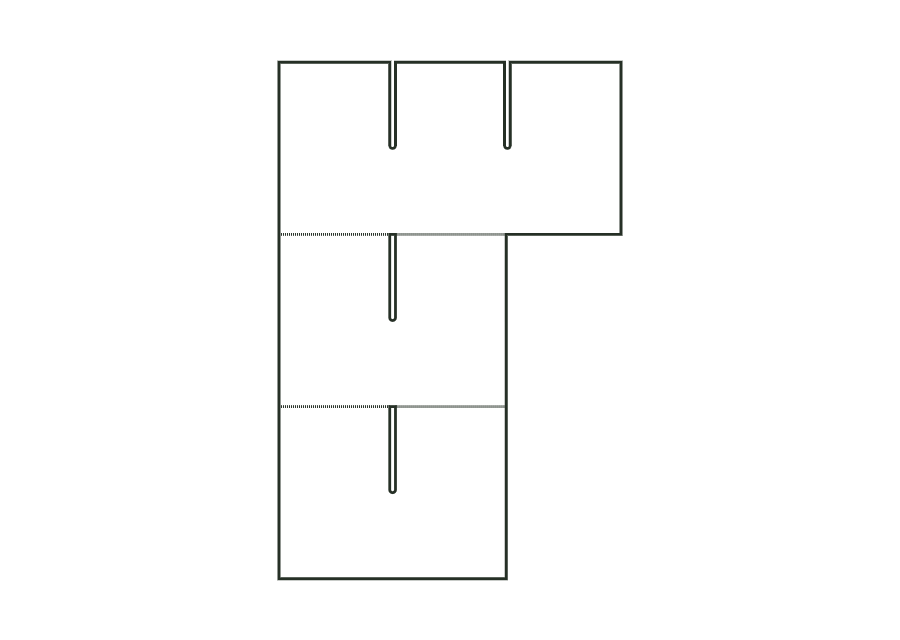
Divider insert made from longitudinal and transverse strips with interlocking slots extending halfway down their height. All strips lie on a shared sheet and remain joined by holding nicks until separated.
corrugated.dividerView templateFlat insert pad as a base, intermediate layer or top insert in a box. Flat dimensions follow the box's inside space; side clearance makes the pad smaller. An optional grid forms identical rounded cutouts.
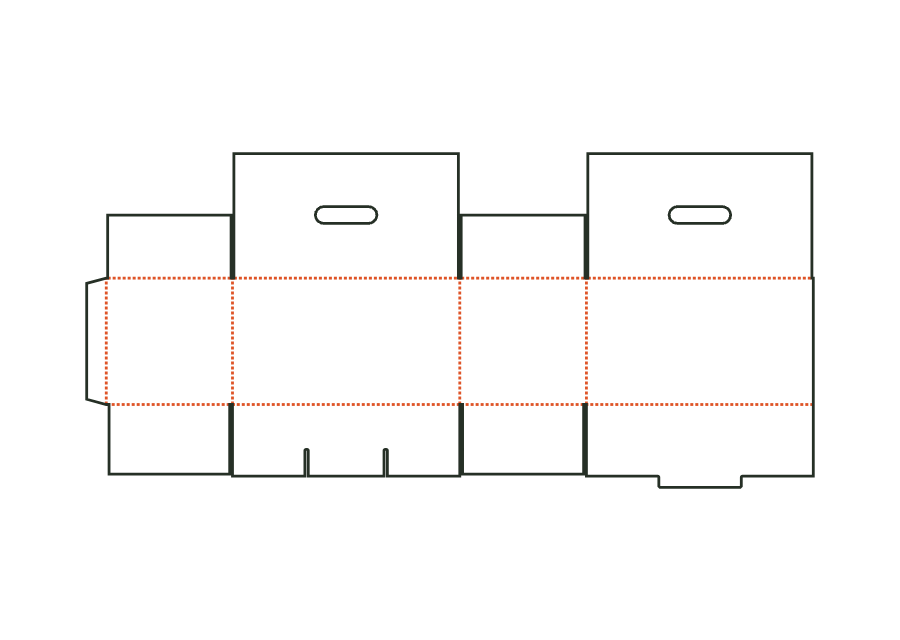
corrugated.insert.padView templateCorrugated carry-handle box with snap-lock bottom. Two fully overlapping lid flaps have aligned handle cut-outs and are glued across their surfaces; an additional handle is not part of the construction.
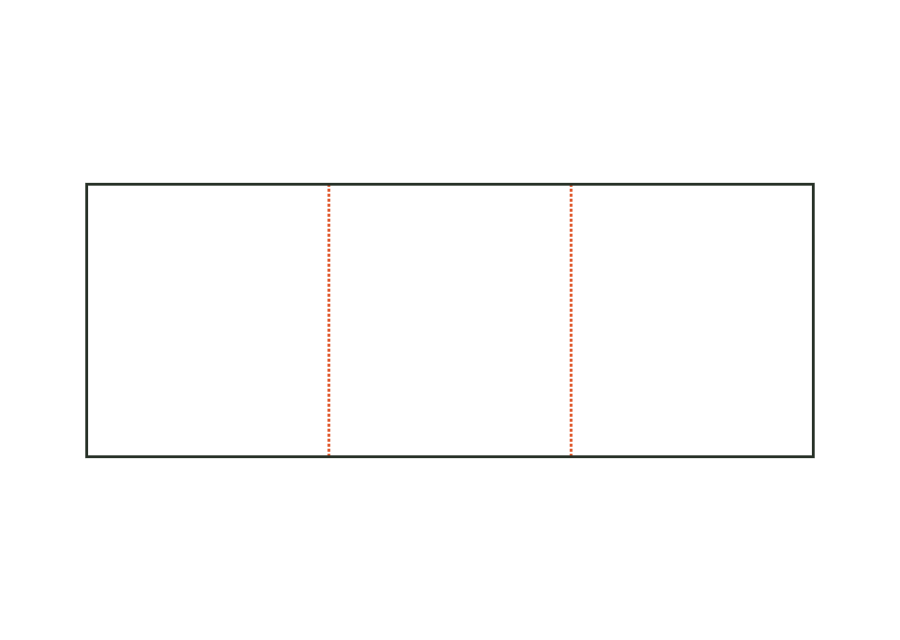
corrugated.handleView templateRectangular corrugated sheet with zero to three evenly spaced creases. Without a crease, it serves as a flat layer pad; folded, it forms an angle, U-profile or wrap around a product.
corrugated.sheetView templateWith JetDieline, choose a suitable template, adjust its size, and place text, logos, and images directly on your packaging.
Try your dimensions