Glue flap
Width of the glue flap used to glue the blank into a tube. The material requires a minimum width.
 JetDieline
Folding cartons / JETDIELINE
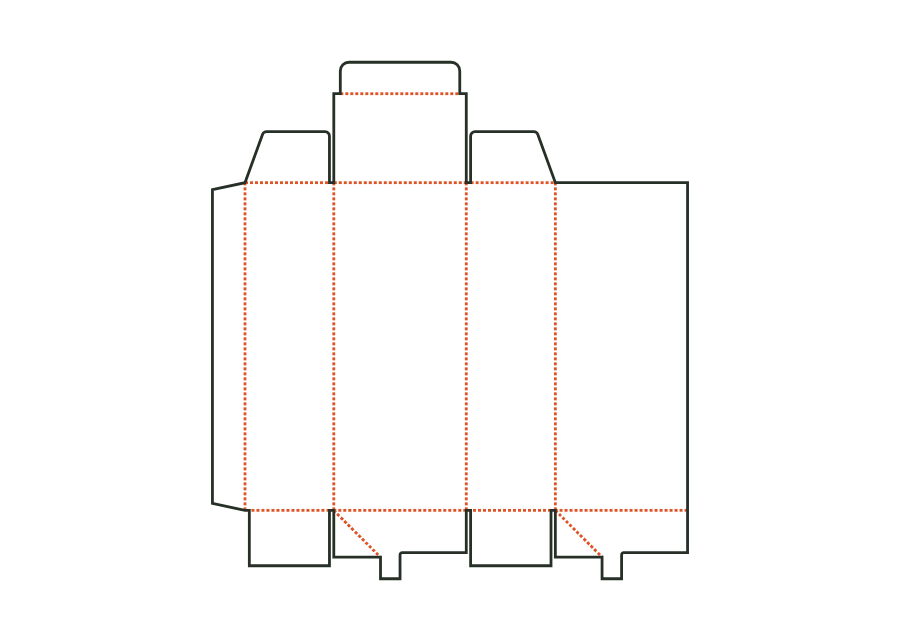
The pre-glued crash-lock bottom closes when the body is erected. Dust flaps and a tuck flap close the folding carton at the top; bottom gluing belongs to the production workflow.
Drag to rotate
03 / BOX
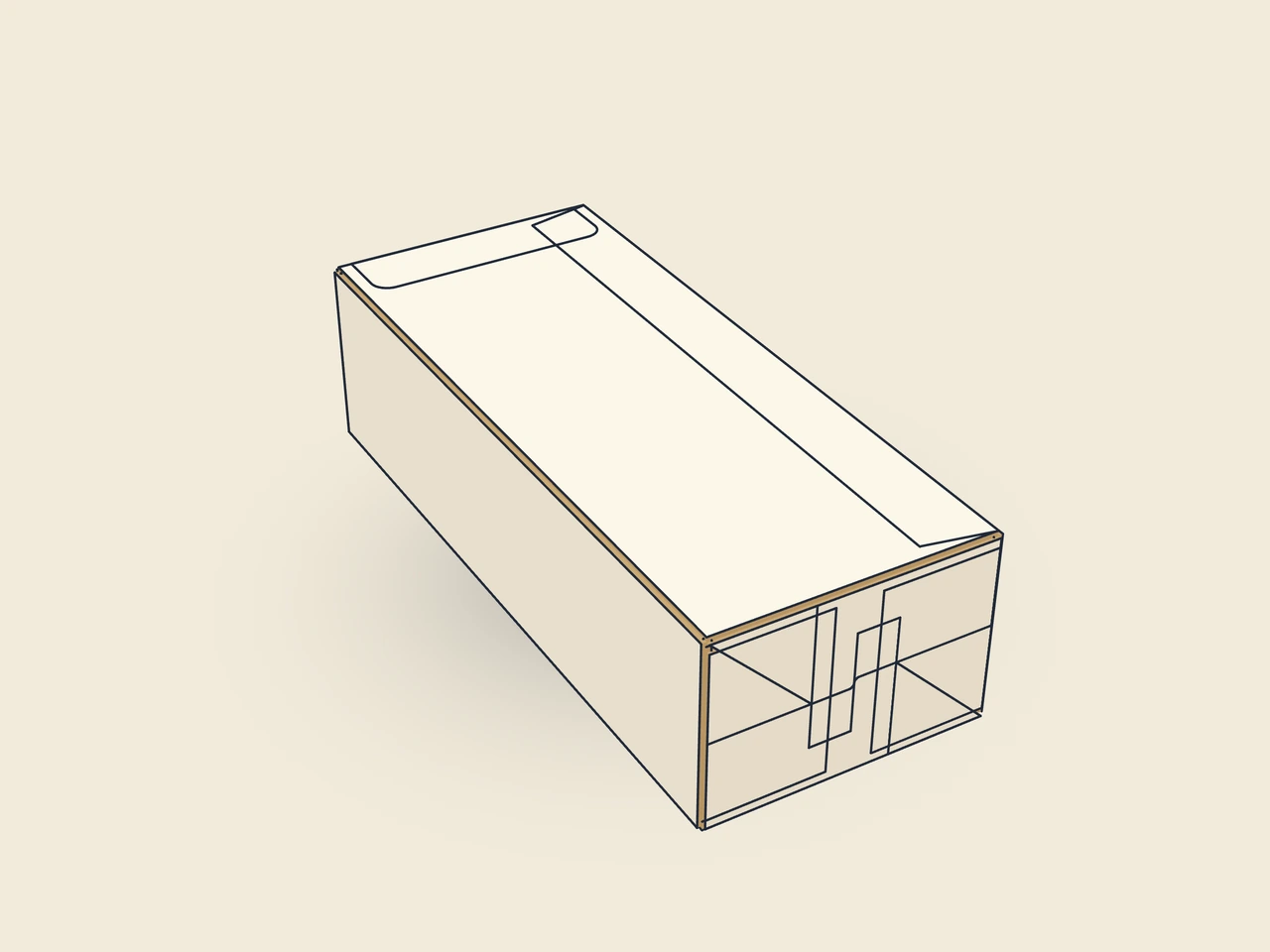
Simplified display model with indicative material thickness, not to scale.
The 3D view is not available in this browser. The image shows the folded shape.
carton.crashlockTwo bottom flaps have a diagonal crease and a glue field. Two side flaps complete the bottom. The body is pre-glued and laid flat at the factory; flaps engage when erected.
At the factory: fold bottom flaps back along diagonal creases, apply glue to glue fields, lay the body flat and glue the glue flap. At the customer: erect the body – the bottom closes automatically. After filling, fold in dust flaps and insert the tuck flap.
Grain direction parallel to height (check)
Test fit, folding and closure on a sample made from the intended material. Confirm material thickness, grain direction and production steps with your printer.
Inside dimension
These dimensions describe the preview, not a fixed packaging size. The app recalculates the dieline for your own dimensions.
Width of the glue flap used to glue the blank into a tube. The material requires a minimum width.
Bevel at the ends of the glue flap; aids folding and erection.
How deeply the tuck flap enters the box; at most about half the width (height for a mailer).
Corner radius of the tuck flap; limited by half the flap width or tuck depth.
Side inset of the tuck flap relative to the lid for easy insertion.
The prepared bottom closes when the flat body is erected. This requires bottom flaps to have been folded and glued at the factory beforehand. The construction does not eliminate this preparation. Check the complete workflow from pre-gluing to filling with the chosen board.
Assembly notes assume glue fields and factory pre-gluing. Without this preparation, the intended automatic workflow does not occur. If you want an unglued bottom, the snap-lock bottom is a different catalogue construction. Its flaps and folding sequence require separate checks.
The documented starting example uses folding carton board 400 g/m². Grammage alone determines neither thickness nor creasing behaviour. The profile is not calibrated. Agree on material, creasing and gluing with the printer and check the bottom on a sample made from the target material.
Find the right packaging shape and fit it to your product
Design the artwork directly on the real dieline
Spot problems before you pass on files
Files your printer can trace
Blank, creases and flaps are calculated from inside dimensions. The results are artwork PDF, production dieline and production sheet for the printer.
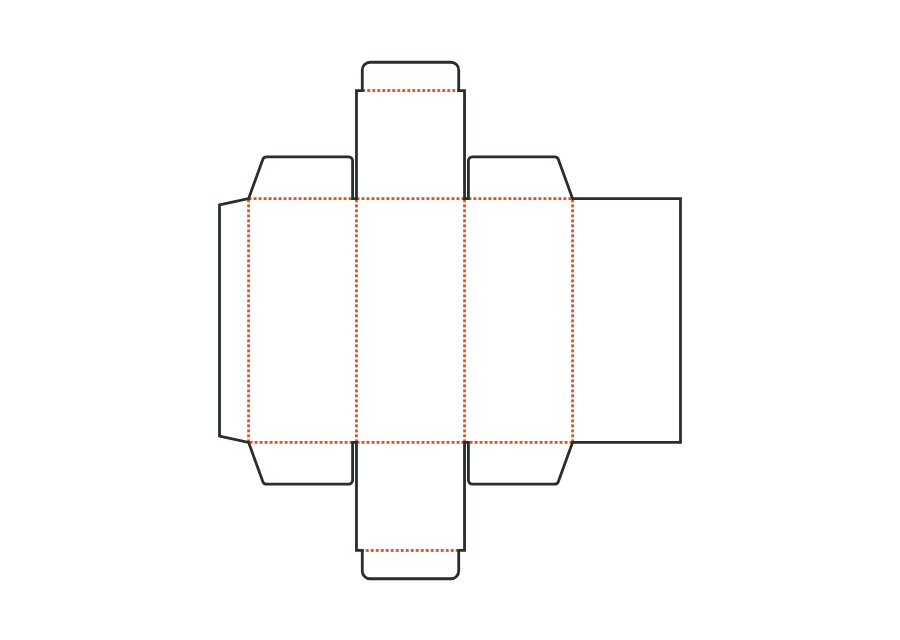
carton.tuckend.straightView templateThe snap-lock bottom closes with four interlocking flaps. Two side flaps sit inside; a nose on the back tucks under the front flap's tongue. Version 1 combines this bottom with a tuck lid. The calculation example uses folding carton board 400 g/m² and shows the flat dieline with creases and bottom cuts.
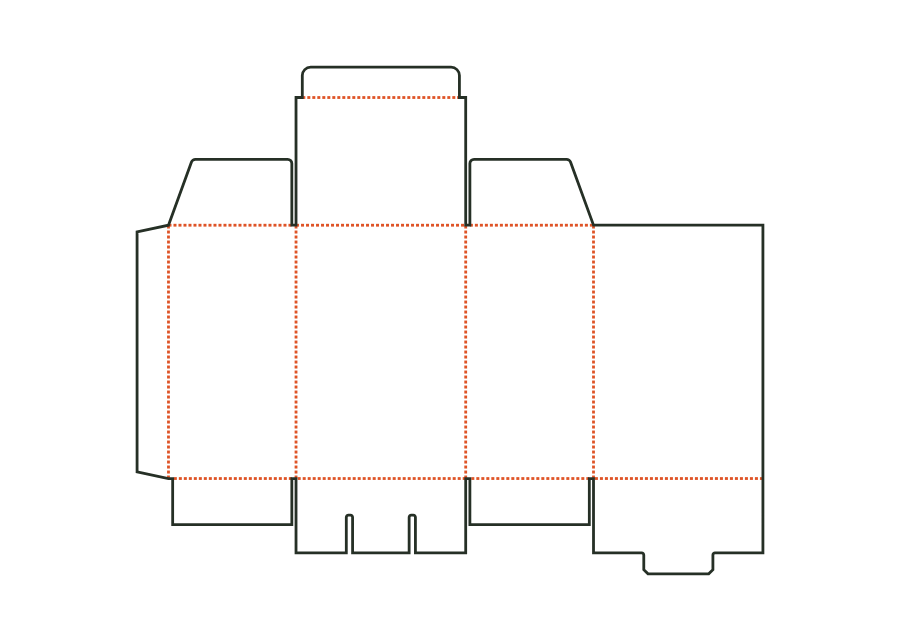
carton.snaplockView templateThe top tuck flap sits on the front, the bottom one on the back. The reverse tuck-end carton calculates its walls, dust flaps and closures from the inside dimension. The dieline shown comes from version 3 with the hanging hole disabled; artwork, production dieline and production sheet can be exported together in the technical core.
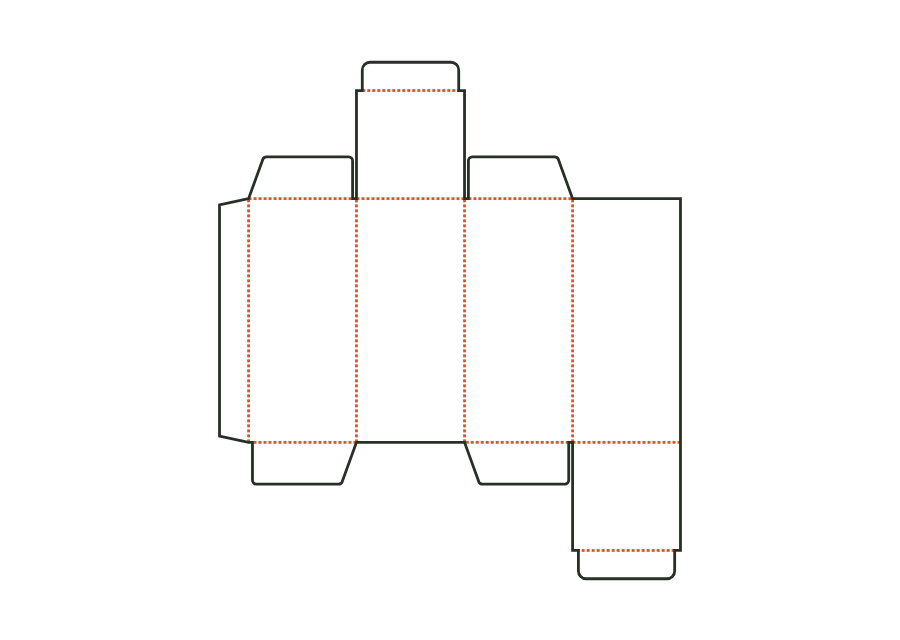
carton.tuckend.reverseView templateThe window carton combines straight tuck closures with a cut-out in the front. Choose a rectangle with corner radius or an oval and leave room for the film margin and bridges. Version 2 shown here starts with a rectangular window and no hanging hole. The dieline provides the construction; window film is attached separately behind the window.
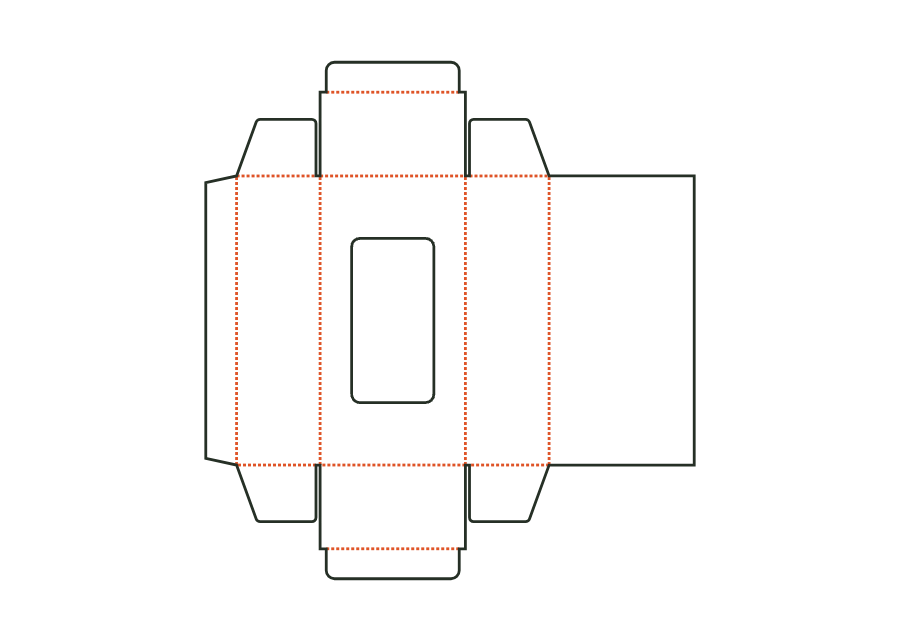
carton.windowView templateWith JetDieline, choose a suitable template, adjust its size, and place text, logos, and images directly on your packaging.
Try your dimensions