Glue flap
Width of the glue flap used to glue the blank into a tube. The material requires a minimum width.
 JetDieline
Special carton shapes / JETDIELINE
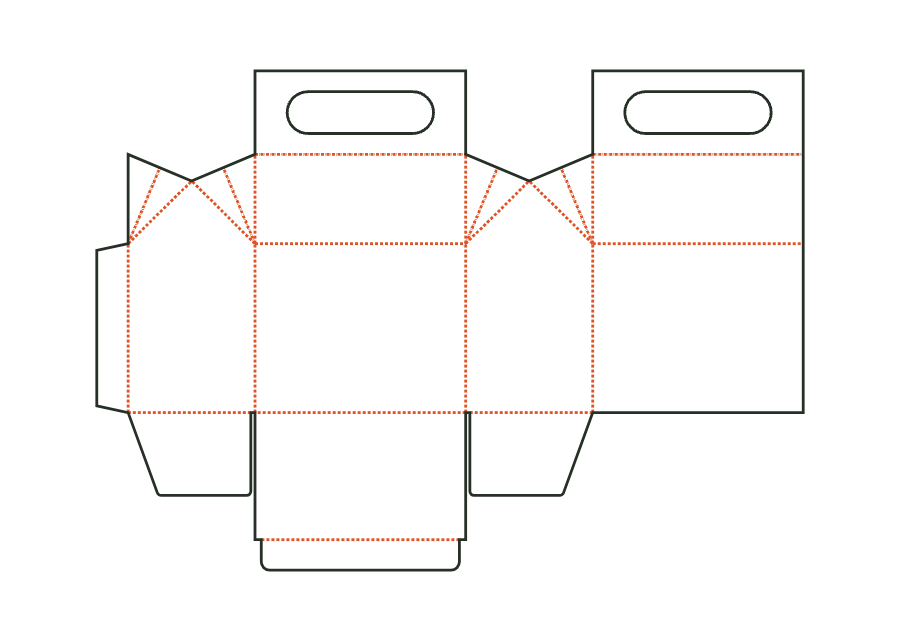
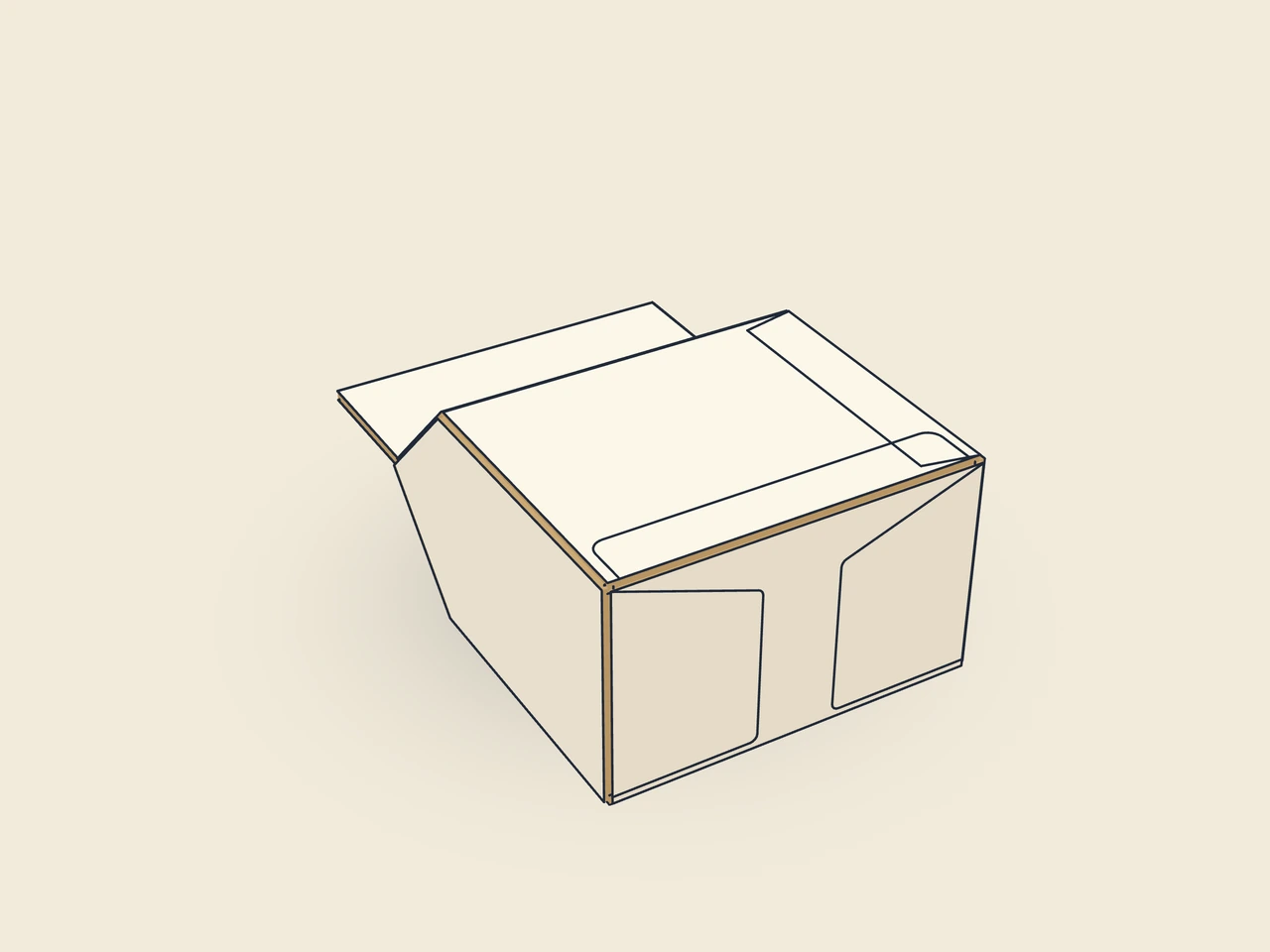
The gable box combines a tuck bottom with a pitched roof and glued handle flaps. The page explicitly shows version 1 with a handle hole, roof panels and gussets. The entered height describes the body; gable and handle are added through their own parameters. The calculated dieline is a basis for a folding sample and does not demonstrate a load capacity.
Drag to rotate
03 / BOX
Simplified display model without material thickness, not to scale.
The 3D view is not available in this browser. The image shows the folded shape.
carton.gableFront and back carry roof panels with handle flaps. Side gable triangles and gussets fold inwards during closing. One gusset is attached by its glue edge to the rear roof; the two handle flaps are glued together. The bottom remains a tuck closure with dust flaps.
Pre-break all creases in the blank, glue the glue flap to the inside of the back and flatten the carton. Erect for filling and close the bottom with dust flaps and a tuck flap. After filling, fold the gussets together along the centre line and place them inwards, close the roof panels, glue the gusset's glue edge to the inside of the rear roof and glue the handle flaps together.
Grain direction parallel to the height: wall creases lengthwise, eaves, ridge and handle flaps crosswise, so carrying loads the handle across the fibre (check with the test printer).
Test fit, folding and closure on a sample made from the intended material. Confirm material thickness, grain direction and production steps with your printer.
Inside dimension
These dimensions describe the preview, not a fixed packaging size. The app recalculates the dieline for your own dimensions.
Width of the glue flap used to glue the blank into a tube. The material requires a minimum width.
Bevel at the ends of the glue flap; aids folding and erection.
How deeply the tuck flap enters the box; at most about half the width (height for a mailer).
Corner radius of the tuck flap; limited by half the flap width or tuck depth.
Side inset of the tuck flap relative to the lid for easy insertion.
No. The dimensions describe the body; gable height and handle flap height are added through their own parameters. The flat blank's bounding rectangle also contains the bottom closure. Do not compare body height directly with flat blank height; check the assembled packaging's overall height on the sample.
Version 1 specifies handle flaps glued together. A gusset is also glued by its glue edge to the inside of the rear roof. The geometry creates these areas but does not perform the gluing. Agree on adhesive, contact areas and production sequence with the printer and check full curing before loading.
The parameter ranges apply together with bridge conditions. At least 10 mm remains at the sides and at least 5 mm above and below in the handle flap. A wide or low handle flap can therefore require smaller hole dimensions than the table maximum permits. In particular, test the remaining bridges with the intended board and real contents.
Find the right packaging shape and fit it to your product
Design the artwork directly on the real dieline
Spot problems before you pass on files
Files your printer can trace
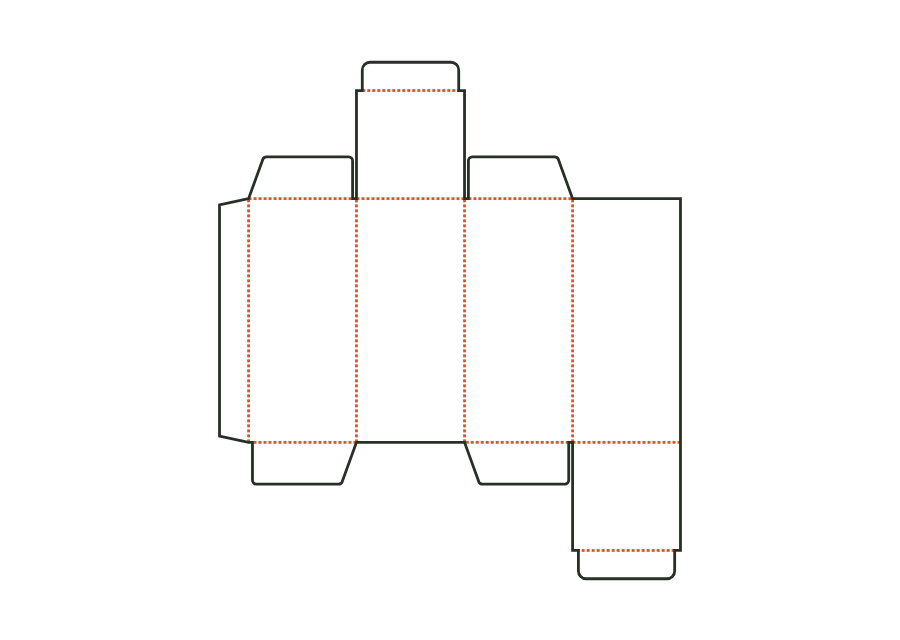
The top tuck flap sits on the front, the bottom one on the back. The reverse tuck-end carton calculates its walls, dust flaps and closures from the inside dimension. The dieline shown comes from version 3 with the hanging hole disabled; artwork, production dieline and production sheet can be exported together in the technical core.
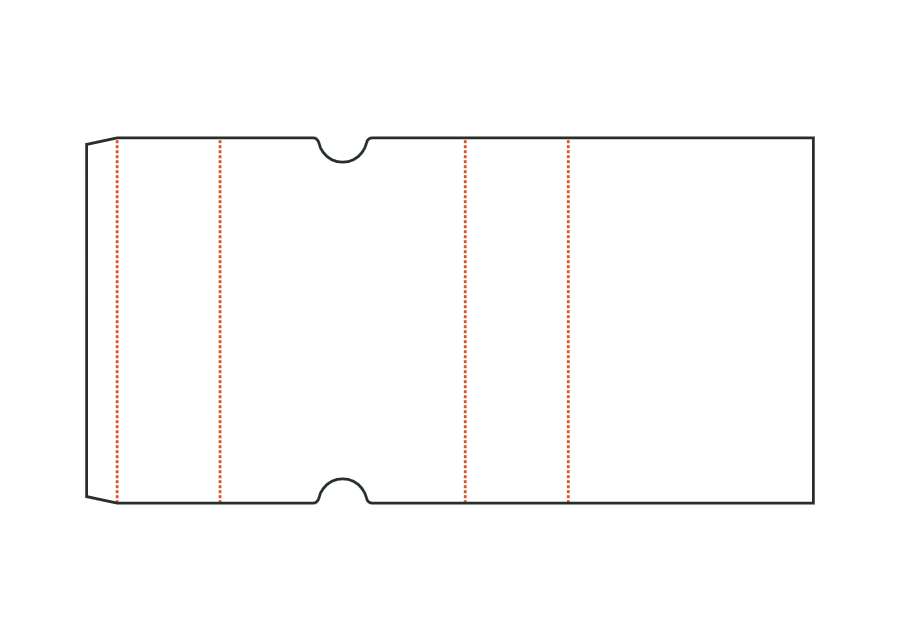
carton.tuckend.reverseView templateThe sleeve surrounds a product with four walls and remains open at both ends. Length and width describe the cross-section; height describes the sleeve length. The dieline shows version 1 with finger notches on the front. Material thickness, glue flap and notch position remain part of the calculation rather than simple scaling.
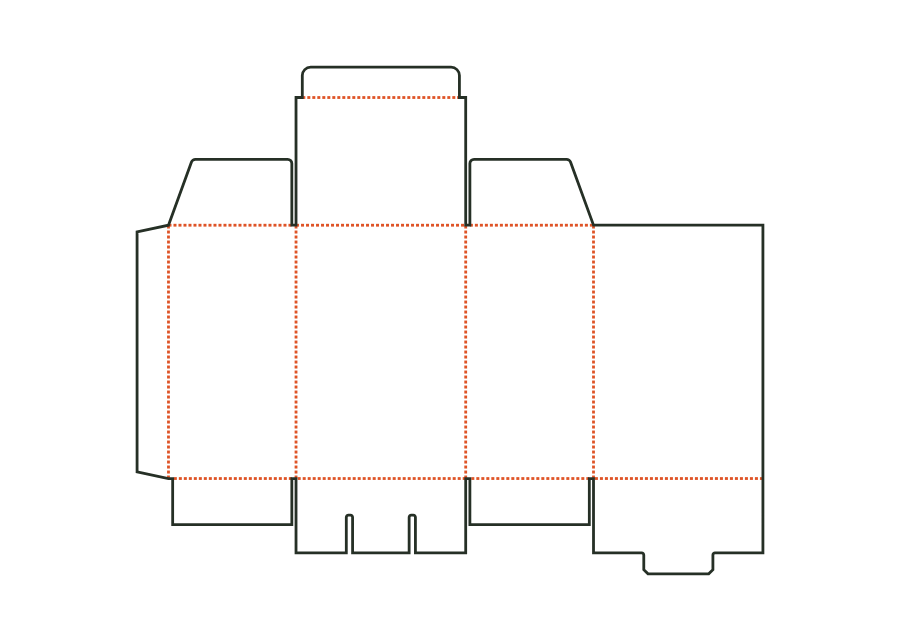
carton.sleeveView templateThe snap-lock bottom closes with four interlocking flaps. Two side flaps sit inside; a nose on the back tucks under the front flap's tongue. Version 1 combines this bottom with a tuck lid. The calculation example uses folding carton board 400 g/m² and shows the flat dieline with creases and bottom cuts.
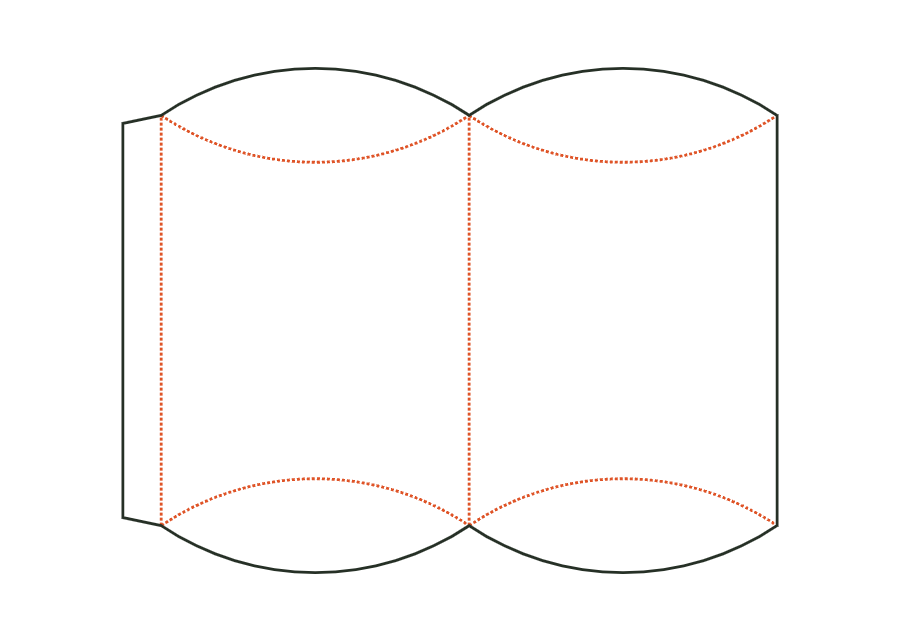
carton.snaplockView templateThe pillow box bows two wall panels between lens-shaped end flaps. Curved creases form the closure instead of straight lid creases. In version 1, the inputs mean width × thickness × length of the packaging. The dieline shown accounts for these proportions and the starting material; it does not define a rectangular box interior.
carton.pillowView templateWith JetDieline, choose a suitable template, adjust its size, and place text, logos, and images directly on your packaging.
Try your dimensions