Clearance to box wall
Clearance between pad edge and box wall on each side; the pad is smaller than the flat dimensions by twice the clearance.
 JetDieline
Corrugated shipping boxes / JETDIELINE
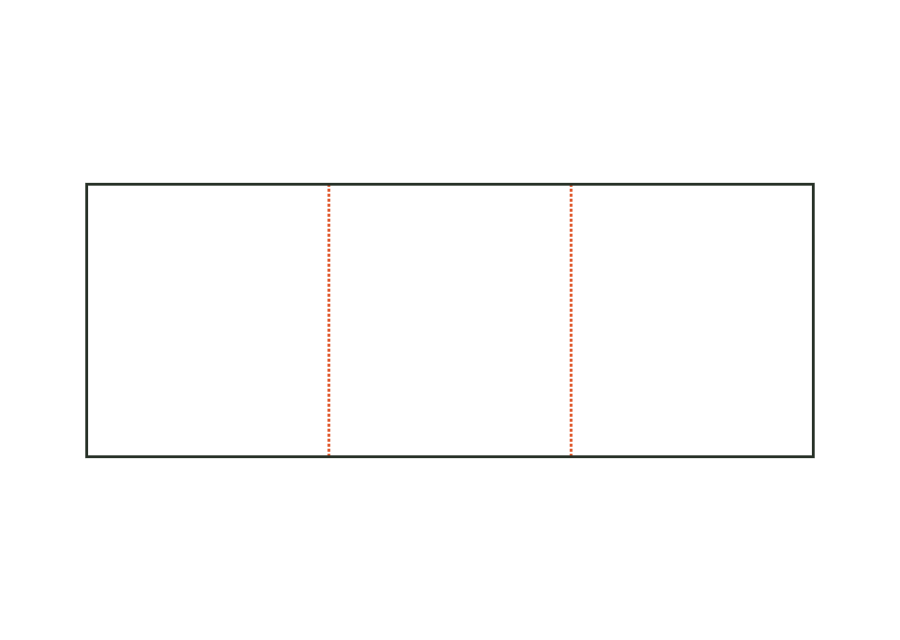
Flat insert pad as a base, intermediate layer or top insert in a box. Flat dimensions follow the box's inside space; side clearance makes the pad smaller. An optional grid forms identical rounded cutouts.

corrugated.insert.padFlat corrugated board pad as a base, intermediate layer or top insert in a box, optionally with a grid of identical rounded cutouts; dimensions = box inside length × inside width.
Separate the pad from the sheet, remove the cutouts and lay it flat in the box – as a base, between two layers or at the top beneath the lid.
Flute direction parallel to the pad's longer side: greater bending stiffness across the larger span (check with a test print shop).
Test fit, folding and closure on a sample made from the intended material. Confirm material thickness, grain direction and production steps with your printer.
Inside dimension
These dimensions describe the preview, not a fixed packaging size. The app recalculates the dieline for your own dimensions.
Clearance between pad edge and box wall on each side; the pad is smaller than the flat dimensions by twice the clearance.
Enable or disable the grid of identical cutouts in the pad.
Number of cutouts along the pad width, evenly distributed.
Number of cutouts along the pad height, evenly distributed.
Width of each cutout; a bridge of at least 10 mm remains between cutouts and at least 5 mm to the edge.
padClearance is subtracted on both sides in each direction. The starting value of 1 mm turns 300 × 200 mm into a pad of 298 × 198 mm. Here, flat dimensions refer to the intended box inside space. Actual clearance can only be confirmed with the box and target material.
Yes. cutouts is enabled; the starting profile contains two cutouts side by side and one row. Each cutout is 100 × 60 mm with a 5 mm radius. Disable the grid if you need a solid intermediate layer. The area metric and cut length then change accordingly.
The template generates a grid of identical cutouts with shared width, height and radius. Different individual contours are not a parameter of this V1. Columns and rows control distribution. For a product-specific contour, you need another suitable construction or a separately checked reference dieline.
Find the right packaging shape and fit it to your product
Design the artwork directly on the real dieline
Spot problems before you pass on files
Files your printer can trace
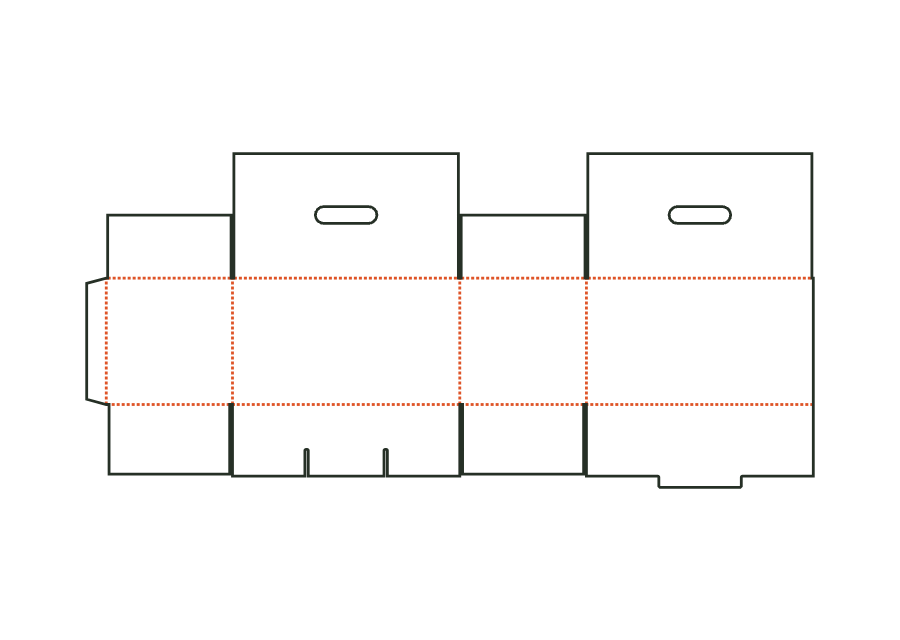
Corrugated carry-handle box with snap-lock bottom. Two fully overlapping lid flaps have aligned handle cut-outs and are glued across their surfaces; an additional handle is not part of the construction.
corrugated.handleView templateRectangular corrugated sheet with zero to three evenly spaced creases. Without a crease, it serves as a flat layer pad; folded, it forms an angle, U-profile or wrap around a product.
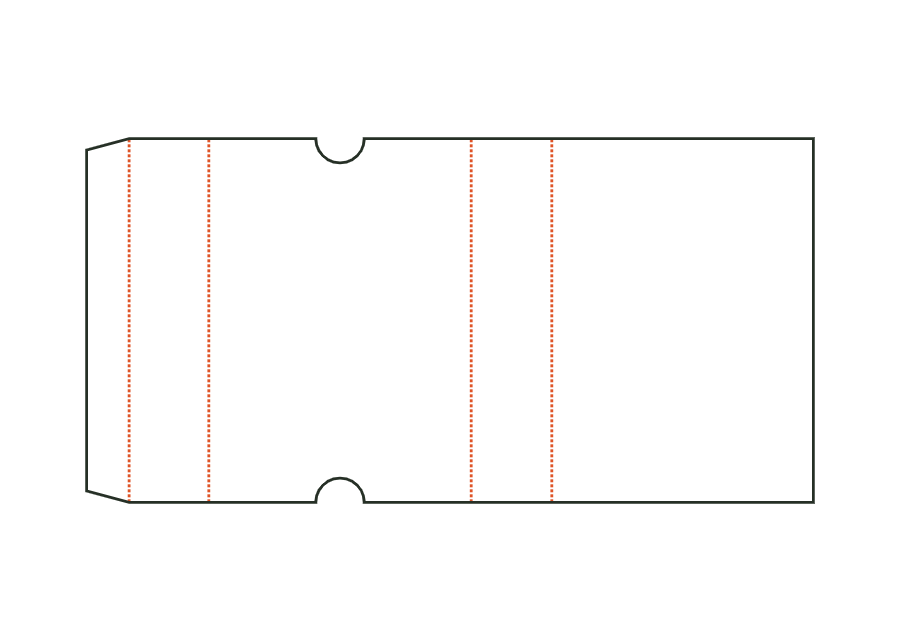
corrugated.sheetView templateCorrugated sliding sleeve with glue flap and open ends. Thumb cut-outs at both ends of the top make sliding out an inner component easier. The template calculates only the sleeve.
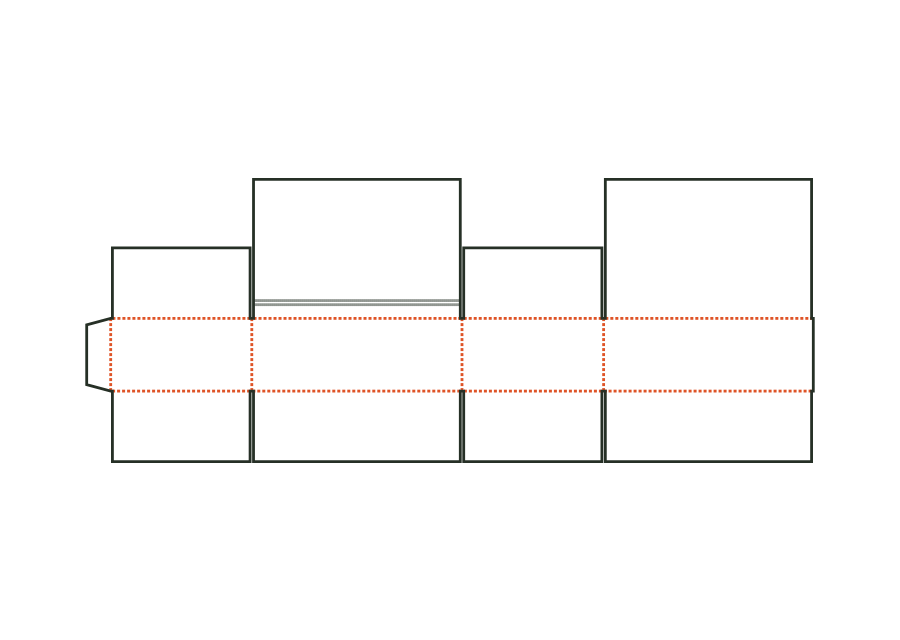
corrugated.slideView templateCorrugated shipping box with fully overlapping lid flaps, self-seal closure and tear strip. The bottom is closed with adhesive tape as on a slotted box; the upper closure has an adhesive strip and opening aid.
corrugated.shipper.selfsealView templateWith JetDieline, choose a suitable template, adjust its size, and place text, logos, and images directly on your packaging.
Try your dimensions Download on the Mac App Store