Flap gap
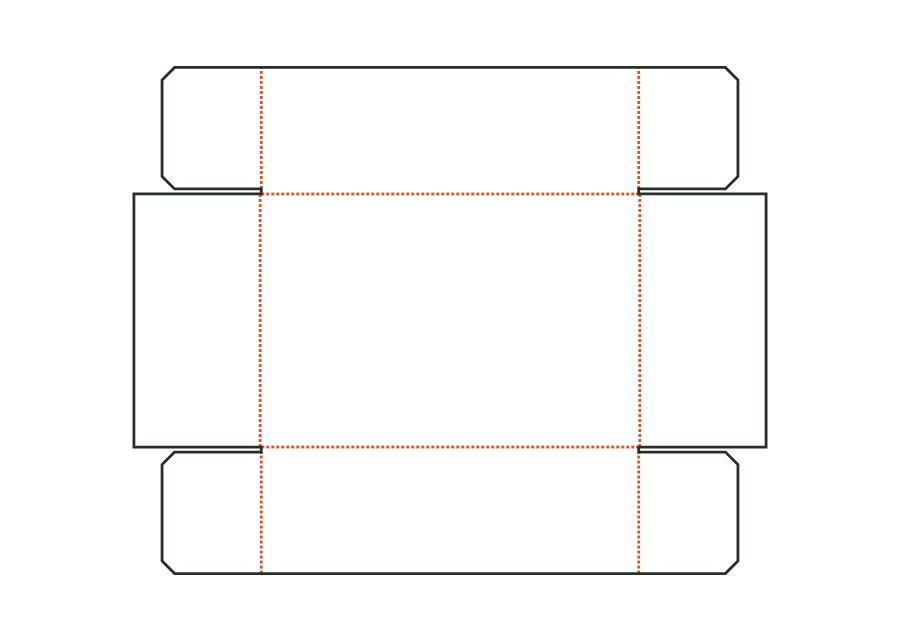
Gap between adjacent flaps or walls; at least about the material thickness.
 JetDieline
Folding cartons and inserts / JETDIELINE
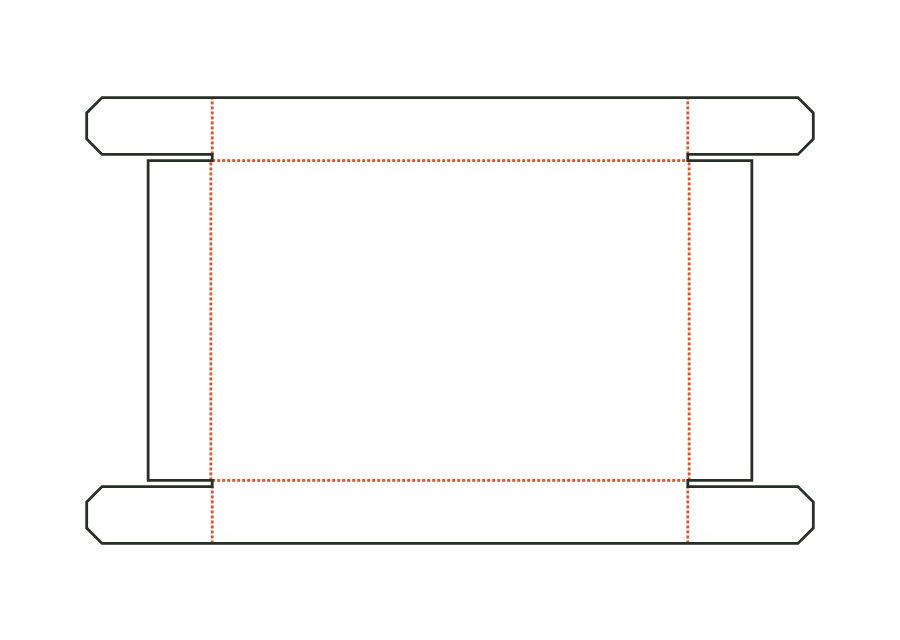
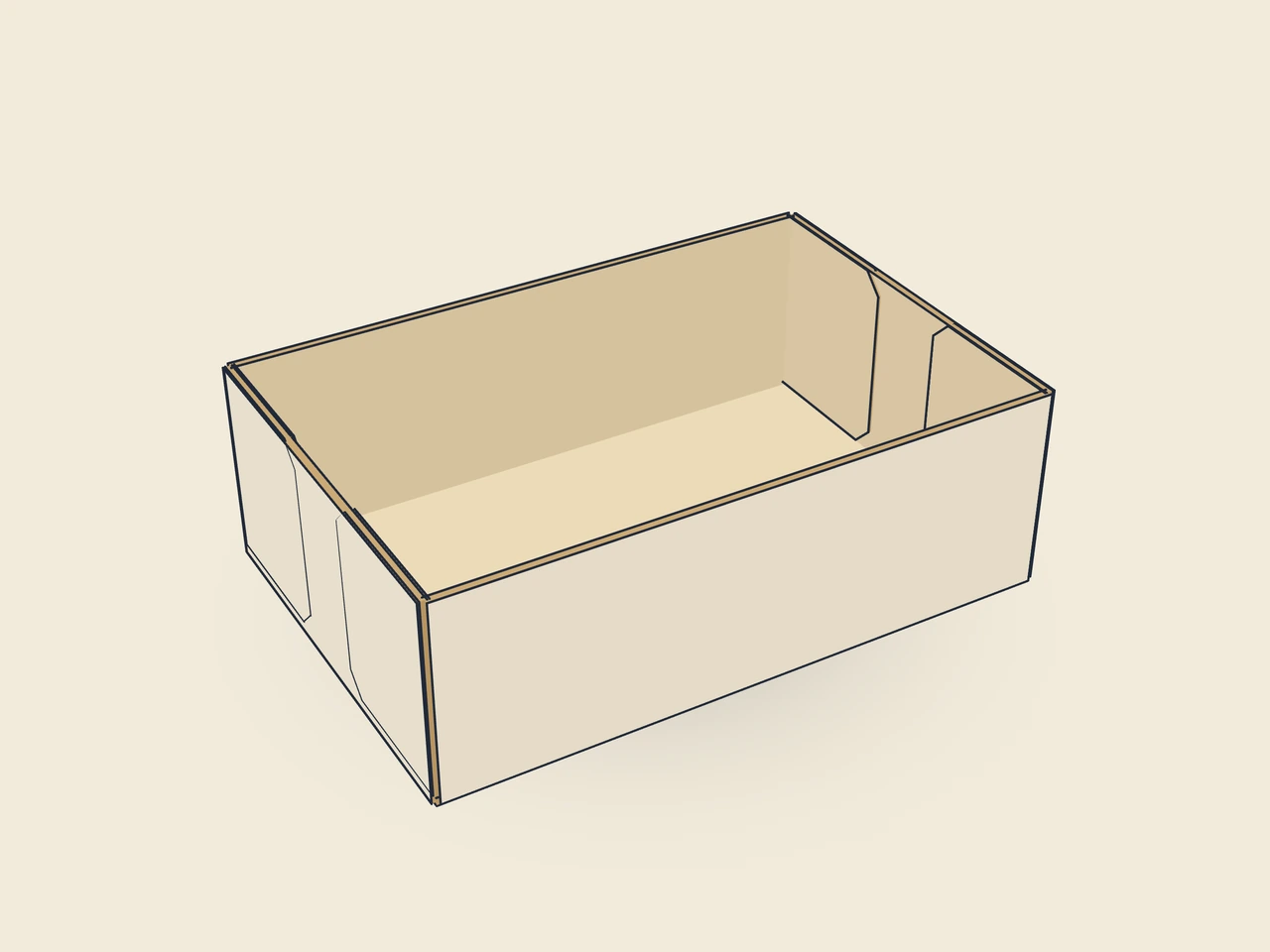
Lower part of the telescopic box made from folding boxboard: base with four walls and glued corner flaps, same design as the corrugated telescopic box, for smaller gift and chocolate boxes.
Drag to rotate
03 / BOX
Simplified display model with indicative material thickness, not to scale.
The 3D view is not available in this browser. The image shows the folded shape.
carton.telescope.baseThis template is a component of a packaging assembly. Match its dimensions to the other parts; lids, bases, wraps and linings serve different purposes.
Base and lid each consist of a tray with four walls and glued corner flaps. Both components are separate templates. Their relationship is established through the base's outside dimension and lid clearance.
Base: erect front and back walls, fold corner flaps inwards, erect end walls and glue them to the corner flaps. Lid: erect front and back walls, fold corner flaps inwards, erect end walls and glue them to the corner flaps. Place the lid upside down over the base.
Test fit, folding and closure on a sample made from the intended material. Confirm material thickness, grain direction and production steps with your printer.
Inside dimension
These dimensions describe the preview, not a fixed packaging size. The app recalculates the dieline for your own dimensions.
Gap between adjacent flaps or walls; at least about the material thickness.
Length of the ears or corner flaps as a proportion of half the inside width.
The lid needs the base's outside dimension plus clearance on each side. The base's inside dimension alone is insufficient: the dimension model accounts for material thickness. The documented individual starting examples are base 150 × 100 × 50 mm and lid 154 × 103 × 20 mm. The lid starting dimensions are rounded; confirm the fit of both parts on a joint sample.
Identical inside dimensions do not produce a fitting telescopic joint because the base walls require additional space outside. Determine the lid from the calculated outside dimension of the lower part and the chosen clearance. Coating or corner gluing can also affect practical fit. Check fitting and removing the lid with both real parts.
The flap gap leaves space between corner flap and adjacent wall. Ear length determines the extent of the corner flaps as a proportion. Both parts use these parameters with their own dimensions. Ears that are too short provide insufficient glue width; too large a gap does not suit the wall height. The tables show each component's unchanged starting values.
Find the right packaging shape and fit it to your product
Design the artwork directly on the real dieline
Spot problems before you pass on files
Files your printer can trace
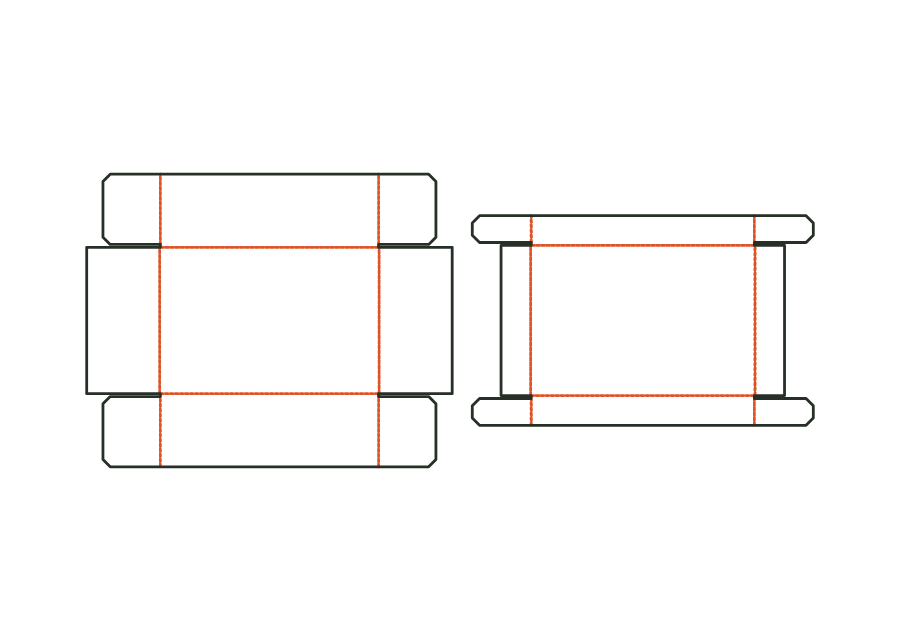
Base and telescope lid in folding boxboard form one assembly. Both parts have glued corner flaps; the lid follows the outside dimensions of the base plus clearance per side. For gift and chocolate boxes.
carton.telescopeView templateTelescopic lid made from folding boxboard in the same design as the base; dimensions from the base's outside dimension plus clearance on each side.
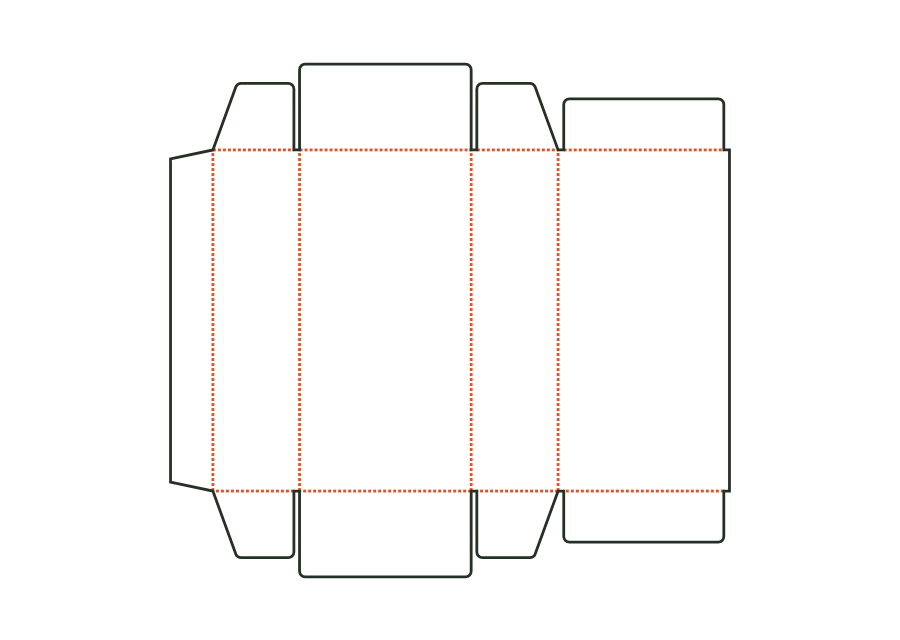
carton.telescope.lidView templateFolding carton with a side seam and glued closures at the top and bottom (Seal End) instead of tuck flaps: outer flap on the front, inner flap on the back, dust flaps on the sides. For pharmaceutical and food products; opened by tearing.
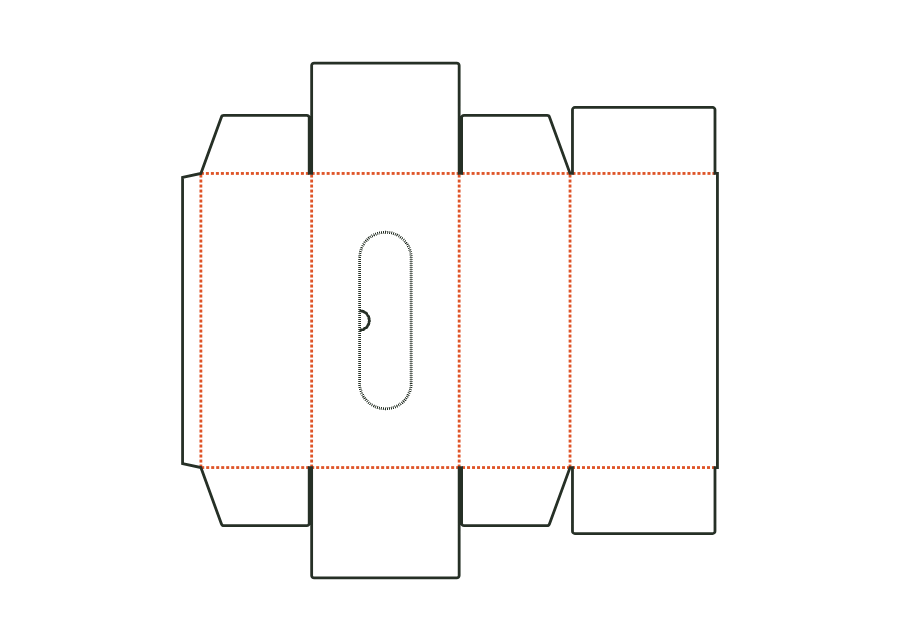
carton.sealendView templateHorizontal box for facial tissues and handkerchiefs: body with side seam, glued end closures (Seal End), perforated dispensing opening in the top (oblong slot or rectangle) with thumb notch. Dimensions: length × top width × height.
carton.tissueView templateWith JetDieline, choose a suitable template, adjust its size, and place text, logos, and images directly on your packaging.
Try your dimensions