Wall slope
Outward slope of front and back walls relative to the vertical; the top opening becomes 2 × height × tan(slope) wider, and the end walls become trapezoids.
 JetDieline
Food and hospitality / JETDIELINE
The takeout box has outward-sloping front and back walls, glued corners and a folding lid with tuck flap. Inside width and outside width have different reference points.


Drag to rotate
03 / BOX
Simplified display model without material thickness, not to scale.
The 3D view is not available in this browser. The image shows the folded shape.
carton.takeoutInside width is measured at the bottom. The slope widens the opening towards the top; vertical end walls become trapezoids. The lid covers the entire opening. Tuck flap and hinge follow the sloping front and back walls.
Erect front and back walls, fold the corner glue flaps inwards and apply adhesive to their outside, erect the end walls and press down. Fill, close the lid and tuck the tuck flap behind the front wall. If required, thread a carrying handle through the handle holes.
Grain direction parallel to the length: bottom, hinge and flap creases run along the grain, and the sloping wall creases fold cleanly (check with the test print shop).
Test fit, folding and closure on a sample made from the intended material. Confirm material thickness, grain direction and production steps with your printer.
Compare openings and closures for your food product. Check direct-contact material, moisture and grease resistance with the manufacturer.
Inside dimension
These dimensions describe the preview, not a fixed packaging size. The app recalculates the dieline for your own dimensions.
Outward slope of front and back walls relative to the vertical; the top opening becomes 2 × height × tan(slope) wider, and the end walls become trapezoids.
Width of the glue flaps at the ends of the front and back walls, which are glued to the inside of the end walls. The material requires a minimum width; flaps from both sides must not meet on the end wall.
Angle at both ends of the corner glue flaps; the flap does not catch on the bottom or top edge during erection. At least equal to the wall slope flareAngle.
Gap between adjacent flaps or walls; at least about the material thickness.
How far the tuck flap reaches into the box; no more than roughly half the width (height for a mailer). For this box, no more than half the height.
For inside dimension, measure width at the bottom. For outside dimension, width refers to the top opening. Front and back walls slope outwards, so these reference points differ. Height is measured vertically. Record the chosen dimension reference during discussion so that bottom and opening are not confused.
No. handleHoles enables one round hole in each end wall. Diameter and distance from the top edge are parameters. No wire or handle is generated. You must determine its shape, attachment and load capacity separately. The model limits hole position geometrically but simulates neither tearing out nor transport of a filled box.
flareAngle permits 0° and therefore a rectangular cuboid starting shape. Larger angles increase the top opening. The model limits this increase and requires a matching corner glue flap angle. Change both together when increasing the slope. Then check lid closure and corners, as their position changes with the angle.
Find the right packaging shape and fit it to your product
Design the artwork directly on the real dieline
Spot problems before you pass on files
Files your printer can trace
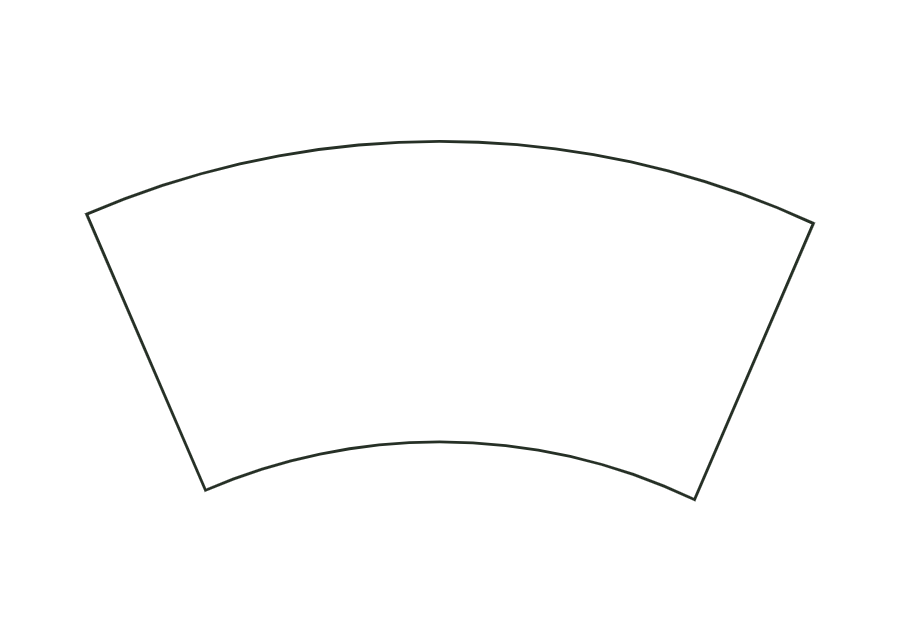
Calculate the conical wall of a paperboard cup from rim diameter, base diameter and finished height. The annular sector includes the glue seam and separate allowances for the bottom curl and top rolled rim.
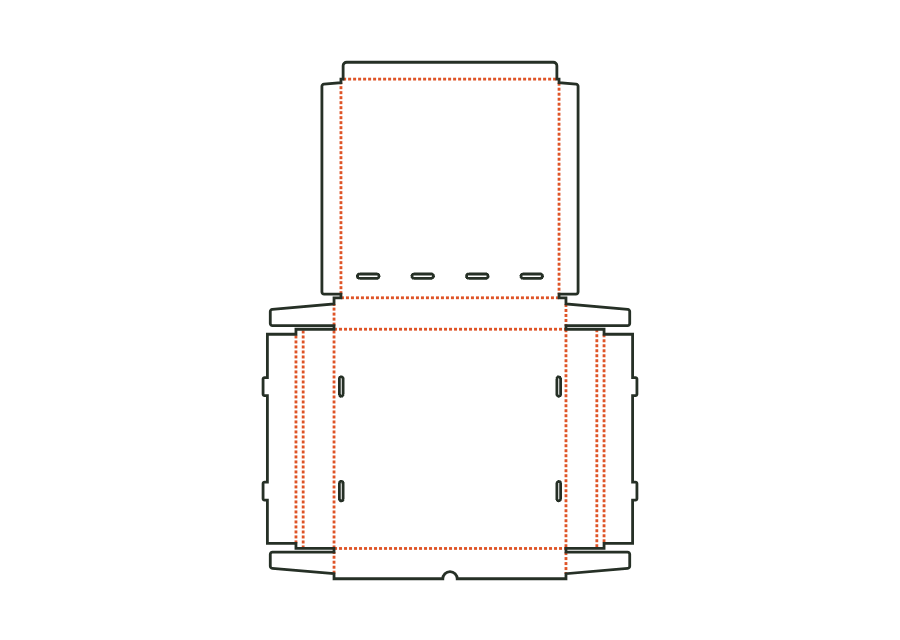
cone.cup.wrapView templateThe pizza box is made from one blank with double side walls, interlocking corners and a hinged lid. Inside dimensions determine the space for the pizza; ventilation slots and locking tabs are separate parameters.
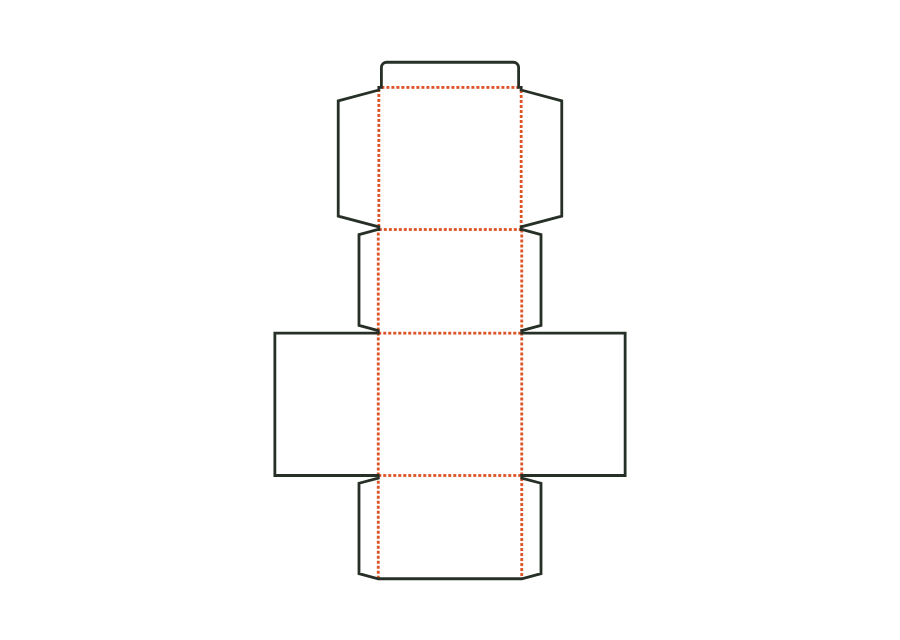
carton.pizzaView templateThe clamshell tray combines a base with glued corners and a lid hinged to the back wall. You choose a tuck flap or tab-and-slot closure and calculate either from inside or outside dimensions.
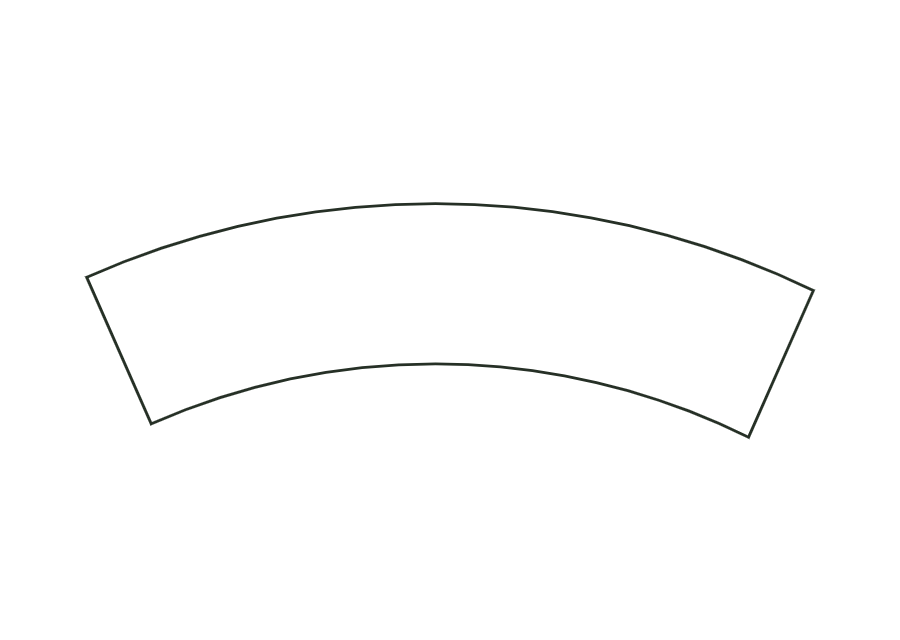
carton.tray.hingedView templateThe cup sleeve is an annular sector with a glue flap for an existing tapered cup. You measure the diameters at the top and bottom edges of the sleeve and its vertical height.
sleeve.cupView templateWith JetDieline, choose a suitable template, adjust its size, and place text, logos, and images directly on your packaging.
Try your dimensions