Return width
Width of the double wall's return (crease to crease); accommodates the flaps in the pocket.
 JetDieline
Corrugated shipping boxes / JETDIELINE
Shipping box with tuck lid and dust flaps made from E flute or microflute. Inside printing, double walls and size series are part of the same construction.
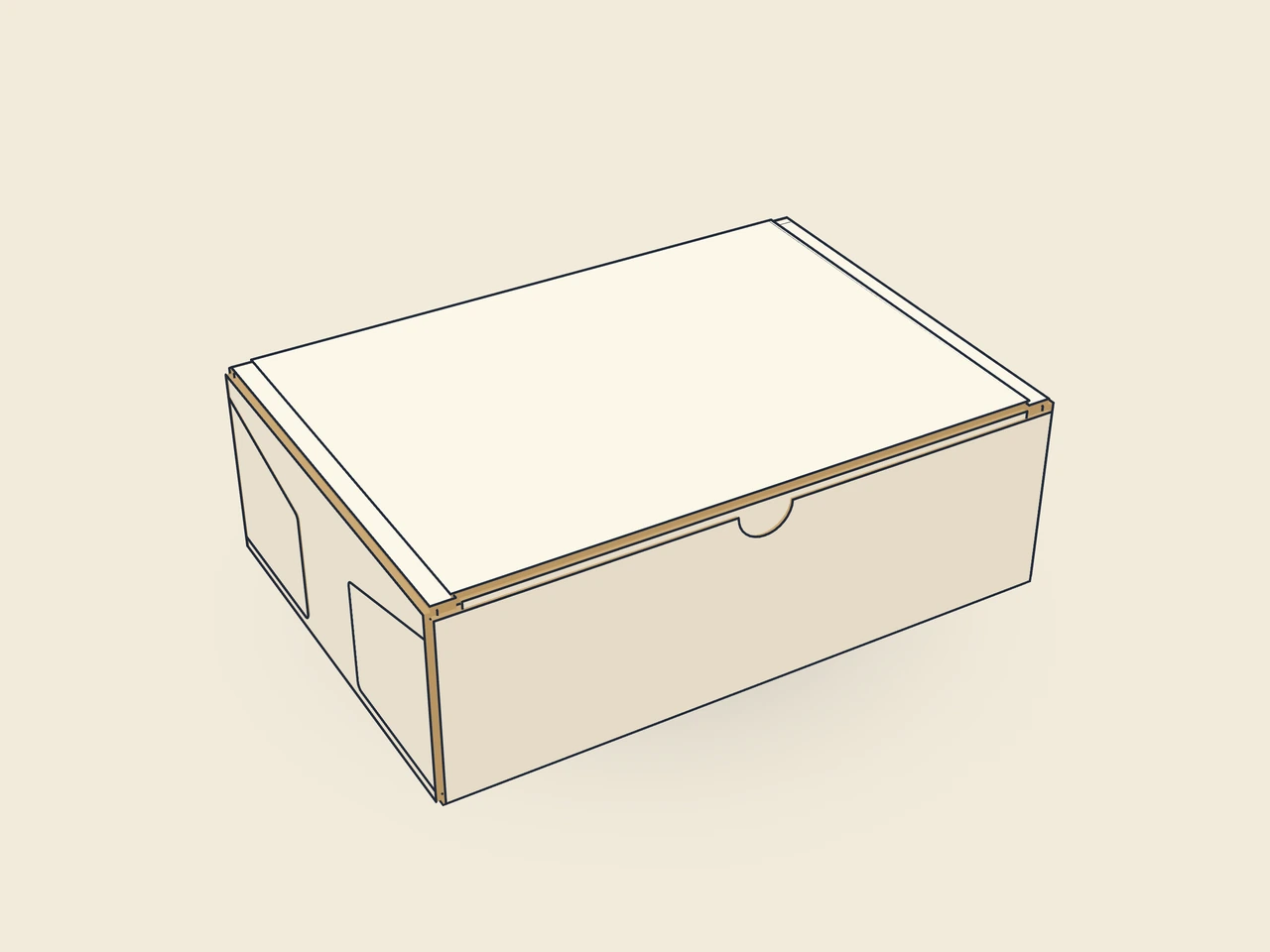
Drag to rotate
03 / BOX
Simplified display model without material thickness, not to scale.
The 3D view is not available in this browser. The image shows the folded shape.
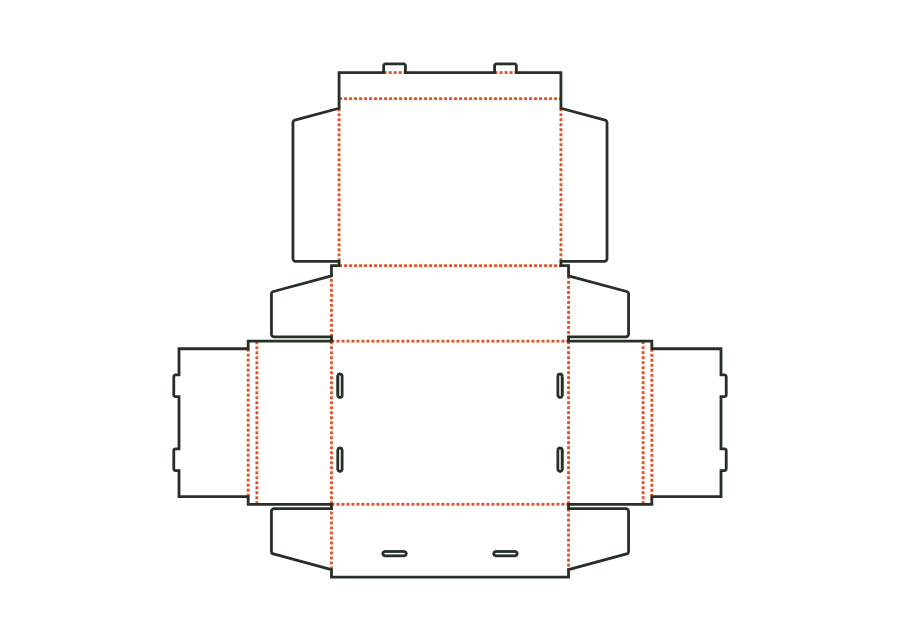
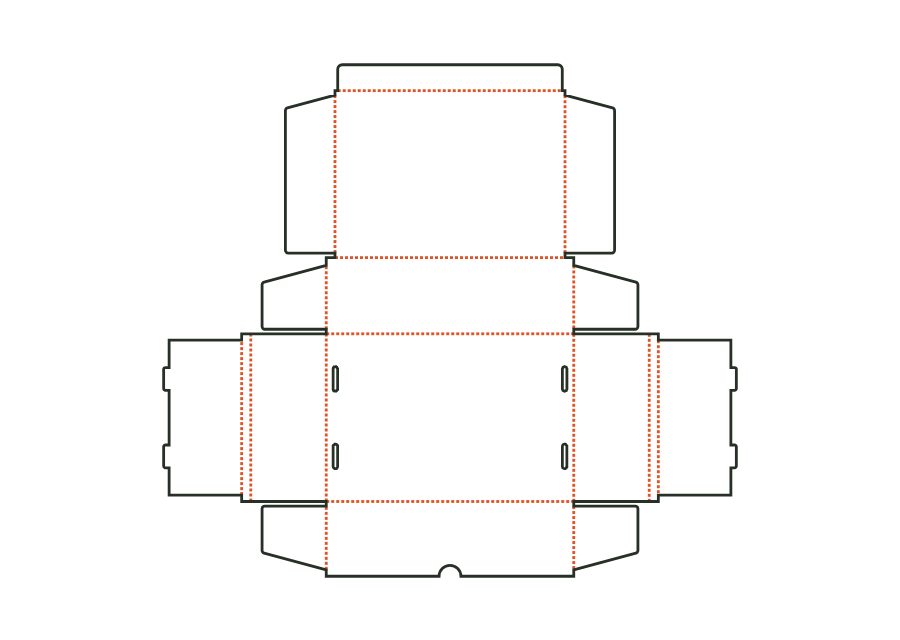
corrugated.mailerThe base sits in the middle of the blank. Double side walls are folded over and held by locking tabs in the base; ears and dust flaps close side openings. A thumb cut-out makes access to the tuck lid easier.
Erect the front and back walls and fold the ears inwards. Erect the side walls over them, fold the return inwards and insert the tabs into the base slots. After filling, close the lid, fold in the dust flaps and insert the tuck flap.
Grain direction vertical on the blank (check)
Test fit, folding and closure on a sample made from the intended material. Confirm material thickness, grain direction and production steps with your printer.
Inside dimension
These dimensions describe the preview, not a fixed packaging size. The app recalculates the dieline for your own dimensions.
Width of the double wall's return (crease to crease); accommodates the flaps in the pocket.
Gap between adjacent flaps or walls; at least about the material thickness.
Length of the ears or corner flaps as a proportion of half the inside width.
Length of the lid's dust flaps as a proportion of the inside height.
Angle of the dust flaps (and the ears on a mailer); larger angles prevent collisions during folding.
The catalogue example specifies E flute or microflute. Starting profiles for B and C are also available. The choice depends on the product and production. The profile is not calibrated. Check fit, locking and protection on the target material before approving the series.
The side walls are folded inwards and held by tabs in the base. The ears sit within them. Multiple folds change the available space and accumulate crease allowance. The preview shows this construction but does not confirm load capacity; check that on a physical sample.
There is no universal value for every product. Measure the product, insert and closure and consider the filling workflow. The material profile changes the finished fit. A mathematically valid inside dimension is therefore insufficient. Determine clearance with a sample made from the corrugated board actually used.
Find the right packaging shape and fit it to your product
Design the artwork directly on the real dieline
Spot problems before you pass on files
Files your printer can trace
Corrugated mailer with double side walls and an external tuck closure. The lid locking tabs engage through oblong holes in the front wall; the construction is erected without gluing.
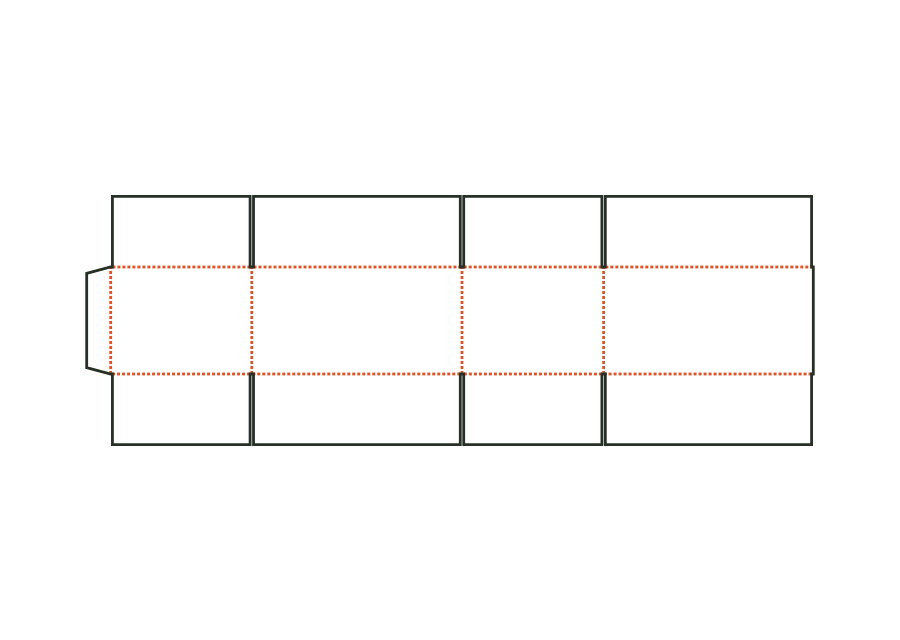
corrugated.mailer.lockView templateThe slotted box combines four walls, a glue flap and four flaps each at the top and bottom. Its outer flaps meet in the middle; the reference is similar to FEFCO 0201.
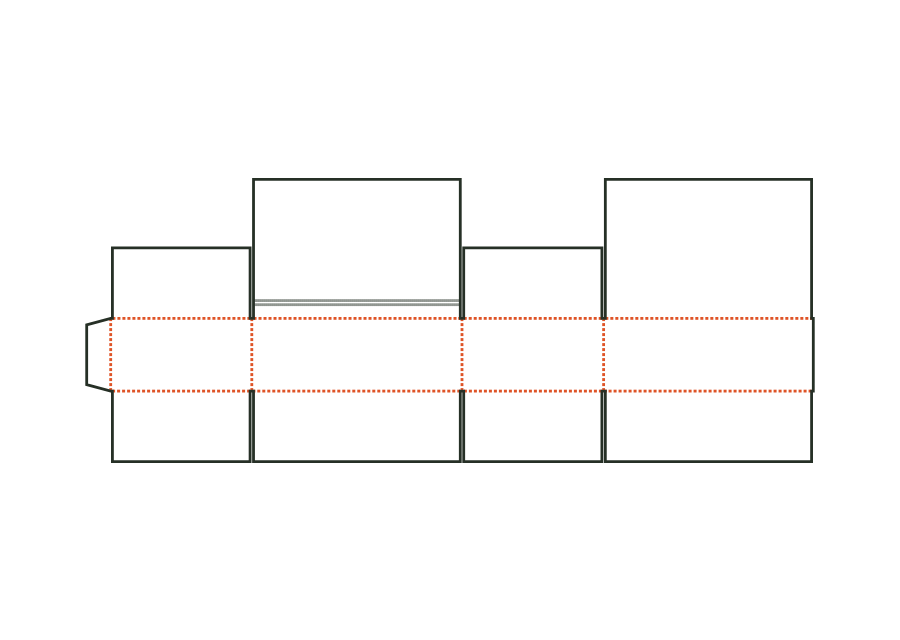
corrugated.rscView templateCorrugated shipping box with fully overlapping lid flaps, self-seal closure and tear strip. The bottom is closed with adhesive tape as on a slotted box; the upper closure has an adhesive strip and opening aid.
corrugated.shipper.selfsealView templateDivider insert made from longitudinal and transverse strips with interlocking slots extending halfway down their height. All strips lie on a shared sheet and remain joined by holding nicks until separated.
corrugated.dividerView templateWith JetDieline, choose a suitable template, adjust its size, and place text, logos, and images directly on your packaging.
Try your dimensions Download on the Mac App Store