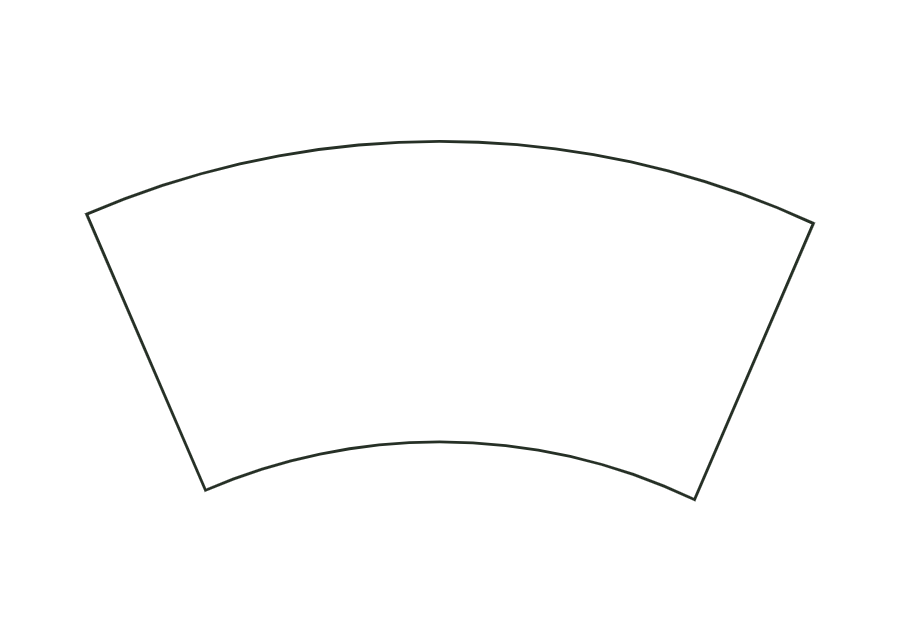
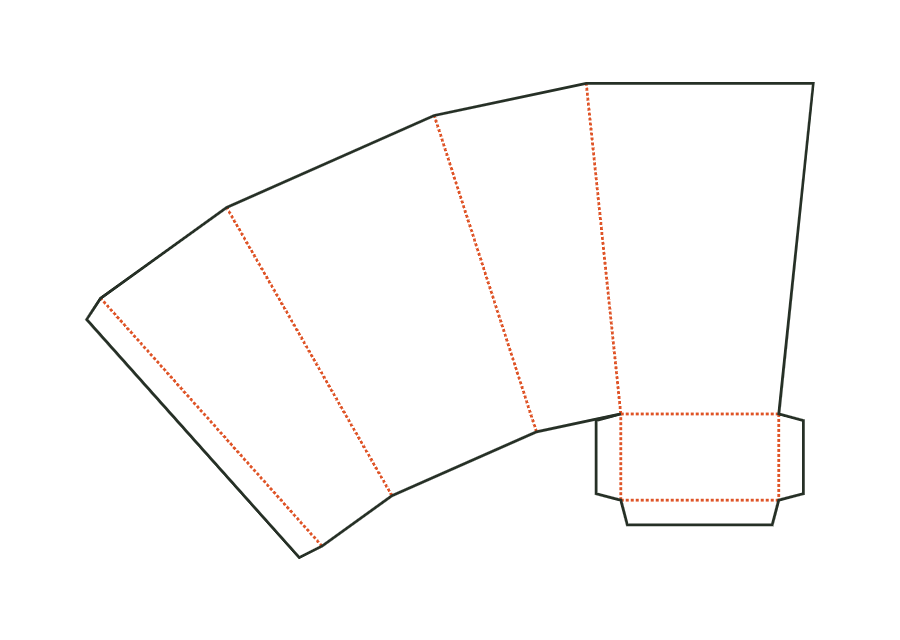
Calculate the conical sidewall blank of a paperboard cup from rim diameter, bottom diameter, and finished height. The annular sector includes the glue seam and separate allowances for the bottom curl and top rolled rim.
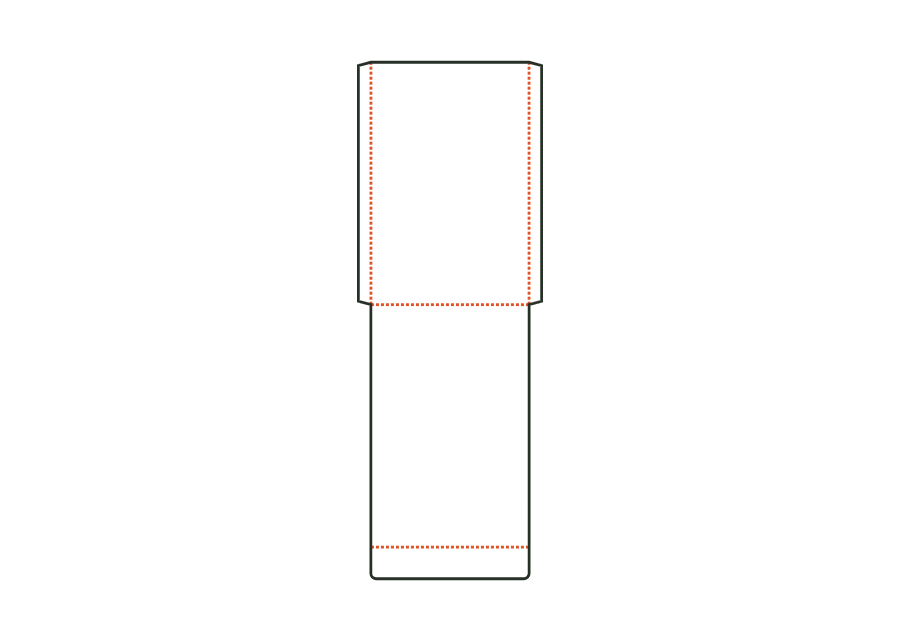
The flat bag consists of front and back with two glued side seams and a bottom fold. Enter bag width and height as outside dimensions. An optional flap on the back closes the opening; the dieline shows its effect on the paper blank.
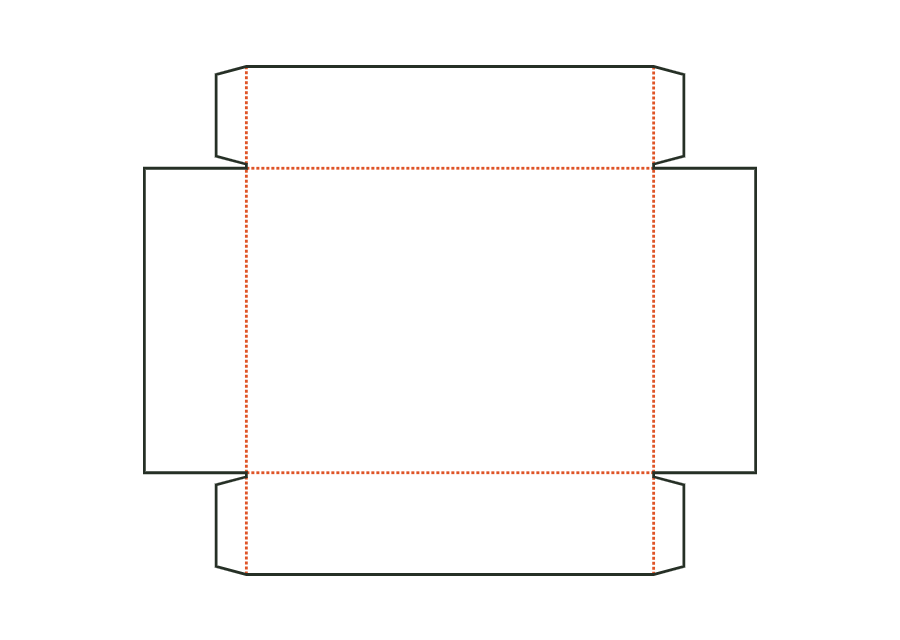
A base, four walls, and glued corners form the open folding tray. This page shows V2 with an optional window; the window remains disabled in the starting example.
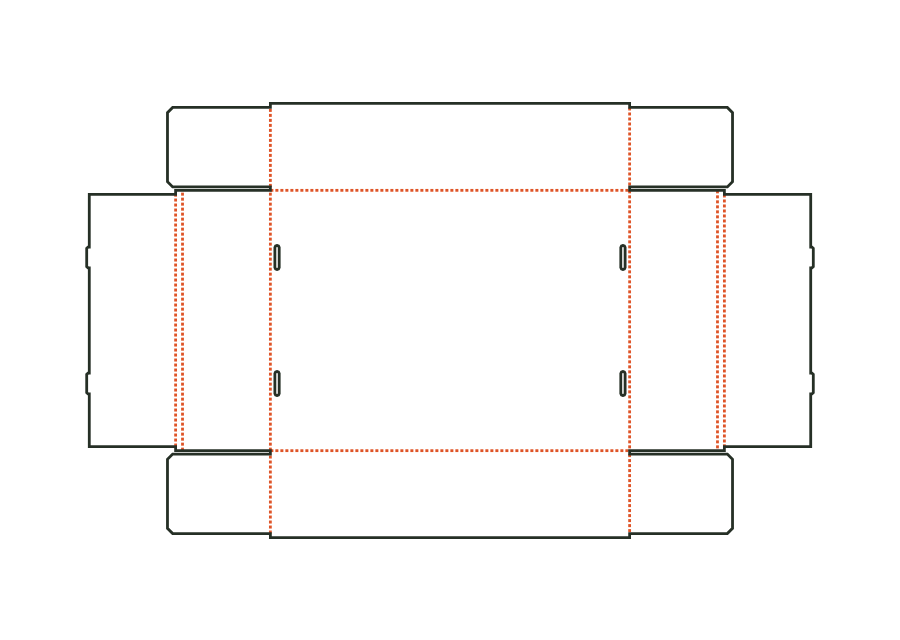
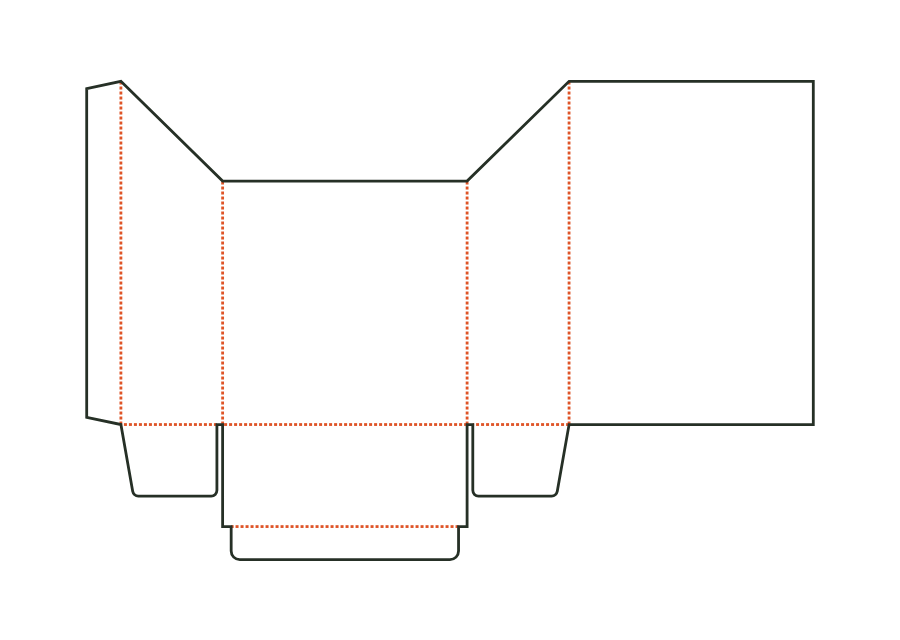
Unglued folding carton board tray: front and back walls with corner flaps, double end walls with a rollover; tabs on the inner wall tuck into slots in the bottom.
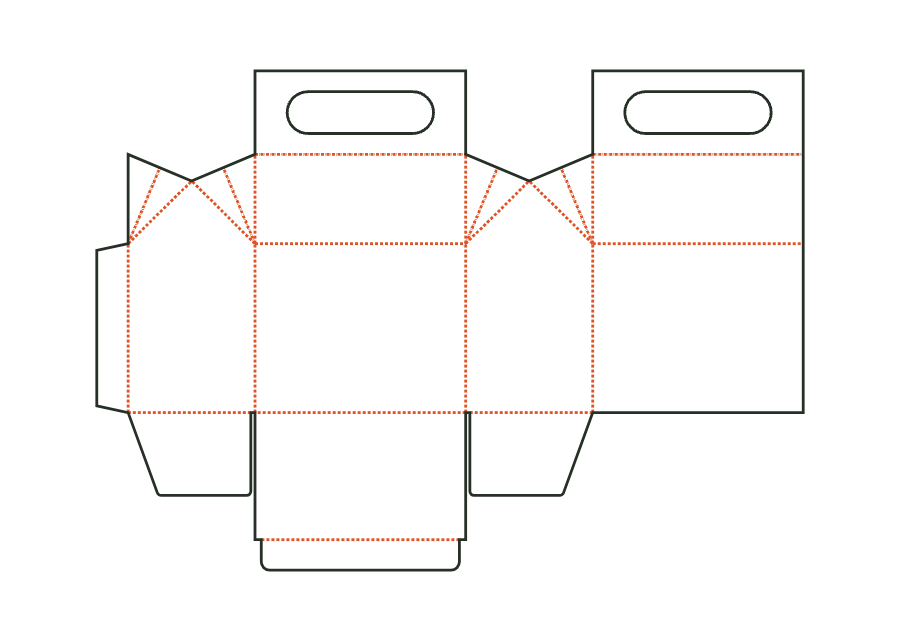
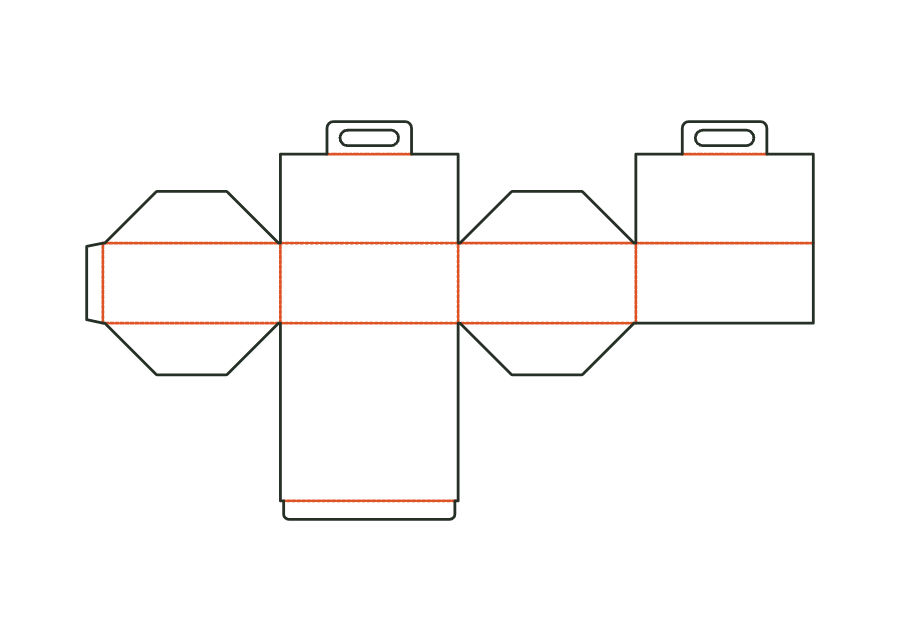
The gable carton combines a tuck bottom with a gable roof and glued handle flaps. The page explicitly shows version 1 with handle hole, roof panels, and gussets. The entered height describes the body; gable and handle are added using separate parameters. The calculated dieline is a basis for the folding sample, not proof of load capacity.
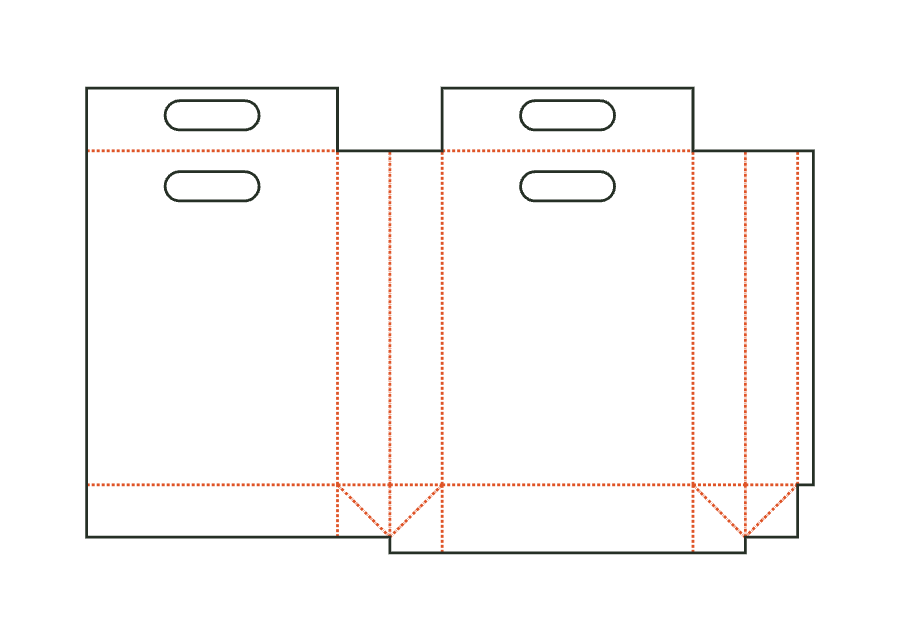
Paper carrier bag comprising front, back, and two side gussets with a longitudinal seam, block bottom, top turn-in as handle reinforcement, and die-cut handle holes; dimensions: bag width × gusset depth × height. Bottom insert and handles are separate parts.
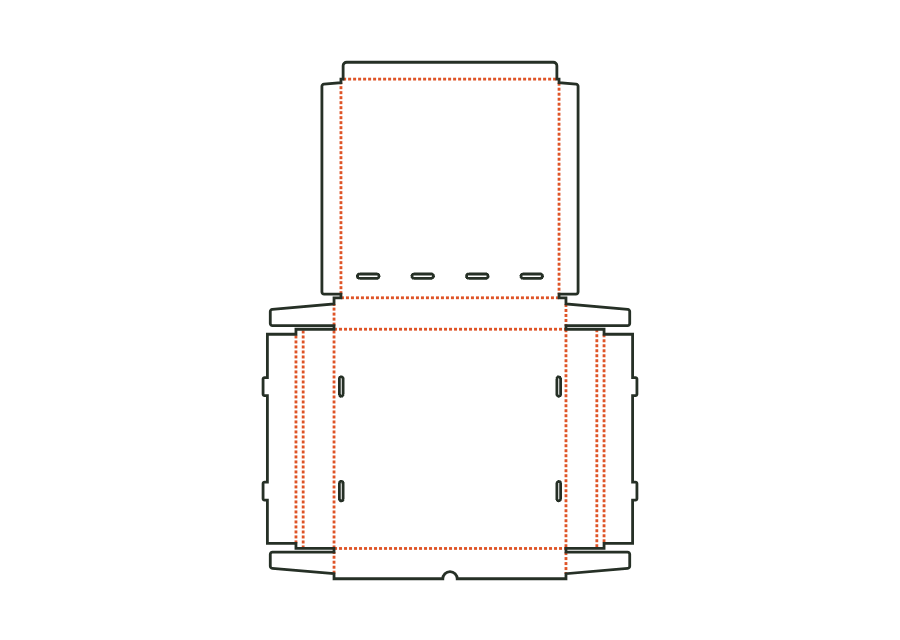
The pizza box is formed from one blank with double side walls, locking corners, and a hinged lid. Inside dimensions determine the space for the pizza; ventilation slots and locking tabs are separate parameters.
The clamshell tray combines a base with glued corners and a lid hinged to the back wall. You choose a tuck flap or tab-and-slot closure and calculate either from inside or outside dimensions.
The takeout box has outward-sloping front and back walls, glued corners, and a folding lid with a tuck flap. Inside width and outside width have different reference points.
The cup sleeve is an annular sector with a glue flap for an existing tapered cup. You measure the diameters at the top and bottom edges of the sleeve and its vertical height.
The French fry scoop remains open at the top and has a taller back wall, a lower front, and downward-sloping sides. Front width, depth, and back wall height form the inside dimensions; front height is a separate parameter.
The popcorn box is open at the top and has four outward-sloping walls, a side seam, and a glued bottom. Length and width describe the top opening; the bottom is smaller.
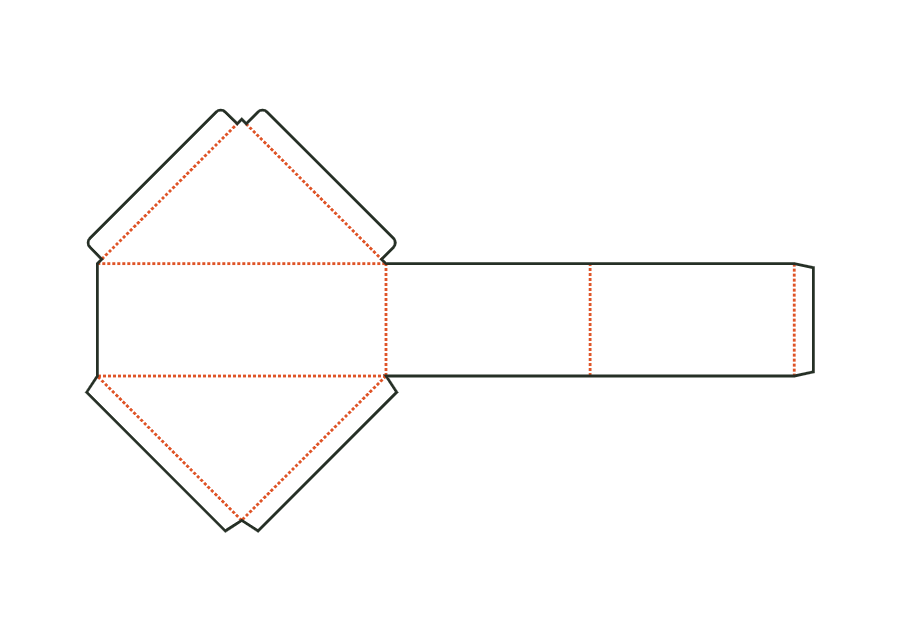
The sandwich wedge forms a triangular prism from a bottom and two sloping sides, a glued-in back, and a hinged lid. Inside dimensions describe baseline, prism thickness, and triangle height.
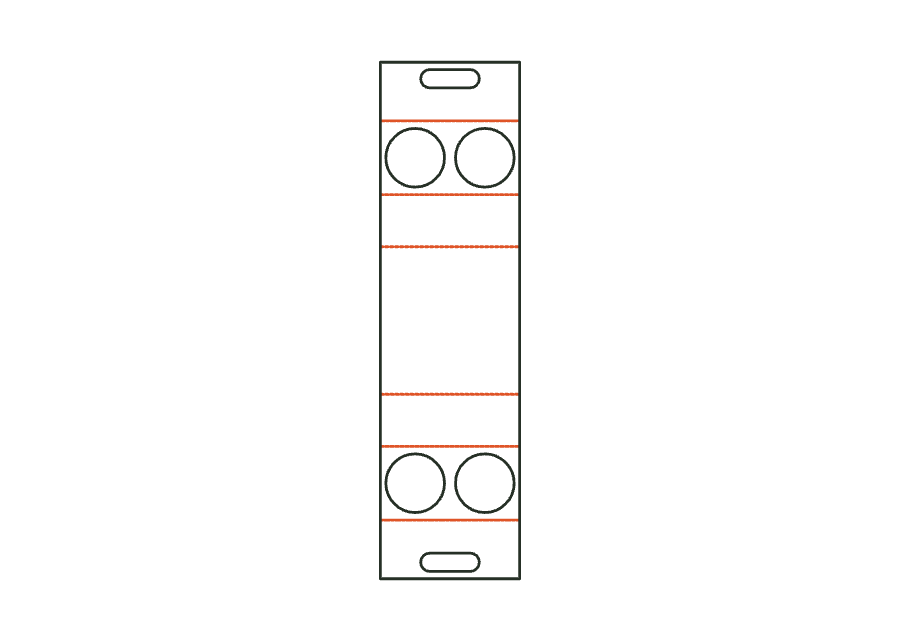
One-piece folding carton carrier for 2 or 4 cups: base, front and back wall, two hole decks holding the cups and a double handle from the blank. Ends open.
Box for cakes and tarts with a tuck bottom, a split lid of two roof halves and a carry handle made of two handle panels with handle holes; optional window in the lid halves or in the front. Starting material E-flute microflute, start sizes for cakes Ø 24, 26 and 28 cm.
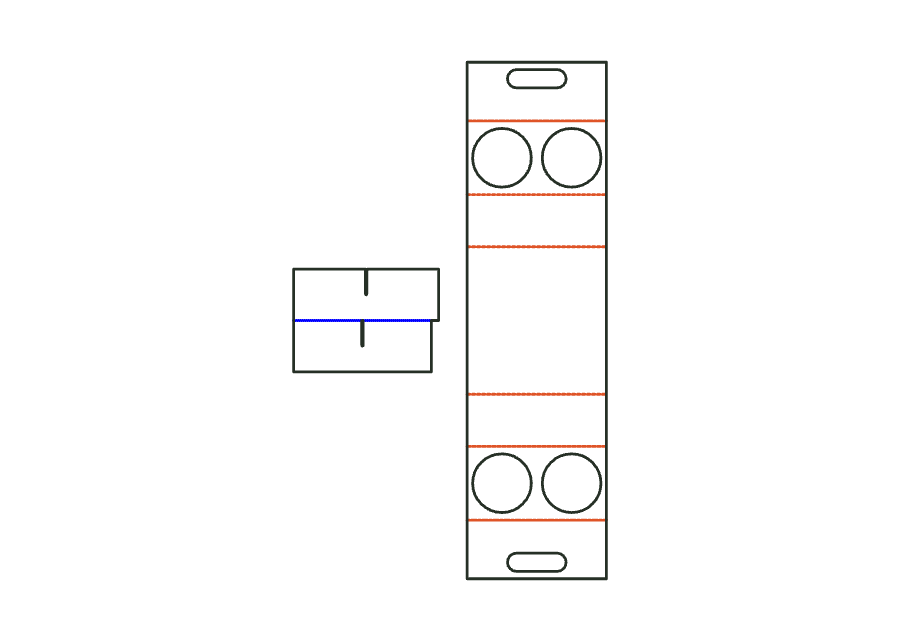
Cup carrier and slotted divider form one assembly. The carrier has two hole decks and a carrying handle; the crossed strips also separate cups below the decks. The divider follows the internal space and cell count of the carrier.
 JetDieline