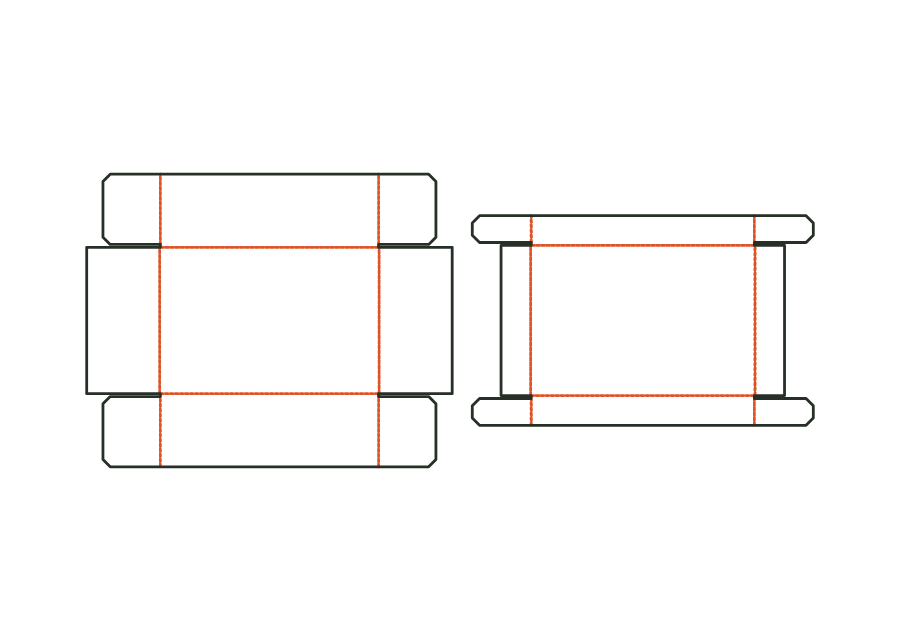
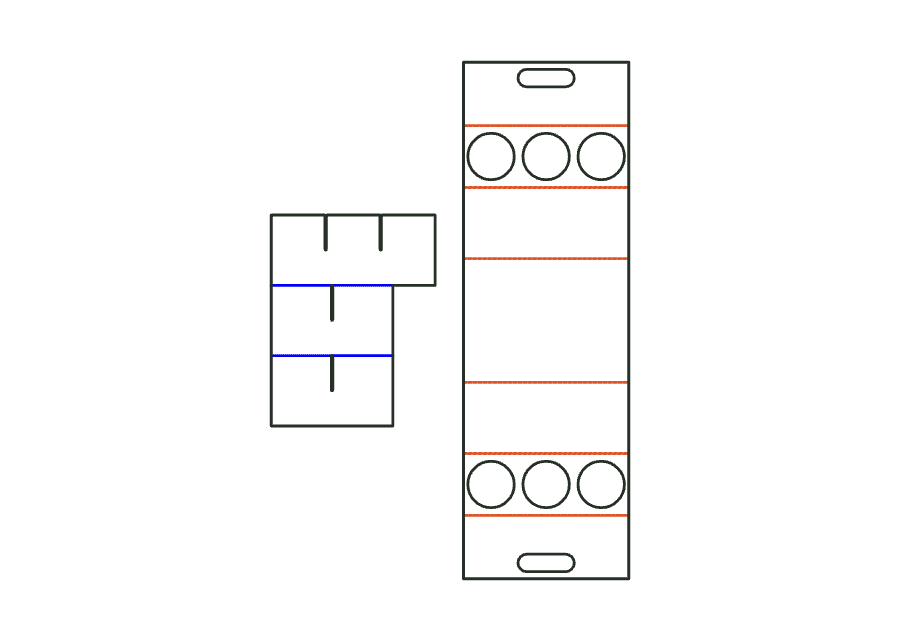
Mailer box
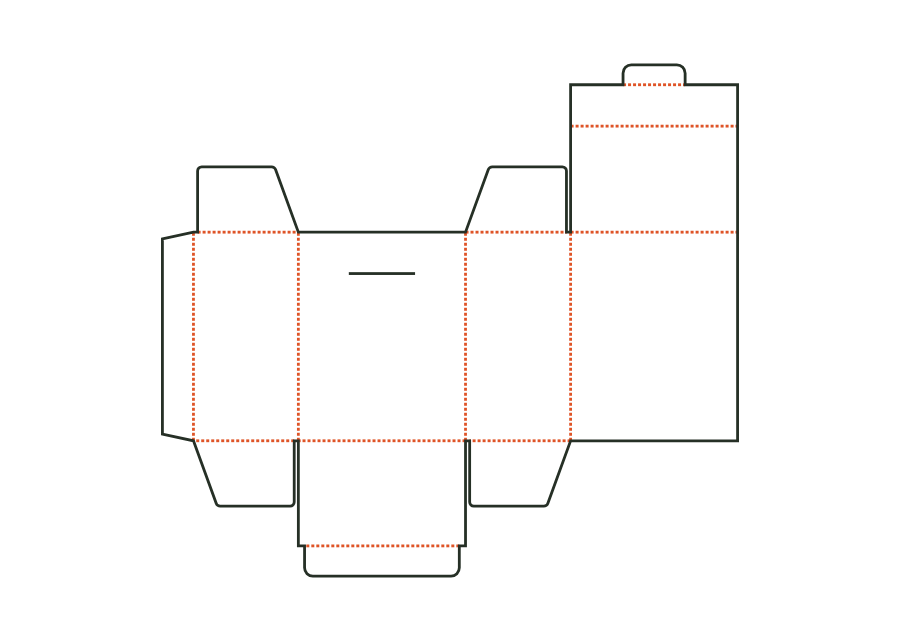
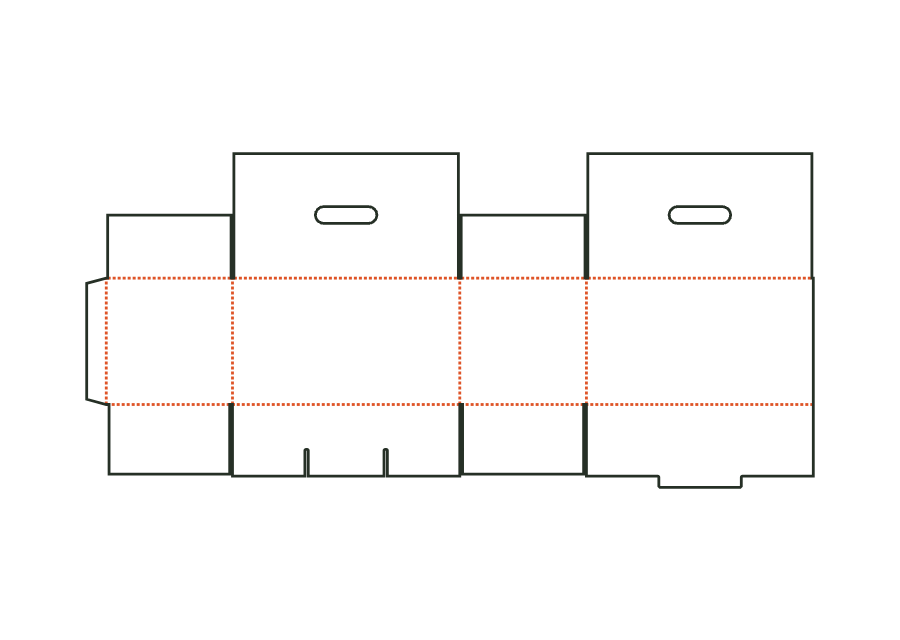
Shipping box with tuck lid and dust flaps made from E flute or microflute. Inside printing, double walls, and size series are part of the same construction.
corrugated.mailerView template JetDieline
JETDIELINE / Templates
Compare opening and presentation: pillow shapes, bands, drawers or lift-off lids. Plan the fit of contents and inserts and allow clearance between moving parts.
Individual components are shown separately. Different sizes and stored template versions are not additional packaging shapes.
 corrugated.mailer
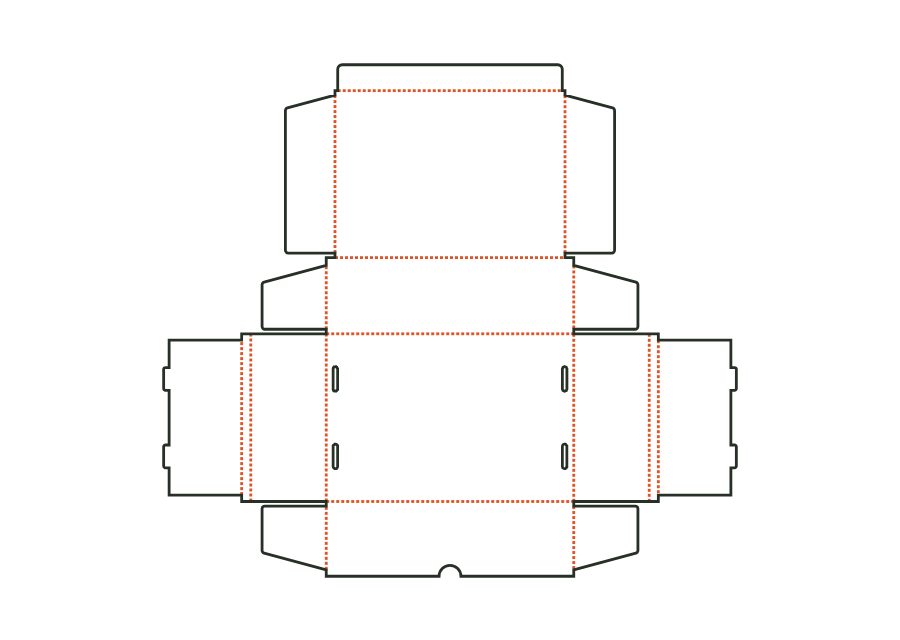
Shipping box with tuck lid and dust flaps made from E flute or microflute. Inside printing, double walls, and size series are part of the same construction.
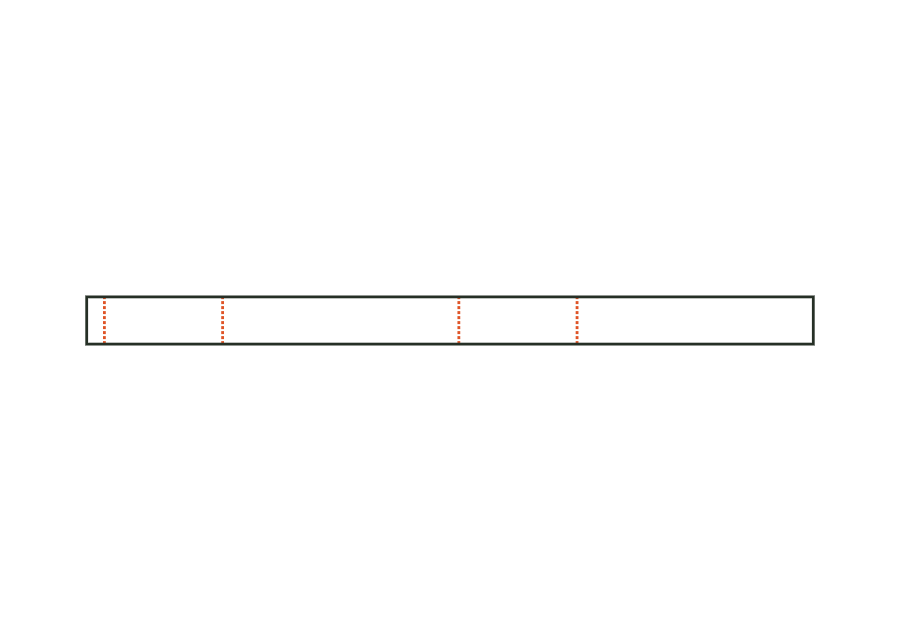
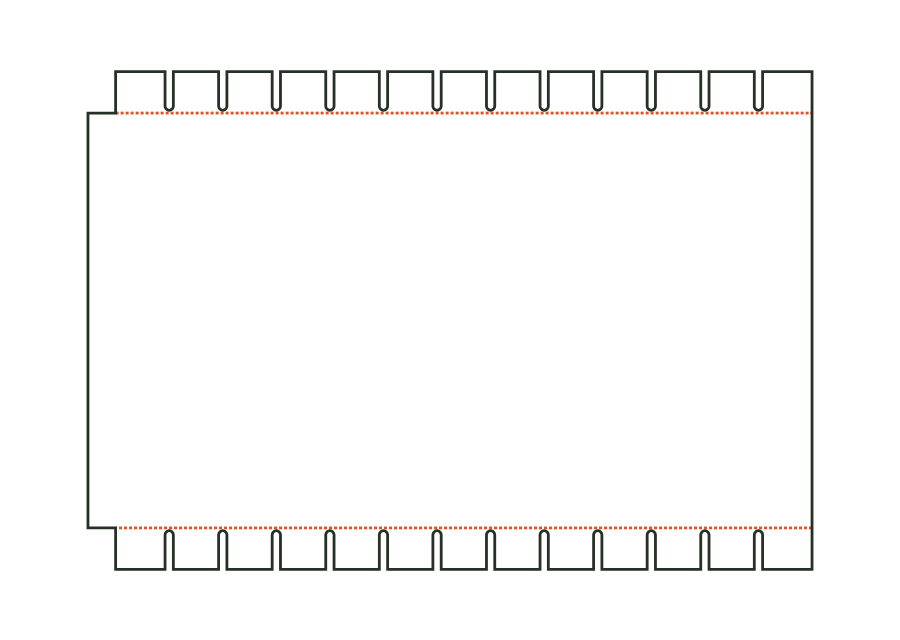
corrugated.mailerView templateThe sleeve surrounds a product with four walls and remains open at both ends. Length and width describe the cross section; height denotes sleeve length. The dieline shows version 1 with finger notches on the front. Material thickness, glue flap, and notch position remain part of the calculation rather than simple scaling.
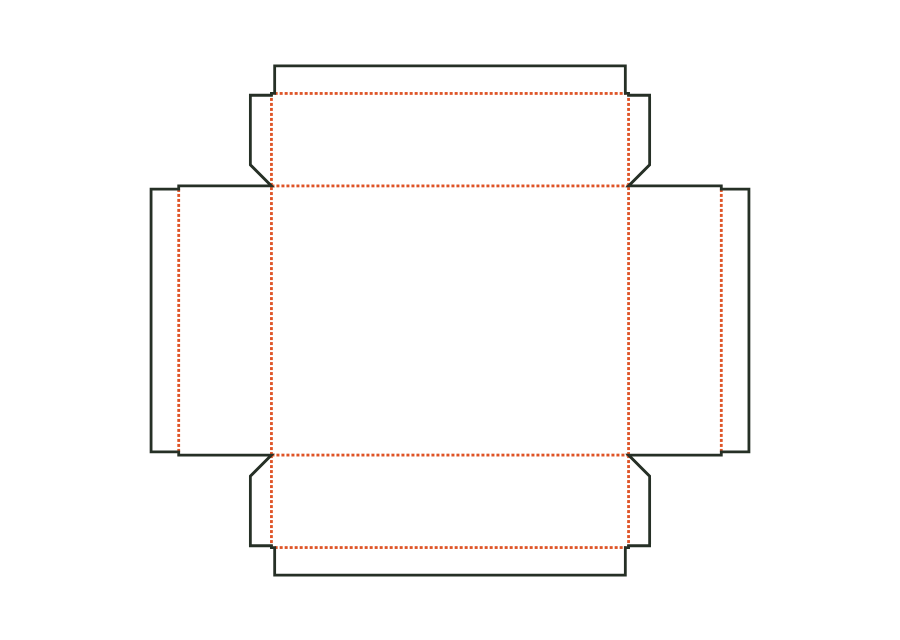
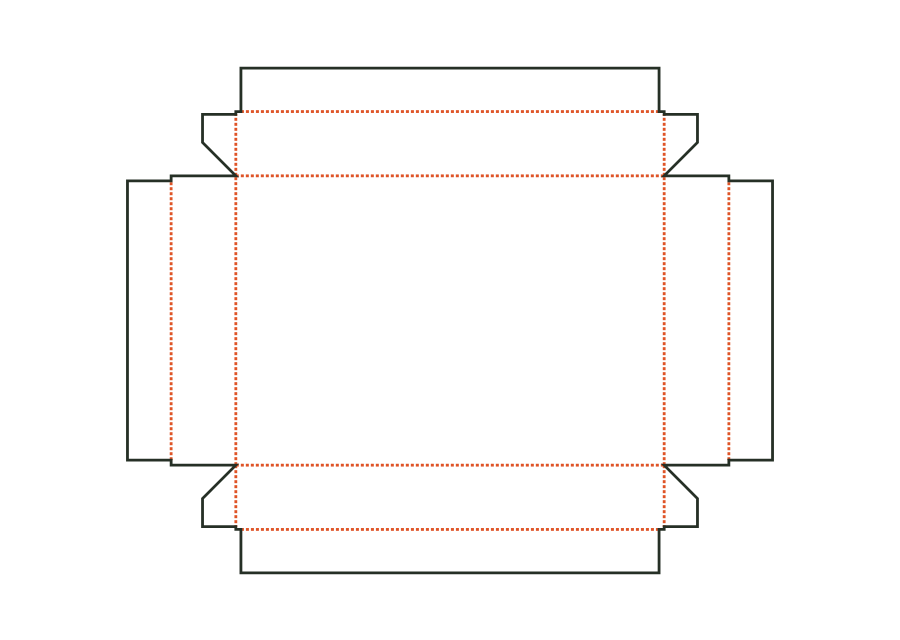
carton.sleeveView templateBase and lid form a two-part corrugated construction with glued corner flaps. Each component has its own dieline; the lid is derived from the base's outside dimension and clearance per side.
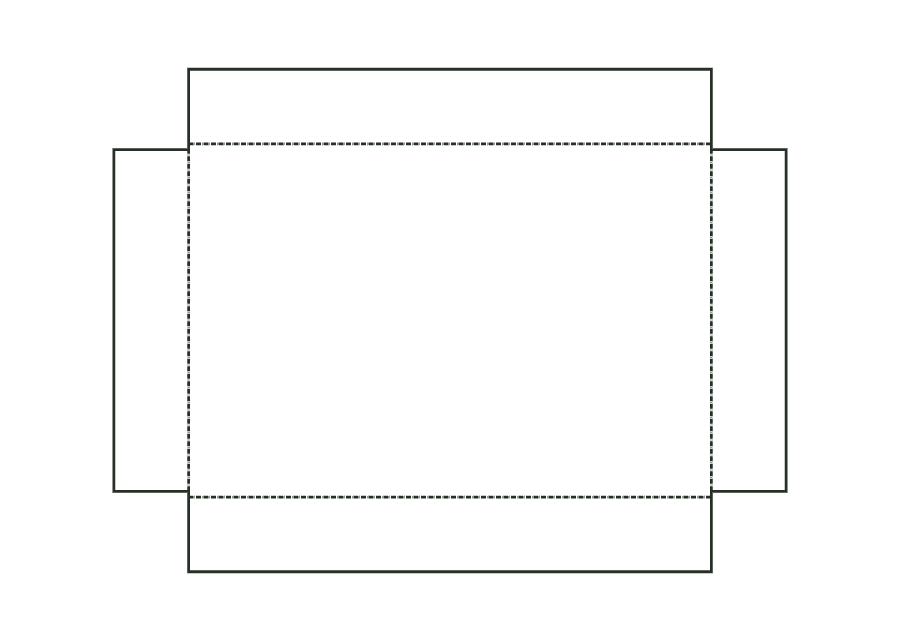
corrugated.telescope.baseView templateCorrugated lift-off lid with the same construction as the base; its dimensions follow the outside dimensions of the base plus clearance per side.
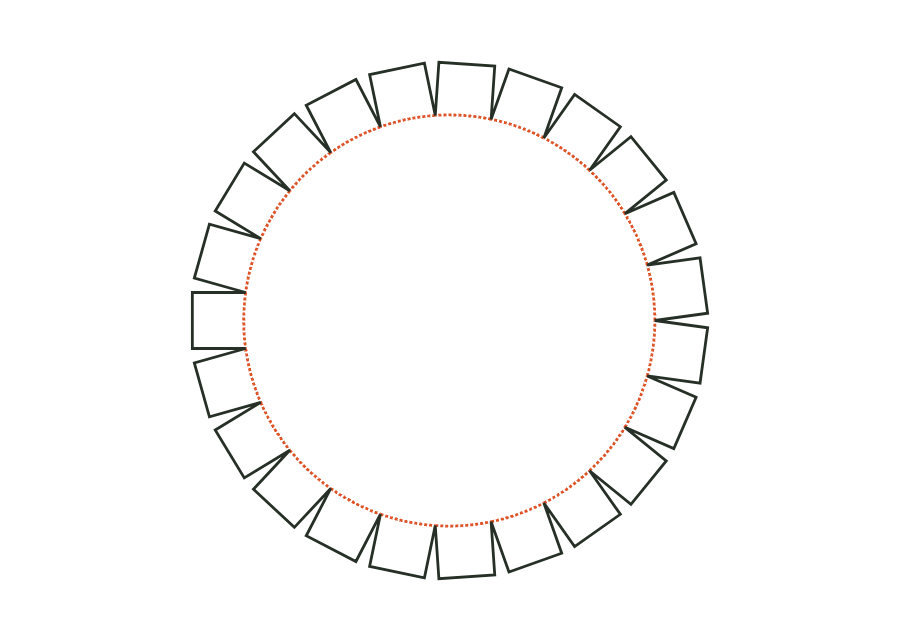
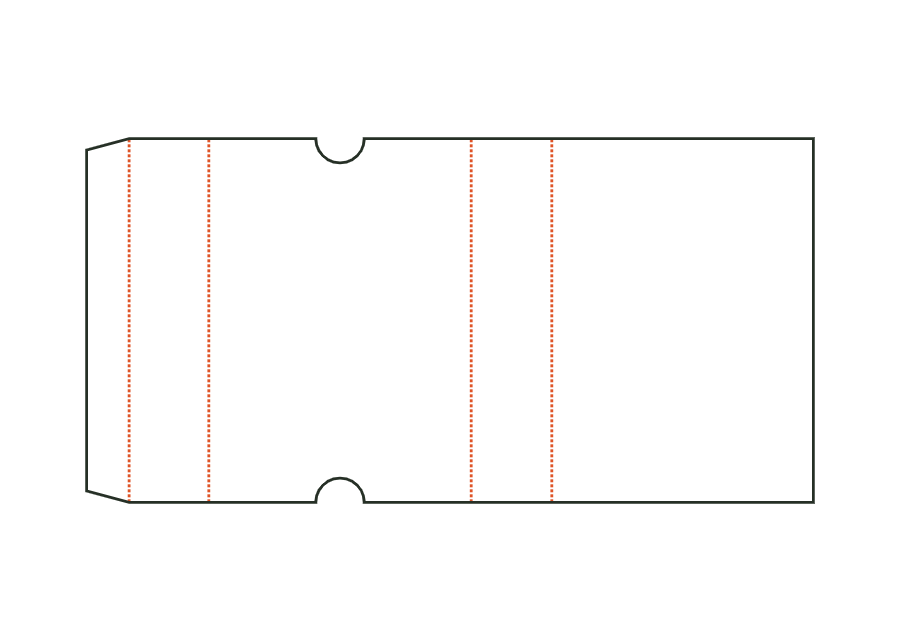
corrugated.telescope.lidView templatePaper wrap band around a round body or a stack: length from circumference plus ease allowance and overlap; the overlap at the beginning is the glue area.
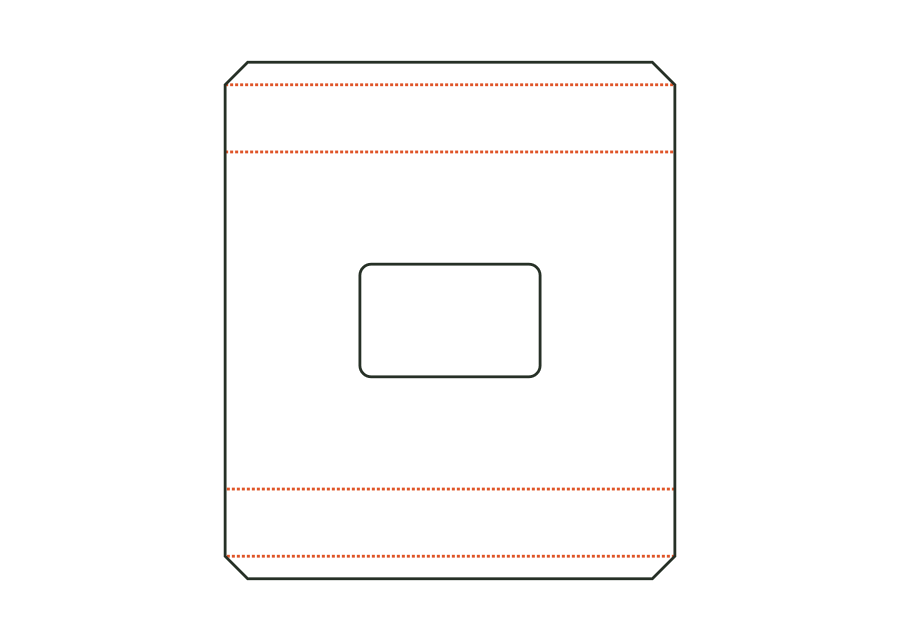
band.wrapView templatePaper belly band around the four walls of a box, with creases at the edges and a glue flap; crease-to-crease dimensions from the box's outside dimensions plus material thickness.
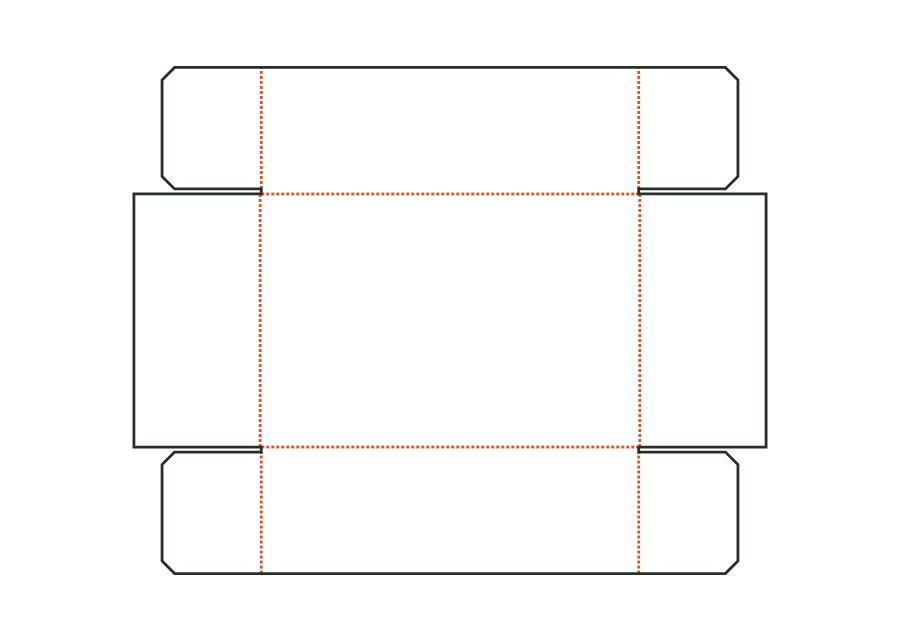
band.bellyView templateGreyboard shell for the base of a rigid box: base with four walls, V-grooves, and butt-jointed corners.
rigid.lidbase.baseView templateGreyboard shell for the lid, constructed in the same way as the base; dimensions derived from the outside dimensions of the base plus clearance and paper.
rigid.lidbase.lidView templateWrapping paper for the base: a cross with corner flaps on the front and back walls and turn-ins over the top edge to the inside.
rigid.lidbase.base.wrapView templateWrapping paper for the lid, constructed in the same way as the base wrap.
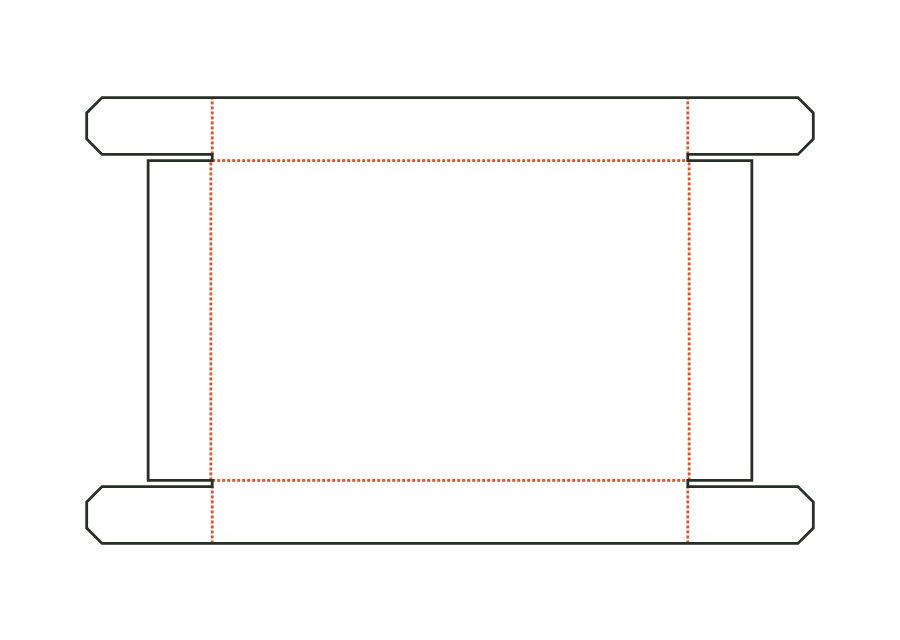
rigid.lidbase.lid.wrapView templateGreyboard tray: shell with V-grooves and butt-jointed corners, optionally with a slot for a pull ribbon in the right end wall.
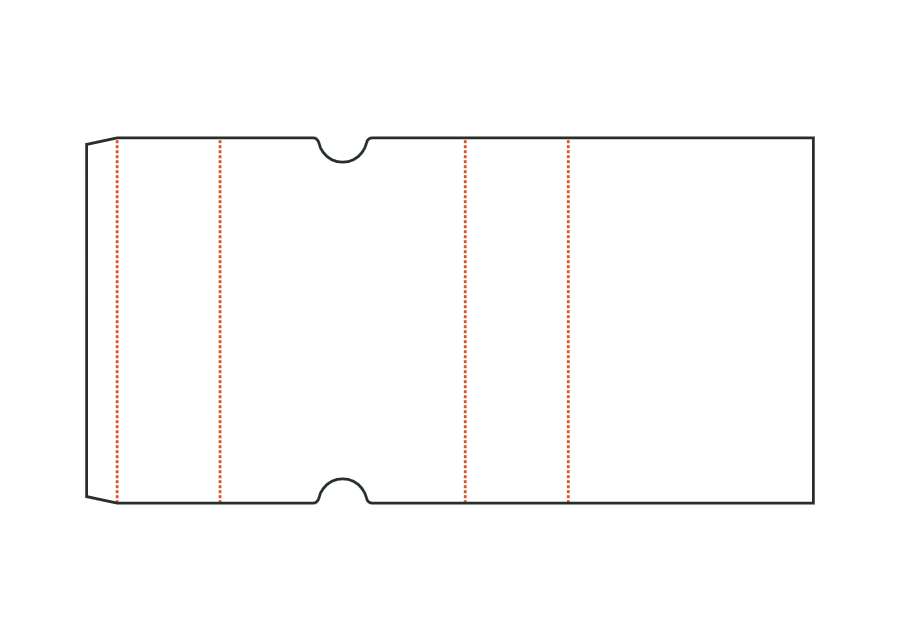
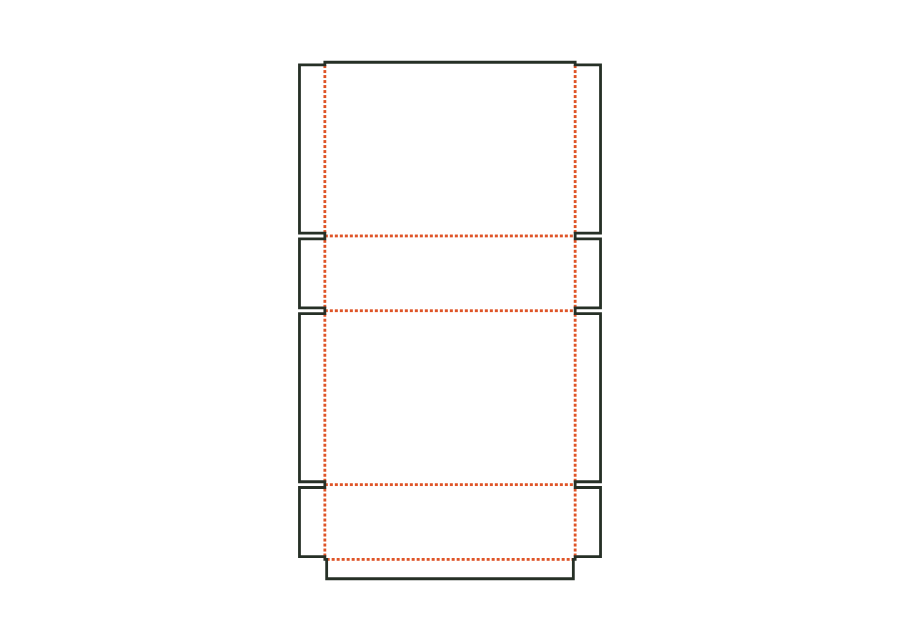
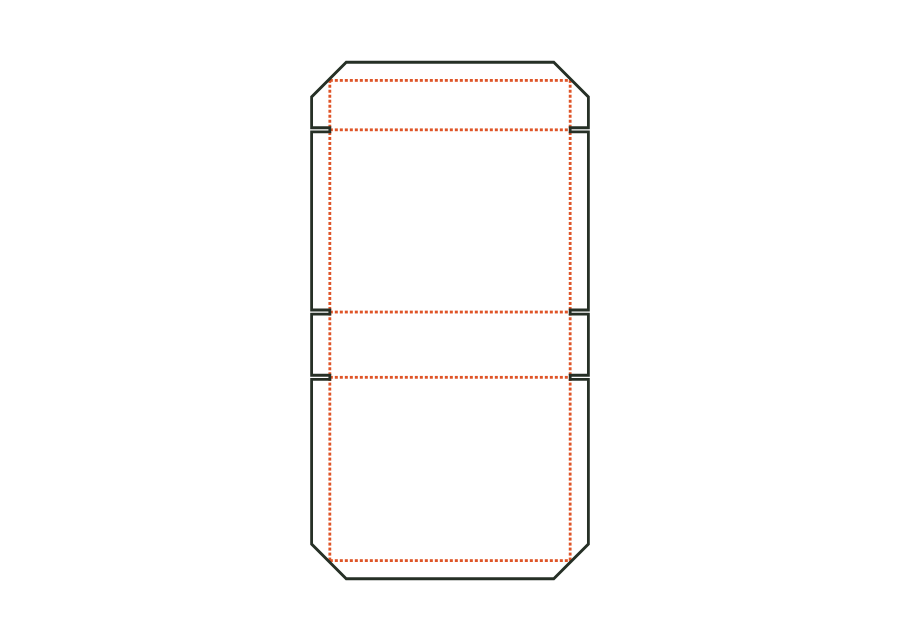
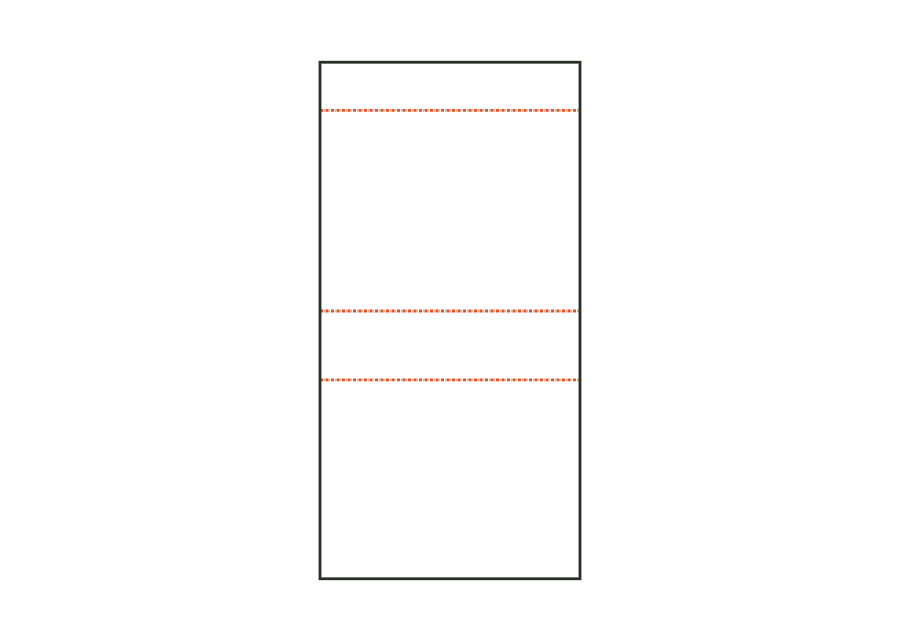
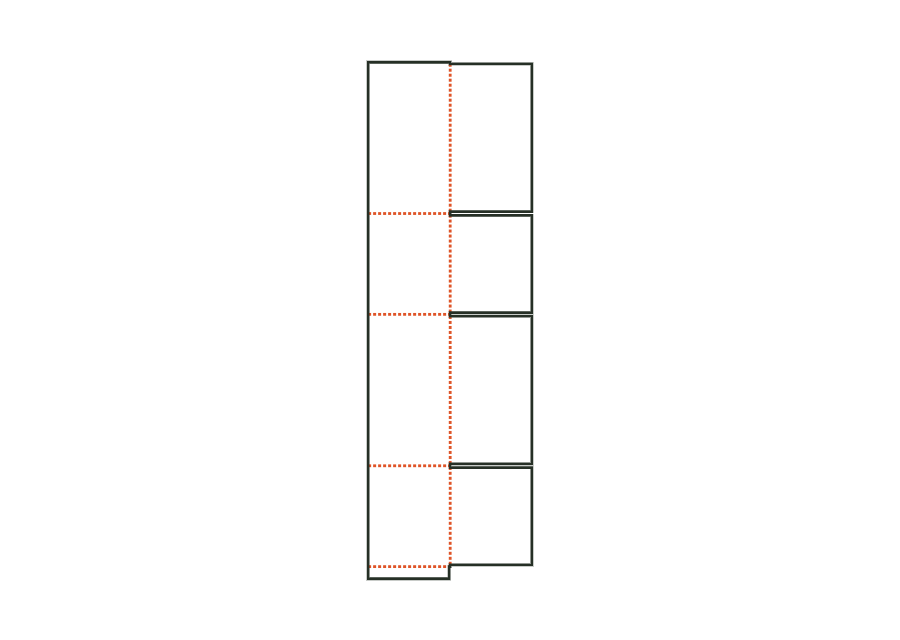
rigid.drawer.trayView templateGreyboard sleeve: strip with three V-grooves, open at both ends, with a joint at the lower front edge.
rigid.drawer.sleeveView templateWrapping paper for the tray: cross-shaped blank with corner flaps and turn-ins, optionally with a slot over the tray's slot.
rigid.drawer.tray.wrapView templateWrapping paper for the sleeve: strip with overlap at the joint and turn-ins at both open ends.
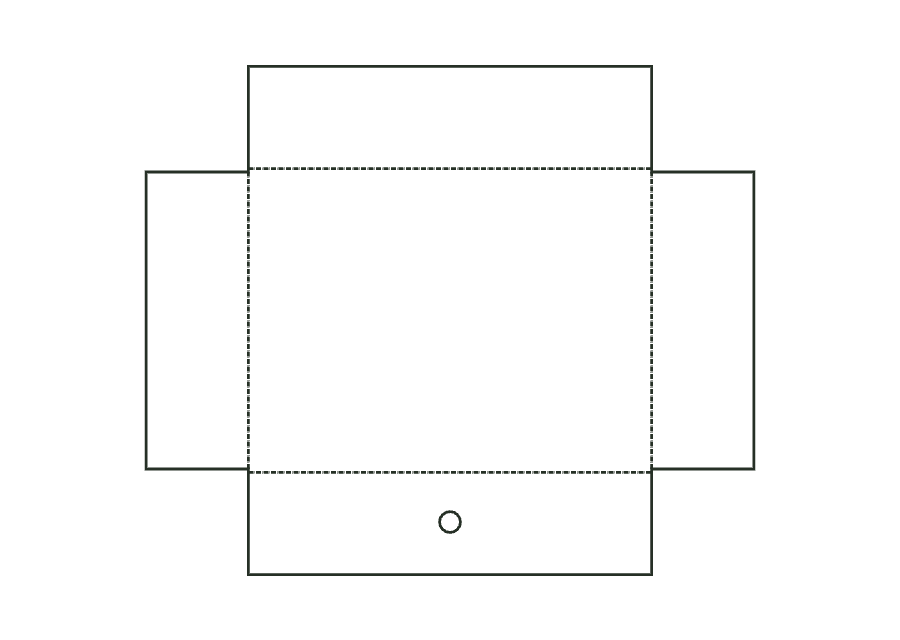
rigid.drawer.sleeve.wrapView templateGrayboard tray with V-grooves and butt-jointed corners, with a round magnet recess centered in the front wall.
rigid.magnetic.trayView templateWrapping paper for the tray: cross with corner flaps and turn-ins; covers the magnet in the front wall.
rigid.magnetic.tray.wrapView templateGrayboard hinged-lid case: bottom, spine with spine allowance, lid, and front flap in one strip with V-grooves, round magnet recess in the flap.
rigid.magnetic.coverView templateWrapping paper for the case: surface with turn-ins all around, corner cuts at 45°, and creases at hinge positions.
rigid.magnetic.cover.wrapView templateLining paper for the inside of the case, smaller by the margin all around; covers the turn-ins and the flap's magnet.
rigid.magnetic.cover.liningView templateGrayboard shell for the neck box base: bottom with four walls, V-grooves, butt-jointed corners.
rigid.neck.baseView templateWrap paper for the neck box base: cross shape with corner flaps and turn-ins over the top edge and inward.
rigid.neck.base.wrapView templateGrayboard neck: continuous strip with three V-grooves, joint at the back right corner; sits in the base and protrudes above it by the neck height.
rigid.neck.neckView templateWrap paper for the neck: strip with overlap at the joint and turn-ins at the top edge covering the inside down to the bottom.
rigid.neck.neck.wrapView templateGrayboard shell for the neck box lid; dimensions derived from the base's inside dimensions plus clearance, height from neck height plus clearance.
rigid.neck.lidView templateWrap paper for the neck box lid, using the same construction as the base wrap.
rigid.neck.lid.wrapView templateCalculate the wrap from diameter or circumference, height, and overlap. Slit turn-ins are added for a cardboard tube; for a can, you can disable both. The drawing shows the blank with starting values, not a finished can or confirmed fit.
tube.wrapView templateThe lid or base disc has glue flaps around a circular crease line. The starting dimensions are the inside diameter of the tube wall and its height. The parametric dieline shows the disc as an individual component; check a matching tube wall and assembly separately.
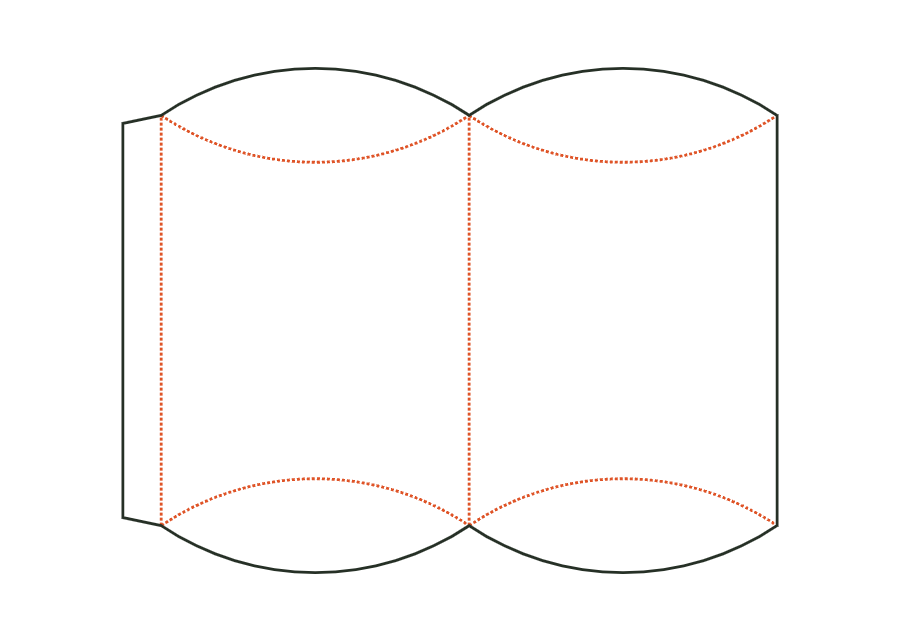
tube.discView templateThe pillow box curves two wall surfaces between lens-shaped end flaps. Curved creases create the closure instead of straight lid creases. In version 1, the inputs mean the package's width × thickness × length. The shown dieline accounts for these proportions and the starting material; it does not define a rectangular box interior.
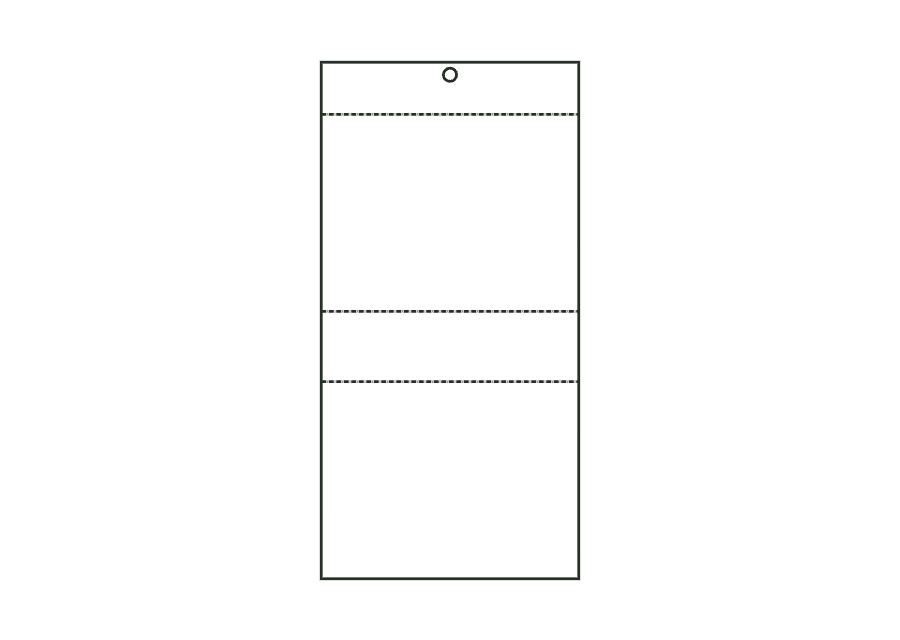
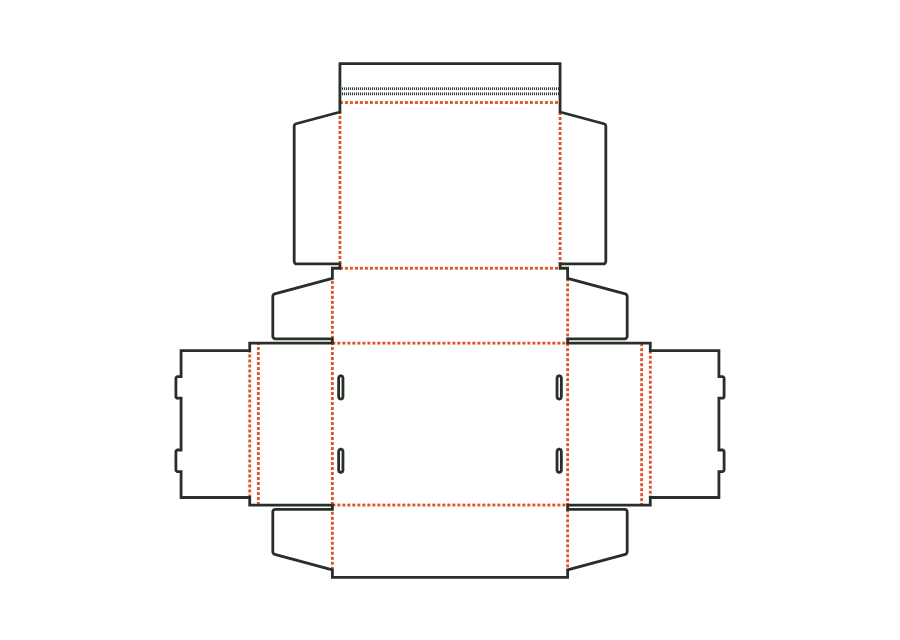
carton.pillowView templateThe hinged lid sits on the back wall and lays its front wall over the outside of the front. A lid flap inserts through a slot in the front; a tuck bottom closes the base. The page shows version 2 with the hanging hole disabled. The technical core calculates lid overhang, flaps, and creases from the chosen dimensions and material profile.
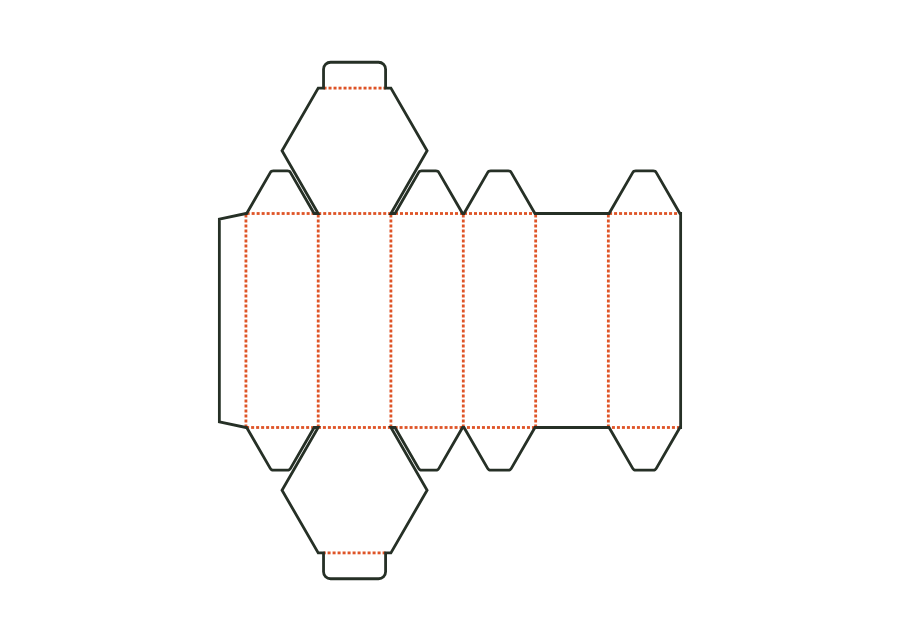
carton.hinged.lidView templateSix walls form a hexagonal footprint with a tuck lid and bottom. Inputs mean across corners × across flats × height, rather than the length and width of a rectangle. Version 1 calculates the angled walls, miters, and creases from these dimensions. The example shows the straight lid style; alternatively, the bottom can be attached to the back.
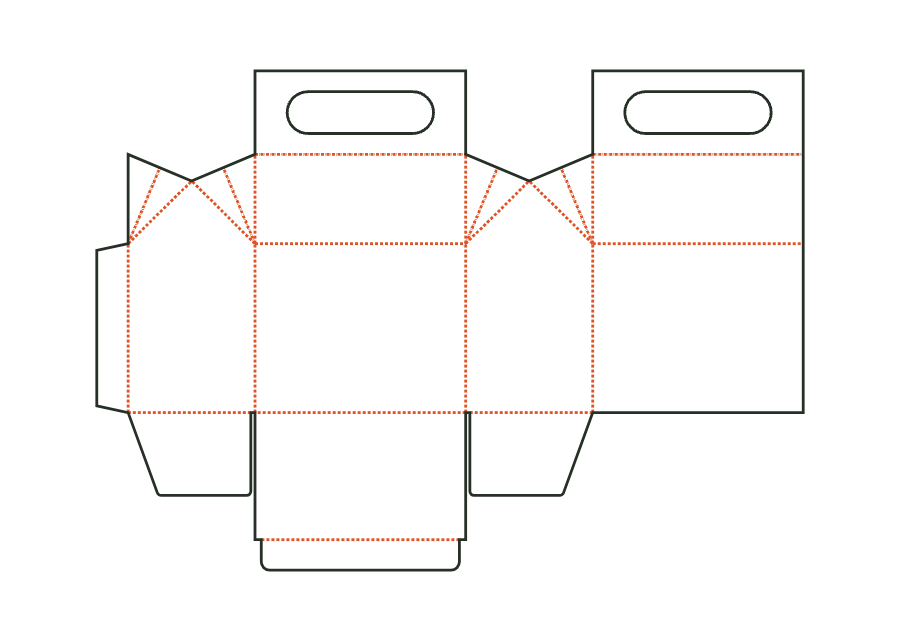
carton.hexagonView templateThe gable carton combines a tuck bottom with a gable roof and glued handle flaps. The page explicitly shows version 1 with handle hole, roof panels, and gussets. The entered height describes the body; gable and handle are added using separate parameters. The calculated dieline is a basis for the folding sample, not proof of load capacity.
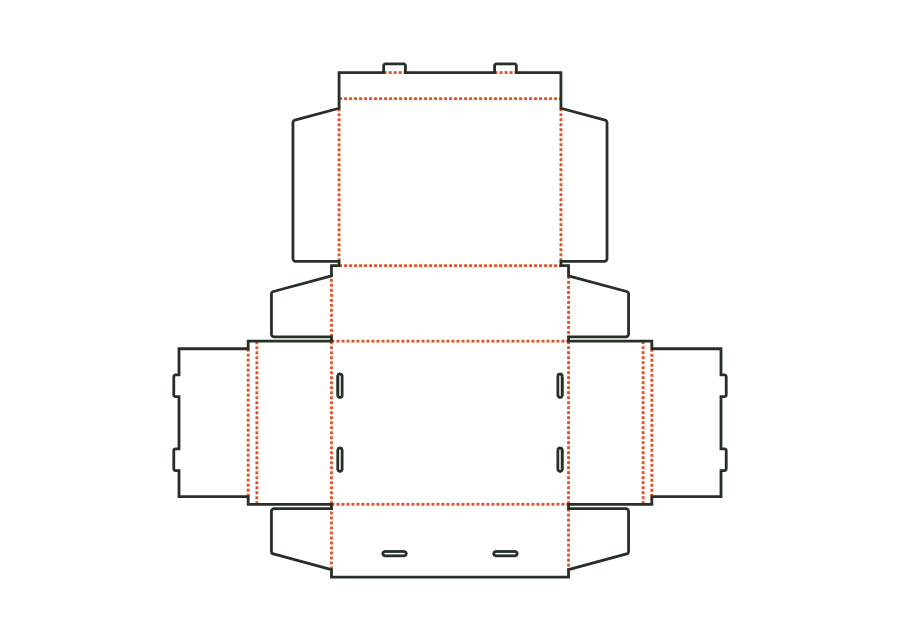
carton.gableView templateCorrugated mailer with double side walls and an external tuck closure. The lid's locking tabs engage through oblong slots in the front wall; the construction is erected without gluing.
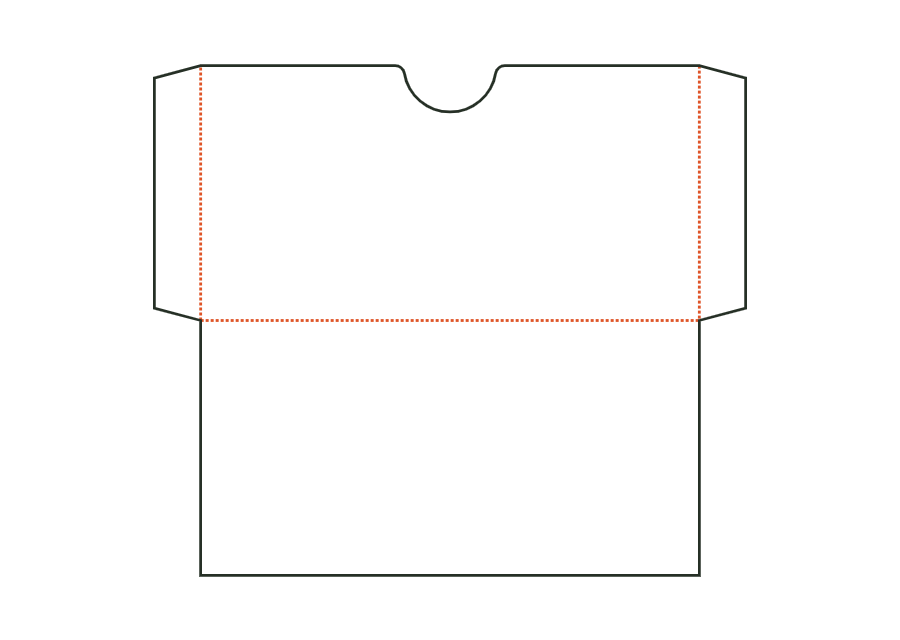
corrugated.mailer.lockView templateFlat sleeve for gift, loyalty, or greeting cards: front with a thumb cutout at the opening, back at the bottom crease, side seams formed by glue flaps, and an optional closure flap. Dimensions are the card's insertion dimensions; the sleeve grows with clearance and flaps.
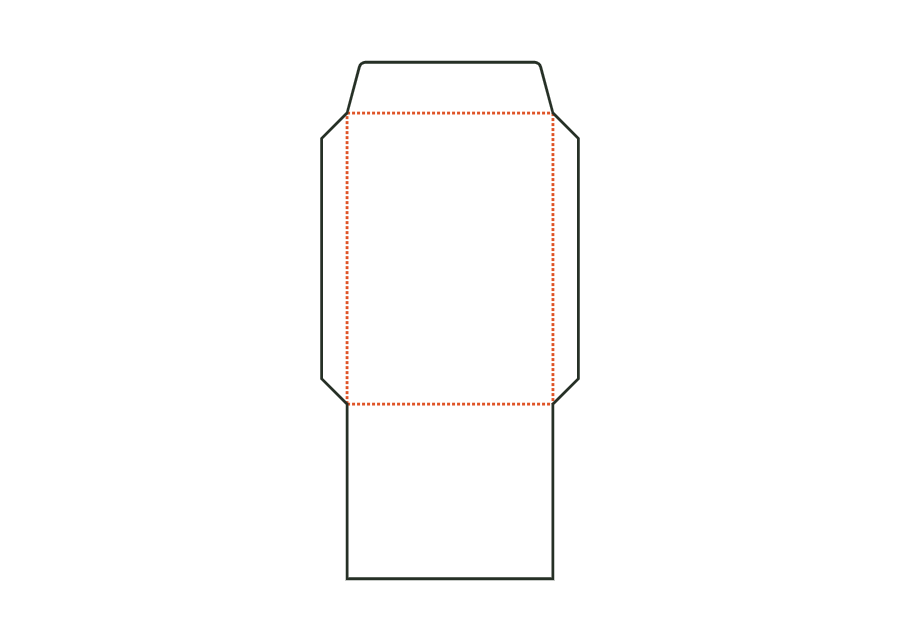
card.sleeveView templateEnvelope or pocket envelope comprising address panel, two side flaps, bottom flap as the back, and closure flap. Dimensions are the finished size; the opening is at the top edge.
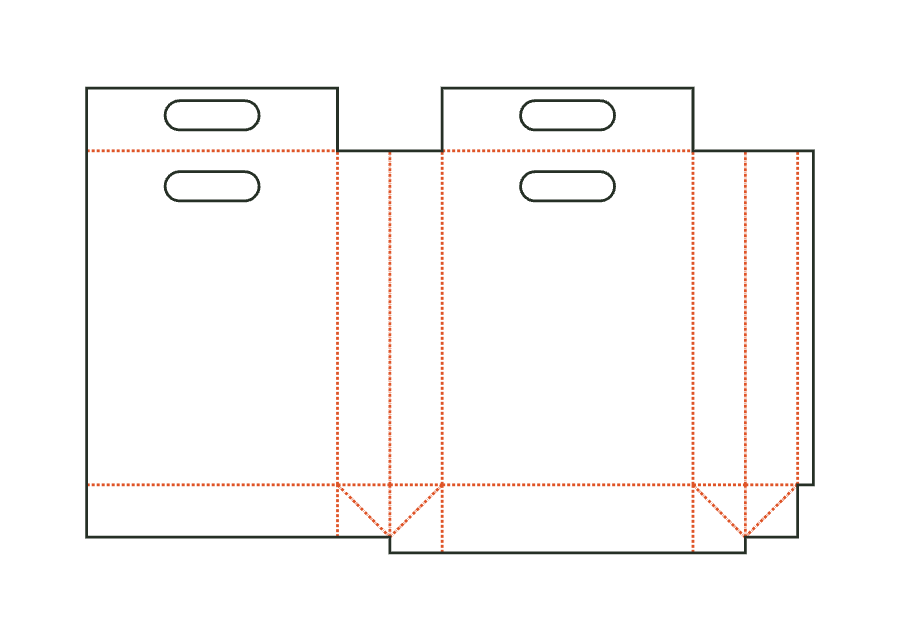
envelope.pocketView templatePaper carrier bag comprising front, back, and two side gussets with a longitudinal seam, block bottom, top turn-in as handle reinforcement, and die-cut handle holes; dimensions: bag width × gusset depth × height. Bottom insert and handles are separate parts.
bag.carrierView templateBlank from your own closed contour (point list, e.g., from an SVG file) with a uniform corner radius and up to four crease lines between contour points; panels are derived from the crease lines.
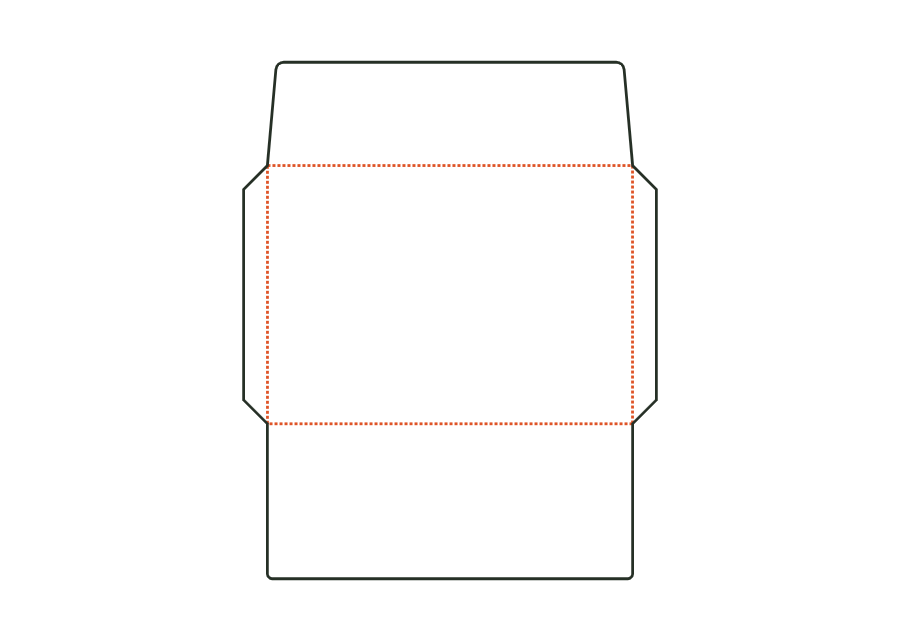
custom.polygonView templateEnvelope with an opening on the long side: address panel, two side flaps, bottom flap as the back, and a straight or pointed closure flap. Dimensions refer to the finished size; starting sizes DL, C6, C5, C4, and US No. 10.
envelope.walletView templateFolded card with a single fold (two panels), roll fold (three panels, with a slightly narrower inner flap), or gate fold (center with two wings). Dimensions refer to the folded finished size.
card.foldView templateFolded card or single card with four corner slots (corner pockets) or two side slots for a credit-card-size gift card of 85.6 × 54 mm; optional header with hanging hole.
card.giftholderView templateCorrugated carry-handle box with a snap-lock bottom. Two fully overlapping lid flaps have aligned handle cutouts and are glued over their full area; an additional handle is not part of the construction.
corrugated.handleView templateMailer with double side walls and an external closure flap. A self-adhesive strip connects the flap to the front wall; a tear strip opens it. The bottom locking tabs still hold the wall structure.
corrugated.mailer.flapView templateCorrugated sliding sleeve with glue flap and open ends. Thumb notches at both ends of the top make it easier to push out an inner part. The template calculates the sleeve only.
corrugated.slideView templatePaperboard insert for a box: a platform with a product cut-out (rectangle, circle, or oval, freely positioned) on folded legs at two or four edges, optionally with inward-folded leg flaps. Dimensions: outside dimensions of the insert (inside dimensions of the box) × platform height.
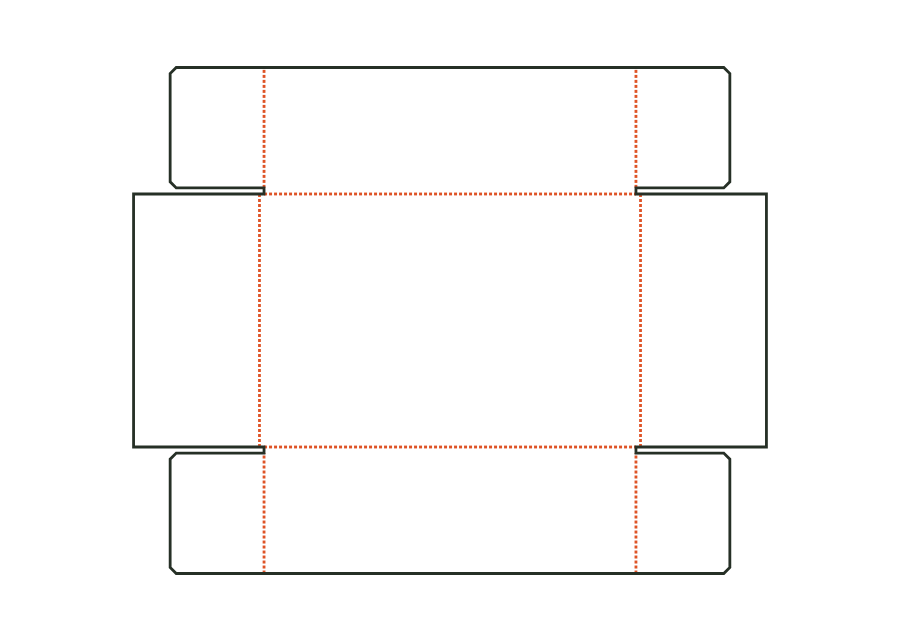
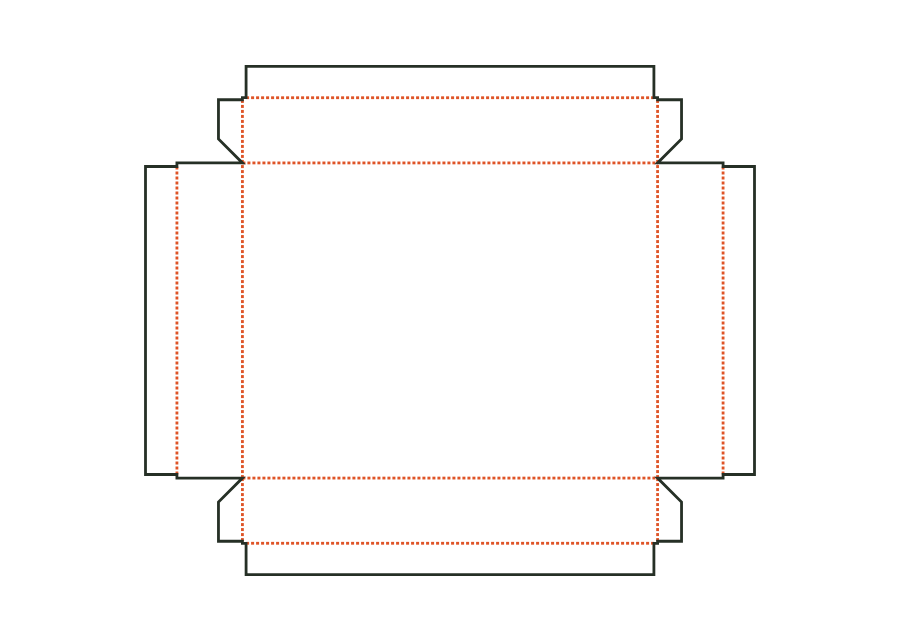
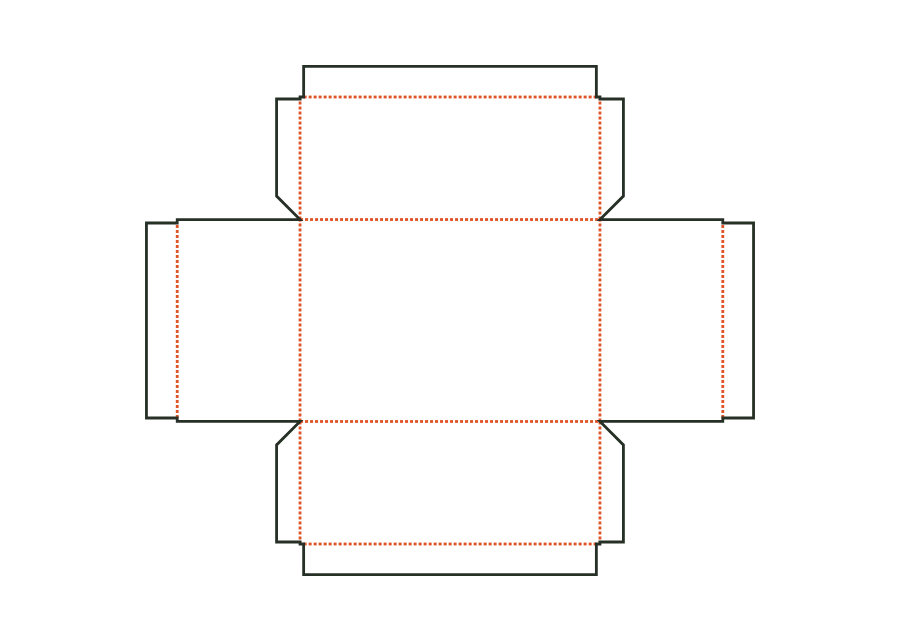
carton.insert.cutoutView templateLower part of the folding carton telescope box: base with four walls and glued corner flaps, same construction as the corrugated telescope box, for smaller gift and chocolate boxes.
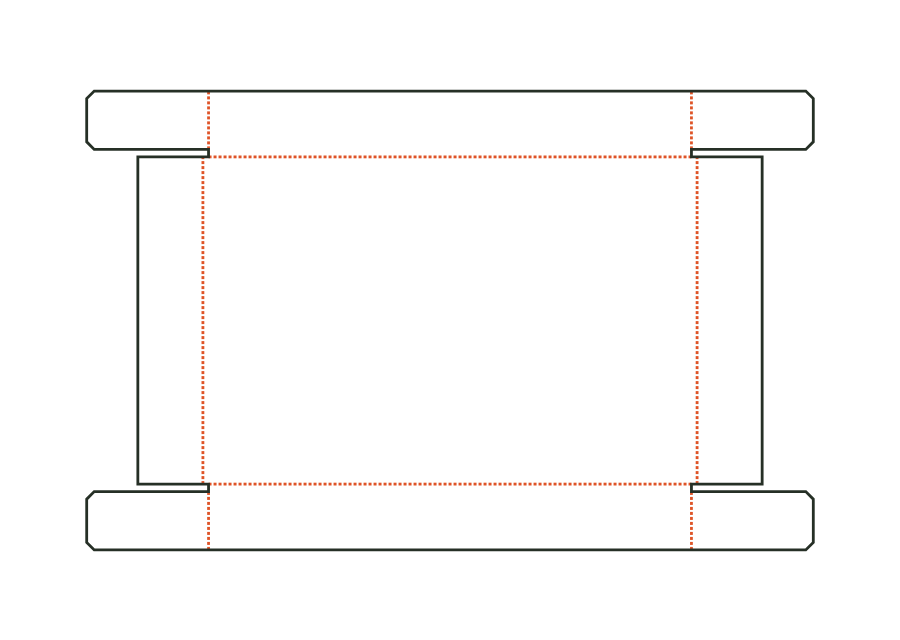
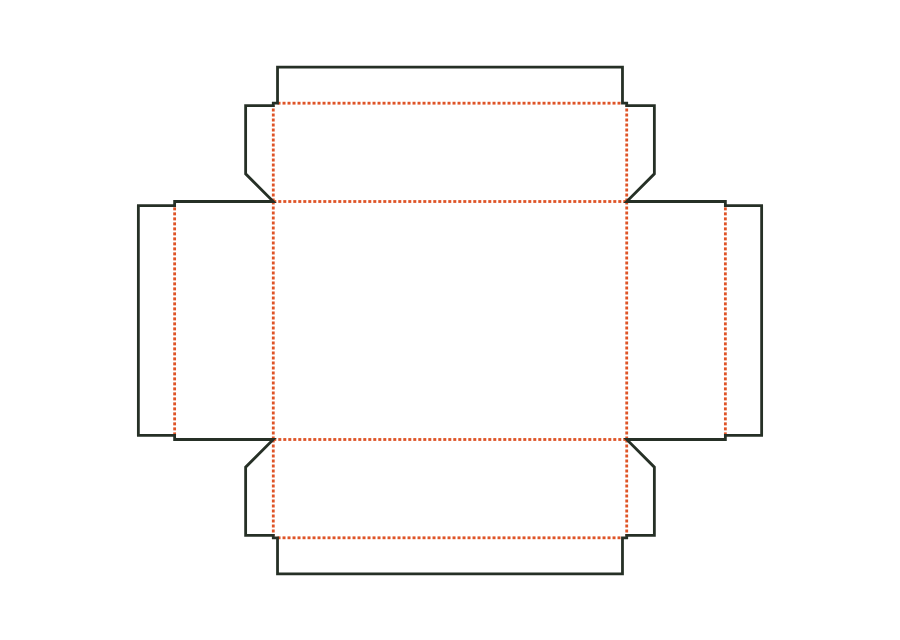
carton.telescope.baseView templateTelescope lid made of folding carton board, with the same construction as the base; dimensions derived from the base's outside dimension plus clearance per side.
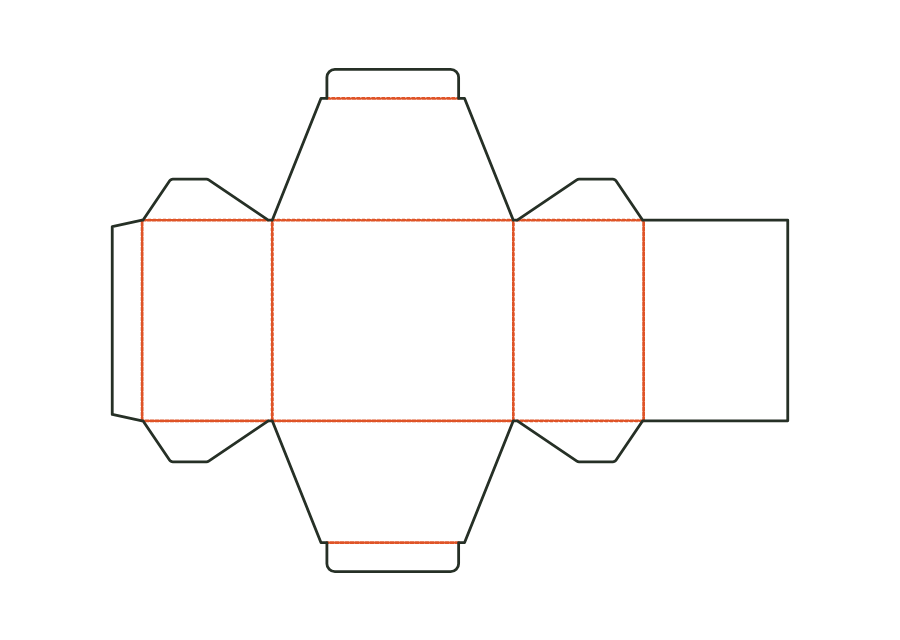
carton.telescope.lidView templateFolding carton with 5 to 12 walls as a generalization of the hexagon box: glue flap, tuck lid at the front with the tuck flap opposite, straight or reverse bottom, mitered dust flaps. Length × width is the rectangle the n-gon fills.
carton.polygonView templateFolding carton with an isosceles trapezoid plan: wide front, narrower back, slanted sides; tuck lid at the front with the tuck flap at the back, straight or reverse bottom. Dimensions: front × depth × height.
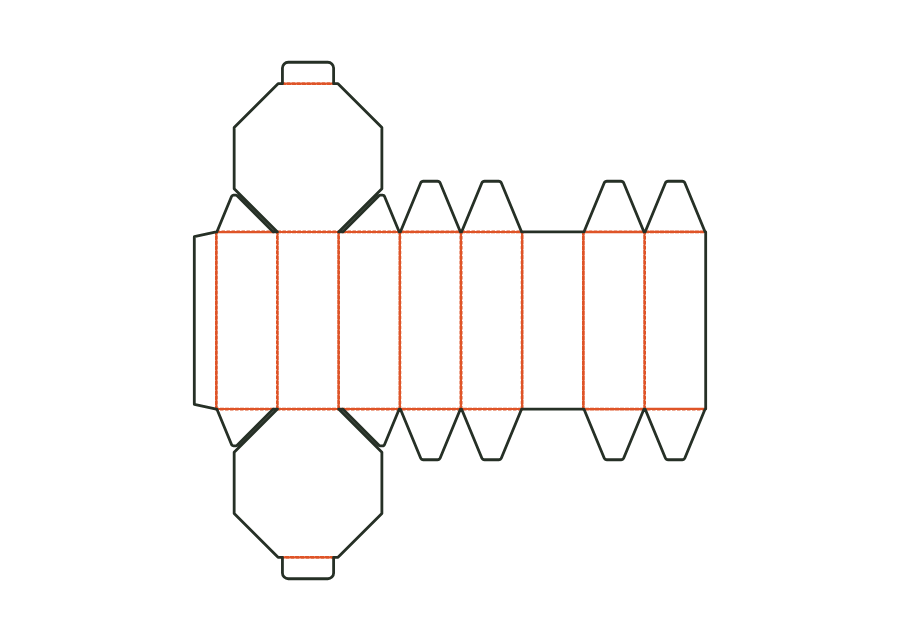
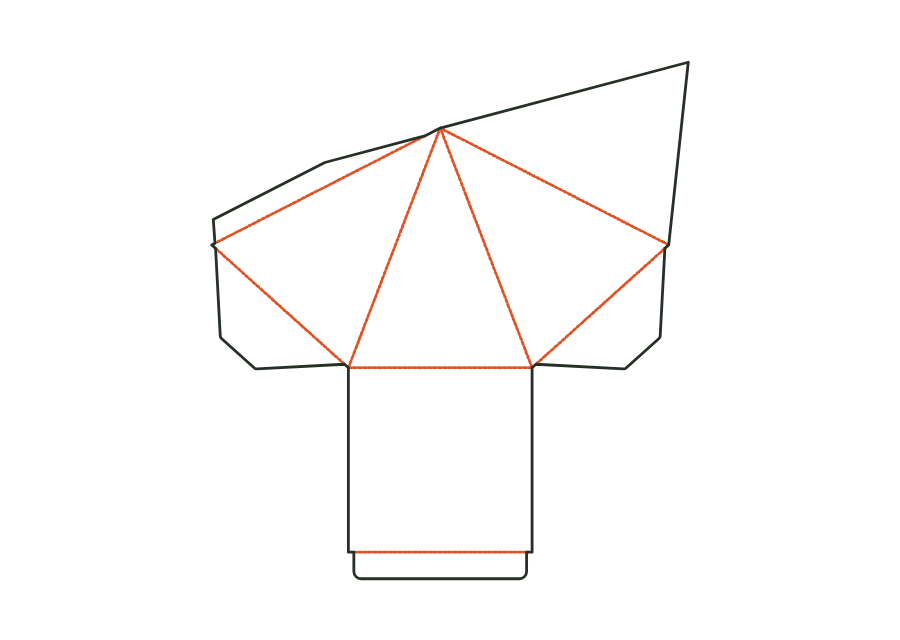
carton.trapezoidView templatePyramid with 3 to 8 triangular faces as a fan around the apex, glue flap, bottom with tuck flap and dust flaps on the other faces. Dimensions: base length × width, apex height above the bottom.
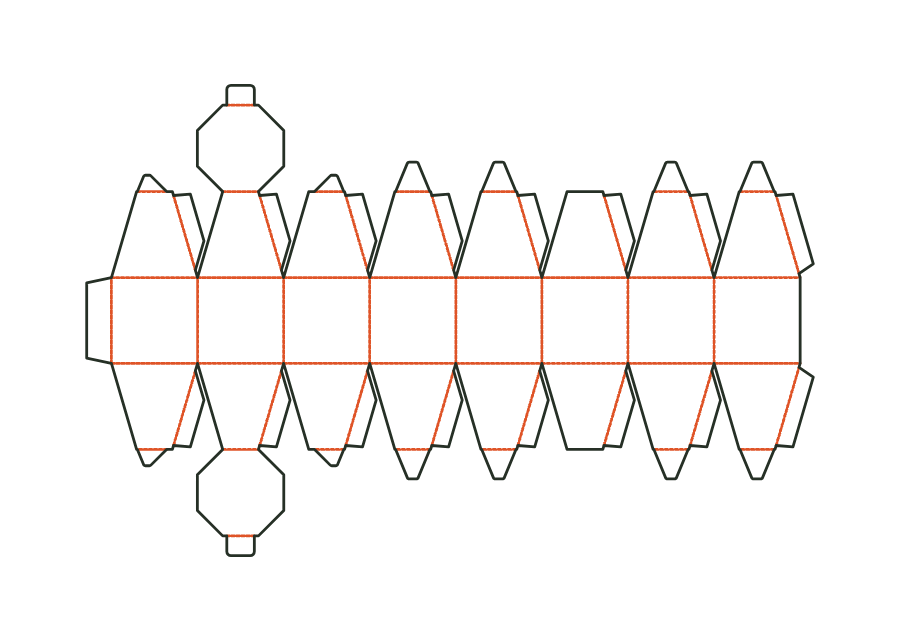
carton.pyramidView templateSphere or ball box as a polyhedron of meridian strips: equator walls, zone faces with glue flaps above and below, a lid at the top and a bottom with tuck flap, dust flaps on the other strips. Dimensions: diameter at the equator (length = width) and height.
carton.sphereView templateBase and telescope lid in folding boxboard form one assembly. Both parts have glued corner flaps; the lid follows the outside dimensions of the base plus clearance per side. For gift and chocolate boxes.
carton.telescopeView templateBottle carrier for 4 or 6 bottles with a matching slotted divider. Two hole decks and the carrying handle hold the bottles in the carrier; additional strips also separate them below. The divider is derived from the internal space and selected bottle count.
carrier.bottle.dividerView templateNo matching template. Change your search or application.
With JetDieline, choose a suitable template, adjust its size, and place text, logos, and images directly on your packaging.
Try your dimensions Download on the Mac App Store