Shopping bags, folders and custom contours begin with a flat paper shape. Handle holes, turn-ins and glue areas serve different functions. For bags, follow the bottom assembly sequence and test the load on a sample.
5Constructions, components and assemblies
Individual components are shown separately. Different sizes and stored template versions are not additional packaging shapes.
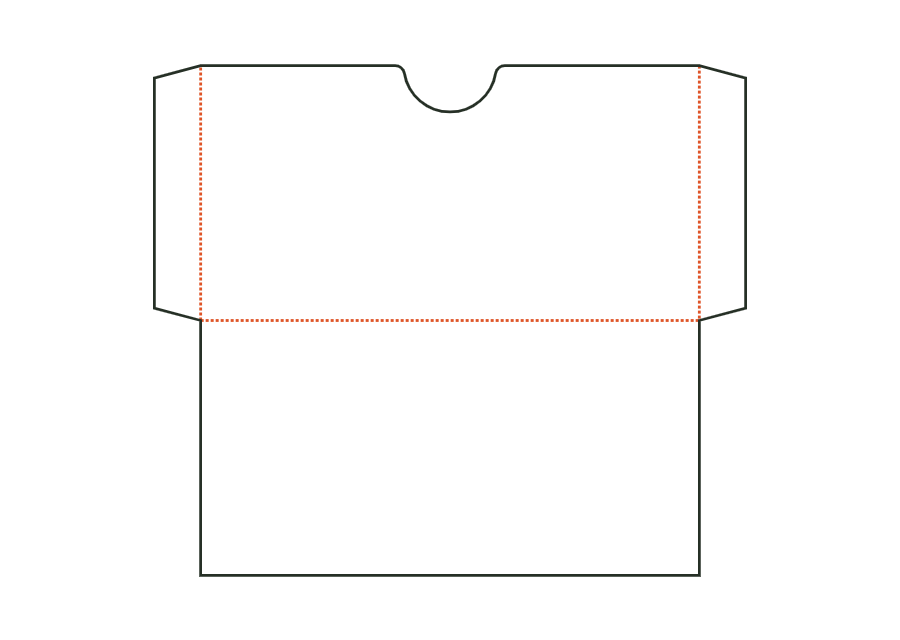
Flat sleeve for gift, loyalty, or greeting cards: front with a thumb cutout at the opening, back at the bottom crease, side seams formed by glue flaps, and an optional closure flap. Dimensions are the card's insertion dimensions; the sleeve grows with clearance and flaps.
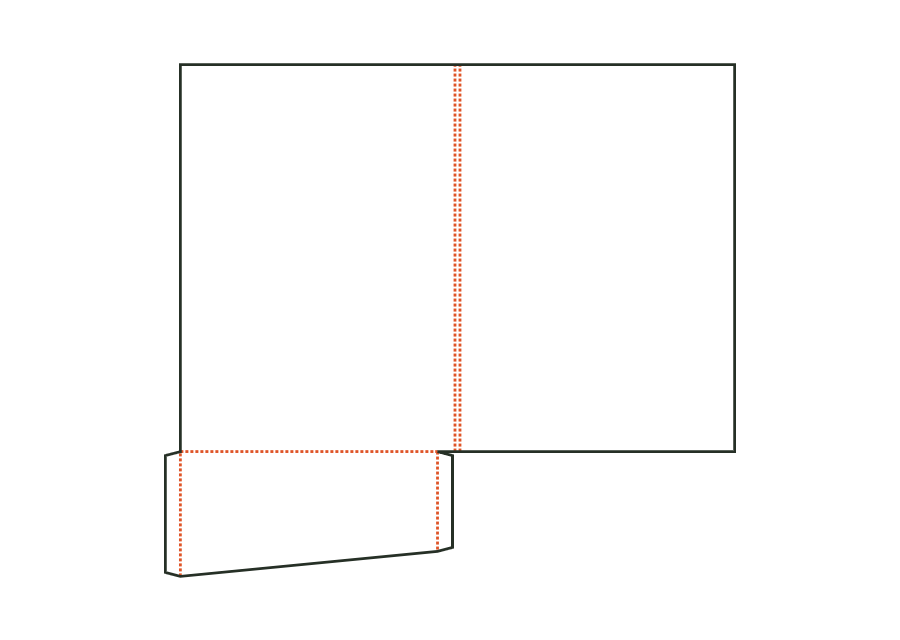
Folder made from front and back covers with a spine and a pocket on the right, left, or both sides; pockets carry glue flaps on both sides, with optional business card slots. Dimensions refer to the finished size of the closed folder.
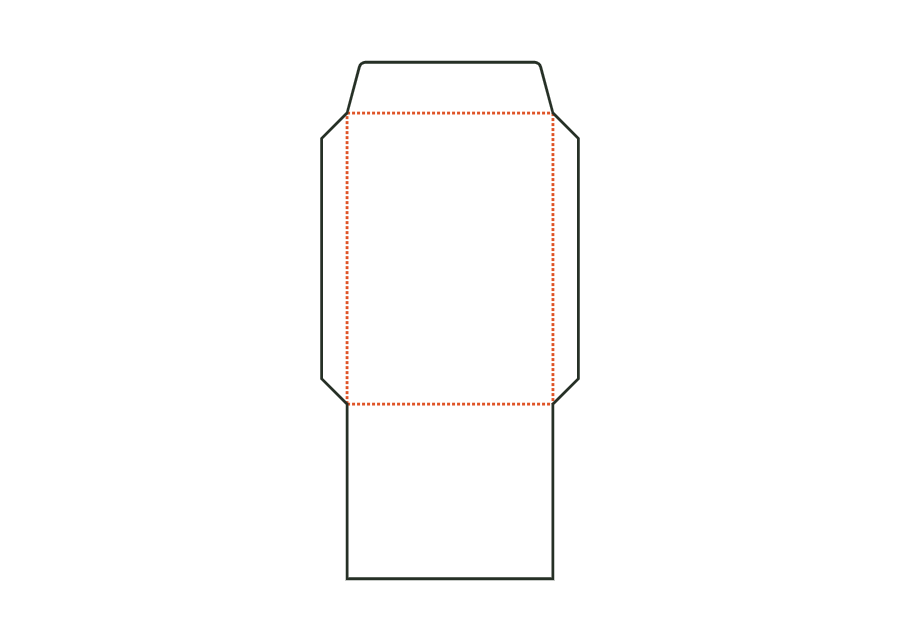
Envelope or pocket envelope comprising address panel, two side flaps, bottom flap as the back, and closure flap. Dimensions are the finished size; the opening is at the top edge.
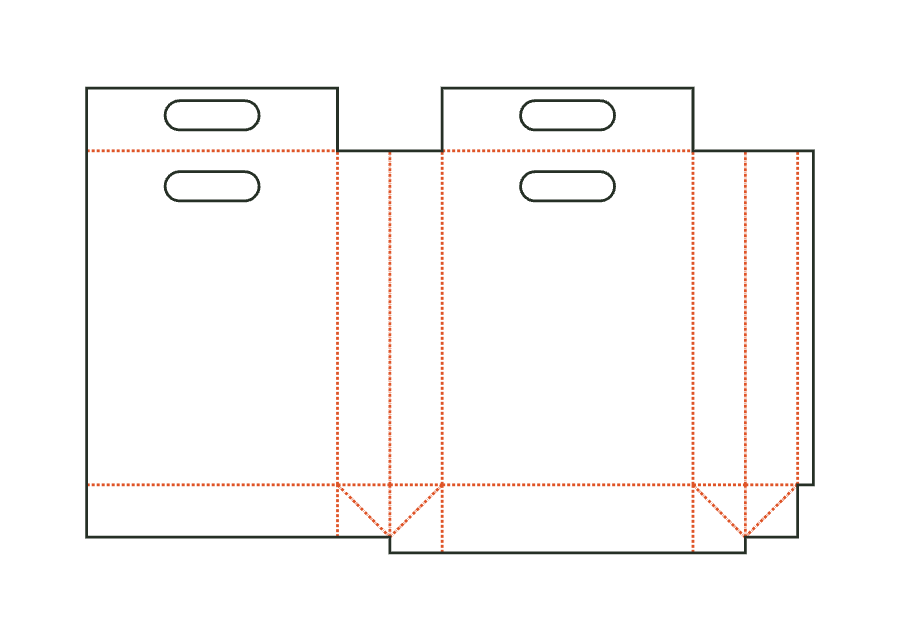
Paper carrier bag comprising front, back, and two side gussets with a longitudinal seam, block bottom, top turn-in as handle reinforcement, and die-cut handle holes; dimensions: bag width × gusset depth × height. Bottom insert and handles are separate parts.
Blank from your own closed contour (point list, e.g., from an SVG file) with a uniform corner radius and up to four crease lines between contour points; panels are derived from the crease lines.
 JetDieline