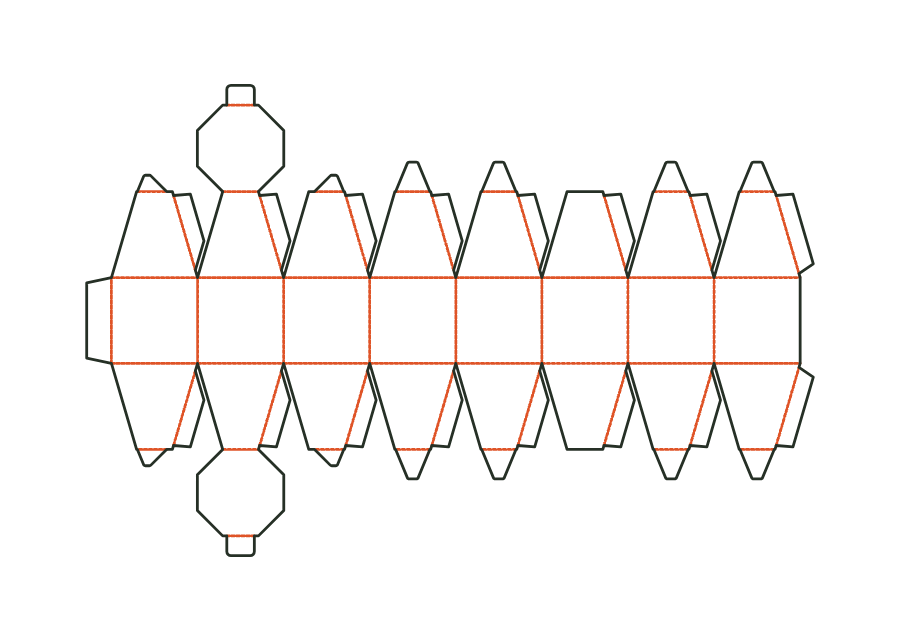
Pillow cartons, polygons and curved shapes give your product a different silhouette. The footprint determines the usable interior. Check how the product fits in a folded sample.
9Constructions, components and assemblies
Individual components are shown separately. Different sizes and stored template versions are not additional packaging shapes.
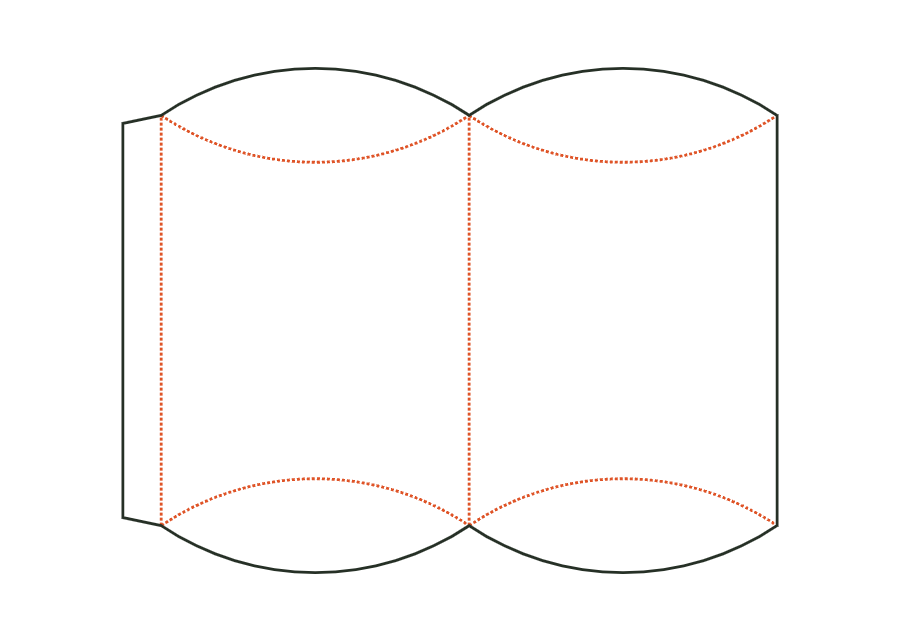
The pillow box curves two wall surfaces between lens-shaped end flaps. Curved creases create the closure instead of straight lid creases. In version 1, the inputs mean the package's width × thickness × length. The shown dieline accounts for these proportions and the starting material; it does not define a rectangular box interior.
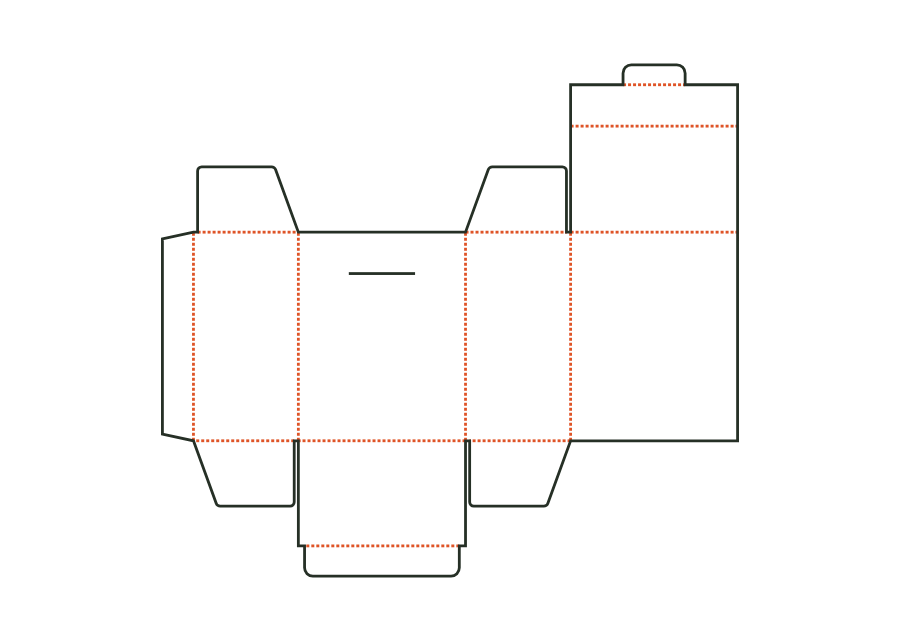
The hinged lid sits on the back wall and lays its front wall over the outside of the front. A lid flap inserts through a slot in the front; a tuck bottom closes the base. The page shows version 2 with the hanging hole disabled. The technical core calculates lid overhang, flaps, and creases from the chosen dimensions and material profile.
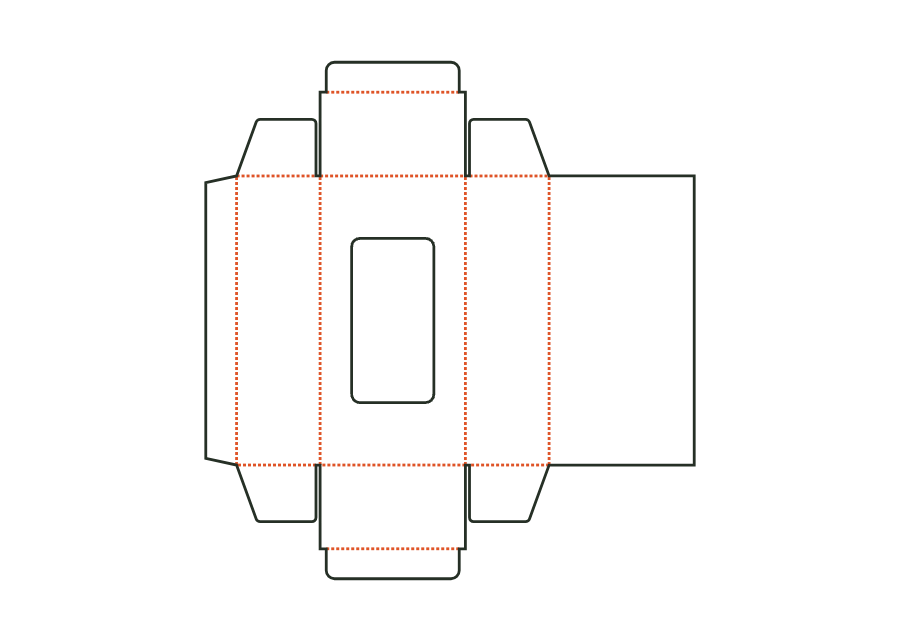
The window carton combines straight tuck closures with a front cutout. Choose a rectangle with corner radius or an oval and leave room for the film margin and bridges. The shown version 2 starts with a rectangular window and no hanging hole. The dieline provides the construction; window film is patched separately on the inside.
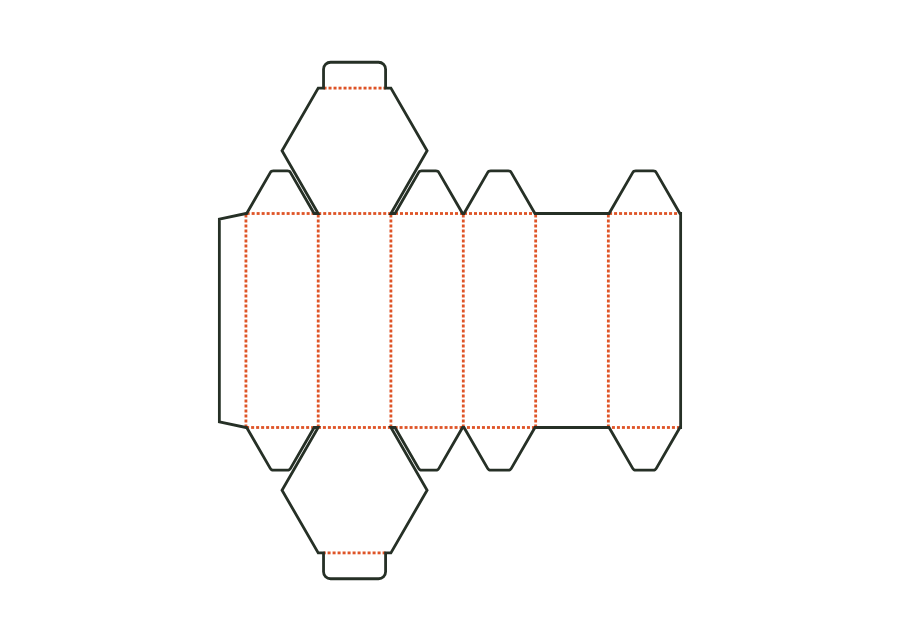
Six walls form a hexagonal footprint with a tuck lid and bottom. Inputs mean across corners × across flats × height, rather than the length and width of a rectangle. Version 1 calculates the angled walls, miters, and creases from these dimensions. The example shows the straight lid style; alternatively, the bottom can be attached to the back.
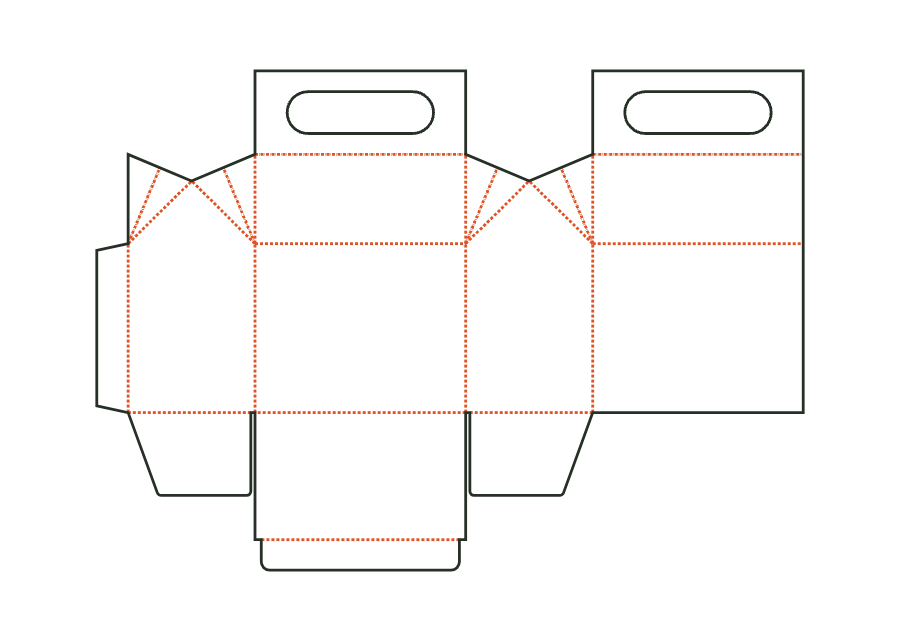
The gable carton combines a tuck bottom with a gable roof and glued handle flaps. The page explicitly shows version 1 with handle hole, roof panels, and gussets. The entered height describes the body; gable and handle are added using separate parameters. The calculated dieline is a basis for the folding sample, not proof of load capacity.
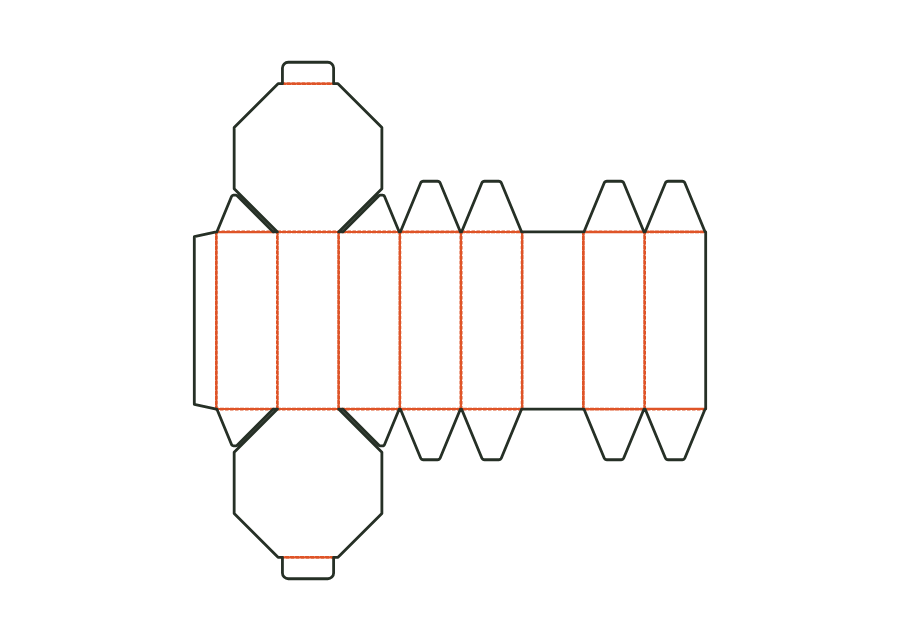
Folding carton with 5 to 12 walls as a generalization of the hexagon box: glue flap, tuck lid at the front with the tuck flap opposite, straight or reverse bottom, mitered dust flaps. Length × width is the rectangle the n-gon fills.
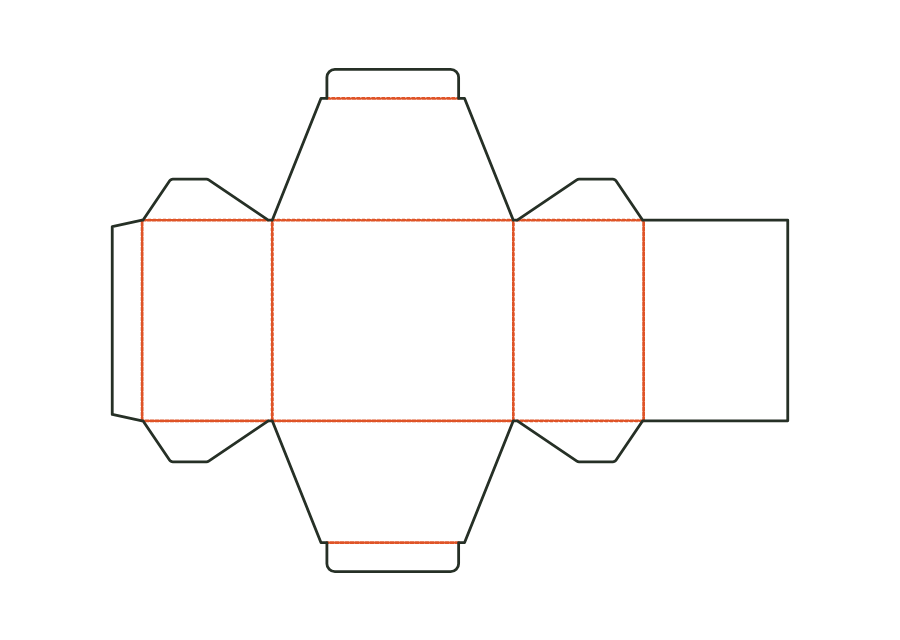
Folding carton with an isosceles trapezoid plan: wide front, narrower back, slanted sides; tuck lid at the front with the tuck flap at the back, straight or reverse bottom. Dimensions: front × depth × height.
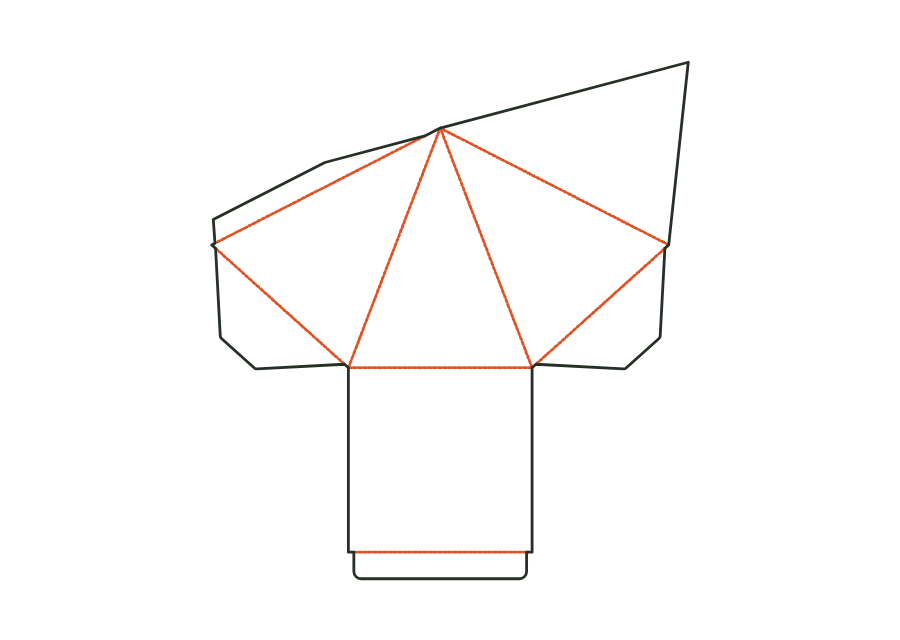
Pyramid with 3 to 8 triangular faces as a fan around the apex, glue flap, bottom with tuck flap and dust flaps on the other faces. Dimensions: base length × width, apex height above the bottom.
Sphere or ball box as a polyhedron of meridian strips: equator walls, zone faces with glue flaps above and below, a lid at the top and a bottom with tuck flap, dust flaps on the other strips. Dimensions: diameter at the equator (length = width) and height.
 JetDieline