Diameter allowance
Clearance added to the cup diameter so the sleeve slides easily over the cup; no greater than 5 % of the bottom diameter. Material thickness is accounted for separately.
 JetDieline
Food and hospitality / JETDIELINE
The cup sleeve is an annular sector with a glue flap for an existing tapered cup. You measure the diameters at the top and bottom edges of the sleeve and its vertical height.

sleeve.cupThe sleeve is formed from a truncated cone wall with a constant-width glue flap. The entered diameters refer to the cup at the contact edges. Material thickness and allowance determine the neutral diameters of the blank. There are no rolled-rim allowances as used for the cup wall.
Apply adhesive to the glue flap, roll the segment into a cone, and align the starting end flush on the glue flap; press together and allow to cure laid flat. To use, open it out and slide it over the cup from below until it fits snugly.
Grain direction along the circumference (across the height): the sleeve bends more easily around the cup axis and does not crack (check with a test print shop).
Test fit, folding and closure on a sample made from the intended material. Confirm material thickness, grain direction and production steps with your printer.
Compare openings and closures for your food product. Check direct-contact material, moisture and grease resistance with the manufacturer.
Inside dimension
These dimensions describe the preview, not a fixed packaging size. The app recalculates the dieline for your own dimensions.
Clearance added to the cup diameter so the sleeve slides easily over the cup; no greater than 5 % of the bottom diameter. Material thickness is accounted for separately.
No. The starting example uses 85 mm at the top, 69 mm at the bottom, and a sleeve height of 60 mm. These diameters are at the sleeve edges, not necessarily at the cup rim and base. Cups from different suppliers can have different shapes at the same volume. Measure at the intended seating position and test a sleeve on the original cup.
No. The input describes the cup at the contact edges. The model derives neutral diameters using material thickness and sleeveAllowance. Adding thickness beforehand would count it twice. Change the material profile and recalculate if you switch from carton board to microcorrugated board; then check the fit again.
The sleeve surrounds an existing cup and receives a diameter allowance for sliding it on. It has neither a bottom nor a top rolled rim. The cone wall for cups is the actual sidewall, with separate rolling allowances. Both are annular sectors but have different dimension references and assembly tasks.
Find the right packaging shape and fit it to your product
Design the artwork directly on the real dieline
See problems before you pass on files
Files your printer can follow
Calculate the conical sidewall blank of a paperboard cup from rim diameter, bottom diameter, and finished height. The annular sector includes the glue seam and separate allowances for the bottom curl and top rolled rim.
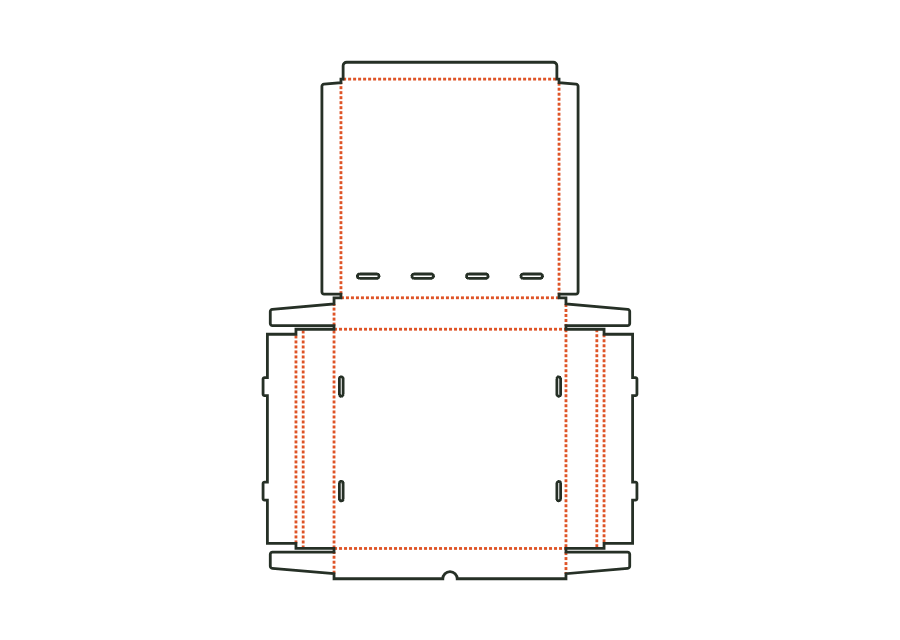
cone.cup.wrapView templateThe pizza box is formed from one blank with double side walls, locking corners, and a hinged lid. Inside dimensions determine the space for the pizza; ventilation slots and locking tabs are separate parameters.
carton.pizzaView templateThe clamshell tray combines a base with glued corners and a lid hinged to the back wall. You choose a tuck flap or tab-and-slot closure and calculate either from inside or outside dimensions.
carton.tray.hingedView templateThe takeout box has outward-sloping front and back walls, glued corners, and a folding lid with a tuck flap. Inside width and outside width have different reference points.
carton.takeoutView templateWith JetDieline, choose a suitable template, adjust its size, and place text, logos, and images directly on your packaging.
Try your dimensions