Front height
Height of the lower front from the bottom; 30 to 90 % of back wall height. The sides slope in straight lines from the back wall to this height.
 JetDieline
Food and hospitality / JETDIELINE
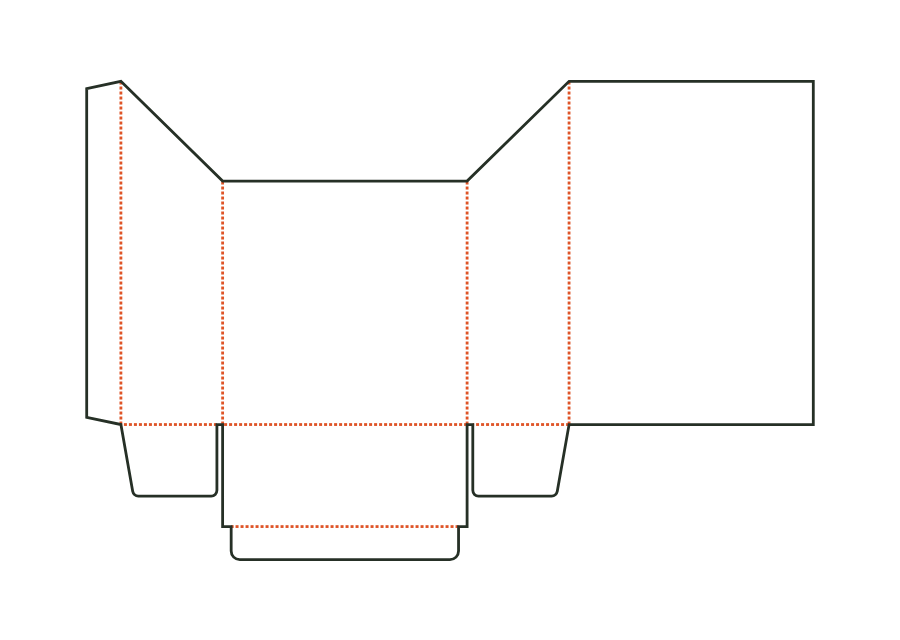
The French fry scoop remains open at the top and has a taller back wall, a lower front, and downward-sloping sides. Front width, depth, and back wall height form the inside dimensions; front height is a separate parameter.
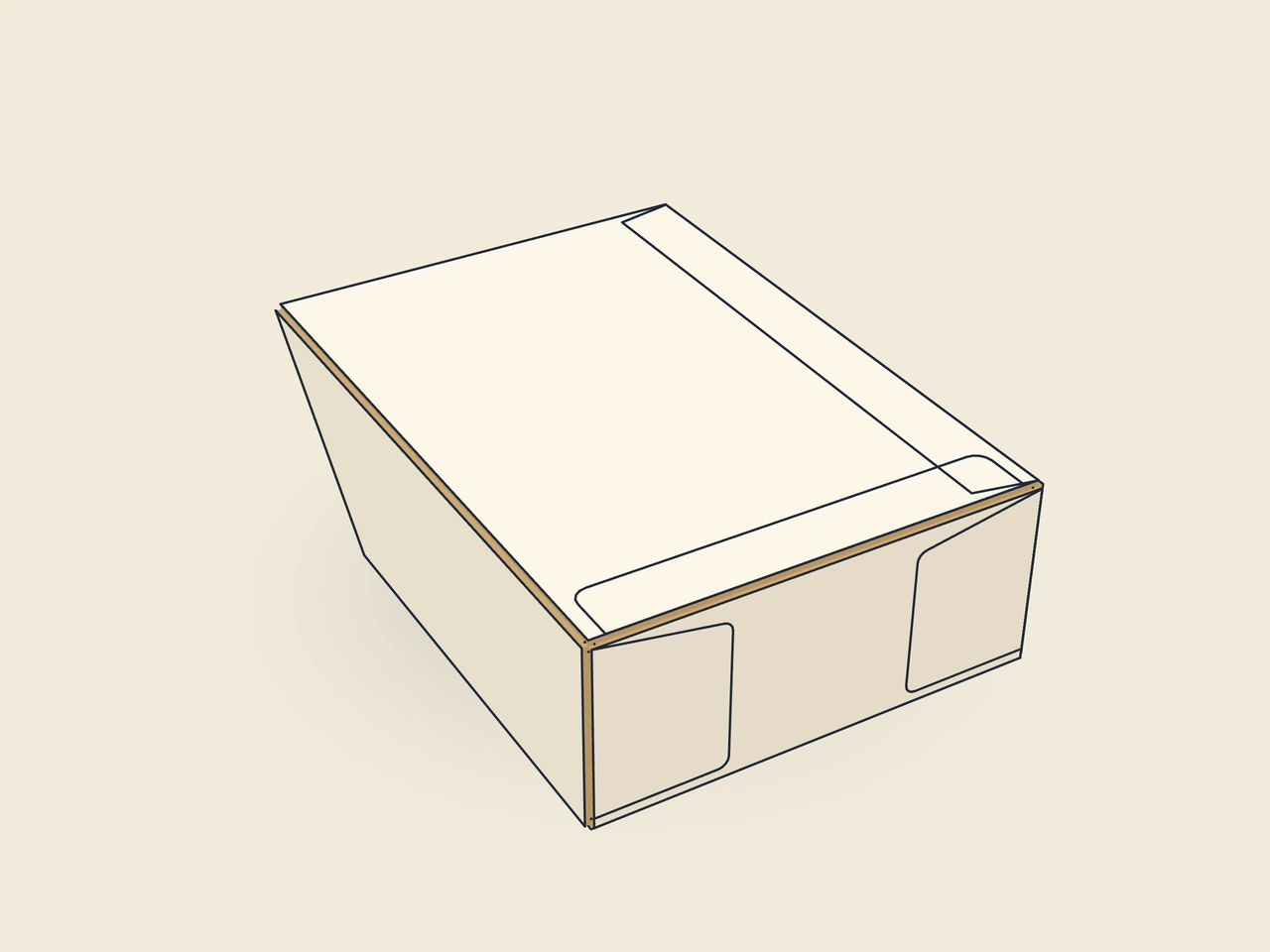
Drag to rotate
03 / BOX
Simplified display model without material thickness, not to scale.
The 3D view is not available in this browser. The image shows the folded shape.
carton.friesThe body follows a folding carton with a side seam. The sides slope in straight lines from back wall height to front height. Dust flaps and a bottom flap close the base; depending on bottom type, the tab tucks into the back wall or is glued there.
Pre-break all creases in the blank, glue the glue flap to the inside of the back wall, and lay the scoop flat. Erect for filling, fold in dust flaps, and close the bottom flap: For a tuck bottom, insert the tuck flap inside against the back wall; for a glued bottom, glue the bottom tab to the inside of the back wall.
Grain direction parallel to height: Wall creases fold neatly and the tall back wall stays stiff (check with a test print shop).
Test fit, folding and closure on a sample made from the intended material. Confirm material thickness, grain direction and production steps with your printer.
Compare openings and closures for your food product. Check direct-contact material, moisture and grease resistance with the manufacturer.
Inside dimension
These dimensions describe the preview, not a fixed packaging size. The app recalculates the dieline for your own dimensions.
Height of the lower front from the bottom; 30 to 90 % of back wall height. The sides slope in straight lines from the back wall to this height.
Tuck bottom (bottom flap with tuck flap, closes without adhesive) or glued bottom (bottom tab glued to the inside of the back wall, sealed and stable).
Width of the glue flap used to glue the blank into a tube. The material requires a minimum width.
Bevel at the ends of the glue flap; facilitates folding and erection.
How far the tuck flap reaches into the box; at most approximately half the width (the height for the mailer). For this scoop, no more than half the depth.
Length means the scoop's front width, width means its depth from front to back wall. Height is the back wall height. Front height is a separate parameter. This mapping matters for an open scoop: The same outside rectangle says little about the filling opening.
The parameter allows 30 to 200 mm, but also only 30 to 90 % of the respective back wall height. Both limits apply together. The M example has an 85 mm front with a 120 mm back wall. If you enter a different height, recheck front height; the sides slope in straight lines to this value.
With the tuck bottom, a tuck flap engages inside against the back wall. With the glued bottom, the bottom tab is glued to the back wall, with dust flaps underneath. friesBottom selects the construction. The tuck bottom also requires the glued side seam. Check assembly and bottom retention with the planned contents instead of comparing only the flat outline.
Find the right packaging shape and fit it to your product
Design the artwork directly on the real dieline
See problems before you pass on files
Files your printer can follow
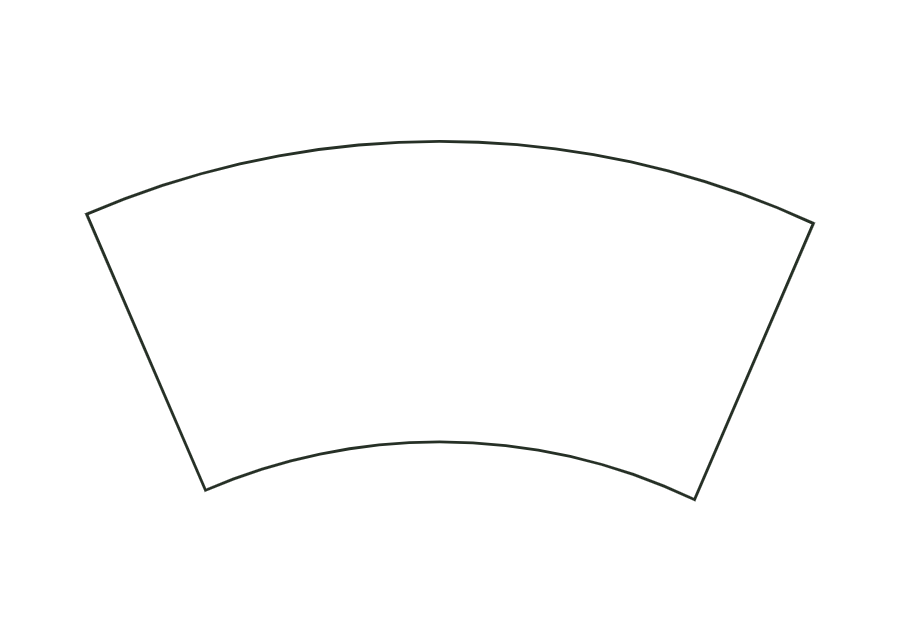
Calculate the conical sidewall blank of a paperboard cup from rim diameter, bottom diameter, and finished height. The annular sector includes the glue seam and separate allowances for the bottom curl and top rolled rim.
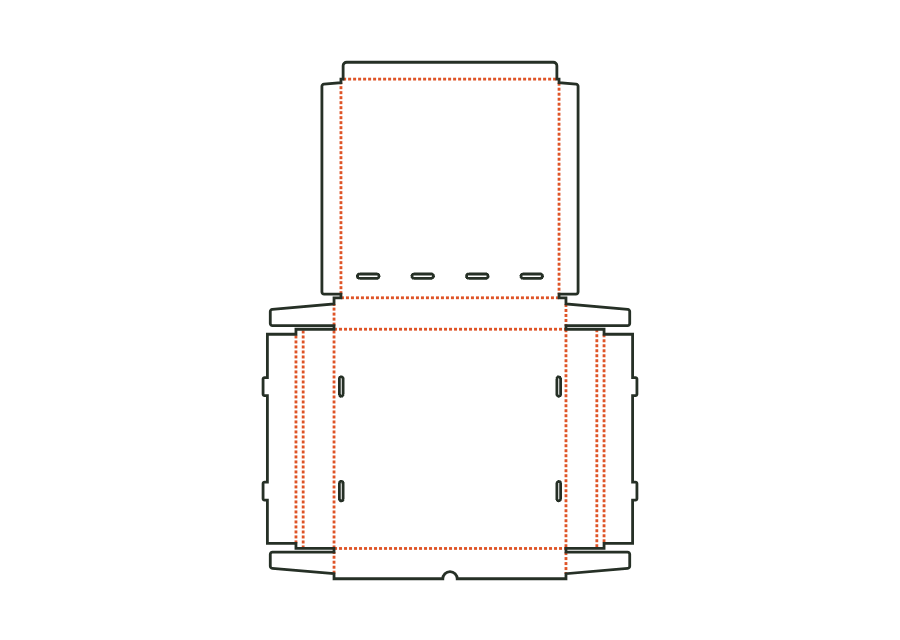
cone.cup.wrapView templateThe pizza box is formed from one blank with double side walls, locking corners, and a hinged lid. Inside dimensions determine the space for the pizza; ventilation slots and locking tabs are separate parameters.
carton.pizzaView templateThe clamshell tray combines a base with glued corners and a lid hinged to the back wall. You choose a tuck flap or tab-and-slot closure and calculate either from inside or outside dimensions.
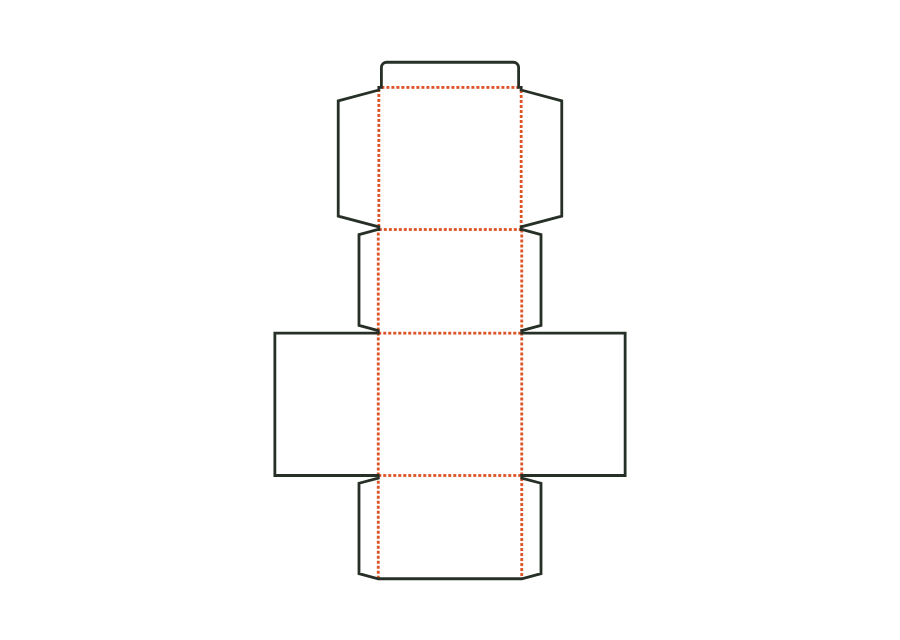
carton.tray.hingedView templateThe takeout box has outward-sloping front and back walls, glued corners, and a folding lid with a tuck flap. Inside width and outside width have different reference points.
carton.takeoutView templateWith JetDieline, choose a suitable template, adjust its size, and place text, logos, and images directly on your packaging.
Try your dimensions Download on the Mac App Store