Greyboard thickness
Thickness of the greyboard around which the wrap is folded; the assembly sets it from the greyboard material.
 JetDieline
Rigid boxes / JETDIELINE
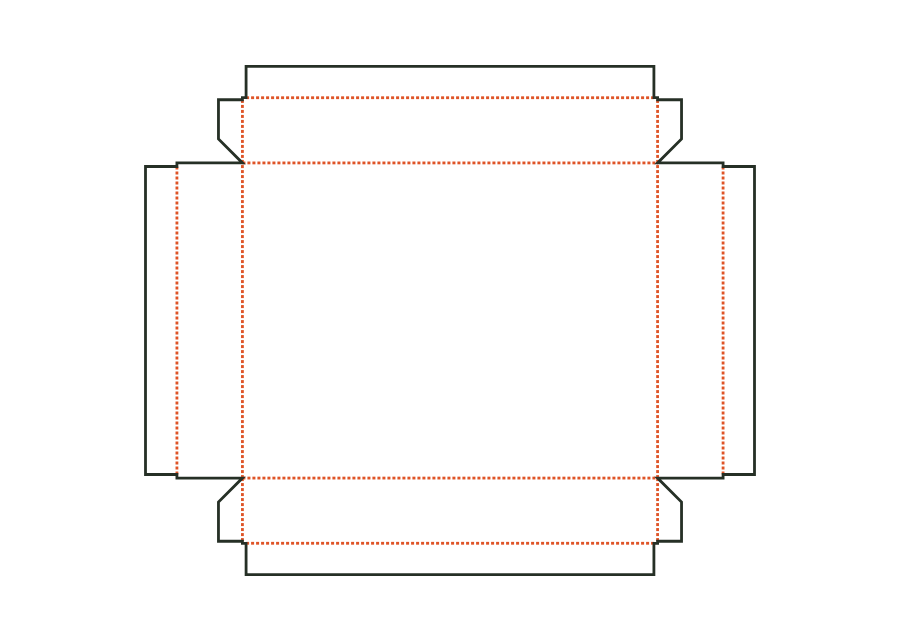
Wrapping paper for the lid, constructed in the same way as the base wrap.
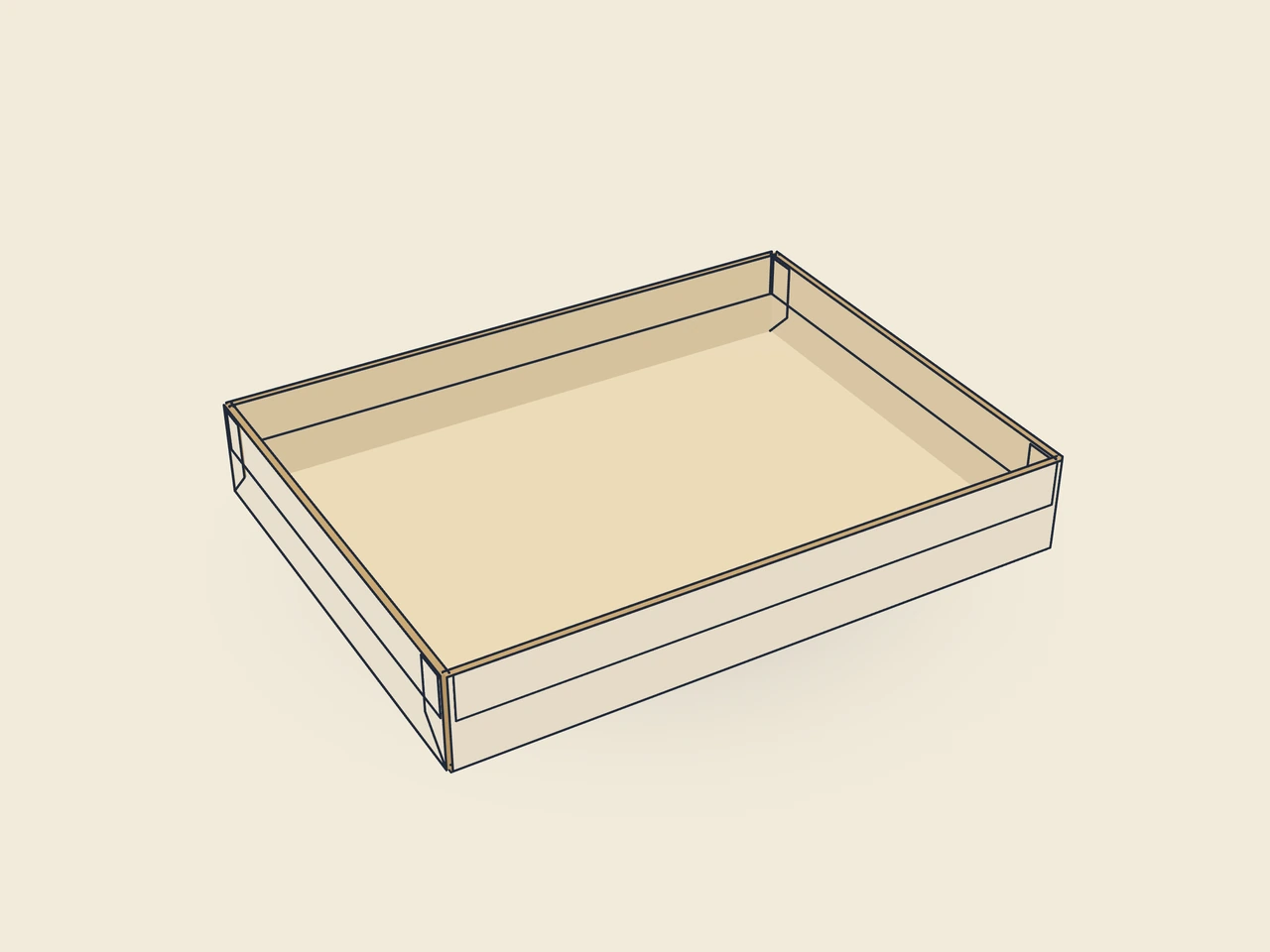
Drag to rotate
03 / BOX
Simplified display model without material thickness, not to scale.
The 3D view is not available in this browser. The image shows the folded shape.
rigid.lidbase.lid.wrapThis template is a component of a packaging assembly. Match its dimensions to the other parts; lids, bases, wraps and linings serve different purposes.
Apply adhesive over the full wrap surface and center the lid shell on the lid panel. Fold up the front and back walls, fold the corner flaps around the edges, glue the end walls over them, and fold the turn-ins inward.
Grain direction of greyboard and wrapping paper parallel to the x-axis of the blank: the long grooves fold cleanly, and board and paper do not warp against each other during wrapping (check with the rigid box manufacturer).
Test fit, folding and closure on a sample made from the intended material. Confirm material thickness, grain direction and production steps with your printer.
Compare opening and presentation: pillow shapes, bands, drawers or lift-off lids. Plan the fit of contents and inserts and allow clearance between moving parts.
Inside dimension
These dimensions describe the preview, not a fixed packaging size. The app recalculates the dieline for your own dimensions.
Thickness of the greyboard around which the wrap is folded; the assembly sets it from the greyboard material.
Depth to which the wrap folds inward over the top edge, measured from the inside edge.
Width of the flaps that wrap around the vertical edges and are covered by the adjacent wall wrap.
The lid must fit over the already wrapped base. The model adds twice the clearance and four times the paper thickness to the outside dimensions of the base. The inside dimensions of the lid greyboard therefore differ from the product's inside space. If you change the paper or greyboard, recalculate the assembly and confirm the fit on the sample.
No. The base starts with an inside height of 60 mm, the lid with 30 mm. ASM-002 warns when lid walls are higher than the base. The lid may then touch the supporting surface. Decide how far the lid should overlap the base with the manufacturer using the wrapped sample.
The base wrap and lid wrap enclose different shells. Both use the dimensions of the corresponding greyboard and its thickness as the boardCaliper parameter. Turn-ins and corner flaps change the paper outline. Do not transfer changes by simply scaling: the shell, its wall height, and the wrapping paper thickness limit the possible turn-in.
Find the right packaging shape and fit it to your product
Design the artwork directly on the real dieline
See problems before you pass on files
Files your printer can follow
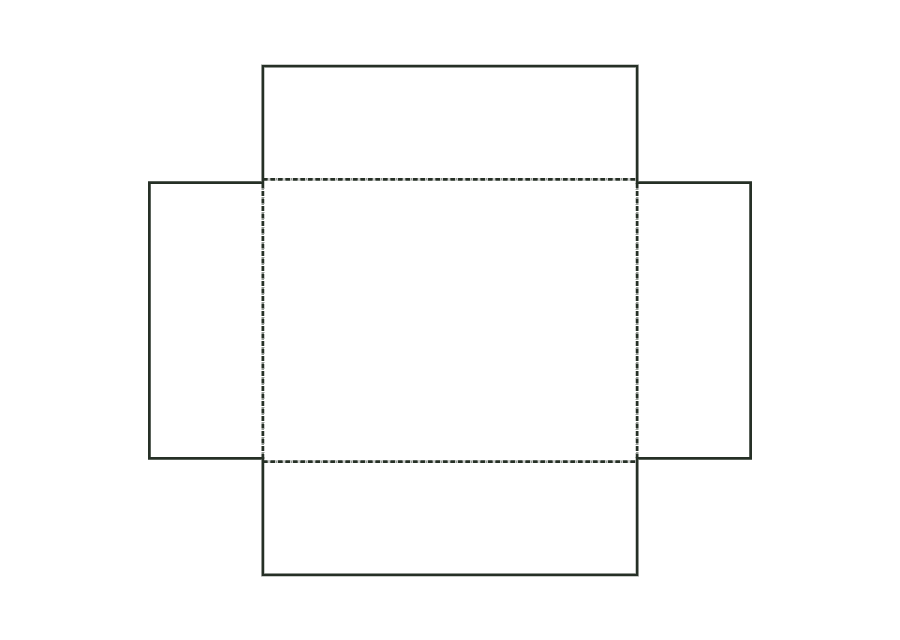
Greyboard shell for the lid, constructed in the same way as the base; dimensions derived from the outside dimensions of the base plus clearance and paper.
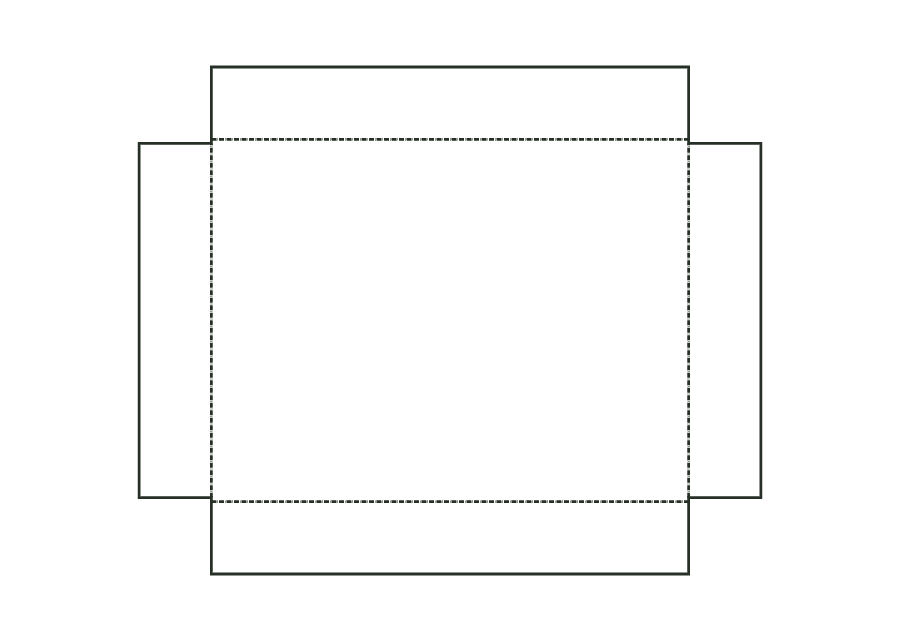
rigid.lidbase.lidView templateGreyboard shell for the base of a rigid box: base with four walls, V-grooves, and butt-jointed corners.
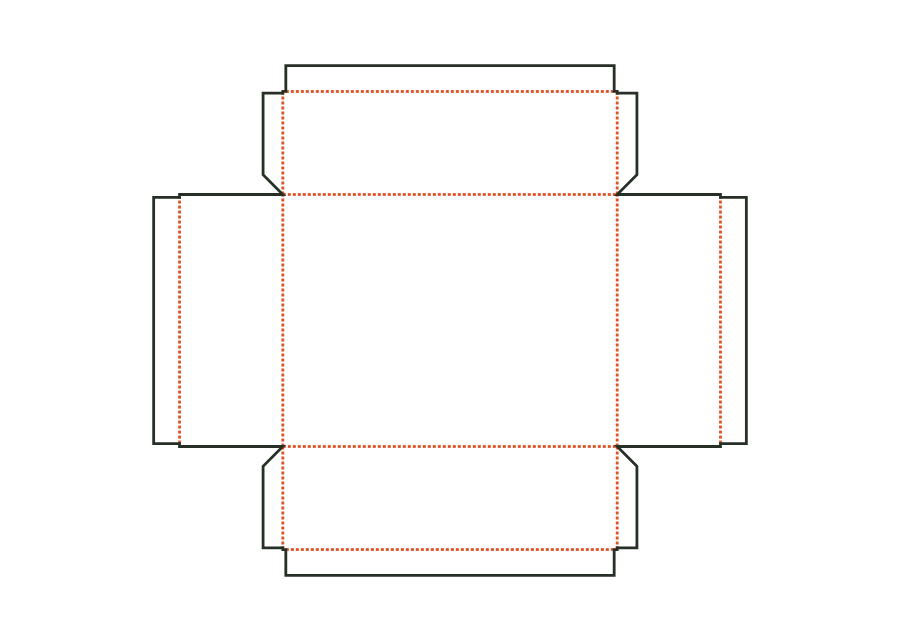
rigid.lidbase.baseView templateWrapping paper for the base: a cross with corner flaps on the front and back walls and turn-ins over the top edge to the inside.
rigid.lidbase.base.wrapView templateGreyboard tray: shell with V-grooves and butt-jointed corners, optionally with a slot for a pull ribbon in the right end wall.
rigid.drawer.trayView templateWith JetDieline, choose a suitable template, adjust its size, and place text, logos, and images directly on your packaging.
Try your dimensions Download on the Mac App Store