Glue flap
Width of the glue flap used to glue the blank into a tube. The material requires a minimum width.
 JetDieline
Folding cartons and inserts / JETDIELINE
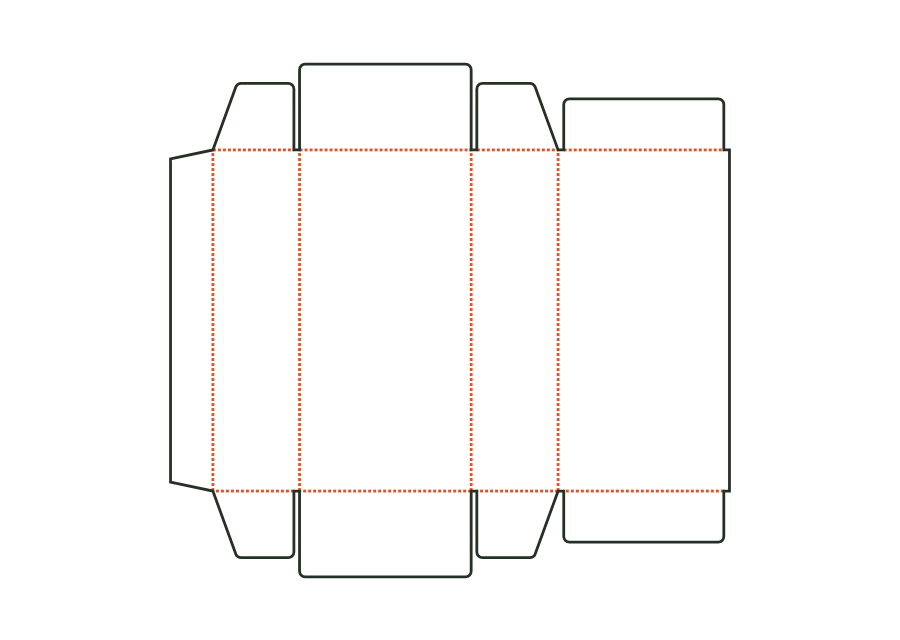
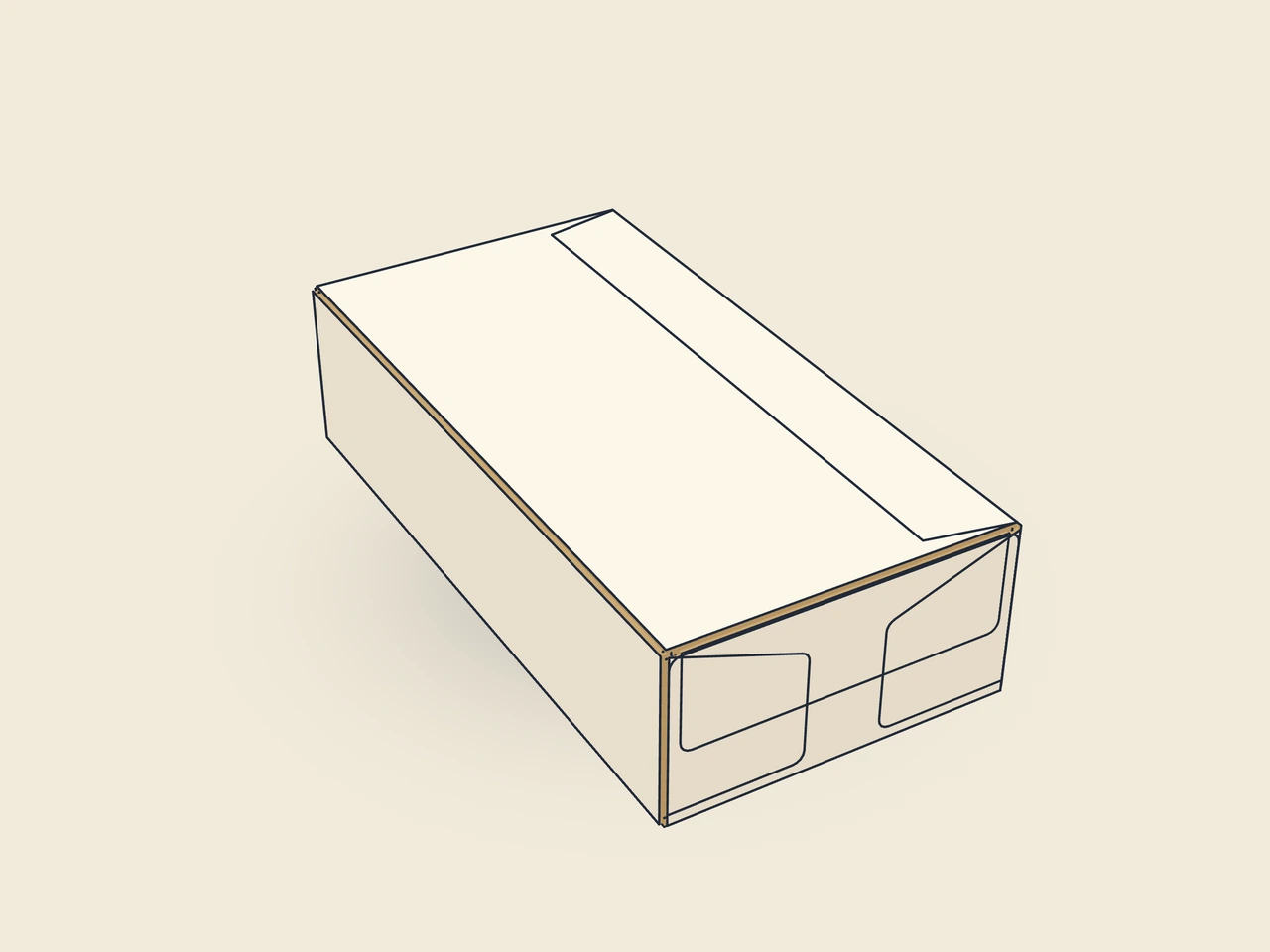
Folding carton with a side seam and glued top and bottom closures (Seal End) in place of tuck flaps: outer flap at the front, inner flap at the back, dust flaps at the sides. For pharmaceuticals and food; opened by tearing.
Drag to rotate
03 / BOX
Simplified display model without material thickness, not to scale.
The 3D view is not available in this browser. The image shows the folded shape.
carton.sealendThe body forms four walls with a side seam. Outer flaps at the front and inner flaps at the back cover the top and bottom openings; the dust flaps lie underneath. Their overlap forms the glue strip.
Pre-break the blank along all creases, glue the glue flap to the inside of the back wall, and flatten it (factory). Erect at the filling facility, fold in the bottom dust flaps and inner flap, apply adhesive to the outer flap's glue strip, and press into place; close the top the same way after filling.
Test fit, folding and closure on a sample made from the intended material. Confirm material thickness, grain direction and production steps with your printer.
Inside dimension
These dimensions describe the preview, not a fixed packaging size. The app recalculates the dieline for your own dimensions.
Width of the glue flap used to glue the blank into a tube. The material requires a minimum width.
Bevel at the ends of the glue flap; facilitates folding and erection.
Dust flap length as a ratio of the available length.
Bevel of the dust flaps (also the ears on the mailer); larger angles prevent collisions during folding.
Distance between dust flap and lid along the crease; at least the material thickness. The machine requires a minimum slot width.
An outer flap lies over an inner flap at both ends. The dust flaps are folded in first. Adhesive in the overlap strip joins the closure flaps. This construction has no tuck flap; the glued closure is torn open. The side seam is glued at the factory, and the ends are closed during filling.
Both depths are proportions of the opening width. The outer flap starts at 100 %, the inner flap at 60 %. Their combined overlap is decisive: it must reach at least the material's glue width. The constraint sealInnerFlap.overlap.minimumGlueFlap checks this relationship. Individually permitted parameter values do not guarantee an adequate glue strip.
This template has no tuck tongue. A tuck closure that can be opened repeatedly requires a suitable tuck end carton. For the seal-end construction, plan the filling sequence and tearing open the glued end. Check adhesive application and opening with the intended board; geometry alone does not specify a guaranteed closure force.
Find the right packaging shape and fit it to your product
Design the artwork directly on the real dieline
See problems before you pass on files
Files your printer can follow
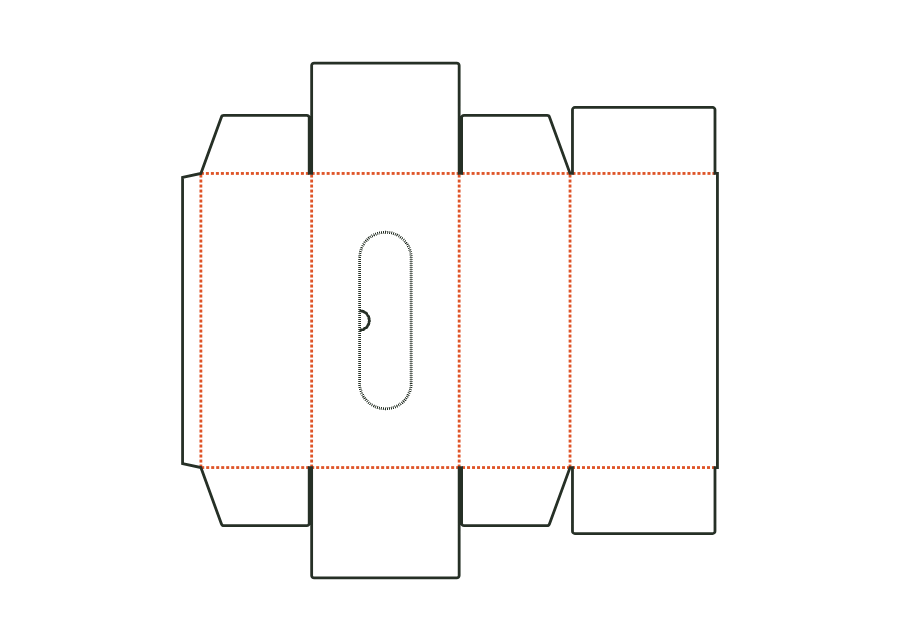
Horizontal box for facial tissues and handkerchiefs: body with side seam, ends with glued closures (Seal End), dispensing opening in the top as a perforation (slot or rectangle) with a thumb notch. Dimensions: length × top width × height.
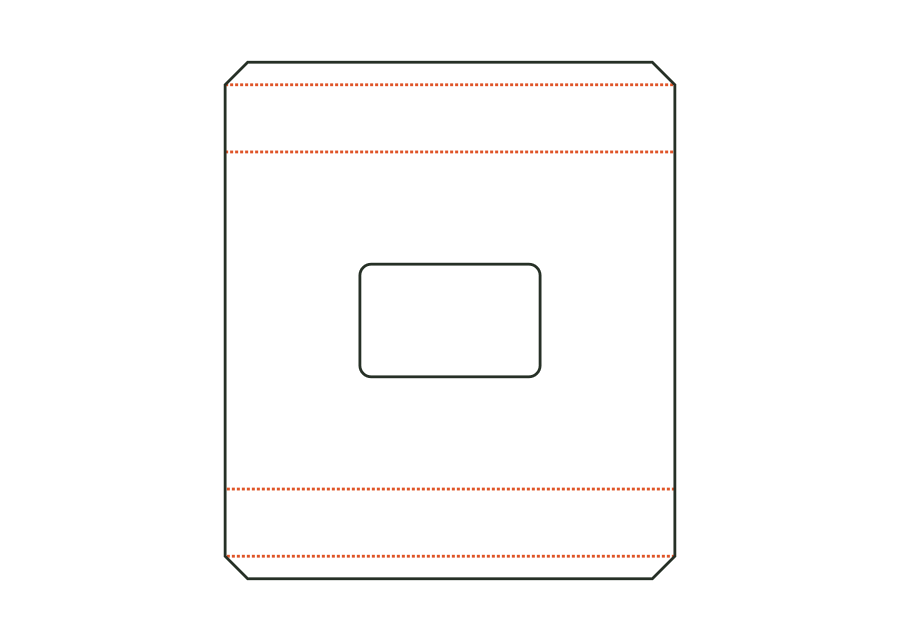
carton.tissueView templatePaperboard insert for a box: a platform with a product cut-out (rectangle, circle, or oval, freely positioned) on folded legs at two or four edges, optionally with inward-folded leg flaps. Dimensions: outside dimensions of the insert (inside dimensions of the box) × platform height.
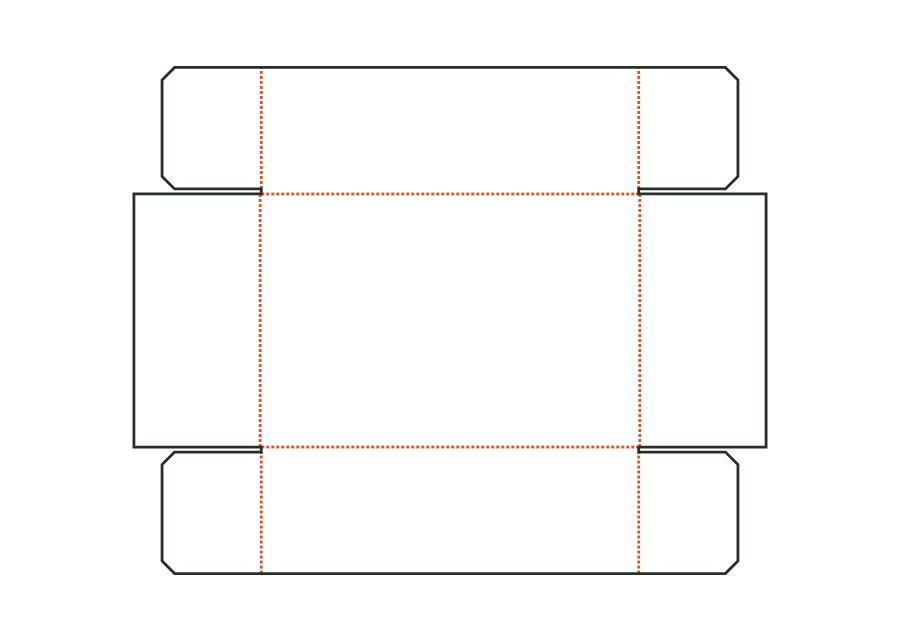
carton.insert.cutoutView templateLower part of the folding carton telescope box: base with four walls and glued corner flaps, same construction as the corrugated telescope box, for smaller gift and chocolate boxes.
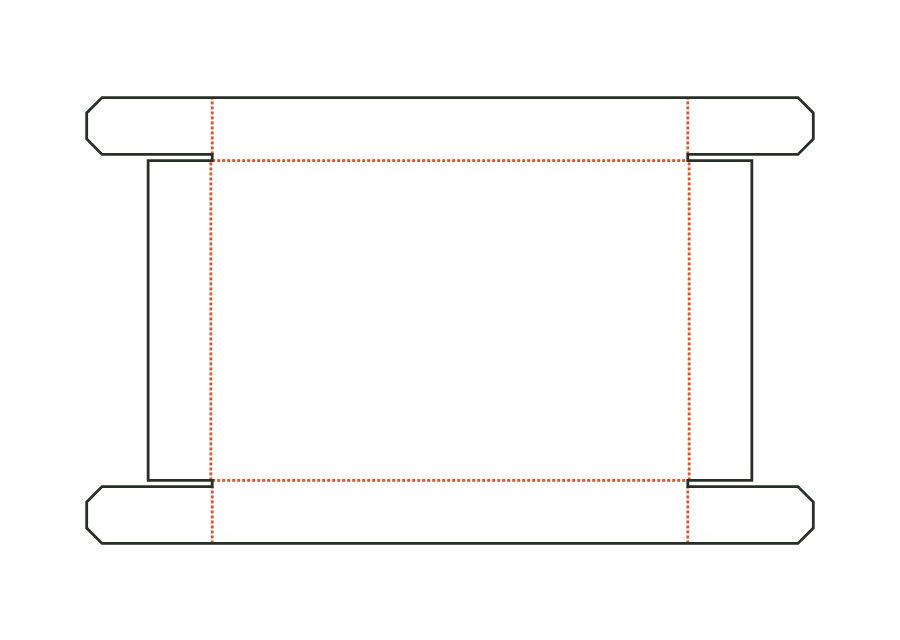
carton.telescope.baseView templateTelescope lid made of folding carton board, with the same construction as the base; dimensions derived from the base's outside dimension plus clearance per side.
carton.telescope.lidView templateWith JetDieline, choose a suitable template, adjust its size, and place text, logos, and images directly on your packaging.
Try your dimensions