Flap gap
Gap between neighboring flaps or walls; at least approximately the material thickness.
 JetDieline
Corrugated shipping boxes / JETDIELINE
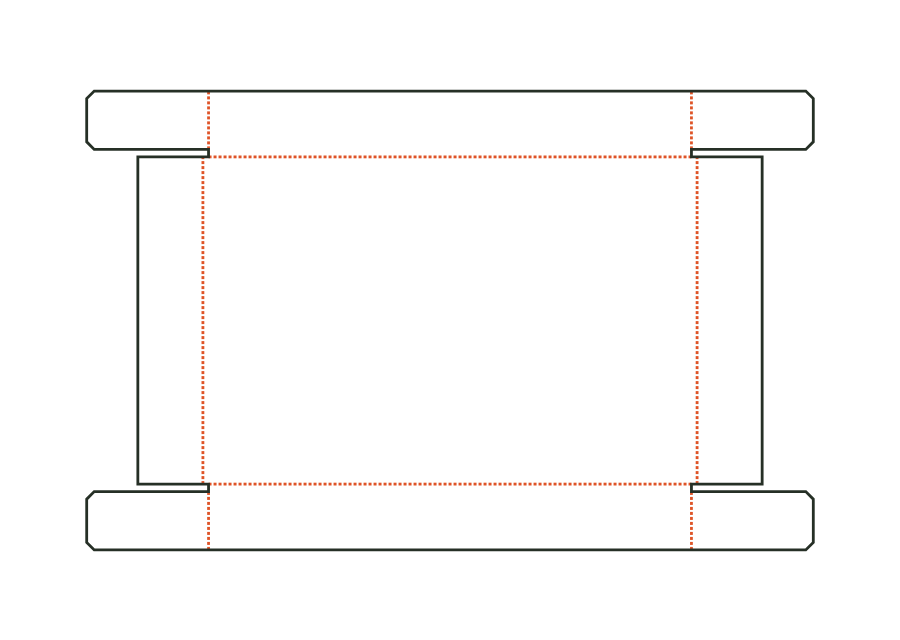
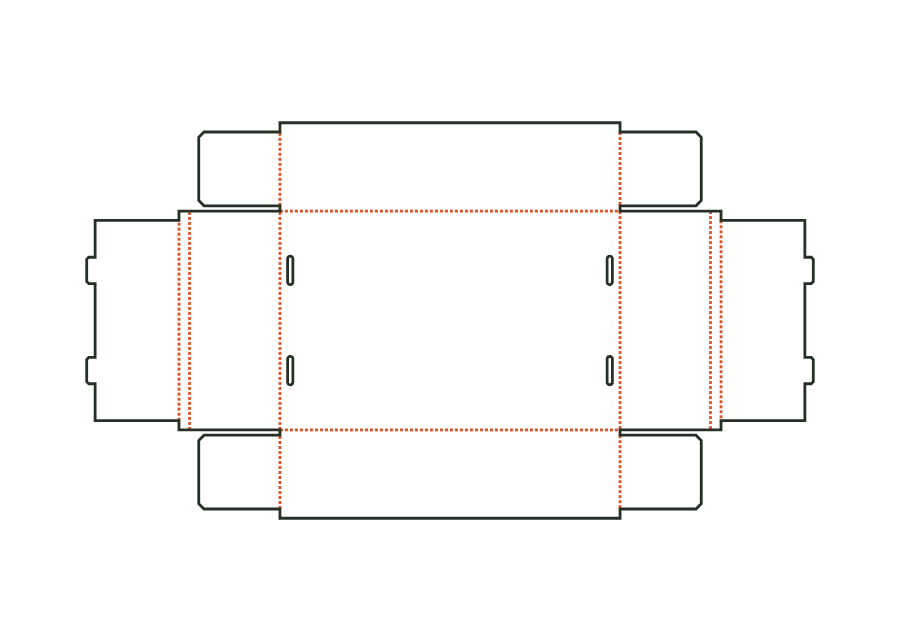
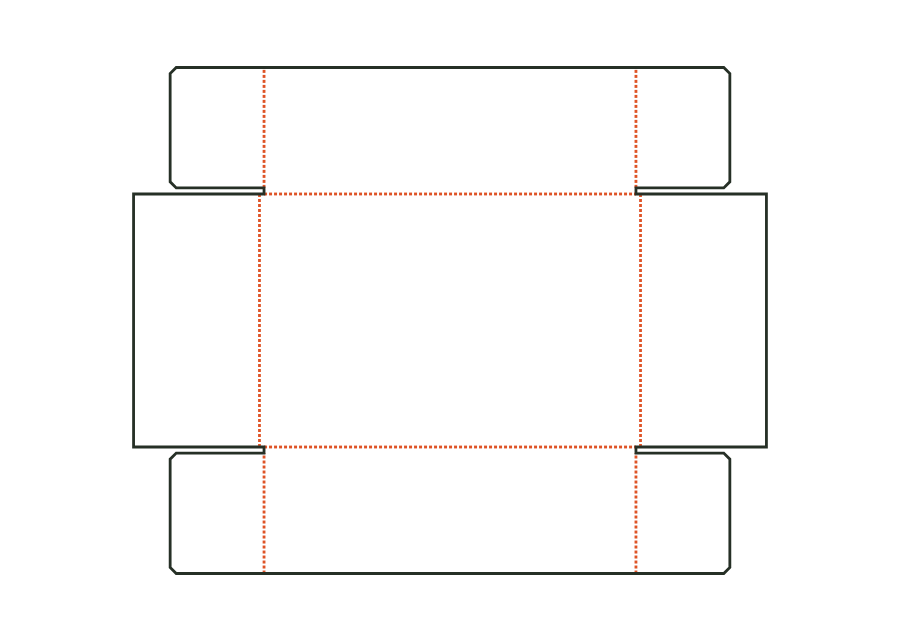
Base and lid form a two-part corrugated construction with glued corner flaps. Each component has its own dieline; the lid is derived from the base's outside dimension and clearance per side.
Drag to rotate
03 / BOX
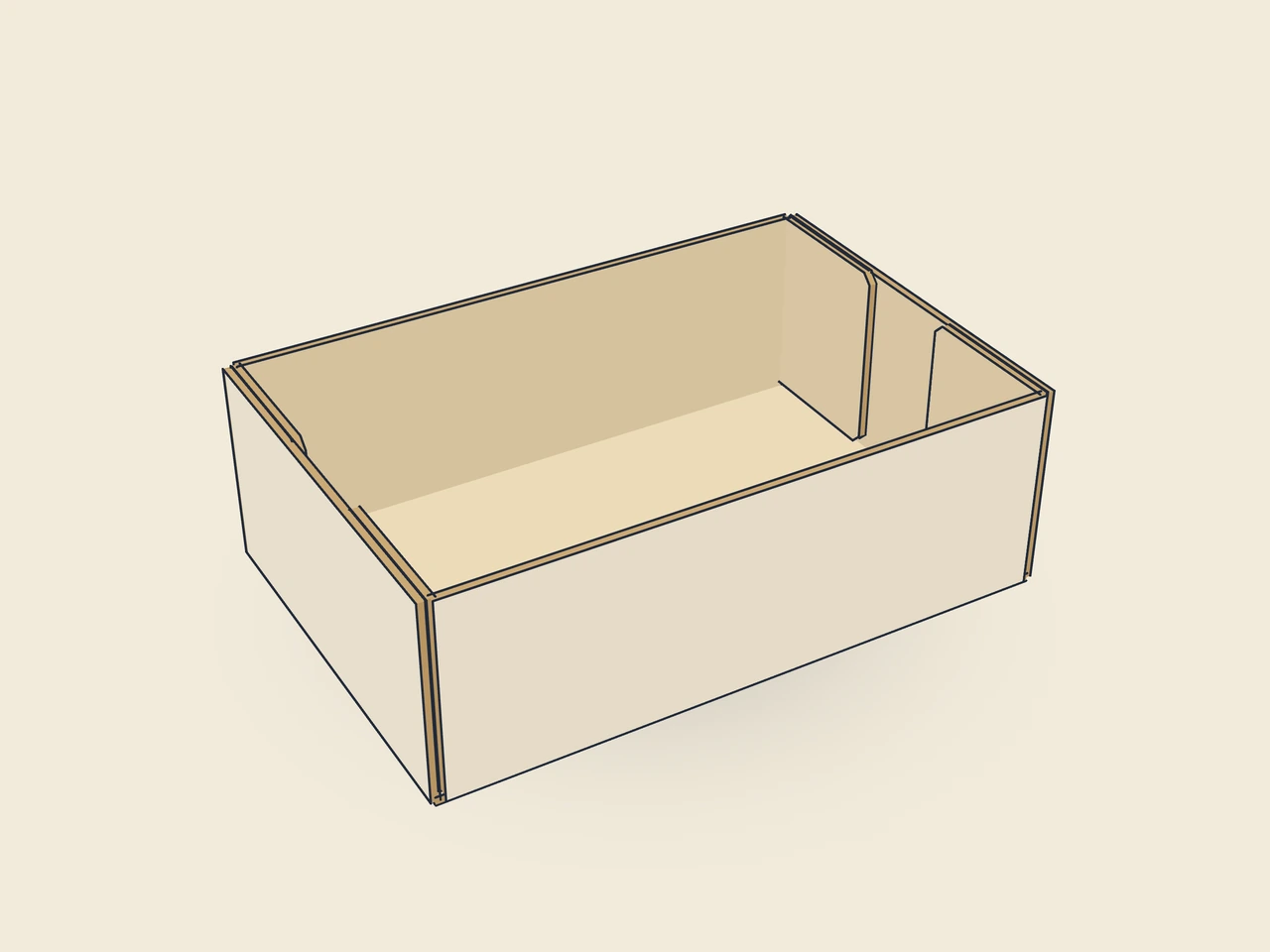
Simplified display model without material thickness, not to scale.
The 3D view is not available in this browser. The image shows the folded shape.
corrugated.telescope.baseThis template is a component of a packaging assembly. Match its dimensions to the other parts; lids, bases, wraps and linings serve different purposes.
Both parts consist of a center panel, four walls, and corner flaps glued to the end walls. Starting dimensions in B flute are base inside 300 × 200 × 100 mm and lid inside 316 × 210 × 40 mm. For the base, the dimension model gives outside dimensions of 312 × 206 × 103 mm; 2 mm clearance per side gives the lid cross section of 316 × 210 mm.
Erect the front and back walls, fold the corner flaps inward, erect the end walls, and glue them to the corner flaps. Erect the front and back walls, fold the corner flaps inward, erect the end walls, and glue them to the corner flaps. Place the lid upside down over the base.
Grain direction vertical on the blank (check)
Test fit, folding and closure on a sample made from the intended material. Confirm material thickness, grain direction and production steps with your printer.
Inside dimension
These dimensions describe the preview, not a fixed packaging size. The app recalculates the dieline for your own dimensions.
Gap between neighboring flaps or walls; at least approximately the material thickness.
Length of the ears or corner flaps as a ratio of half the inside width.
The lid must fit over the base's outer walls. Its inside cross section is therefore the base's outside dimensions plus twice the clearance per side. The starting example in B flute gives 312 × 206 mm outside at the base and, with 2 mm clearance per side, 316 × 210 mm inside at the lid.
No. Each component has its own blank, parameters, and metrics. The figures appear in sequence on this page; the first group of metrics belongs to the base, the second to the lid. Components can be documented together in the assembly export. Keep their dimensions distinct when printing or cutting the sample.
These two component templates support inside and outside dimensions. Crease-to-crease dimensions are not offered for the glued corners because the end wall and corner flap overlap, making the reference ambiguous. Choose the reference before calculation. You need the calculated outside dimensions of the base to determine lid fit.
Find the right packaging shape and fit it to your product
Design the artwork directly on the real dieline
See problems before you pass on files
Files your printer can follow
Corrugated lift-off lid with the same construction as the base; its dimensions follow the outside dimensions of the base plus clearance per side.
corrugated.telescope.lidView templateAn open corrugated tray with double end walls and locking corners. The blank is erected without adhesive; this page shows our own V2 construction with B flute.
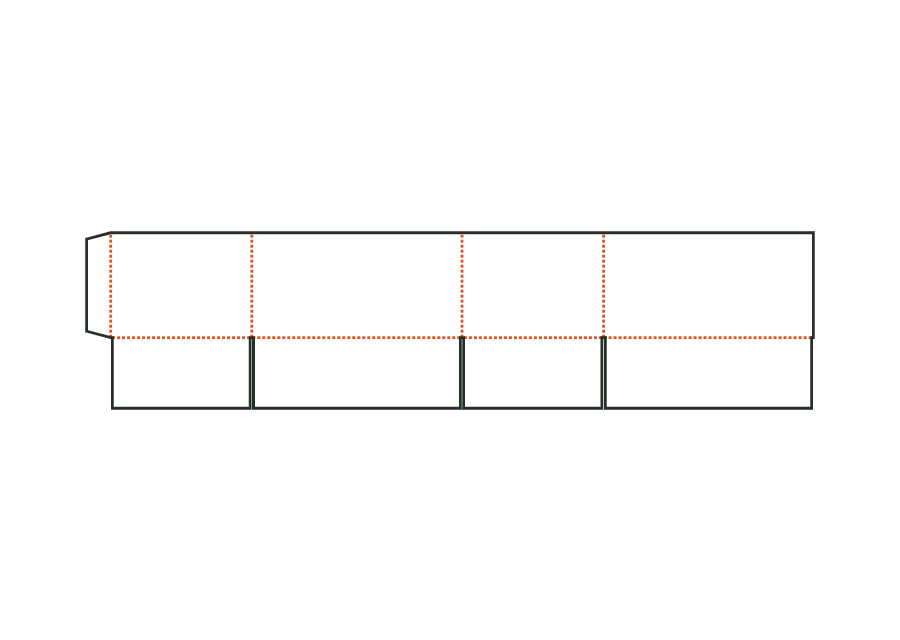
corrugated.trayView templateFour walls with a glue flap and bottom flaps, open at the top: the half slotted container can serve as a shelf box or base. The own parametric construction calculates only this open box body.
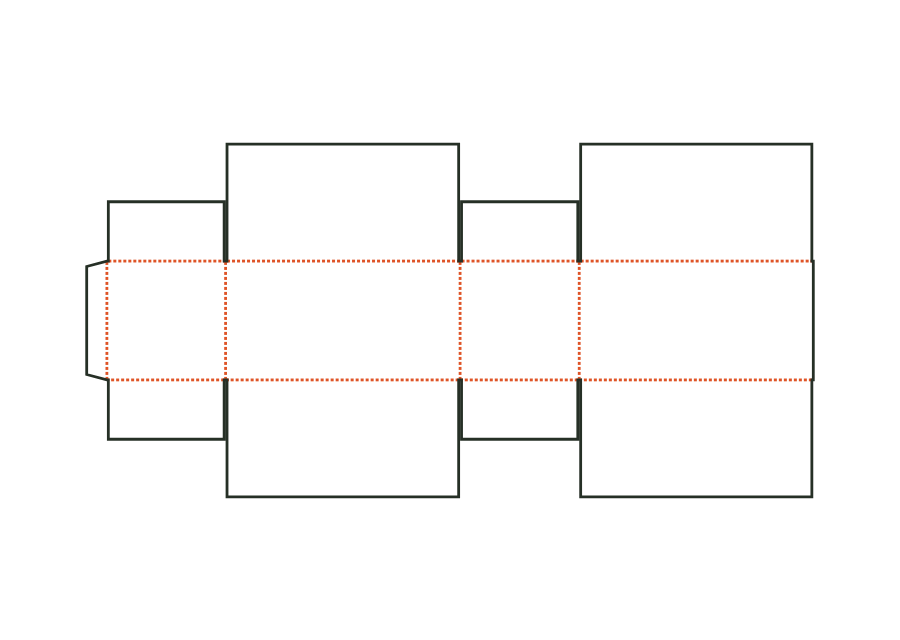
corrugated.halfslottedView templateThe outer flaps each cover the entire opening at the top and bottom and overlap. Our corrugated construction calculates full coverage rather than just a narrow overlap strip.
corrugated.rsc.fulloverlapView templateWith JetDieline, choose a suitable template, adjust its size, and place text, logos, and images directly on your packaging.
Try your dimensions Download on the Mac App Store