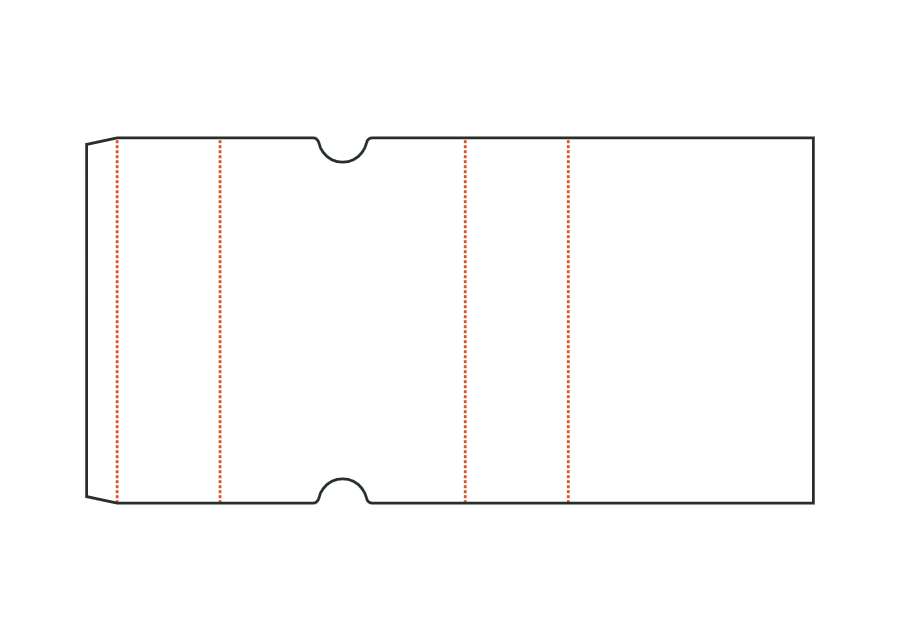
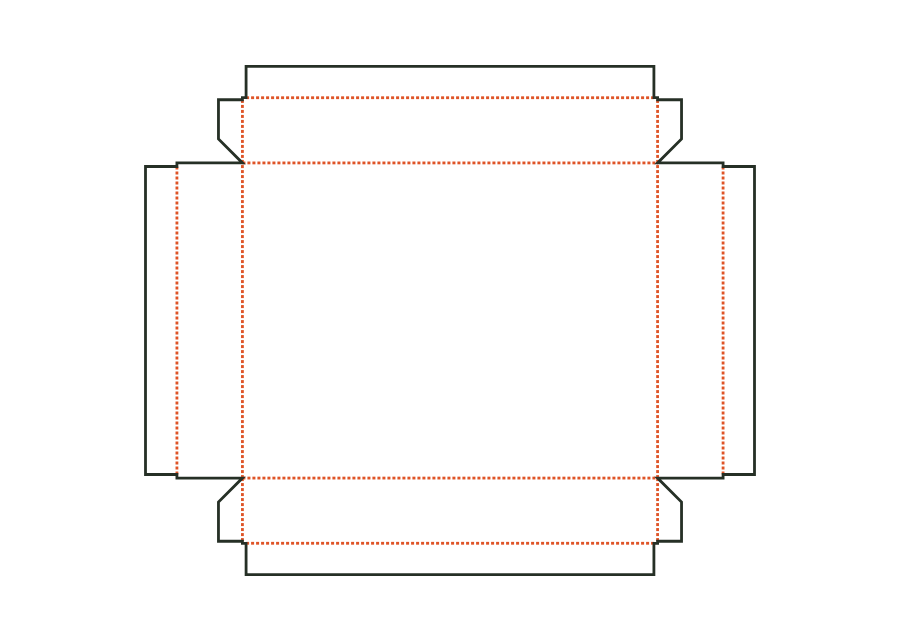
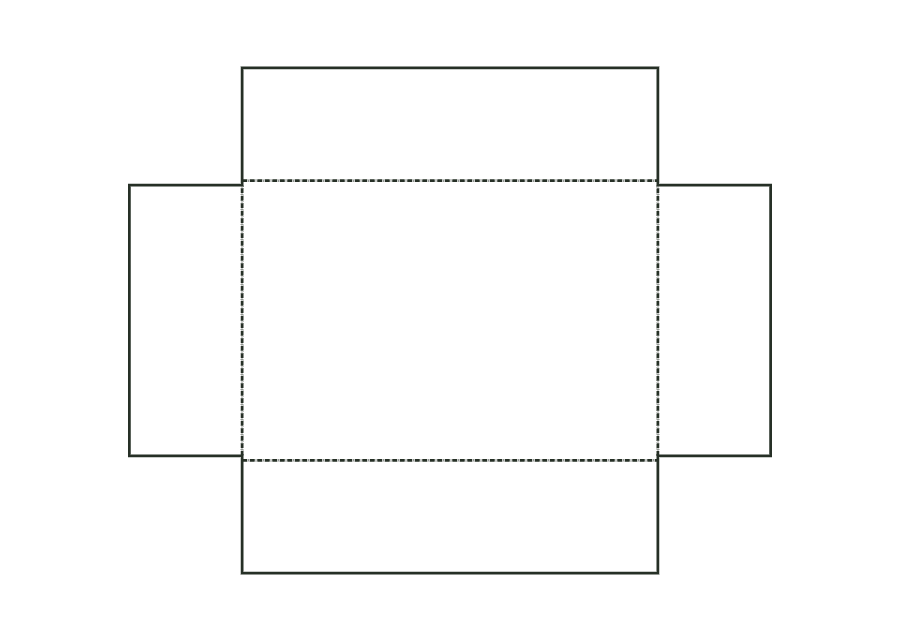
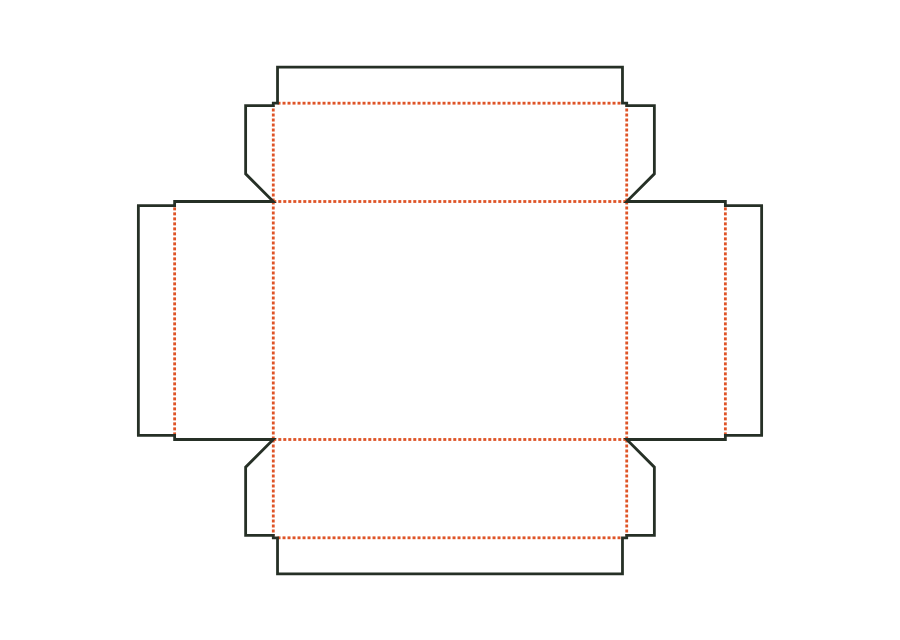
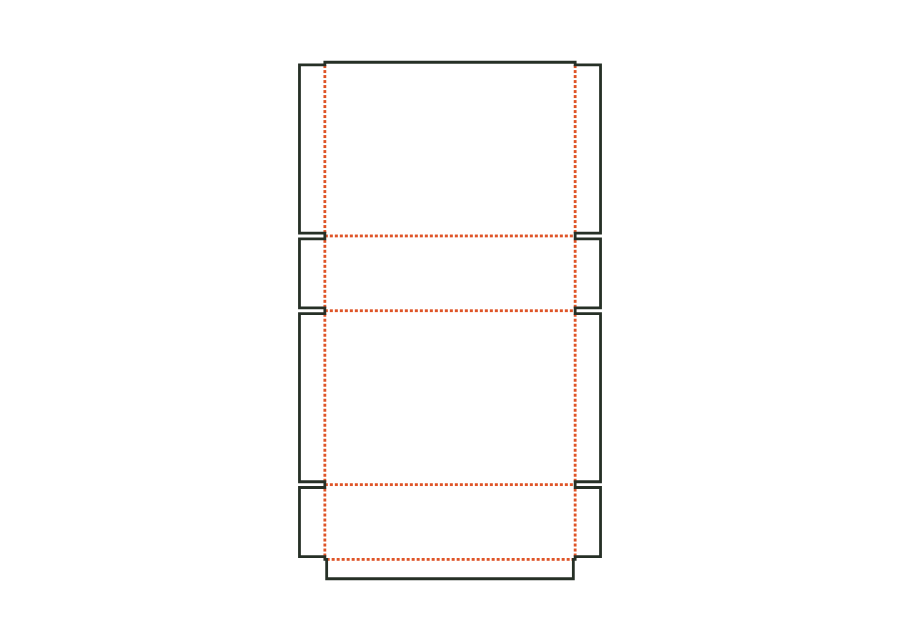
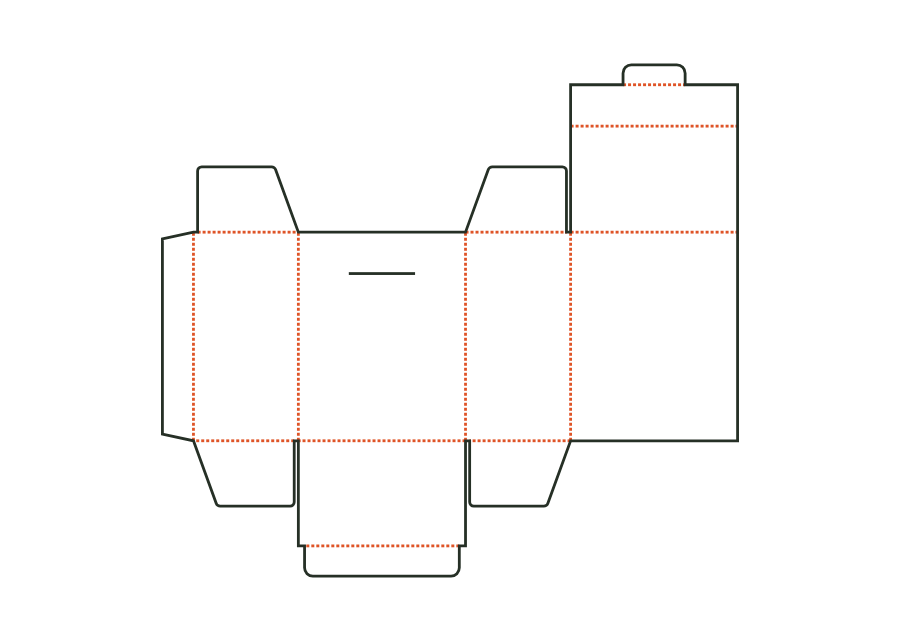
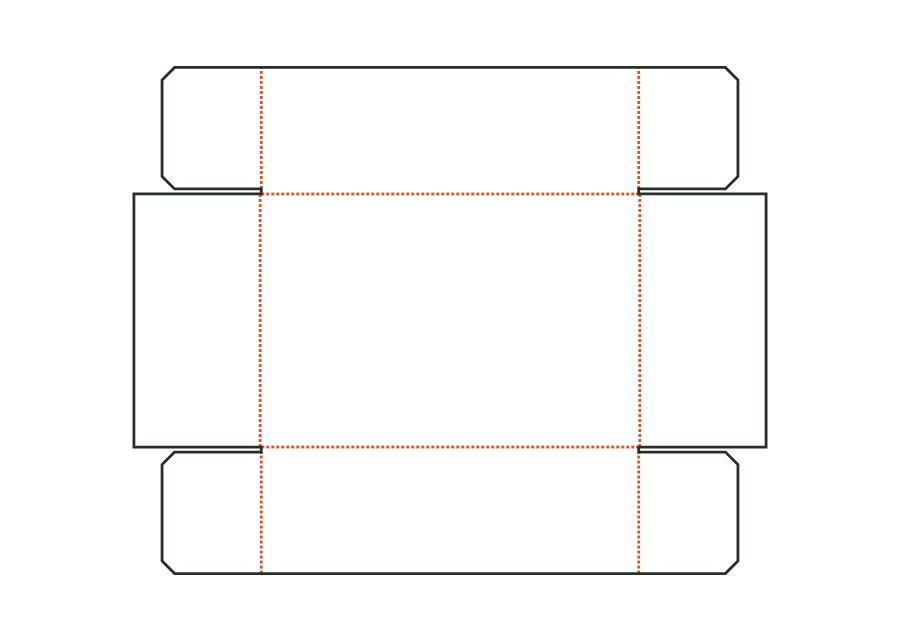
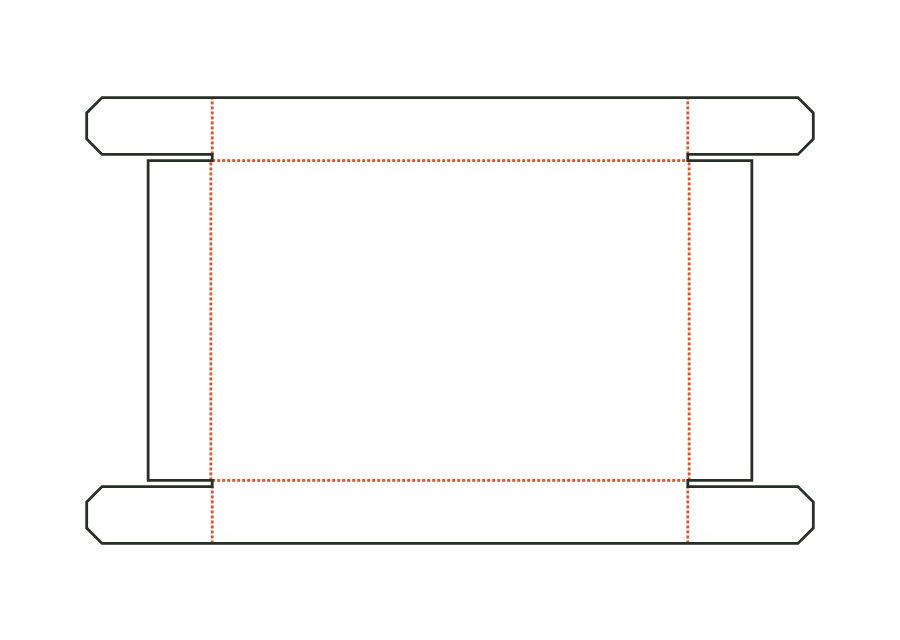
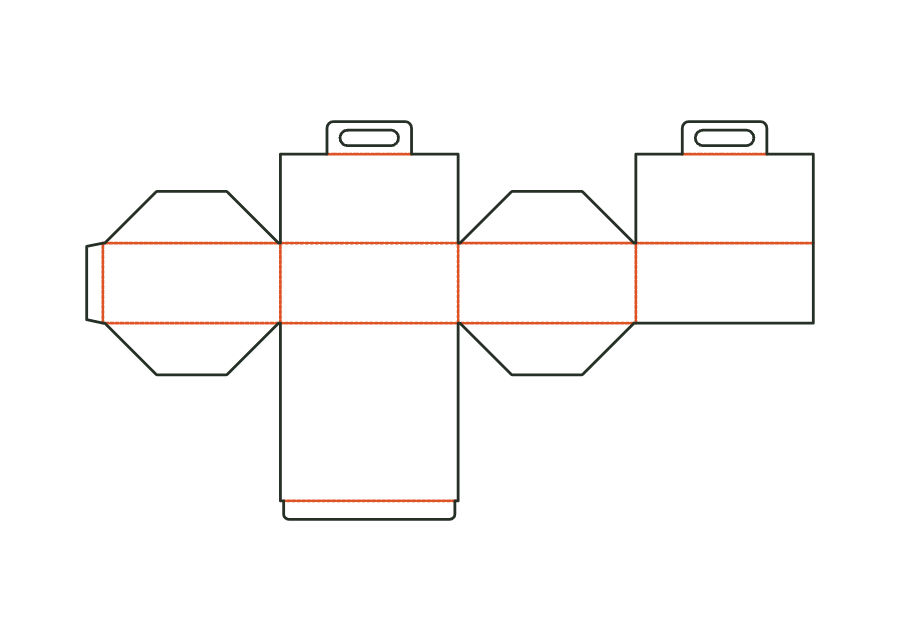
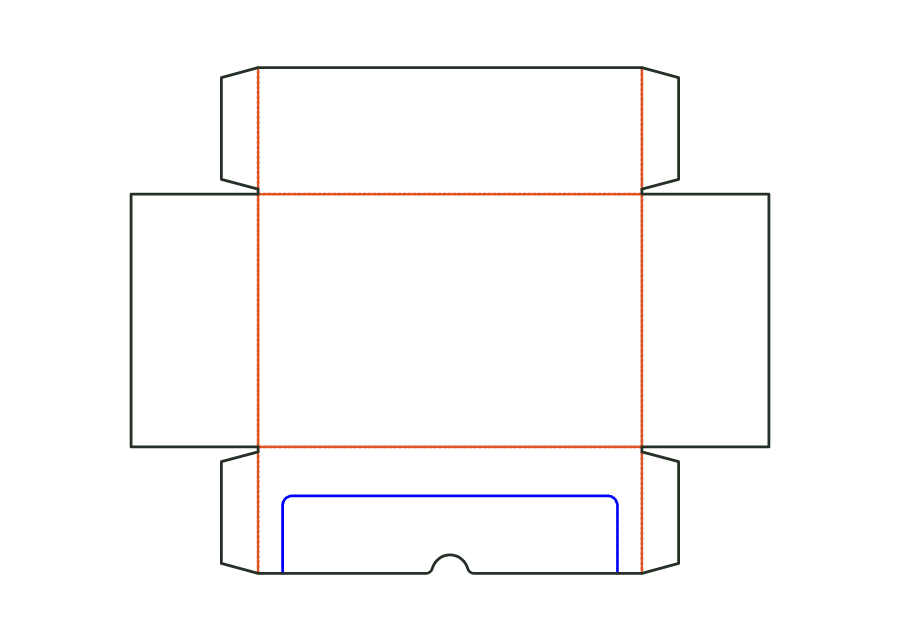
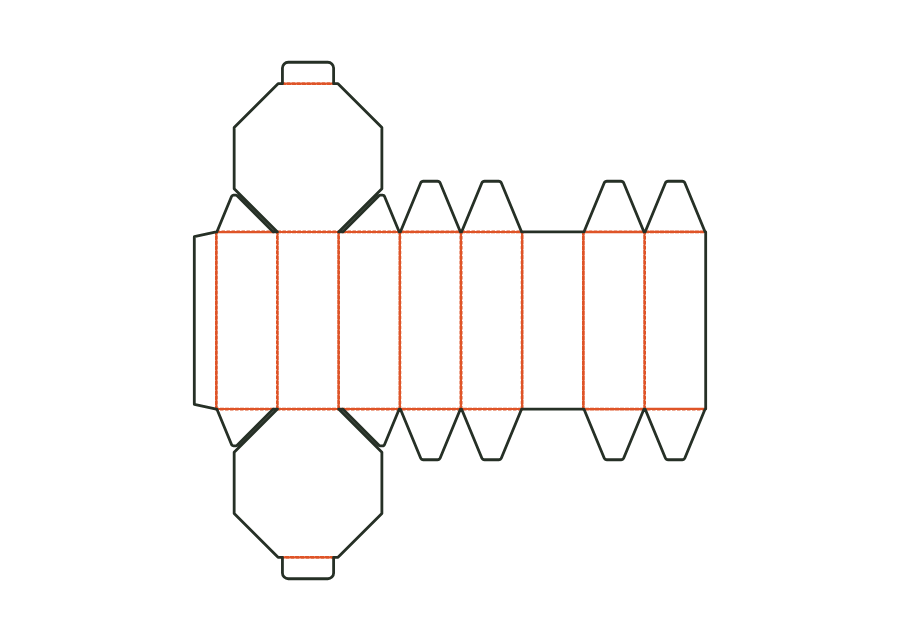
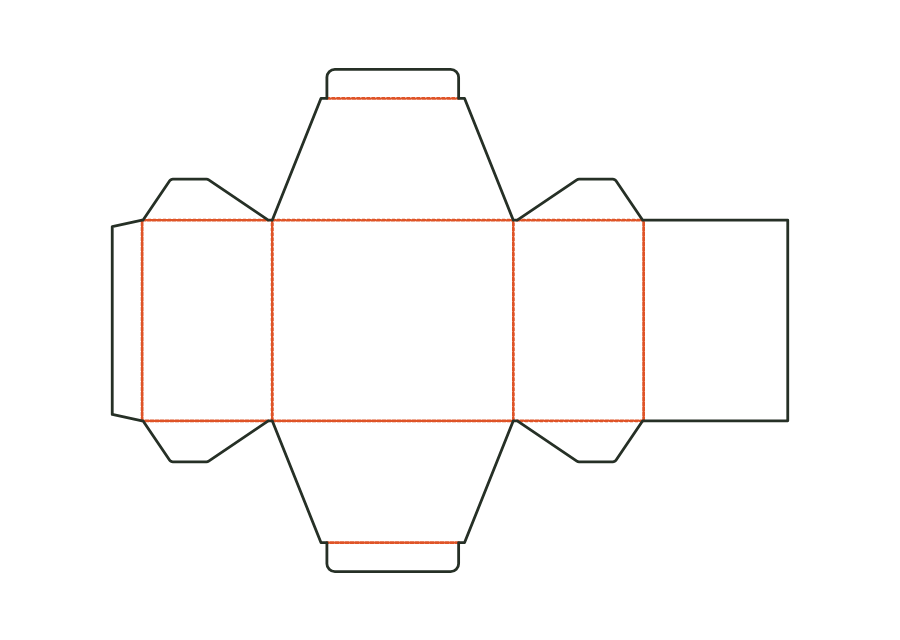
Straight tuck-end carton
Blank, creases, and flaps are calculated from inside dimensions. The result is an artwork PDF, production dieline, and production sheet for the print shop.
carton.tuckend.straightView template JetDieline
JETDIELINE / Templates
Compare small cartons, windows and gift shapes for confectionery. An insert can keep products apart. Check filling space, direct contact and closure on a fully packed sample.
Individual components are shown separately. Different sizes and stored template versions are not additional packaging shapes.
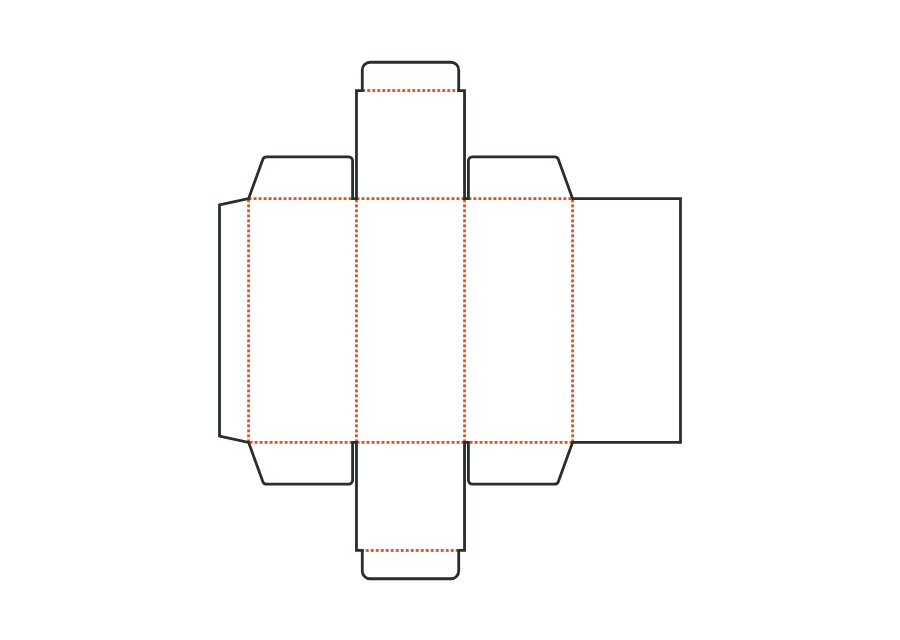 carton.tuckend.straight
Blank, creases, and flaps are calculated from inside dimensions. The result is an artwork PDF, production dieline, and production sheet for the print shop.
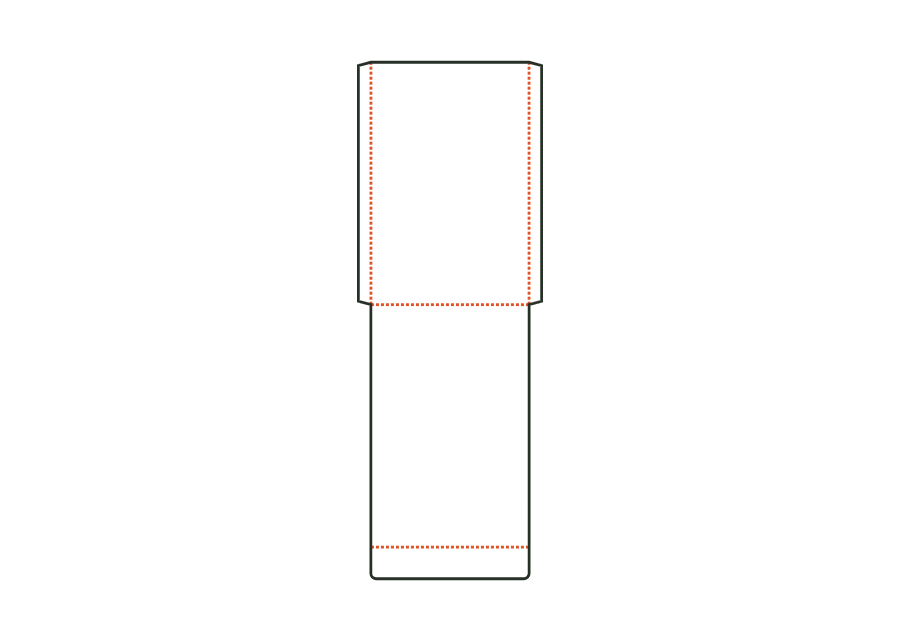
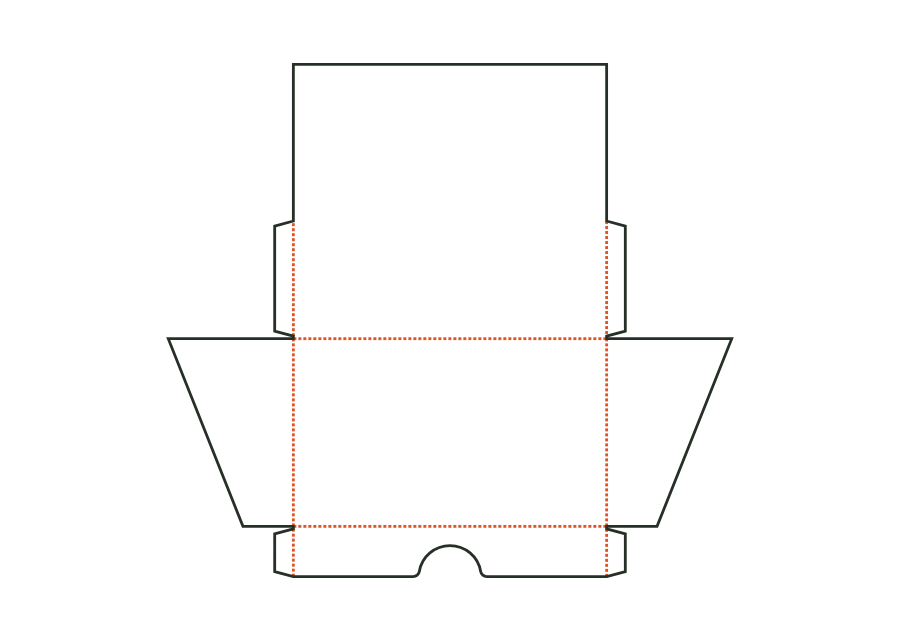
carton.tuckend.straightView templateThe sleeve surrounds a product with four walls and remains open at both ends. Length and width describe the cross section; height denotes sleeve length. The dieline shows version 1 with finger notches on the front. Material thickness, glue flap, and notch position remain part of the calculation rather than simple scaling.
carton.sleeveView templateGreyboard shell for the base of a rigid box: base with four walls, V-grooves, and butt-jointed corners.
rigid.lidbase.baseView templateGreyboard shell for the lid, constructed in the same way as the base; dimensions derived from the outside dimensions of the base plus clearance and paper.
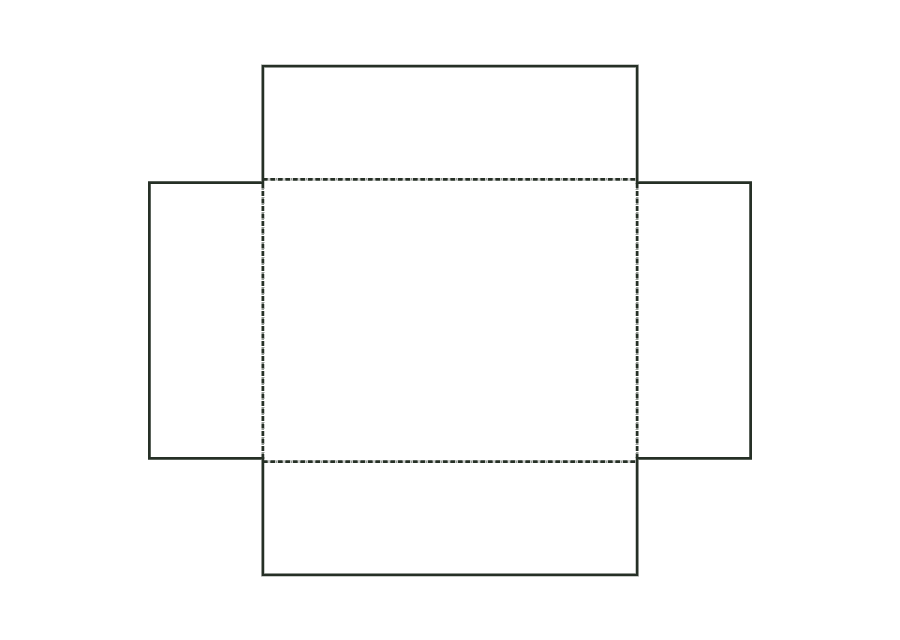
rigid.lidbase.lidView templateWrapping paper for the base: a cross with corner flaps on the front and back walls and turn-ins over the top edge to the inside.
rigid.lidbase.base.wrapView templateWrapping paper for the lid, constructed in the same way as the base wrap.
rigid.lidbase.lid.wrapView templateGreyboard tray: shell with V-grooves and butt-jointed corners, optionally with a slot for a pull ribbon in the right end wall.
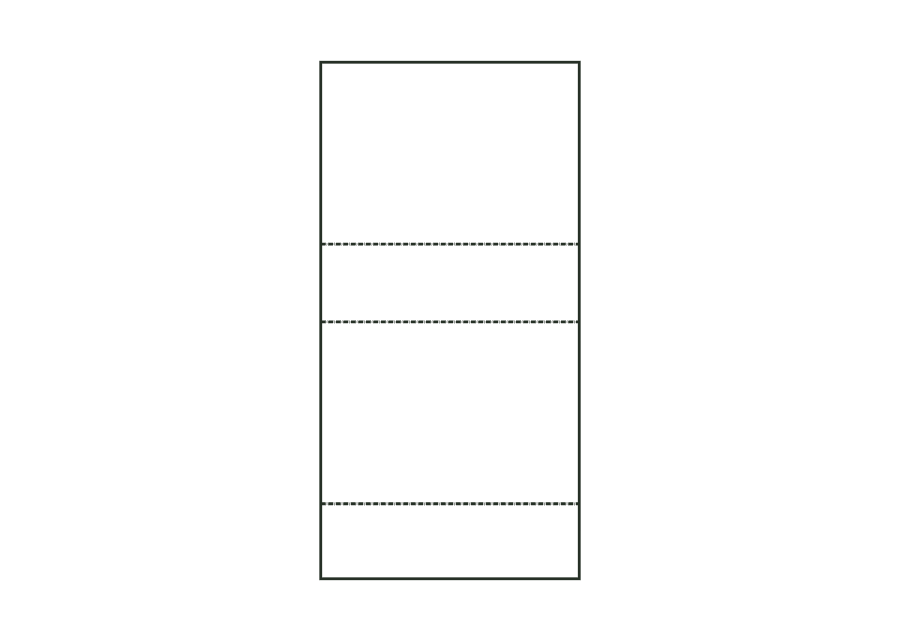
rigid.drawer.trayView templateGreyboard sleeve: strip with three V-grooves, open at both ends, with a joint at the lower front edge.
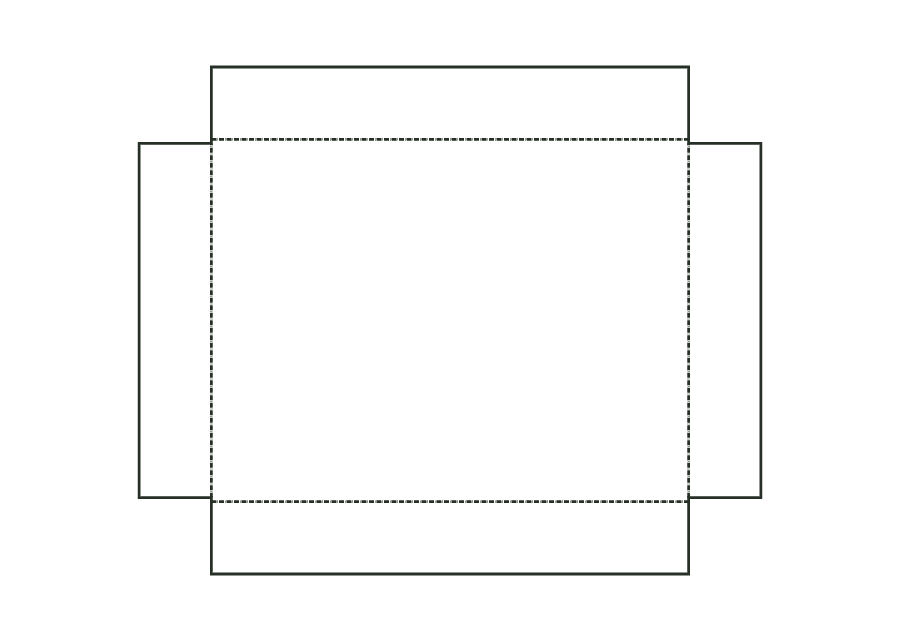
rigid.drawer.sleeveView templateWrapping paper for the tray: cross-shaped blank with corner flaps and turn-ins, optionally with a slot over the tray's slot.
rigid.drawer.tray.wrapView templateWrapping paper for the sleeve: strip with overlap at the joint and turn-ins at both open ends.
rigid.drawer.sleeve.wrapView templateThe flat bag consists of front and back with two glued side seams and a bottom fold. Enter bag width and height as outside dimensions. An optional flap on the back closes the opening; the dieline shows its effect on the paper blank.
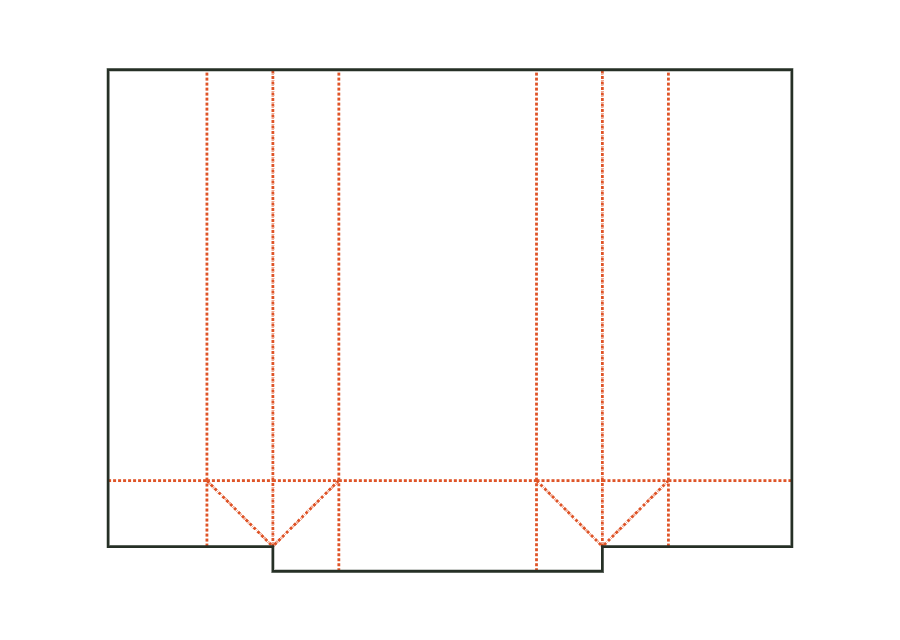
bag.flatView templateThe side-gusset bag has a glued longitudinal seam and a block bottom made of flaps, ears, and triangles. You set bag width, gusset depth, and height. The inside dimension shown is converted into crease-to-crease dimensions using the material profile; the flat dieline also includes the bottom overlap.
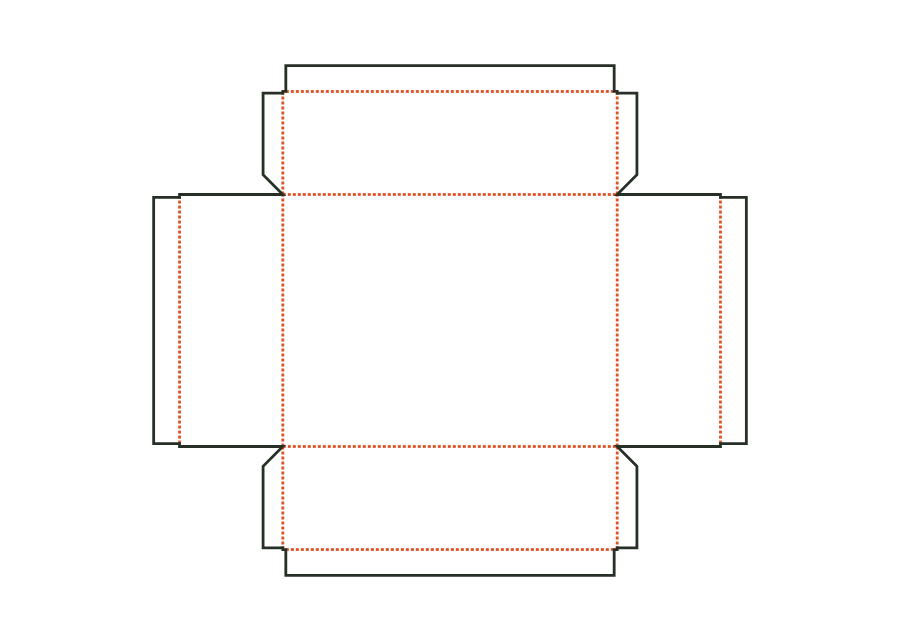
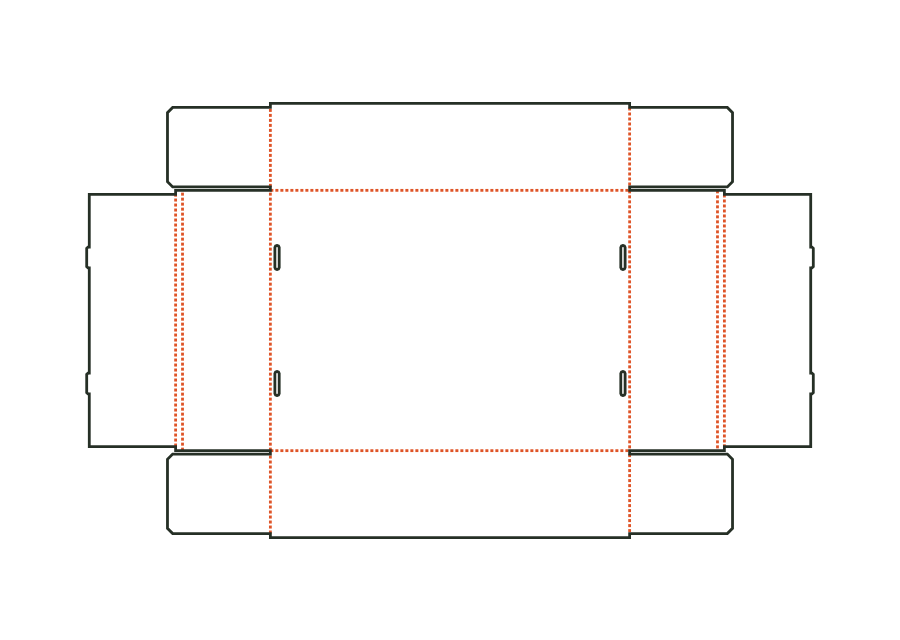
bag.gussetView templateUnglued folding carton board tray: front and back walls with corner flaps, double end walls with a rollover; tabs on the inner wall tuck into slots in the bottom.
carton.tray.lockedView templateReverse tuck end carton with a perforated tear-open window in the front and a thumb notch as an opening tab; after opening, contents are removed individually.
carton.dispenserView templateOpen countertop display: low front wall with a finger recess, tall back wall with an advertising area, and sloping side walls; corners are glued inside with corner glue flaps as on the tray.
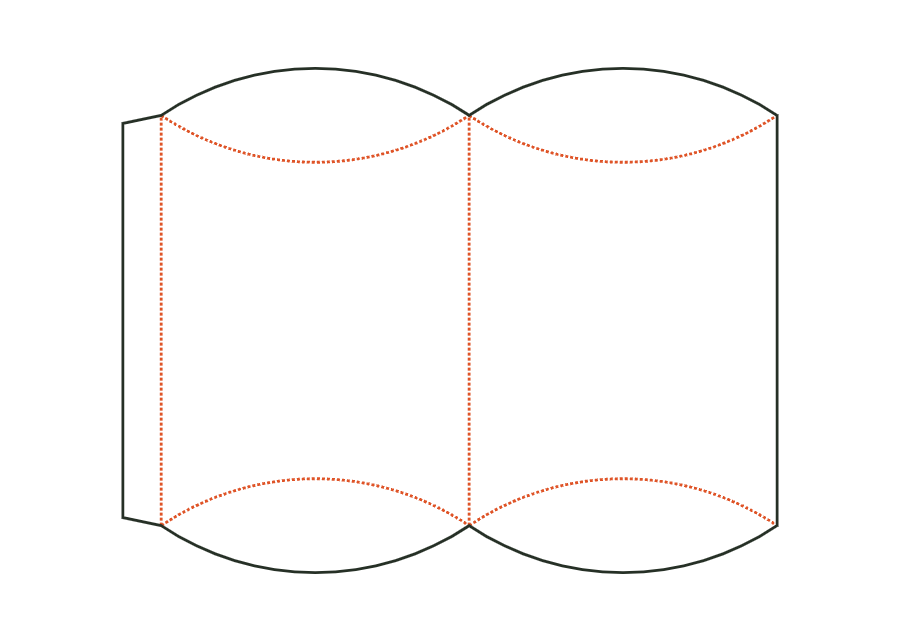
carton.display.counterView templateThe pillow box curves two wall surfaces between lens-shaped end flaps. Curved creases create the closure instead of straight lid creases. In version 1, the inputs mean the package's width × thickness × length. The shown dieline accounts for these proportions and the starting material; it does not define a rectangular box interior.
carton.pillowView templateThe hinged lid sits on the back wall and lays its front wall over the outside of the front. A lid flap inserts through a slot in the front; a tuck bottom closes the base. The page shows version 2 with the hanging hole disabled. The technical core calculates lid overhang, flaps, and creases from the chosen dimensions and material profile.
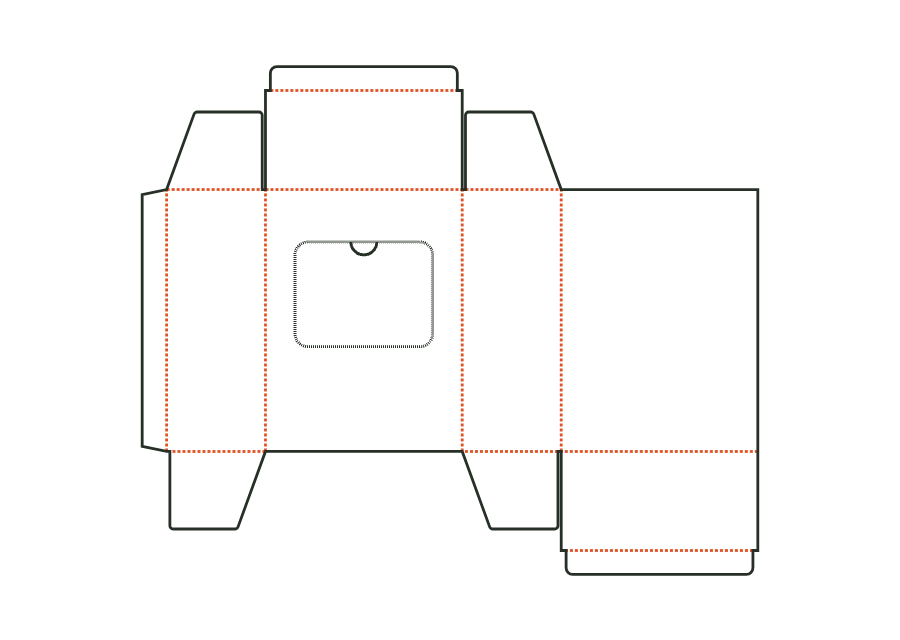
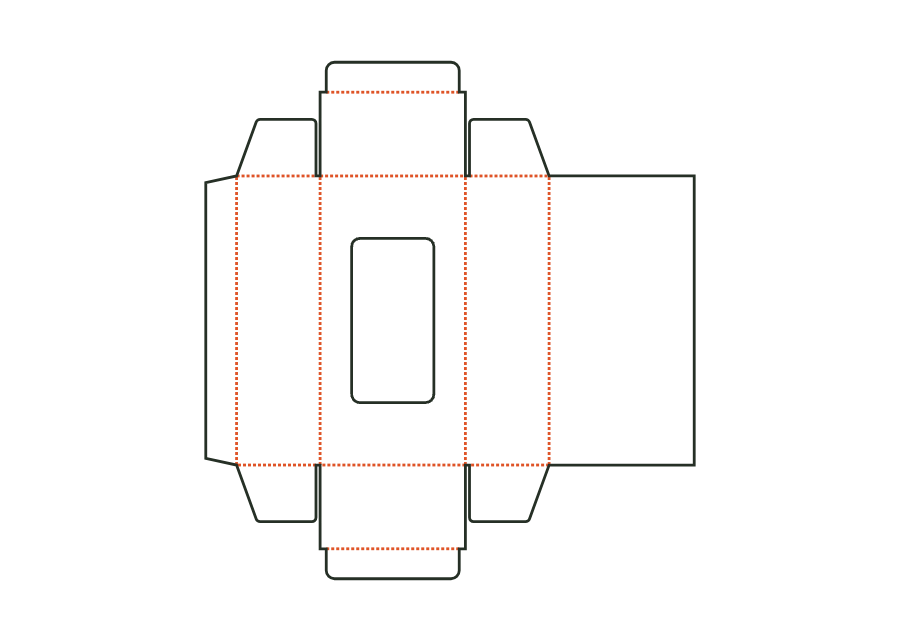
carton.hinged.lidView templateThe window carton combines straight tuck closures with a front cutout. Choose a rectangle with corner radius or an oval and leave room for the film margin and bridges. The shown version 2 starts with a rectangular window and no hanging hole. The dieline provides the construction; window film is patched separately on the inside.
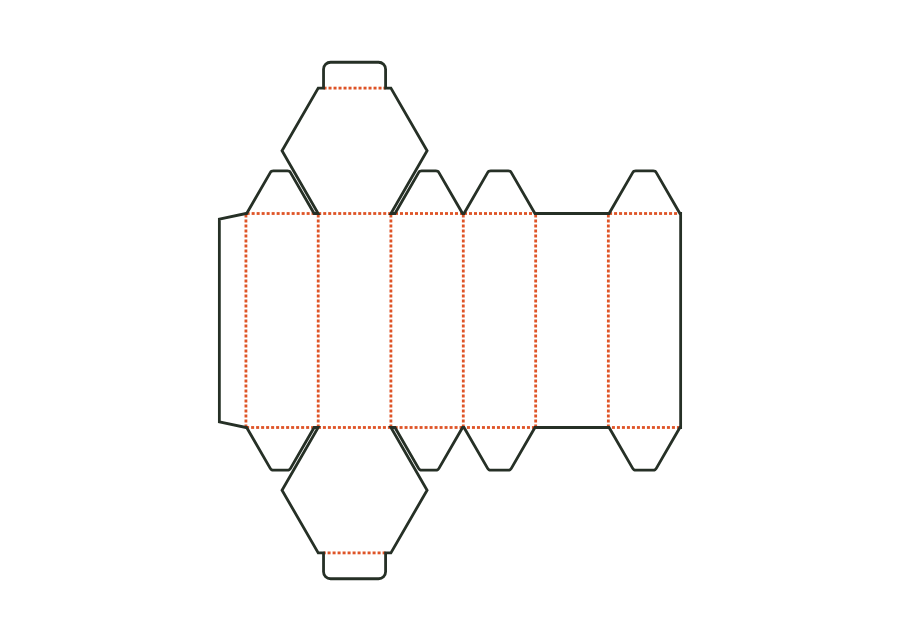
carton.windowView templateSix walls form a hexagonal footprint with a tuck lid and bottom. Inputs mean across corners × across flats × height, rather than the length and width of a rectangle. Version 1 calculates the angled walls, miters, and creases from these dimensions. The example shows the straight lid style; alternatively, the bottom can be attached to the back.
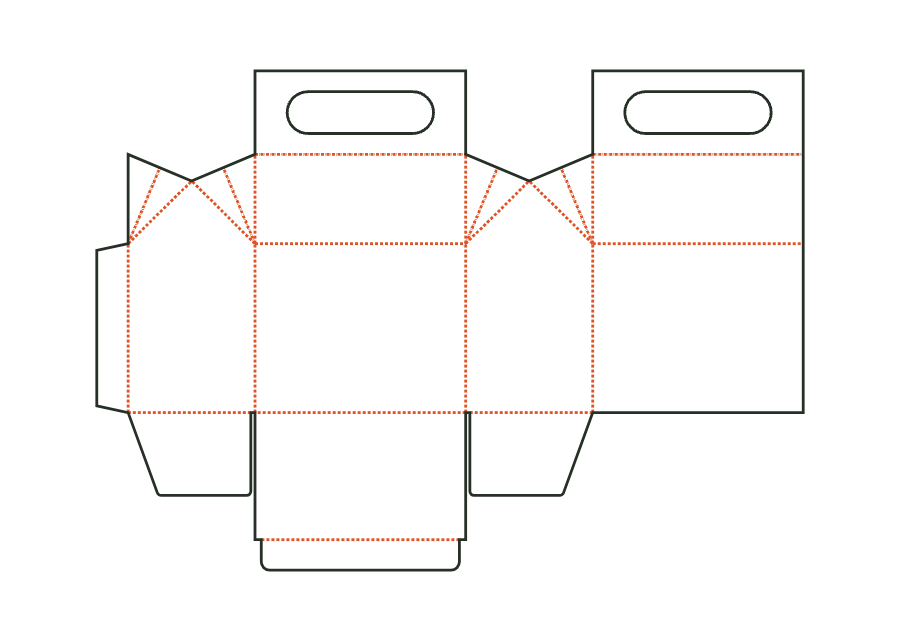
carton.hexagonView templateThe gable carton combines a tuck bottom with a gable roof and glued handle flaps. The page explicitly shows version 1 with handle hole, roof panels, and gussets. The entered height describes the body; gable and handle are added using separate parameters. The calculated dieline is a basis for the folding sample, not proof of load capacity.
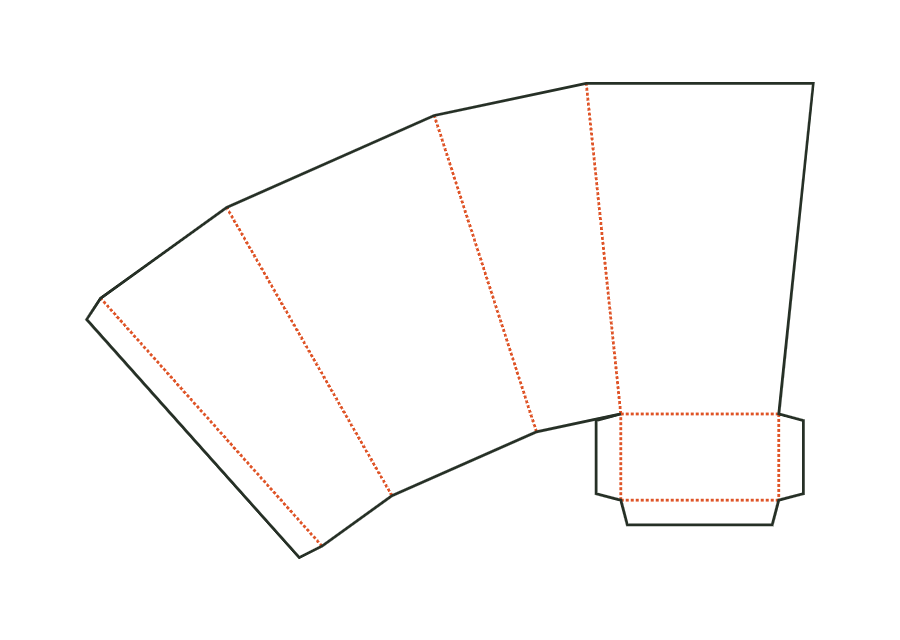
carton.gableView templateThe popcorn box is open at the top and has four outward-sloping walls, a side seam, and a glued bottom. Length and width describe the top opening; the bottom is smaller.
carton.popcornView templateThis template calculates the print mask for a flat pouch with a three-side seal. Front and back share one print sheet with a bottom fold. Side and top seams are seal zones; optional additions include a zipper, tear notch, and hanging hole. The drawing is not an approved die-cutting contour for film.
pouch.flatView templateThe stand-up pouch receives a print mask comprising the front, inserted W-shaped bottom gusset, and back. Side seam, top seam, Doyen corners, and zipper band remain documented as seal zones. Pouch width and height are outside dimensions; the bottom gusset is a separate parameter. The calculated print sheet does not yet confirm standing stability.
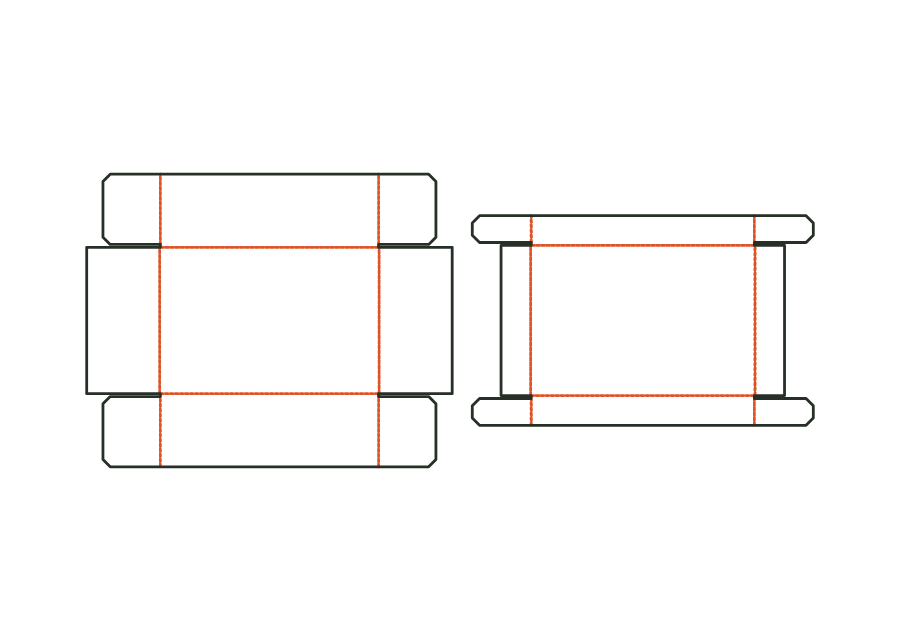
pouch.standupView templateLower part of the folding carton telescope box: base with four walls and glued corner flaps, same construction as the corrugated telescope box, for smaller gift and chocolate boxes.
carton.telescope.baseView templateTelescope lid made of folding carton board, with the same construction as the base; dimensions derived from the base's outside dimension plus clearance per side.
carton.telescope.lidView templateBox for cakes and tarts with a tuck bottom, a split lid of two roof halves and a carry handle made of two handle panels with handle holes; optional window in the lid halves or in the front. Starting material E-flute microflute, start sizes for cakes Ø 24, 26 and 28 cm.
carton.cakeView templateShipping and shelf packaging in one: tray with four walls of equal height and glued corners, a U-shaped tear-off perforation with a thumb notch in the front wall. After tearing off, a low front and side lands remain; optional header on the back wall (straight, rounded or arched). Starting material B-flute.
carton.display.shelfView templateFolding carton with 5 to 12 walls as a generalization of the hexagon box: glue flap, tuck lid at the front with the tuck flap opposite, straight or reverse bottom, mitered dust flaps. Length × width is the rectangle the n-gon fills.
carton.polygonView templateFolding carton with an isosceles trapezoid plan: wide front, narrower back, slanted sides; tuck lid at the front with the tuck flap at the back, straight or reverse bottom. Dimensions: front × depth × height.
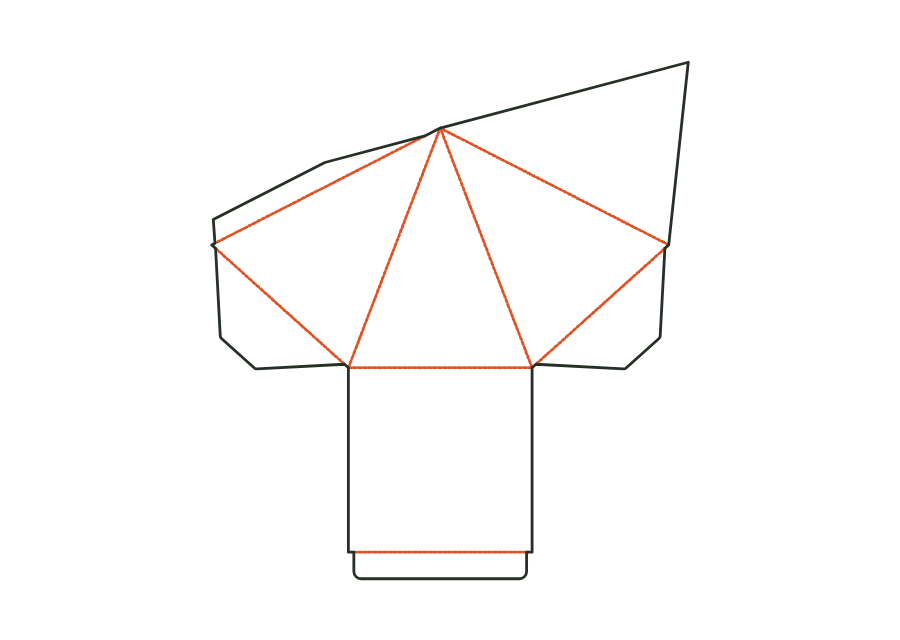
carton.trapezoidView templatePyramid with 3 to 8 triangular faces as a fan around the apex, glue flap, bottom with tuck flap and dust flaps on the other faces. Dimensions: base length × width, apex height above the bottom.
carton.pyramidView templateBase and telescope lid in folding boxboard form one assembly. Both parts have glued corner flaps; the lid follows the outside dimensions of the base plus clearance per side. For gift and chocolate boxes.
carton.telescopeView templateNo matching template. Change your search or application.
With JetDieline, choose a suitable template, adjust its size, and place text, logos, and images directly on your packaging.
Try your dimensions Download on the Mac App Store